The Short Answer on Hyundai's Electric Cars
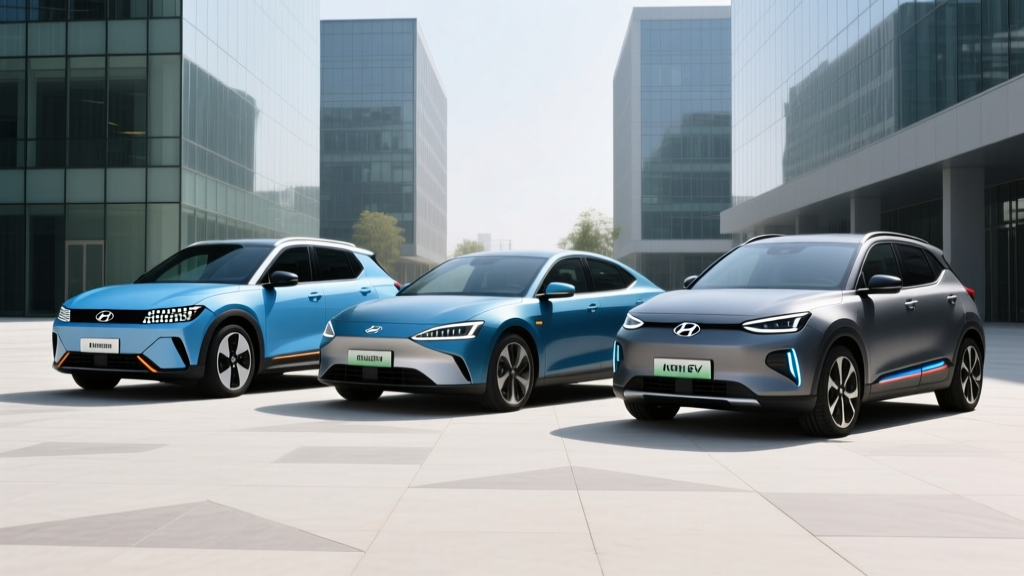
Hyundai currently sells three battery-electric vehicles in the U.S.: the Ioniq 5 (crossover, EPA 318 mi, from ~$42,900), the Ioniq 6 (sedan, EPA 361 mi, from ~$38,650), and the Kona Electric (subcompact SUV, EPA 261 mi, from ~$33,550). The Ioniq 5 NACS model now charges natively on Tesla Superchargers, the Ioniq 6 delivers the longest range, and the Kona Electric is the most affordable entry point. All three use Hyundai's E-GMP platform (Ioniq models) or a dedicated EV architecture (Kona), feature 800V-class charging hardware on the Ioniq twins, and carry a 10-year/100,000-mile battery warranty. Federal tax credit eligibility under IRS §30D varies by model, trim, battery sourcing, and buyer income — verify current status at IRS.gov before purchasing.
Hyundai's 2026 EV Lineup at a Glance
Hyundai has invested heavily in electrification, and its current U.S. EV portfolio targets three distinct buyer profiles. The Ioniq 5 is the volume seller — a midsize crossover competing directly with the Tesla Model Y and Ford Mustang Mach-E. The Ioniq 6 is the efficiency champion, a sleek sedan that squeezes more miles per kilowatt-hour than almost anything else on the market. The Kona Electric is the budget-friendly subcompact for urban drivers who don't need 300+ miles of range.
| Spec | 2026 Ioniq 5 (SEL AWD) | 2026 Ioniq 6 (SEL AWD) | 2026 Kona Electric (SEL) |
|---|---|---|---|
| EPA Range | 290 mi (AWD) / 318 mi (RWD Long Range) | 316 mi (AWD) / 361 mi (RWD) | 261 mi |
| Battery (usable) | 84 kWh (NMC) | 77.4 kWh (NMC) | 65 kWh (NMC) |
| Peak DC Charge Rate | ~240 kW | ~240 kW | ~100 kW |
| 10–80% DC Fast Charge | ~18 min | ~18 min | ~43 min |
| Level 2 Charge Rate | 10.9 kW | 10.9 kW | 7.2 kW |
| Horsepower | 320 hp (AWD) | 320 hp (AWD) | 201 hp |
| 0–60 mph | ~4.5 sec (AWD) | ~5.1 sec (AWD) | ~7.5 sec |
| MPGe (combined) | 110 MPGe (AWD) | 117 MPGe (AWD) / 140 MPGe (RWD) | 112 MPGe |
| Connector (2026) | NACS (native Supercharger access) | NACS (native Supercharger access) | CCS1 |
| Starting MSRP | ~$42,900 | ~$38,650 | ~$33,550 |
| Battery Warranty | 10 yr / 100,000 mi | 10 yr / 100,000 mi | 10 yr / 100,000 mi |
Sources: EPA fueleconomy.gov, Hyundai USA spec sheets. Real-world highway range typically runs 10–15% below EPA combined figures; cold weather (below 32°F) can reduce range 20–30%.
Range Reality Check: EPA Sticker vs. Real World
Hyundai's EPA numbers are competitive, but buyers planning road trips need to budget for real-world losses. In our experience with the E-GMP platform:
- Highway driving at 70–75 mph: Expect 85–90% of the EPA combined figure. An Ioniq 5 RWD rated at 318 miles will deliver roughly 270–285 miles on a flat interstate run at moderate temperatures.
- Cold weather (20–32°F): Both Ioniq models include a battery heat pump (standard on most trims), which mitigates but doesn't eliminate range loss. Plan for 70–80% of EPA range in freezing conditions with cabin heating active.
- Extreme cold (below 10°F): Range can drop to 60–65% of the sticker number. Preconditioning the battery while plugged in is essential to preserve both range and charging speed.
Real-World Range Estimate: The Ioniq 6 RWD's EPA 361-mile rating is outstanding, but on a 75-mph highway drive in 40°F weather, expect approximately 290–310 miles before needing to charge. The Kona Electric's 261-mile EPA figure translates to roughly 210–230 miles of usable highway range in similar conditions — adequate for commuting, tight for road trips.
Charging Speed: Hyundai's 800V Advantage
The Ioniq 5 and Ioniq 6 use Hyundai's 800V-class E-GMP architecture, which enables peak DC fast-charging rates around 240 kW when connected to a 350 kW charger. This translates to a 10–80% charge in roughly 18 minutes under ideal conditions — among the fastest in the mainstream EV market.
However, the charging curve matters more than the peak number. Here's what actually happens at the charger:
- 10–40% SoC: The battery sustains near-peak rates (~220–240 kW).
- 40–70% SoC: Rate tapers to ~150–180 kW.
- 70–80% SoC: Further taper to ~100–120 kW.
- Above 80% SoC: Charging slows dramatically to protect battery health — plan to unplug at 80% on road trips.
The Kona Electric, operating on a 400V architecture, peaks at approximately 100 kW and takes around 43 minutes for a 10–80% session. For a vehicle positioned as a commuter and urban runabout, this is acceptable — but it means the Kona is less suited to frequent long-distance travel.
| Charging Level | Power | Ioniq 5/6 Miles Added per Hour | Kona Electric Miles Added per Hour |
|---|---|---|---|
| Level 1 (120V outlet) | ~1.4 kW | ~5 mi/hr | ~4 mi/hr |
| Level 2 (240V, 48A) | 10.9 kW (Ioniq) / 7.2 kW (Kona) | ~38 mi/hr | ~25 mi/hr |
| DC Fast Charge | Up to 240 kW (Ioniq) / 100 kW (Kona) | ~18 min for 10–80% | ~43 min for 10–80% |
NACS, CCS, and Supercharger Access
For 2026, the Ioniq 5 and Ioniq 6 are equipped with the NACS (North American Charging Standard) connector, meaning they can plug directly into Tesla Supercharger stalls without an adapter. This is a significant practical advantage — Tesla's Supercharger network remains the most reliable and geographically extensive DC fast-charging network in the U.S., with over 25,000 stalls nationally.
The Kona Electric retains the CCS1 connector. Owners rely on Electrify America, EVgo, ChargePoint, and other networks. Hyundai provides complimentary charging credits with some trims, but public CCS charging reliability remains more variable than Supercharger access in many regions.
| Network | Ioniq 5/6 (NACS) | Kona Electric (CCS1) |
|---|---|---|
| Tesla Supercharger | ✅ Native (no adapter) | ❌ Not compatible |
| Electrify America | ✅ (with NACS-to-CCS adapter if needed) | ✅ Native |
| EVgo | ✅ (adapter may be needed) | ✅ Native |
| ChargePoint | ✅ (adapter may be needed) | ✅ Native |
Cost of Ownership: Hyundai EV vs. Gas Equivalent
The purchase price of a Hyundai EV is higher than a comparable gas vehicle, but the total cost of ownership story shifts over five years. Let's compare the Ioniq 5 SEL AWD (~$42,900 MSRP) against a similarly equipped Hyundai Tucson gas AWD (~$33,000 MSRP).
| Cost Category (5-Year Estimate) | Ioniq 5 SEL AWD | Tucson SEL AWD (Gas) |
|---|---|---|
| Purchase Price (MSRP) | $42,900 | $33,000 |
| Federal Tax Credit (§30D, if eligible) | –$3,750 to $7,500* | $0 |
| Fuel/Energy (15,000 mi/yr, 5 yrs) | $3,200–$4,500† | $7,800–$9,200† |
| Maintenance (5 yrs) | $800–$1,200 | $2,500–$3,500 |
| Insurance (avg, 5 yrs) | $8,500–$10,500 | $6,800–$8,200 |
| Estimated 5-Year Total | $49,100–$56,600 | $50,100–$53,900 |
*Tax credit eligibility depends on battery sourcing, MSRP caps ($55,000 for sedans, $80,000 for SUVs/vans), buyer income limits ($150K single / $300K joint), and point-of-sale transfer rules. Verify at IRS.gov. Hyundai's credit amount has fluctuated as sourcing requirements tighten.
†Energy costs: home charging at $0.14/kWh vs. public DC at $0.35–$0.50/kWh. Gas at $3.30/gal, 28 MPG combined. Your mileage and local utility rates will vary.
Which Hyundai EV Is Right for You?
Choose the Ioniq 5 if: You want a practical family crossover with fast charging, Supercharger access, and the versatility of a hatchback. Best all-around pick for most buyers who can charge at home.
Choose the Ioniq 6 if: Range is your top priority and you prefer a sedan. The RWD Long Range model's 361-mile EPA rating is the highest in Hyundai's lineup, ideal for frequent highway commuters and road-trippers.
Choose the Kona Electric if: Budget is the primary constraint and your driving is mostly urban/suburban under 40 miles daily. At ~$33,550, it's one of the most affordable new EVs in the U.S., but plan road trips carefully around CCS charging infrastructure.
Tax Credit Eligibility: What You Actually Need to Know
The federal §30D clean vehicle credit can reduce your effective purchase price by up to $7,500, but qualifying is not automatic. For 2026, the key requirements include:
- MSRP cap: Vehicle MSRP must not exceed $80,000 for SUVs/pickups (Ioniq 5 qualifies) or $55,000 for sedans (Ioniq 6 qualifies).
- Buyer income cap: Adjusted gross income must not exceed $150,000 (single), $225,000 (head of household), or $300,000 (married filing jointly).
- Battery sourcing: A percentage of critical minerals and battery components must be sourced from the U.S. or free-trade-agreement countries. This requirement tightens annually — Hyundai's credit amount has varied as a result.
- Point-of-sale transfer: You can transfer the credit to the dealer at purchase, reducing your out-of-pocket cost immediately rather than waiting for a tax refund.
- Final assembly: Vehicle must undergo final assembly in North America. The Ioniq 5 and Ioniq 6 are now assembled at Hyundai's Metaplant in Georgia.
Because sourcing requirements shift, always confirm the current credit amount for your specific model and trim on fueleconomy.gov's tax credit tool before signing a purchase agreement.
Home Charging: The Make-or-Break Factor
Home Level 2 charging is where EV ownership either clicks or frustrates. Both Ioniq models accept up to 10.9 kW on Level 2 (48 amps on a 240V circuit), which replenishes a depleted battery in roughly 8–9 hours — ideal for overnight charging. The Kona Electric accepts 7.2 kW, requiring about 9–10 hours for a full charge.
Installation costs vary significantly based on your home's electrical panel:
| Item | Estimated Cost Range |
|---|---|
| Level 2 charger (hardwired, 48A) | $400–$700 |
| Electrician labor (standard install, <50 ft run) | $600–$1,500 |
| Permit and inspection | $100–$300 |
| Electrical panel upgrade (if needed, 100A→200A) | $1,500–$3,500 |
| Total (no panel upgrade) | $1,100–$2,500 |
| Total (with panel upgrade) | $2,600–$6,000 |
If you live in an apartment or condo without dedicated parking and charging access, public charging becomes your primary fueling method. At DC fast-charging rates of $0.35–$0.50/kWh, your per-mile cost roughly doubles compared to home charging at $0.14/kWh. Factor this into your budget before purchasing.
Common Misconceptions About Hyundai EVs
| Myth | Fact |
|---|---|
| "The battery will need replacing in a few years." | Hyundai warranties the battery for 10 years/100,000 miles against capacity loss below 70%. Real-world data from E-GMP vehicles shows approximately 5–8% degradation over the first 100,000 miles with normal use. |
| "EVs are more expensive to insure." | Often true — EV insurance premiums run 10–20% higher than gas equivalents due to higher repair costs and parts pricing. Get quotes before buying. |
| "I can't take road trips." | With NACS Supercharger access (Ioniq 5/6), road-trip charging is straightforward along most major corridors. Plan 18–20 minute stops every 200–250 miles. |
| "Cold weather makes EVs unusable." | Cold reduces range 20–30%, but preconditioning (warming the battery while plugged in) mitigates both range loss and slow charging. Millions of EVs operate in Nordic winters. |
| "The Ioniq 5 and Ioniq 6 are the same car underneath." | They share the E-GMP platform and powertrain options, but the Ioniq 6's lower, more aerodynamic sedan body gives it a 15–20% efficiency advantage (more miles per kWh), translating to longer range from a smaller battery. |
First-Time EV Buyer Checklist
If this is your first electric vehicle, here's what to evaluate before signing:
- Home charging access: Can you install a Level 2 charger? If not, map your nearest reliable public chargers and calculate your per-mile energy cost at public rates.
- Daily driving distance: If your round-trip commute is under 60 miles, even the Kona Electric covers multiple days between charges. Over 100 miles daily, prioritize the Ioniq 6 RWD.
- Climate: If you regularly experience sub-freezing winters, budget for 25–30% seasonal range reduction and confirm the trim includes a heat pump.
- Road trip frequency: More than four 300+ mile trips per year? The Ioniq 5 or 6 with NACS/Supercharger access will save significant time and frustration over the Kona on CCS.
- Tax credit verification: Confirm your specific model/trim/income qualifies for §30D before committing. Rules change, and not every Hyundai EV qualifies for the full amount at every point in the year.
- Insurance quotes: Get binding quotes for the exact trim you're considering. EV premiums vary widely by insurer, model, and state.
Frequently Asked Questions
Does the Hyundai Ioniq 5 qualify for the $7,500 federal tax credit?
It depends on the current battery-sourcing requirements, your income, and the specific trim's MSRP. The Ioniq 5 is assembled in Georgia (meeting final-assembly rules) and falls under the $80,000 SUV MSRP cap. However, the credit amount has fluctuated as critical-mineral sourcing thresholds tighten. Check the latest eligibility at fueleconomy.gov and consult a tax professional for your situation.
How long does it take to charge a Hyundai Ioniq 5 at home?
On a Level 2 home charger (240V, 48A, 10.9 kW), a full charge from near-empty takes approximately 8–9 hours for the 84 kWh battery. Most owners plug in overnight and wake to a full charge. On a standard 120V outlet (Level 1), expect roughly 5 miles of range added per hour — only practical for topping off, not daily recharging.
Is the Hyundai Kona Electric good for road trips?
It's workable but not ideal. The 261-mile EPA range and ~100 kW peak charging rate mean longer stops and more careful planning. CCS charging infrastructure is less consistent than Tesla's Supercharger network. If road trips are a regular part of your driving, the Ioniq 5 or 6 with NACS/Supercharger access is a significantly better fit.
What is the real-world range of the Ioniq 6 in winter?
The Ioniq 6 RWD's EPA rating is 361 miles. In sustained freezing temperatures (20–32°F) with cabin heating, expect approximately 250–290 miles. Below 10°F, range may drop to 220–250 miles. Preconditioning the battery while plugged in helps preserve both range and charging speed in cold conditions.
How does Hyundai's EV warranty compare to Tesla's?
Hyundai offers a 10-year/100,000-mile battery warranty (capacity retention above 70%) and a 10-year/100,000-mile powertrain warranty. Tesla's Model Y battery warranty is 8 years/120,000 miles (retention above 70%). Hyundai's longer time-based coverage is a strong ownership advantage, though Tesla's mileage limit is higher.
Can I charge a Hyundai EV at a Tesla Supercharger?
Yes — the 2026 Ioniq 5 and Ioniq 6 come equipped with the NACS connector and can charge natively at Tesla Supercharger stalls without an adapter. The Kona Electric uses CCS1 and cannot access Superchargers. Always confirm NACS compatibility with your specific model year, as earlier Ioniq models used CCS1.