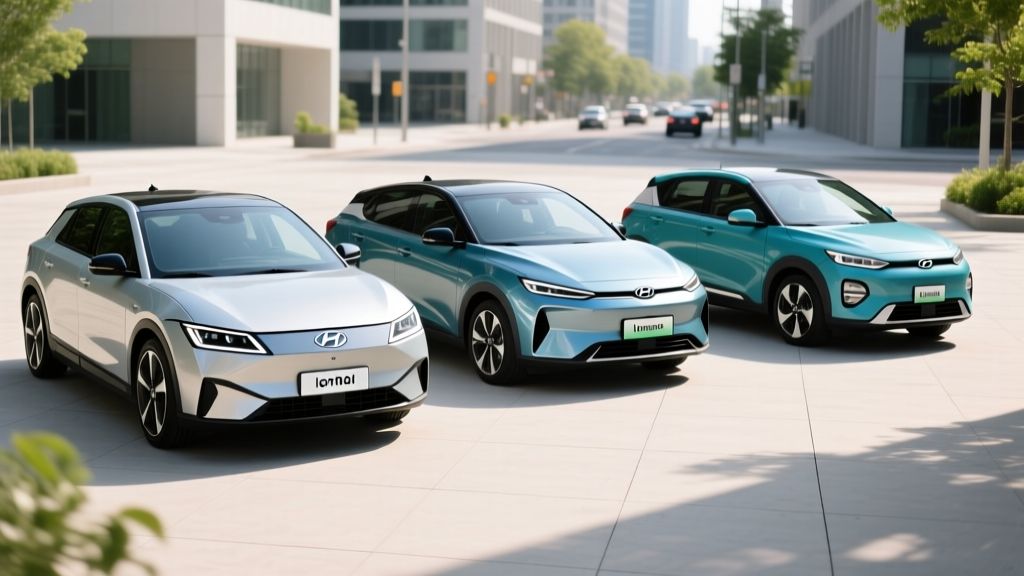
Quick Answer: Hyundai's 2026 EV lineup spans three models: the Kona Electric (261 mi EPA, ~$33,000), the Ioniq 6 sedan (361 mi EPA, ~$38,650), and the Ioniq 5 crossover (315 mi EPA, ~$42,900). All three use Hyundai's E-GMP platform with 800V architecture enabling 10-80% DC fast charging in roughly 18 minutes. If you want maximum range per dollar, the Ioniq 6 SE Long Range leads. If you need cargo space and Supercharger access, the Ioniq 5 wins. Budget buyers should start with the Kona Electric.
Hyundai's 2026 EV Lineup at a Glance
Hyundai has consolidated its battery-electric offerings around three distinct vehicles, each targeting a different buyer profile. The automaker's decision to adopt the North American Charging Standard (NACS) port — beginning with the 2025 model year refresh — means all current Hyundai EVs can access Tesla Supercharger stalls with a factory-included adapter, dramatically expanding the usable public charging network.
Below is the core spec comparison across the lineup. Note that kWh (kilowatt-hours) measures battery energy capacity — think of it as the size of the fuel tank — while kW (kilowatts) measures power flow, or how fast energy moves into that tank during charging.
| Spec | 2026 Kona Electric | 2026 Ioniq 6 SE LR | 2026 Ioniq 5 SEL AWD |
|---|---|---|---|
| EPA Range | 261 mi | 361 mi | 290 mi |
| Battery (usable) | 65 kWh (NMC) | 77.4 kWh (NMC) | 77.4 kWh (NMC) |
| Peak DC Charge Rate | ~100 kW | ~235 kW | ~235 kW |
| 10-80% DC Fast Charge | ~43 min | ~18 min | ~18 min |
| Level 2 (240V) Rate | ~10.5 kW | ~10.9 kW | ~10.9 kW |
| Horsepower | 201 hp (FWD) | 225 hp (RWD) | 320 hp (AWD) |
| 0-60 mph | ~7.3 sec | ~6.1 sec | ~4.5 sec |
| MPGe (combined) | 105 MPGe | 140 MPGe | 110 MPGe |
| Cargo (rear seats up) | 25.5 cu ft | 12.3 cu ft | 27.2 cu ft |
| Base MSRP | $32,975 | $38,650 | $42,900 |
| Battery Warranty | 10 yr / 100,000 mi | 10 yr / 100,000 mi | 10 yr / 100,000 mi |
Source: fueleconomy.gov and Hyundai Newsroom. Real-world highway range typically runs 10-20% below EPA depending on speed, temperature, and elevation.
Real-World Range: What the EPA Sticker Doesn't Tell You
EPA range estimates assume a mix of city and highway driving at moderate temperatures. In practice, your mileage will vary — sometimes significantly.
Real-World Range Expectations (2026 Hyundai EVs)
- Ioniq 6 SE LR: EPA 361 mi → expect ~290-310 mi at sustained 75 mph highway speeds; ~240-260 mi in sub-30°F winter conditions.
- Ioniq 5 SEL AWD: EPA 290 mi → expect ~240-260 mi highway; ~195-215 mi in cold weather.
- Kona Electric: EPA 261 mi → expect ~215-235 mi highway; ~175-195 mi in cold weather.
The Ioniq 6's aerodynamic drag coefficient (Cd 0.21) gives it an outsized advantage at highway speed. The boxier Ioniq 5 and Kona lose proportionally more range above 70 mph. All three benefit from Hyundai's standard heat pump, which reduces cold-weather HVAC energy draw compared to resistive heating.
If your daily commute is under 50 miles round-trip, even the Kona Electric requires charging only twice a week on a Level 2 home charger. For road trippers, the Ioniq 6's combination of range and 18-minute fast-charge stops makes 500-mile days practical with a single midway stop.
Charging at Home and on the Road
Hyundai's 800V E-GMP architecture (Ioniq 5 and Ioniq 6) is one of the fastest-charging platforms available at any price point. But peak kW numbers don't tell the whole story — the charge curve matters more. Both Ioniq models sustain roughly 200+ kW from 10% to about 55% SoC, then taper gradually. A 10-80% session on a 350 kW-capable Electrify America or Tesla Supercharger V4 stall takes approximately 18 minutes. Above 80%, charging slows sharply to protect battery longevity — plan to unplug at 80% on road trips rather than waiting for 100%.
The Kona Electric uses a 400V architecture with a ~100 kW peak rate. It's adequate for overnight home charging but noticeably slower on DC fast chargers — budget 40-45 minutes for a 10-80% stop.
| Charging Level | Power (kW) | Ioniq 5/6 (mi/hr added) | Kona EV (mi/hr added) |
|---|---|---|---|
| Level 1 (120V, standard outlet) | ~1.4 kW | ~5 mi/hr | ~5 mi/hr |
| Level 2 (240V, 48A home charger) | ~10.9 kW | ~38 mi/hr | ~36 mi/hr |
| DC Fast (350 kW stall) | Peak ~235 kW | ~800+ mi/hr (peak) | Peak ~100 kW |
Home charging installation typically costs $800-$2,500 for a 240V/48A hardwired wall connector, depending on panel proximity and whether your home's electrical panel needs a 200A upgrade (add $1,500-$3,500 if required). A licensed electrician should assess your panel capacity before purchase. Hyundai includes a NACS-compatible portable charger with the vehicle that handles Level 1 and, with the right adapter, Level 2 from a 240V dryer outlet.
If you lack access to home or workplace charging, public DC fast charging costs roughly $0.35-$0.55/kWh on networks like Electrify America or EVgo — translating to about $25-$40 for a 10-80% session in an Ioniq 5. That's more expensive than home charging ($0.10-$0.18/kWh in most US markets, or ~$8-$14 for the same session) but still generally cheaper than gasoline per mile.
Hyundai EV vs. Gas Car: The Cost Math
Let's compare the Ioniq 5 SEL AWD against a similarly equipped gas crossover — the Hyundai Tucson SEL AWD — over five years and 75,000 miles. This comparison uses national averages: $3.40/gallon regular unleaded, $0.16/kWh residential electricity, and EPA efficiency figures from fueleconomy.gov.
| Cost Category | Ioniq 5 SEL AWD (EV) | Tucson SEL AWD (Gas) |
|---|---|---|
| Purchase Price (MSRP) | $42,900 | $33,500 |
| Fed. Tax Credit (§30D, if eligible) | -$3,750 to -$7,500* | $0 |
| Effective Purchase | $35,400 - $39,150 | $33,500 |
| Fuel/Energy (75k mi) | ~$3,300 (home charging) | ~$8,800 (26 MPG combined) |
| Maintenance (75k mi) | ~$900 | ~$2,800 |
| Insurance (5-yr avg.) | ~$9,500 | ~$7,800 |
| 5-Year Total (est.) | $49,100 - $52,850 | $52,900 |
*The federal §30D tax credit for 2026 has strict requirements: buyer AGI caps ($150K single / $300K joint), MSRP caps ($55K cars / $80K SUVs/trucks), and battery critical-mineral and component sourcing rules that change annually. Check current eligibility on IRS.gov. The credit can now be transferred to the dealer as a point-of-sale discount. State incentives vary — consult your state energy office.
The EV wins on operating costs by roughly $5,500-$7,400 over five years, primarily from fuel and maintenance savings (no oil changes, fewer brake replacements due to regenerative braking). Insurance premiums run 15-25% higher on EVs due to repair costs and battery replacement risk. The break-even point versus a gas car typically arrives around year 3-4 if you qualify for the full tax credit and charge primarily at home.
Tax Credits, Incentives, and What You Actually Pay
2026 Federal §30D Clean Vehicle Credit — Key Requirements:
- Income cap: Modified AGI ≤ $150,000 (single) / $225,000 (head of household) / $300,000 (married filing jointly)
- MSRP cap: ≤ $55,000 for sedans (Ioniq 6); ≤ $80,000 for SUVs/trucks (Ioniq 5, Kona EV)
- Battery sourcing: Critical minerals and battery components must meet escalating domestic/free-trade-partner thresholds — the qualifying credit amount (up to $7,500) depends on which sourcing requirements the vehicle meets in the current model year
- Point-of-sale transfer: You can assign the credit to the dealer at purchase, reducing your out-of-pocket cost immediately rather than waiting for tax filing
- Assembly: Vehicle must undergo final assembly in North America (all three Hyundai EVs sold in the US now qualify — Ioniq 5 is built in Georgia; Kona EV and Ioniq 6 sourcing varies by model year)
Consult a tax professional and verify current-year rules at IRS.gov before purchasing. Rules change frequently.
Common Misconceptions About Hyundai EVs
| Myth | Fact |
|---|---|
| "The battery will need replacing in a few years." | Hyundai warranties the battery for 10 years/100,000 miles against capacity loss below 70%. Real-world degradation data from E-GMP vehicles shows ~5-8% capacity loss over the first 100,000 miles — meaning an Ioniq 5 with 290 mi EPA range would still deliver ~265+ mi after a decade of typical use. |
| "You can't road trip in an EV." | With NACS access to 20,000+ Tesla Superchargers plus Electrify America's network, the Ioniq 5/6 can add ~200 miles of range in an 18-minute stop. A 600-mile trip requires two stops — roughly 36 minutes of added charging time versus a single gas fill-up. |
| "EVs are worse in winter." | Range drops 15-30% in sub-freezing temps — this is real. But preconditioning (warming the battery and cabin while plugged in) recovers significant range. Hyundai's heat pump and battery preconditioning for fast charging are standard, not optional extras. |
| "Home charging requires a panel upgrade." | Most homes with a 200A panel can support a 48A Level 2 charger without an upgrade. A 100A panel may require an upgrade ($1,500-$3,500) or you can opt for a lower-amperage charger (32A, ~7.7 kW) that still fully replenishes any Hyundai EV overnight. |
| "All Hyundai EVs charge at the same speed." | Only the Ioniq 5 and Ioniq 6 use the 800V E-GMP platform capable of ~235 kW peak charging. The Kona Electric uses a 400V architecture limited to ~100 kW — roughly double the charging time on DC fast chargers. |
Decision Framework: Which Hyundai EV Fits Your Life?
Choose the Kona Electric if:
- Your budget is under $35,000 (before incentives)
- Your daily driving is under 80 miles round-trip
- You charge at home and rarely take road trips over 300 miles
- You want the lowest insurance premiums in the lineup
Choose the Ioniq 6 if:
- Maximum range is your top priority (361 mi EPA is best-in-class for sedans)
- You commute long distances on highways (the 0.21 Cd aero pays dividends)
- You prefer a sedan's driving dynamics over an SUV ride height
- Cargo space is secondary (12.3 cu ft trunk is limited — no hatchback)
Choose the Ioniq 5 if:
- You need SUV cargo space (27.2 cu ft rear, 56+ cu ft with seats folded)
- You want AWD and quick acceleration (4.5 sec 0-60)
- You road-trip frequently and value 18-minute fast-charge capability
- You need V2L (vehicle-to-load) capability to power devices or appliances from the car's battery
What First-Time Hyundai EV Buyers Should Know
Before signing paperwork, confirm three things:
- Home charging feasibility: Have an electrician assess your panel and run a quote for a 240V/48A circuit. This is the single biggest factor in EV satisfaction — owners who charge at home report dramatically higher satisfaction than those relying on public infrastructure.
- Tax credit eligibility: Use the IRS's clean vehicle credit lookup and verify your AGI, the specific trim's MSRP, and the current battery-sourcing qualification. A $7,500 credit can bring an Ioniq 5 SEL close to Tucson pricing.
- Driving pattern honesty: If you regularly drive 400+ miles in winter conditions through charging-sparse regions (rural Montana, West Virginia, the Dakotas), a Hyundai PHEV like the Tucson Plug-in Hybrid may serve you better until infrastructure matures. EVs excel where charging access is reliable — that's most of the US population corridor, but not everywhere.
Hyundai's 10-year/100,000-mile battery and powertrain warranty remains one of the strongest in the industry, and the brand's inclusion of complimentary maintenance for three years/36,000 miles reduces early ownership costs. For buyers ready to transition from gas to electric, Hyundai's 2026 lineup offers a credible option at nearly every price point — provided you can charge where you park.
Frequently Asked Questions
Does Hyundai still make the Ioniq hatchback?
No. The original Ioniq Electric (discontinued after 2021) and Ioniq Hybrid/PHEV have been replaced by the Ioniq 5 crossover and Ioniq 6 sedan. The upcoming Ioniq 7 three-row SUV is expected for the 2027 model year but is not yet on sale.
Can I use Tesla Superchargers with a Hyundai EV?
Yes. All 2025+ Hyundai EVs sold in North America come with a NACS port or a CCS-to-NACS adapter that enables access to Tesla's Supercharger network (V3 and V4 stalls). This adds roughly 20,000 charging locations to your available network.
How long does it take to charge a Hyundai EV at home?
On a 240V/48A Level 2 charger (~10.9 kW), the Ioniq 5 and Ioniq 6 go from 10% to 100% in approximately 7-8 hours. The Kona Electric takes about 6-7 hours. Plug in when you get home and the car is fully charged by morning — no daily thought required.
Is the Hyundai EV battery expensive to replace?
Out-of-warranty battery replacement for E-GMP vehicles currently ranges from $12,000-$18,000 depending on the pack. However, real-world degradation data suggests most owners will never need a full replacement — the 10-year/100,000-mile warranty covers defects and excessive capacity loss (below 70%), and batteries typically retain 90%+ capacity at 100K miles.
Which Hyundai EV qualifies for the full $7,500 tax credit?
Credit amounts vary by model year and current battery-sourcing rules. The Ioniq 5 (built in Georgia) has historically qualified for a partial or full credit depending on critical-mineral sourcing thresholds. Always verify current eligibility at IRS.gov before purchasing — the credit structure has changed multiple times since 2023.