If you've seen videos of hydrofoil electric watercraft gliding above the surface with near-zero wake, you might wonder whether the battery and motor technology behind them overlaps with what's available in electric vehicles on the road today. The short answer: hydrofoil electric craft like the Candela C-8 use similar lithium-ion battery chemistries and permanent-magnet motors found in EVs, but their energy demands, range limitations, and ownership costs are fundamentally different. For EV shoppers, the real takeaway is that hydrofoil electric technology highlights the same battery-density and charging-infrastructure challenges that define the current EV market — and understanding those parallels helps you make a smarter purchase decision on four wheels.
Quick Answer: Hydrofoil Electric vs. EV Ownership
Hydrofoil electric boats (e.g., Candela C-8) use ~44 kWh batteries for ~50 nautical miles of range at 20+ knots, costing roughly $300,000+. Electric vehicles offer 250-400+ miles of EPA range from 60-100 kWh batteries starting under $35,000. The battery and motor tech overlaps, but EVs benefit from far more mature charging infrastructure, federal tax credits, and lower per-mile energy costs.
What Is Hydrofoil Electric Technology?
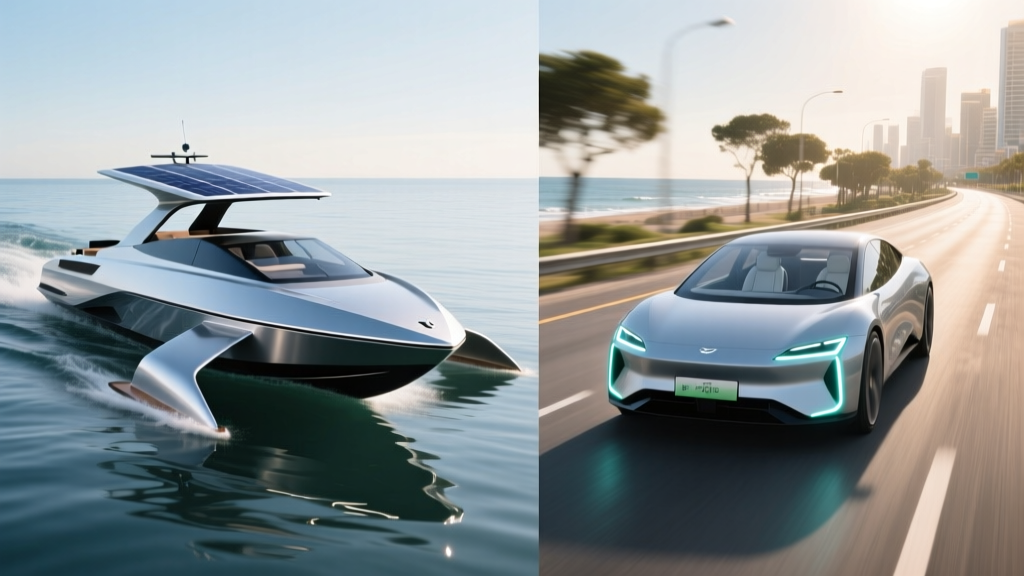
A hydrofoil electric watercraft uses submerged wing-like foils to lift the hull above the water at speed, dramatically reducing hydrodynamic drag. Combined with electric motors and lithium-ion battery packs, this yields efficiency gains of 80% or more compared to conventional planing hulls. The Candela C-8, the most widely recognized production hydrofoil electric boat, uses a 44 kWh battery pack (NMC chemistry) paired with a 75 kW electric motor to achieve roughly 50 nautical miles (57 statute miles) of range at cruising speeds around 22 knots.
The engineering parallels to EVs are direct: both rely on high-voltage battery packs, inverter-driven motors, regenerative systems, and sophisticated thermal management. But the operating environments diverge sharply. Water is roughly 800 times denser than air, meaning even a foiled hull faces resistance that dwarfs highway aerodynamic drag. The result? Energy consumption per mile is vastly higher on the water, and range is measured in tens of miles, not hundreds.
Range and Efficiency: Hydrofoil Electric vs. EV Comparison
Understanding the efficiency gap between hydrofoil electric craft and road-going EVs puts battery technology limitations into sharp perspective. Here's how the numbers stack up across a representative electric boat, a mid-range electric SUV, and a comparable gas vehicle:
| Metric | Candela C-8 (Hydrofoil Electric) | 2026 Hyundai Ioniq 5 (BEV) | 2026 Toyota RAV4 (Gas) |
|---|---|---|---|
| Battery / Tank | 44 kWh (NMC) | 84 kWh (NMC) | 14.5 gal fuel tank |
| Range | ~57 statute miles | 310 miles (EPA) | ~435 miles |
| Energy per Mile | ~770 Wh/mi | ~270 Wh/mi (3.7 mi/kWh) | N/A (28 MPG combined) |
| "Refuel" Time | ~2 hrs (DC fast charge) | 18 min 10-80% (240 kW peak) | ~5 min |
| Starting Price | ~$330,000 | $42,600 MSRP | $30,400 MSRP |
The Ioniq 5's 84 kWh usable battery delivers over five times the range of the Candela's 44 kWh pack, despite weighing only about twice as much. That's because rolling resistance and aero drag on a highway are orders of magnitude lower than hydrodynamic drag — even with foils deployed. For EV buyers, this underscores a key principle: battery capacity (kWh) alone doesn't determine range; vehicle efficiency (Wh/mi) matters just as much.
Real-World Range Reality Check
EPA sticker: 310 miles (Ioniq 5 Long Range AWD)
Real-world highway (70 mph): ~250-270 miles
Cold weather (below 32°F): ~210-240 miles
With roof rack/cargo box: subtract 10-15%
Cost Breakdown: Purchase, Energy, and Maintenance
Whether you're evaluating a hydrofoil electric craft or an electric car, the total cost of ownership follows the same framework: upfront purchase price, energy costs, maintenance, insurance, and depreciation. The scale is wildly different, but the math principles are identical.
| Cost Category | Hydrofoil Electric (Candela C-8) | EV (Ioniq 5 SEL, 5yr/75k mi) | Gas (RAV4 LE, 5yr/75k mi) |
|---|---|---|---|
| Purchase Price | $330,000 | $42,600 (before credits) | $30,400 |
| Federal Tax Credit | None (not a road vehicle) | Up to $7,500 (§30D, subject to eligibility) | None |
| Energy Cost (5yr) | ~$2,500 (marine electricity) | ~$4,200 (home charging, $0.14/kWh avg) | ~$8,400 ($3.50/gal, 28 MPG) |
| Maintenance (5yr) | $3,000+ (hull, foil service) | ~$1,500 (tires, cabin filter, fluid top-offs) | ~$3,500 (oil, filters, brakes, belts) |
| Insurance (5yr est.) | $15,000+ | ~$7,500 | ~$5,800 |
| 5-Year Total (approx.) | $350,500+ | $48,300 (net of credit) | $48,100 |
The EV and gas vehicle reach near-parity on 5-year cost in this scenario, but the EV pulls ahead as fuel prices rise or if the buyer qualifies for the full §30D federal tax credit. The hydrofoil electric, meanwhile, exists in a luxury category where efficiency savings are almost beside the point.
Federal Tax Credit Eligibility (2026 Rules)
For EV buyers — not boat buyers — the IRS §30D credit can reduce your effective purchase price by up to $7,500. However, eligibility depends on multiple factors that change frequently:
- Vehicle MSRP cap: $80,000 for SUVs/pickups/vans; $55,000 for sedans
- Buyer income cap: $300,000 (joint), $225,000 (head of household), $150,000 (individual) modified AGI
- Battery sourcing: Critical minerals and battery components must meet escalating domestic/free-trade-agreement thresholds
- Assembly: Final assembly must occur in North America
- Point-of-sale transfer: You can apply the credit as a down-payment reduction at the dealer (effective 2024 onward)
Always verify current eligibility on fueleconomy.gov and consult a tax professional before relying on the credit in your purchase math.
Common Misconceptions About Electric Propulsion
The hype around hydrofoil electric boats often spills into broader EV conversations, creating confusion. Let's separate fact from fiction with data.
| Myth | Fact |
|---|---|
| "Electric motors are all the same whether in a boat or car" | Marine motors require waterproofing, corrosion resistance, and different torque curves. EV motors (like the Ioniq 5's 168 kW rear motor) are optimized for efficiency at highway RPMs, not continuous high-load marine operation. |
| "If a boat can foil on batteries, EVs should have 1,000-mile range" | Hydrofoils reduce drag by ~80% vs. planing hulls, but water resistance still dwarfs road friction. The physics don't translate to 10x range gains on land. |
| "EV batteries degrade quickly and cost $20,000 to replace" | Modern NMC and LFP packs retain 85-90% capacity after 150,000 miles. Warranty coverage is typically 8 years/100,000 miles. Full replacement costs $8,000-$18,000 depending on pack size, but most owners never need one. |
| "Charging an EV takes hours everywhere" | Level 2 home charging adds ~25-35 miles per hour (7-11 kW). DC fast chargers at 150-350 kW can deliver 10-80% in 15-25 minutes for modern EVs with preconditioning. |
| "EVs are worse in cold weather so they're impractical" | Cold reduces range 15-30% due to battery chemistry and cabin heating. Heat pumps (standard on many 2026 models) recover 5-10 percentage points. Preconditioning while plugged in mitigates further loss. |
Real-World Ownership Considerations
Whether you're drawn to electric propulsion by hydrofoil electric videos or by rising gas prices, practical ownership hinges on a few universal questions:
Do You Have Home Charging Access?
Over 80% of EV charging happens at home. A Level 2 home charger (240V, 32-48 amps / 7.7-11.5 kW) adds roughly 25-40 miles of range per hour and costs $500-$1,500 for equipment plus $800-$3,000 for electrician installation, depending on whether your panel needs an upgrade from 100A to 200A service. If you live in an apartment or park on the street, public charging infrastructure becomes your primary source — and reliability varies enormously by network and region.
What's Your Driving Pattern?
If your daily commute is under 50 miles round-trip, virtually any 2026 EV with 250+ miles of EPA range will cover multiple days between charges. Road trippers should prioritize vehicles with DC fast-charge capability above 200 kW and access to reliable networks (Tesla Supercharger, Electrify America). The Ioniq 5, for example, peaks at 240 kW on an 800V architecture, delivering 10-80% in roughly 18 minutes when the battery is preconditioned.
What About Climate?
In regions with harsh winters (sustained temperatures below 32°F), plan for 20-30% range loss. Choose an EV with a heat pump — it uses roughly 50% less energy for cabin heating compared to resistive heaters. LFP (lithium iron phosphate) batteries, found in standard-range Tesla Model 3 and some other models, tolerate daily 100% charging better than NMC but lose more capacity in extreme cold.
Decision Framework: Is an EV Right for You?
Choose an EV If:
- You have home or workplace Level 2 charging access
- Your daily driving is under 100 miles (covers 95% of US drivers)
- You want to eliminate oil changes, spark plugs, and emissions testing
- You qualify for the §30D tax credit (check income and vehicle eligibility)
- You value instant torque, quiet operation, and low per-mile energy cost (~$0.04-$0.06/mi on home charging vs. $0.12-$0.15/mi for gas)
Choose a PHEV (Plug-in Hybrid) If:
- You lack reliable home charging but want some electric-only driving (20-40 miles typical)
- You frequently drive 300+ miles in areas with sparse DC fast-charging
- You want EV-like commuting with gas-car road-trip flexibility (e.g., Toyota RAV4 Prime: 42 miles electric-only, 38 MPG combined after battery depletes)
Stick with Gas (for Now) If:
- You park on-street with zero charging access and no workplace option
- Your budget is strictly under $25,000 and you need a newer vehicle
- You regularly tow heavy loads over long distances in cold climates (EV towing can cut range 40-50%)
What the Hydrofoil Electric World Teaches EV Buyers
The hydrofoil electric movement demonstrates that battery energy density remains the ultimate bottleneck in electrification — whether on water or on land. A Candela C-8 costs $330,000 to deliver 57 miles of range because the physics of water demand enormous energy per mile. EVs on roads benefit from vastly better efficiency, mature supply chains, and infrastructure investments that marine electrification hasn't yet matched.
For the practical buyer, the lesson is clear: today's EVs represent the sweet spot of electric propulsion — enough range for real life, charging speeds that make road trips viable, and purchase prices that approach gas-car parity when incentives are factored in. The battery breakthroughs being tested in hydrofoil electric applications (higher energy density cells, advanced thermal management, lighter pack structures) will eventually trickle into EVs, further closing the gap between sticker range and real-world performance.
Are hydrofoil electric boats eligible for any EV tax credits?
No. The IRS §30D federal tax credit applies only to qualified on-road motor vehicles. Marine craft, off-road vehicles, and e-bikes are not eligible. Some states may offer separate incentives for electric marine equipment, but these are rare and jurisdiction-specific.
Can I charge a hydrofoil electric boat at a standard EV charger?
Generally no. Marine charging systems use different connectors and protocols, though some dockside installations can accommodate CCS or similar standards. The Candela C-8 uses a proprietary marine charging setup. Always verify connector compatibility with your marina.
How does EV battery chemistry affect my buying decision?
NMC (nickel manganese cobalt) batteries offer higher energy density and better cold-weather performance but are typically recommended for 80% daily charge limits. LFP (lithium iron phosphate) batteries are heavier but tolerate daily 100% charging, have longer cycle life, and cost less — making them ideal for standard-range trims and urban commuters. Check the specific chemistry for the trim you're considering.
What's the real cost to charge an EV at home versus gas?
At the US average residential electricity rate of ~$0.16/kWh (EIA data), charging a 75 kWh battery from empty to full costs roughly $12. That delivers ~250-280 miles, or about $0.04-$0.05 per mile. A gas car at 28 MPG and $3.50/gal costs $0.125 per mile — roughly 2.5 to 3 times more per mile driven.
Is it worth waiting for solid-state batteries before buying an EV?
Solid-state batteries promise higher energy density and faster charging, but commercial availability in affordable consumer EVs remains years away (likely 2028-2030+ for mainstream models). Current NMC and LFP batteries already deliver 250,000+ mile lifespans with manageable degradation. Waiting means missing years of fuel savings and available tax credits.