The Short Answer
A hydrofoil electric surfboard (eFoil) is a battery-powered personal watercraft — not an electric vehicle in the automotive sense. If you're researching eFoils while shopping for an EV, the core overlap is lithium-ion battery chemistry, home charging logistics, and total cost of ownership analysis. Most eFoils run 2–5 kWh battery packs (vs. 60–100+ kWh in an EV), charge on standard 120V outlets in 2–4 hours, and cost $6,000–$15,000. They do not qualify for the federal §30D EV tax credit, which applies only to highway-capable four-wheeled vehicles. If your goal is electrified transportation that saves money on commuting, an EV or PHEV is the answer. If you want electrified recreation on the water, an eFoil is a separate purchase with its own cost and charging profile.
What Is a Hydrofoil Electric Surfboard?
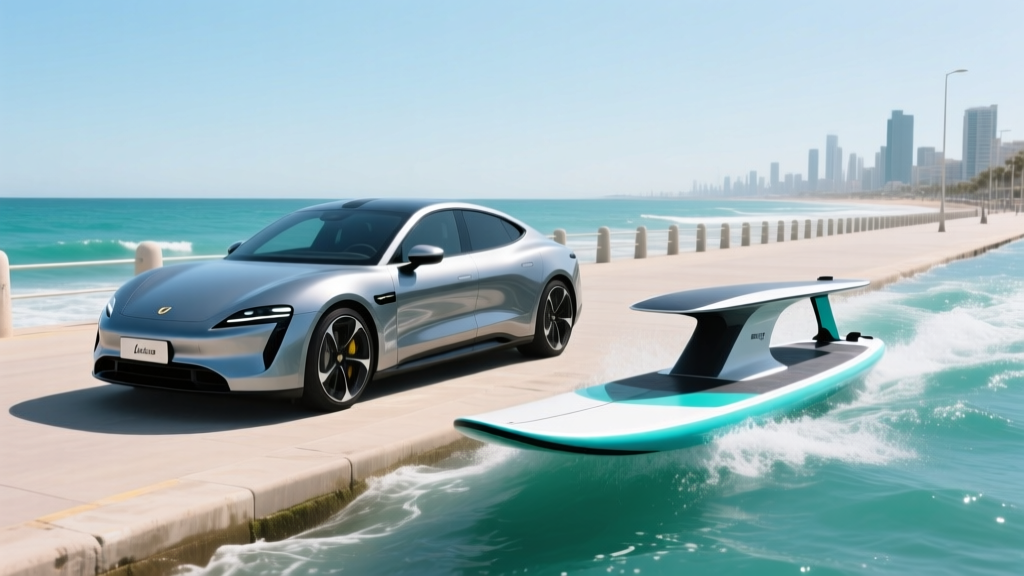
A hydrofoil electric surfboard — commonly called an eFoil — pairs a surfboard-style deck with a submerged hydrofoil wing and an electric motor. The foil lifts the board above the water at speed, dramatically reducing drag and enabling a smooth, nearly silent ride. Power comes from a removable lithium-ion battery pack, typically 2.1 kWh to 5.0 kWh, driving a brushless DC motor rated between 3 kW and 12 kW peak output.
Leading brands in 2026 include Lift Foils, Fliteboard, and Awake Boards. Ride times range from 60 to 120 minutes depending on rider weight, speed, and battery capacity. Top speeds sit between 25–35 mph for performance models. These are recreational watercraft, not road vehicles, and they fall under U.S. Coast Guard and state watercraft regulations — not NHTSA or EPA vehicle standards.
Why eFoils Show Up in EV Research
Shoppers exploring electrified lifestyles often cross-pollinate searches: home solar, EVs, electric boats, and eFoils share lithium-ion DNA. The confusion arises because the same terms — kWh, charge rate, battery degradation — apply to both. Here's where the overlap ends and diverges:
| Attribute | eFoil (Hydrofoil Electric Surfboard) | EV (e.g., Tesla Model Y LR) | Gas Car (e.g., Toyota RAV4) |
|---|---|---|---|
| Battery / Tank | 2.1–5.0 kWh (removable Li-ion) | 75–82 kWh (NMC/LFP pack) | 14.5-gal gasoline tank |
| Energy Cost per Session/Trip | $0.30–$0.75 per full charge | $0.04–$0.15/mile (home charging) | $0.12–$0.18/mile (gas at $3.50/gal) |
| Charge / Refuel Time | 2–4 hours (120V wall outlet) | 10–80% in ~25 min (DC fast); 8–10 hrs (Level 2 home) | ~5 minutes at gas station |
| Purchase Price | $6,000–$15,000 | $38,000–$55,000 (before credits) | $29,000–$40,000 |
| Federal Tax Credit (§30D) | Not eligible | Up to $7,500 (income/MSRP/sourcing rules apply) | Not eligible |
| Range | 60–120 min ride time (~15–30 miles equivalent) | 280–330 miles EPA | 380–450 miles per tank |
| Charging Access Needed | Standard 120V outlet | Level 2 (240V) home install recommended; DC fast for road trips | Gas station network |
Real Costs: eFoil Ownership Breakdown
If you're budgeting for an eFoil alongside an EV purchase, treat them as separate line items. Here's a realistic 3-year cost projection for a mid-tier eFoil:
| Category | Year 1 | Year 2 | Year 3 | 3-Year Total |
|---|---|---|---|---|
| Purchase (e.g., Fliteboard Ultra) | $10,995 | — | — | $10,995 |
| Charging (~80 sessions/yr × $0.50) | $40 | $40 | $40 | $120 |
| Battery replacement (if needed, ~$2,000–$3,500) | — | — | $2,500 | $2,500 |
| Maintenance / repairs | $100 | $200 | $350 | $650 |
| Insurance (specialty watercraft) | $300 | $300 | $300 | $900 |
| Total | $11,435 | $540 | $3,190 | $15,165 |
For context, a typical EV owner spending $0.10/mile on electricity and driving 12,000 miles/year pays ~$1,200/year in energy — but saves roughly $800–$1,200/year versus gasoline, depending on local rates and fuel prices. The eFoil is a pure recreation expense with no commuting offset.
Battery Chemistry and Degradation: What Transfers from EV Knowledge
Understanding eFoil batteries is easier if you already grasp EV battery basics. Most eFoils use NMC (nickel manganese cobalt) cells, the same chemistry found in many long-range EVs. A few newer models are exploring LFP (lithium iron phosphate), which trades some energy density for longer cycle life and safer thermal behavior — the same trade-off EV buyers weigh.
| Myth | Fact |
|---|---|
| "The battery will die after one season." | NMC eFoil batteries are rated for 500–1,000 full charge cycles. At 80 sessions/year, that's 6–12 years before significant capacity loss. EV packs are rated similarly (8-year/100,000-mile warranties are standard). |
| "I need a special charger at home." | eFoils charge on standard 120V household outlets using the included charger. No 240V install needed — unlike an EV, where a Level 2 home charger ($500–$2,000 installed) is strongly recommended. |
| "eFoils qualify for the EV tax credit." | The IRS §30D credit applies only to four-wheeled, highway-capable vehicles under specific MSRP and buyer income caps. Watercraft, e-bikes, and scooters are excluded. |
| "Storing it fully charged is fine." | Li-ion batteries (eFoil and EV) degrade fastest at 100% SoC in heat. Store at 50–60% charge in a cool, dry place — the same best practice for EV long-term parking. |
Home Charging and Electrical Considerations
One advantage of an eFoil over an EV: you almost certainly already have the infrastructure. The included charger draws roughly 300–600 watts from a standard 120V/15A outlet — similar to a large laptop charger. A full charge of a 3.5 kWh pack takes about 3–4 hours.
However, if you're simultaneously installing a Level 2 EV charger (which requires a dedicated 240V/40–50A circuit), your electrical panel capacity matters. A typical home has a 100A or 200A main panel. Adding a 48A EV charger circuit may consume available headroom. Factor in:
- Panel upgrade (100A → 200A): $1,500–$3,500 if needed
- Level 2 EV charger install: $500–$2,000 (equipment + electrician + permit)
- eFoil charging: $0 additional — uses existing outlets
The eFoil adds negligible load. The EV charger is the project that demands electrical planning.
Decision Framework: Do You Need an eFoil, an EV, or Both?
If-Then Buying Guide
- If your primary goal is reducing commuting fuel costs → then prioritize an EV or PHEV. The §30D credit (up to $7,500, subject to IRS eligibility rules) and $800–$1,200/year fuel savings make the math compelling.
- If you live near water and want silent, emission-free recreation → then an eFoil is a legitimate option, but budget $8,000–$15,000 as a discretionary purchase with no tax incentive.
- If you're considering both → then sequence the purchases. Buy the EV first (commuting savings begin immediately), then add the eFoil once your home charging setup is stable and your budget allows.
- If you rent or lack home charging access → then an EV requires public charging planning (workplace, apartment building, or DC fast network reliance). An eFoil only needs any 120V outlet, making it simpler to own in rental situations.
- If you're in a cold climate → then know that both EV range and eFoil battery performance drop in cold temperatures. EVs lose 20–30% range below freezing; eFoil batteries lose similar output and should not be charged below 32°F (0°C) to avoid cell damage.
Common Questions
Can I charge a hydrofoil electric surfboard from my EV's outlet or charger?
No. EV Level 2 chargers use a J1772 or NACS connector designed for vehicles. eFoils use proprietary DC barrel connectors or standard AC plugs with their included charger. There's no cross-compatibility, but both can draw from your home's electrical system independently.
Does buying an eFoil affect my EV tax credit eligibility?
No. The IRS §30D credit has no interaction with recreational purchases. Your eligibility depends on your modified adjusted gross income, the EV's MSRP cap ($55,000 for sedans, $80,000 for SUVs/trucks/vans), battery sourcing requirements, and whether you've transferred or claimed the credit in prior years. An eFoil purchase is irrelevant to this calculation.
How long do eFoil batteries last before replacement?
Expect 500–1,000 full charge cycles before the battery drops below 80% of original capacity. At typical recreational use (50–100 sessions per year), that translates to 5–10+ years. Replacement battery packs cost $2,000–$3,500 depending on the brand and capacity — comparable to an EV module replacement on a per-kWh basis, but far cheaper in absolute terms due to the small pack size.
Are hydrofoil electric surfboards safe?
eFoils carry inherent risk — falls at 20+ mph onto water can cause injury. Most states classify them as vessels, meaning life jackets and boating safety rules apply. Unlike EVs, which are crash-tested by NHTSA and rated by IIHS, eFoils have no standardized safety rating system. Protective gear (helmet, impact vest) is strongly recommended.
What's the real-world ride time vs. advertised?
Advertised ride times (e.g., "2 hours") assume moderate speed, a lighter rider, and calm water. Real-world conditions — aggressive riding, heavier riders (200+ lbs), choppy water, cold battery temperatures — typically reduce ride time by 25–40%. Plan for 60–90 minutes of practical use from a mid-tier 3.5 kWh pack.