Quick Answer: The Huffy Green Machine Electric Is Not a Car
The Huffy Green Machine Electric is a battery-powered ride-on toy (typically a 24V kids' drift trike), not an electric vehicle you can drive on public roads. It has no EPA range rating, no highway capability, and does not qualify for the federal §30D EV tax credit. If you're researching electrified transportation — whether a commuter EV, a plug-in hybrid, or a neighborhood electric vehicle (NEV) — this guide will help you understand what the Green Machine actually is, how real EVs compare to gas and hybrid alternatives, and how to decide which electrified vehicle fits your budget and driving needs in 2026.
What the Huffy Green Machine Electric Actually Is
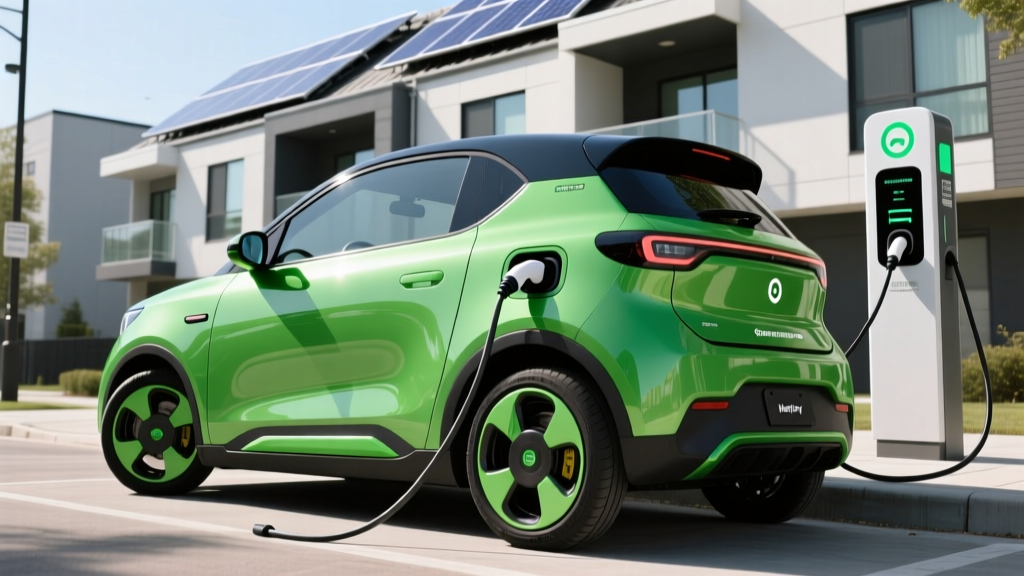
The Huffy Green Machine Electric is a recreational ride-on product marketed primarily for children and teens. Current and recent models typically feature:
- Motor: ~100–150 watts (brushed DC)
- Battery: 24V sealed lead-acid (SLA), roughly 0.2–0.3 kWh of usable energy
- Top speed: ~8–12 mph (throttle-limited)
- Run time: 30–45 minutes of continuous use per charge
- Charge time: 8–12 hours on a standard 120V wall outlet
- Price: ~$150–$250 retail
This product falls under the Consumer Product Safety Commission's jurisdiction for toys and youth vehicles — not NHTSA's vehicle safety standards. It cannot be registered, insured, or driven on public roads. If your search intent was to find an affordable electric commuter vehicle, you're in the wrong product category entirely.
Real EVs vs. Gas vs. Hybrid: The Numbers That Matter
Let's put the Green Machine's specs in perspective by comparing actual road-legal electrified vehicles against a typical gas-powered compact car. All figures below reflect 2025–2026 model-year data.
| Metric | 2026 Chevrolet Equinox EV (LT) | 2026 Toyota Prius (LE Hybrid) | 2026 Honda Civic (Gas, Sport) |
|---|---|---|---|
| Powertrain | BEV (85 kWh NMC usable) | HEV (1.8L + electric motor) | ICE (2.0L turbo) |
| EPA Range / Tank Range | 319 mi (EPA) | 588 mi (11.4 gal × 52 MPG) | 378 mi (12.4 gal × 30.5 MPG) |
| Combined Efficiency | 114 MPGe (29 kWh/100mi) | 57 MPG combined | 30.5 MPG combined |
| Fuel/Energy Cost per Mile | ~$0.04–$0.14 (home vs. DCFC) | ~$0.07 (at $3.30/gal) | ~$0.11 (at $3.30/gal) |
| 0–60 mph | ~7.9 sec | ~7.2 sec | ~7.5 sec |
| Base MSRP | $33,600 | $28,550 | $26,450 |
| Federal Tax Credit (§30D) | Up to $7,500 (eligibility varies) | None (HEV) | None |
| Effective Price After Credit | ~$26,100 (if fully eligible) | $28,550 | $26,450 |
Sources: fueleconomy.gov, manufacturer MSRP data, IRS §30D guidelines. Tax credit eligibility depends on buyer income, vehicle MSRP caps, battery critical-mineral sourcing, and point-of-sale transfer rules. Consult a tax professional.
Real Costs of EV Ownership: A 5-Year Breakdown
One of the most common misconceptions is that EVs are always more expensive or always cheaper. The truth depends on your driving patterns, electricity rates, and whether you can charge at home. Here's a realistic 5-year/75,000-mile ownership projection comparing a mainstream BEV, a hybrid, and a gas car.
| Cost Category | BEV (e.g., Equinox EV) | Hybrid (e.g., Prius) | Gas (e.g., Civic) | |
|---|---|---|---|---|
| Purchase Price (after credit) | $26,100 | $28,550 | $26,450 | |
| Fuel/Energy (75k mi) | $3,750 (home L2, $0.13/kWh avg) | $4,850 ($3.30/gal avg) | $8,200 ($3.30/gal avg) | |
| Maintenance (5 yr) | $1,500 (tires, cabin filter, fluid top-offs) | $3,200 (oil, filters, brakes, tires) | $3,800 (oil, filters, brakes, tires, plugs) | |
| Insurance (5 yr avg) | $9,500 (typically 10–15% higher) | $7,800 | $7,500 | |
| Home Charger Install | $800–$2,500 (Level 2, 240V) | $0 | $0 | |
| Estimated Depreciation | $11,000 | $9,500 | $10,200 | |
| 5-Year Total Cost | ~$42,650–$44,350 | ~$53,900 | ~$56,150 |
Key takeaway: A BEV with the $7,500 tax credit and home charging can undercut both a hybrid and a gas car over five years, but only if you qualify for the full credit and charge primarily at home. Public DC fast charging at $0.35–$0.50/kWh pushes your per-mile cost closer to or above hybrid levels.
First-Time EV Buyer Essentials: What You Must Know
If you're pivoting from a gas car to a battery-electric or plug-in hybrid vehicle, these realities separate expectations from ownership experience.
Charging Access Is Your #1 Decision Factor
Home Level 2 charging (240V, 7–11.5 kW) adds roughly 25–45 miles of range per hour and costs $0.03–$0.06 per mile in most US markets. Without it, you'll rely on public DC fast chargers or slower Level 2 stations, which increases both cost and inconvenience. If you rent or live in a condo without charging infrastructure, a PHEV (plug-in hybrid) like the Toyota RAV4 Prime (42 mi electric-only range) or a conventional hybrid may be a smarter fit.
EPA Range vs. Real-World Range
EPA range estimates are tested under controlled conditions. In practice:
- Highway driving at 70+ mph: Expect 15–25% less than EPA range.
- Cold weather (below 32°F): Expect 20–40% range reduction, especially without a heat pump.
- DC fast charging: The advertised peak kW (e.g., 150 kW) is sustained only briefly. A "10–80% in 30 minutes" spec is more meaningful than peak rate alone, because the charge curve tapers significantly above 80% State of Charge.
Battery Longevity and Warranty
Federal law mandates that EV batteries carry a minimum warranty of 8 years/100,000 miles. Most manufacturers guarantee the battery will retain 70–80% of original capacity during that period. NMC (nickel manganese cobalt) chemistries offer higher energy density but slightly faster degradation; LFP (lithium iron phosphate) batteries trade some range for longer cycle life and can be charged to 100% daily without damage. Replacement costs range from $8,000 to $20,000+ depending on the model, but most batteries outlast the vehicle.
EV Myths vs. Facts
| Myth | Fact |
|---|---|
| "EV batteries need replacing every 5 years" | Most EV batteries degrade 10–15% over 100,000 miles. Federal warranty covers 8 yr/100k mi minimum. Many packs exceed 200,000 miles before needing replacement. |
| "EVs are worse in cold weather" | Range drops 20–40% in freezing temps, but preconditioning (warming the battery while plugged in) recovers much of that loss. EVs start instantly in cold — no cranking, no warm-up idle. |
| "Charging takes too long" | Home Level 2 charging happens overnight while you sleep — zero active time. Road-trip DC fast charging adds 150–200 miles in 18–25 minutes at modern 150–250 kW stations. |
| "The electrical grid can't handle EVs" | Most EVs charge overnight during off-peak hours when grid capacity is underutilized. A single EV charging at 7 kW uses roughly the same power as an electric clothes dryer. |
| "EVs cost more to insure" | True — typically 10–20% higher premiums due to repair costs and battery replacement. Factor this into your total cost of ownership calculation. |
Your Decision Framework: Which Electrified Vehicle Fits?
Choose a Battery-Electric Vehicle (BEV) if:
- You have reliable home or workplace Level 2 charging access
- Your daily commute is under 80 miles round-trip
- You want the lowest per-mile fuel cost ($0.03–$0.06/mi at home)
- You qualify for the §30D tax credit (income and MSRP caps apply — check IRS guidelines)
- You take road trips 2–4 times a year and can plan DC fast-charging stops
Choose a Plug-In Hybrid (PHEV) if:
- You can charge at home but want gas-engine backup for longer trips
- Your daily driving is 25–45 miles (within electric-only range)
- You live in an area with sparse public charging infrastructure
- You want to reduce fuel consumption without full EV commitment
Choose a Conventional Hybrid (HEV) if:
- You cannot charge at home or at work
- You want maximum range flexibility with zero charging behavior change
- You prioritize lower purchase price over per-mile fuel savings
- You drive in stop-and-go city conditions where hybrids shine (50+ MPG achievable)
Stick with a Gas Car (for now) if:
- You live in an apartment with no charging and no workplace charging
- You regularly tow heavy loads or drive 400+ miles between stops in rural areas
- Your budget is strictly under $22,000 and you buy used (EV used-market options are growing but still limited at that price)
Frequently Asked Questions
Can I drive the Huffy Green Machine Electric on the street?
No. The Huffy Green Machine Electric is classified as a toy/recreational product, not a motor vehicle. It lacks the safety equipment, lighting, registration capability, and speed required for any public-road use. If you need a street-legal low-speed electric vehicle, look into NEVs (Neighborhood Electric Vehicles) like the Polaris Gem or Wink Motors, which are federally regulated for roads with speed limits up to 35 mph.
What's the cheapest real electric car I can buy in 2026?
The 2026 Chevrolet Equinox EV starts at ~$33,600 and may qualify for the full $7,500 §30D tax credit, bringing the effective price to ~$26,100 for eligible buyers. The used EV market also offers options like the Chevrolet Bolt EV (2022–2023 models) for $15,000–$20,000, which qualifies for a separate used-EV credit of up to $4,000 under §25E.
How much does home EV charger installation cost?
A Level 2 home charger (240V, 32–48 amp) typically costs $800–$2,500 installed, depending on whether your electrical panel needs an upgrade. The charger unit itself runs $300–$700. If your panel is already 200 amps with available breaker slots, expect the lower end. A 100-amp panel upgrade can add $1,500–$3,000. Always hire a licensed electrician and pull permits — this is not a DIY project.
Do EVs really save money compared to gas cars?
Over five years and 75,000 miles, a BEV with home charging and the full federal tax credit can save $8,000–$15,000 in total cost of ownership compared to an equivalent gas car, primarily from lower fuel and maintenance costs. However, higher insurance premiums (10–20%), potential home charger installation, and faster depreciation on some models partially offset those savings. Run the numbers for your specific electricity rate, annual mileage, and local incentives.
What happens if my EV battery degrades?
All new EVs carry a federally mandated battery warranty of at least 8 years/100,000 miles, covering defects and excessive capacity loss (typically below 70% state of health). Real-world data from millions of EVs shows average degradation of 1–2% per year under normal use. Most EV batteries retain 85–90% capacity at 100,000 miles and rarely require full replacement during the vehicle's useful life.