The Straight Answer on the Huffy Electric Drift Trike
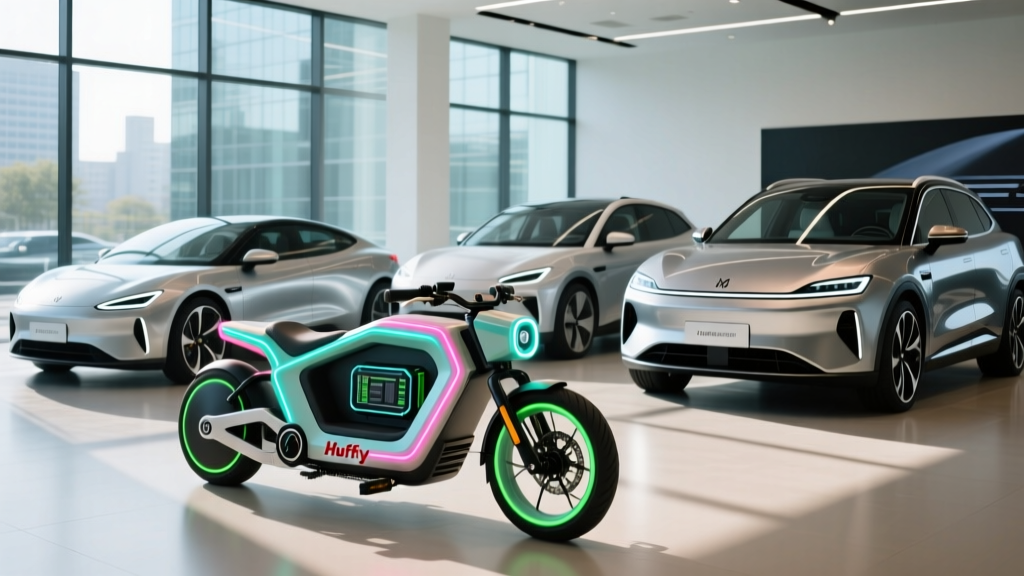
The Huffy electric drift trike is a battery-powered recreational trike designed for drifting and fun — it is not a street-legal electric vehicle and should not be confused with a commuter EV. It typically uses a small 24V or 36V lead-acid or lithium battery pack (roughly 0.2–0.5 kWh of usable energy), a hub or chain-driven motor in the 250W–500W range, and offers a top speed around 12–15 mph with a runtime of approximately 30–45 minutes per charge. If you're researching it as a first step into electrified transportation, the honest reality is that it shares almost nothing with a real EV beyond a battery and a motor. Below, we break down exactly what the Huffy drift trike delivers, what it costs to own, and how it compares to entry-level electric vehicles in 2026.
What the Huffy Electric Drift Trike Actually Is
Huffy is a heritage bicycle brand known for affordable consumer bikes and ride-on toys. Their electric drift trike lineup sits in the recreational toy category — think of it as a motorized tricycle engineered for sliding around parking lots and driveways on its low-traction rear slick sleeves. It is not classified by the NHTSA as a motor vehicle, it cannot be registered, insured, or plated for road use, and it does not qualify for any federal or state EV incentives.
Here's what the typical Huffy electric drift trike delivers in spec terms:
| Spec | Value |
|---|---|
| Motor Power | 250W–500W (chain or hub drive) |
| Battery Voltage / Chemistry | 24V–36V, sealed lead-acid (SLA) or lithium-ion |
| Usable Energy Capacity | ~0.2–0.5 kWh |
| Top Speed | 12–15 mph (governed) |
| Runtime per Charge | 30–45 minutes (varies by rider weight, terrain) |
| Charge Time (0–100%) | 6–10 hours (wall outlet, ~40W–60W charger) |
| Rider Weight Limit | ~120–200 lbs depending on model |
| Approximate Retail Price | $250–$600 MSRP |
| Street Legal? | No — recreational use only |
For context, a kilowatt-hour (kWh) is a unit of energy — how much electricity the battery stores. A kilowatt (kW) is a unit of power — how fast energy flows in or out. The Huffy drift trike's ~0.3 kWh battery holds roughly the same energy as running a 300W space heater for one hour. A 2026 Chevrolet Equinox EV, by comparison, carries an 85 kWh usable battery — roughly 280 times more stored energy.
How the Huffy Drift Trike Compares to a Real EV
If you've landed on this page while researching your first electric purchase, it's worth understanding the gulf between a recreational electric toy and a highway-capable battery electric vehicle (BEV). The table below puts the Huffy drift trike alongside two popular 2026 entry-level EVs to illustrate the differences in every metric that matters for transportation.
| Metric | Huffy Electric Drift Trike | 2026 Nissan Leaf S | 2026 Chevy Equinox EV 2LT |
|---|---|---|---|
| Price (MSRP) | $250–$600 | ~$28,140 | ~$33,600 |
| EPA Range | N/A (not an EV) | 149 mi | 319 mi |
| Battery Capacity | ~0.3 kWh | 40 kWh (usable) | 85 kWh (usable) |
| Battery Chemistry | SLA or generic Li-ion | NMC lithium-ion | NMC (Ultium platform) |
| Motor Output | 250–500W (~0.3–0.7 HP) | 110 kW (~147 HP) | 150 kW (~201 HP) |
| Top Speed | 12–15 mph | ~95 mph (governed) | ~112 mph (governed) |
| DC Fast Charge Capable | No | Yes, up to 100 kW (CCS/CHAdeMO) | Yes, up to 150 kW (NACS) |
| 10–80% DC Charge Time | N/A | ~40 min | ~20 min |
| Level 2 Home Charge Time | 6–10 hrs (wall outlet) | ~7.5 hrs (6.6 kW onboard) | ~9.5 hrs (11.5 kW onboard) |
| Federal §30D Tax Credit | Not eligible | Up to $3,750 (varies by sourcing) | Up to $7,500 (subject to income/MSRP/sourcing) |
| Street Legal / Insurable | No | Yes | Yes |
| Warranty (Battery) | ~90 days to 1 year | 8 yr / 100,000 mi | 8 yr / 100,000 mi |
The takeaway: the Huffy drift trike is fun for what it is, but comparing it to an EV is like comparing a gas-powered go-kart to a Honda Civic. They share a fuel source and nothing else.
Real Costs: Drift Trike vs EV Ownership
Even though the Huffy drift trike isn't transportation, buyers often wonder about the economics. Let's break down the true cost picture for both, including what you'd spend on energy, maintenance, and replacements over time.
| Cost Category | Huffy Drift Trike | 2026 Equinox EV 2LT |
|---|---|---|
| Purchase Price | $400 (mid-range model) | $33,600 (before incentives) |
| Federal Tax Credit | $0 | Up to $7,500 (point-of-sale, per IRS §30D rules) |
| Effective Purchase Price | $400 | ~$26,100 |
| Annual Energy Cost | ~$5–$10/yr (negligible kWh draw) | ~$540/yr (12,000 mi at $0.15/kWh, 3.5 mi/kWh) |
| 5-Year Energy Total | ~$38 | ~$2,700 |
| Maintenance (5 yr) | ~$50–$100 (battery replacement likely) | ~$500 (tire rotation, cabin filter, fluid top-offs) |
| Insurance (5 yr) | $0 (not insurable as vehicle) | ~$7,500 (avg ~$1,500/yr, varies by state/profile) |
| Comparable Gas Car Fuel (5 yr) | N/A | ~$7,200 (12,000 mi/yr, 25 MPG, $3.00/gal) |
| 5-Year Fuel Savings vs Gas | N/A | ~$4,500 |
A real EV saves a typical driver roughly $900 per year in fuel compared to a 25 MPG gas car at $3.00/gallon, based on 12,000 miles annually and home charging at the national average of ~$0.15/kWh. Over five years, that's approximately $4,500 back in your pocket — enough to offset a meaningful chunk of the purchase price. The Huffy drift trike costs almost nothing to "fuel," but it also takes you nowhere useful.
Common Misconceptions — Addressed With Facts
When researching electric vehicles for the first time, buyers sometimes encounter misleading claims or conflations between electric toys and real EVs. Here are the myths worth busting.
| Myth | Fact |
|---|---|
| "Electric drift trikes and EVs use the same battery technology." | Most Huffy drift trikes use cheap sealed lead-acid (SLA) batteries or low-grade lithium cells with no thermal management. Modern EVs use sophisticated NMC or LFP battery packs with active liquid cooling, cell-level monitoring, and 8-year/100,000-mile warranties. |
| "If I can charge a drift trike from a wall outlet, I can charge an EV the same way." | Technically yes — Level 1 EV charging uses a standard 120V outlet. But Level 1 delivers only ~1.4 kW, adding about 3–5 miles of range per hour. Most EV owners install a Level 2 home charger (240V, 7–11 kW) for practical overnight charging. Expect $500–$2,000 for a Level 2 installation depending on your electrical panel, per U.S. Department of Energy guidance. |
| "All electric things qualify for the $7,500 tax credit." | The federal §30D Clean Vehicle Credit applies only to new, street-legal plug-in vehicles meeting strict battery-sourcing, critical-mineral, MSRP cap, and buyer income requirements. Recreational products like drift trikes, e-scooters, and e-bikes do not qualify. See IRS.gov for current eligibility rules. |
| "EV batteries die after a few years like toy batteries." | EV battery packs are engineered for longevity. Data from Tesla's 2023 Impact Report showed average degradation of ~12% after 200,000 miles. Most manufacturers warrant the pack for 8 years/100,000 miles at a minimum 70% capacity retention threshold. SLA batteries in toys like drift trikes typically last 1–3 years before significant capacity loss. |
| "EVs don't work in cold weather." | Cold weather does reduce range — expect 15–30% loss at 20°F compared to the EPA sticker, depending on whether the vehicle has a heat pump. But EVs start instantly in cold (no cranking a frozen engine), and preconditioning the battery while plugged in restores much of the lost efficiency. |
Real-World EV Ownership: What First-Time Buyers Must Know
If the Huffy drift trike search has sparked a broader interest in going electric, here's the practical groundwork you need before buying a real EV in 2026.
Home Charging Access Is the Single Biggest Factor
Approximately 80–90% of EV charging happens at home. If you have a garage or driveway with access to a 240V outlet (like a dryer outlet) or can have an electrician install a Level 2 charger, an EV fits seamlessly into daily life — plug in at night, wake up with 200+ miles of range. If you live in an apartment without charging access, ownership is harder but not impossible: public Level 2 and DC fast charging networks (Tesla Supercharger, Electrify America, EVgo) are expanding, but relying solely on public charging costs more and adds time to your routine.
Charging Speed: kW and the Curve
DC fast charging speed is measured in kW (power flow rate). A 150 kW charger can theoretically add ~150 kWh of energy per hour — but no EV charges at peak speed the entire session. Lithium-ion batteries follow a charging curve: they accept power fastest between roughly 10–50% state of charge, then taper significantly above 80% to protect cell health. That's why manufacturers quote "10–80% charge time" rather than 0–100%. A 2026 Hyundai Ioniq 5, for example, peaks at ~240 kW and does 10–80% in about 18 minutes — but a full 0–100% session takes closer to 40 minutes.
Range Reality vs the EPA Sticker
EPA range estimates are tested under controlled conditions. Real-world results vary based on:
- Highway speed: Sustained 75+ mph driving can cut range 10–20% below EPA.
- Cold weather: At 20°F, expect 15–30% range loss; below 0°F, losses can exceed 40% without a heat pump.
- Terrain: Mountain driving with sustained climbs drains the battery faster; regenerative braking on descents recovers some energy.
- Climate control: Running cabin heat in winter draws 2–5 kW continuously, directly reducing range.
As a rule of thumb: plan trips using 75–80% of the EPA range as your realistic buffer, especially in winter or on highway-heavy routes.
Tax Credit Eligibility in 2026
The federal §30D Clean Vehicle Credit can deliver up to $7,500 for qualifying new EVs and up to $4,000 for qualifying used EVs — but the rules are strict:
- MSRP caps: Vans, SUVs, and trucks must be under $80,000; sedans under $55,000.
- Buyer income limits: Modified AGI must not exceed $300,000 (joint), $225,000 (head of household), or $150,000 (single).
- Battery sourcing: A percentage of critical minerals and battery components must be sourced from the U.S. or free-trade-agreement countries — this requirement tightens annually.
- Point-of-sale transfer: As of 2024, you can transfer the credit to the dealer at purchase, reducing your out-of-pocket cost immediately rather than waiting for tax filing.
Always verify current eligibility on fueleconomy.gov and consult a tax professional for your specific situation.
Decision Framework: Should You Buy a Drift Trike or a Real EV?
If-Then Buying Guide
- Choose the Huffy electric drift trike if: You want a fun, low-cost recreational toy for a teenager or for weekend parking-lot drifting on private property, your budget is under $600, and you have no expectation of road use, commuting, or passenger transport.
- Choose an entry-level EV (Nissan Leaf, Chevy Equinox EV, Hyundai Kona Electric) if: You need daily transportation, you have access to home or reliable workplace charging, your commute is under 100 miles round-trip, and you want to reduce fuel costs while driving a vehicle with modern safety features, a warranty, and federal tax credit eligibility.
- Choose a plug-in hybrid (PHEV) like the Toyota RAV4 Prime if: You want 30–42 miles of electric-only range for daily commuting but need a gas engine for longer road trips, you have limited charging access, or you're not ready to commit to a full BEV.
- Choose a conventional hybrid (HEV) like the Toyota Prius if: You have no charging access at all but still want to reduce fuel consumption — a hybrid like the Prius delivers 57 MPG combined with no plug required.
Frequently Asked Questions
Is the Huffy electric drift trike street legal?
No. The Huffy electric drift trike is classified as a recreational toy, not a motor vehicle. It cannot be registered, titled, plated, or insured for road use in any U.S. state. It is intended for use on private property, closed lots, and driveways.
Can I get a tax credit for buying a Huffy electric drift trike?
No. The federal §30D Clean Vehicle Credit applies only to qualifying new plug-in electric vehicles that meet MSRP, buyer income, and battery-sourcing requirements. Recreational toys, e-bikes, and e-scooters are not eligible. See the IRS Clean Vehicle Credit page for details.
How long does the Huffy drift trike battery last before needing replacement?
Sealed lead-acid (SLA) batteries in recreational trikes typically last 1–3 years or 200–500 charge cycles before noticeable capacity loss. Lithium-equipped models may last 3–5 years. Replacement batteries cost $30–$80 depending on voltage and chemistry. By contrast, EV battery packs are warranted for 8 years/100,000 miles and typically retain 85–90% capacity after 100,000 miles based on fleet data.
What's the cheapest real EV I can buy in 2026?
The 2026 Nissan Leaf S starts around $28,140 MSRP. With the available $3,750 federal credit (subject to sourcing and income eligibility), effective cost can drop to roughly $24,390. The 2026 Chevrolet Equinox EV 2LT starts around $33,600 and may qualify for the full $7,500 credit, bringing the effective price to approximately $26,100 — competitive with many gas-powered compact SUVs.
Do I need a special charger at home for an EV?
You can charge any EV from a standard 120V household outlet (Level 1), but it adds only 3–5 miles of range per hour — adequate only if you drive under 30 miles daily. For practical home charging, a Level 2 charger (240V, 32–48 amps) adds 25–40 miles per hour and fully recharges most EVs overnight. Professional installation costs $500–$2,000 depending on your electrical panel capacity and the distance from panel to charger location. Some homes may need a panel upgrade ($1,500–$3,000) if they're already near capacity.
Is an EV actually cheaper to own than a gas car?
Over five years, a typical EV saves $3,000–$5,000 in fuel costs compared to a 25 MPG gas vehicle, plus $1,000–$2,000 in reduced maintenance (no oil changes, fewer brake replacements due to regenerative braking). These savings partially offset the higher purchase price and potentially higher insurance premiums. Total cost of ownership parity or advantage depends on your local electricity rates, driving volume, and whether you qualify for federal and state incentives.