Quick Answer: The Huffy 36V Electric Green Machine Is Not a Street-Legal EV
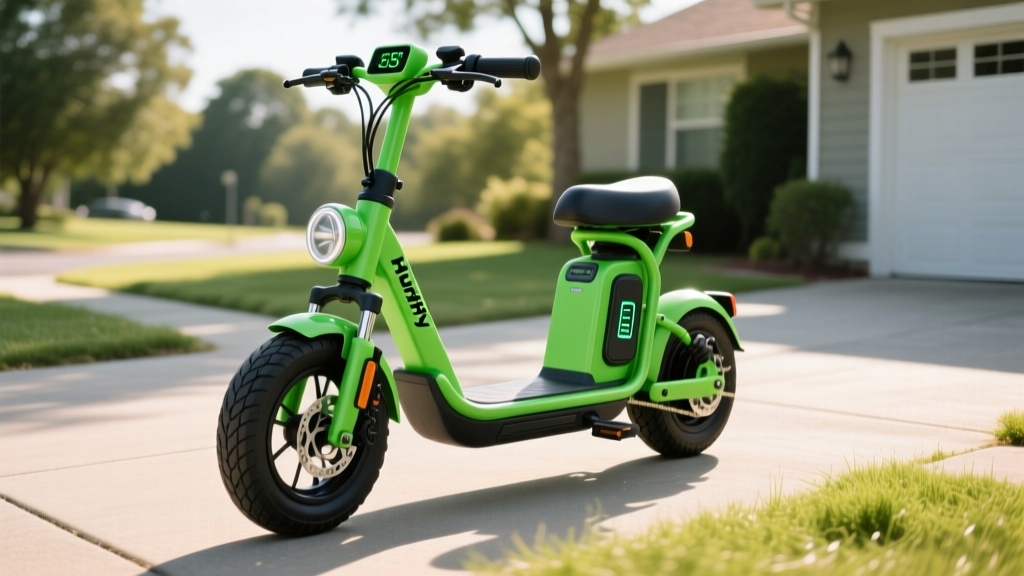
The Huffy 36V Electric Green Machine is a battery-powered ride-on toy (typically a drift trike or scooter platform) designed for recreational use by kids and teens — not a road-legal electric vehicle. It runs on a 36-volt lead-acid or lithium battery pack, tops out around 12–15 mph, and offers roughly 45–60 minutes of continuous ride time per charge. It does not qualify for any federal EV tax credits, cannot be registered for street use, and should not be confused with a highway-capable EV or even a low-speed vehicle (LSV). If you're researching your first real electric car, this product sits in an entirely different category.
What Exactly Is the Huffy 36V Electric Green Machine?
Huffy is best known for bicycles, scooters, and ride-on toys sold through big-box retailers. The "Green Machine" nameplate has historically been attached to their line of drift trikes — low-slung, three-wheeled vehicles with a slick rear wheel designed for controlled slides. The 36V electric version adds a brushed or brushless DC motor and a rechargeable battery pack to the formula.
Here's what you're typically looking at in terms of specifications:
| Spec | Value |
|---|---|
| Battery Voltage | 36V (lead-acid or lithium pack) |
| Estimated Capacity | ~8–12 Ah (288–432 Wh) |
| Motor | 250–350W brushless DC |
| Top Speed | 12–15 mph |
| Run Time per Charge | 45–60 minutes (varies by rider weight/terrain) |
| Charge Time | 6–8 hours (standard wall outlet) |
| Max Rider Weight | ~120–150 lbs |
| Street Legal? | No — recreational use only |
| Typical Price | $250–$400 MSRP |
For context, a single kWh (kilowatt-hour — the standard unit of battery energy in real EVs) equals 1,000 watt-hours. The Green Machine's ~0.3–0.4 kWh battery pack holds roughly the same energy as charging a smartphone about 25 times. A 2026 Tesla Model 3 Standard Range, by comparison, carries a ~60 kWh battery — roughly 150 times more energy.
How Does This Compare to an Actual Electric Vehicle?
If you landed on this page while exploring electric transportation, it's worth understanding the vast gulf between a ride-on toy and a highway-capable EV. The table below makes the differences concrete:
| Attribute | Huffy 36V Green Machine | 2026 Chevrolet Equinox EV (Base) | 2026 Honda Civic (Gas Sedan) |
|---|---|---|---|
| Top Speed | ~15 mph | ~115 mph | ~130 mph |
| Range per Charge/Tank | ~8–12 miles (run time limited) | 319 miles (EPA est.) | ~400 miles |
| Battery/Fuel Capacity | ~0.4 kWh | ~85 kWh usable | 12.4 gal gasoline |
| Recharge/Refuel Time | 6–8 hours | ~26 min (10–80% DC fast) | ~3 minutes |
| Purchase Price | $250–$400 | ~$33,400 MSRP | ~$25,000 MSRP |
| Federal Tax Credit (§30D) | Not eligible | Up to $7,500 (eligibility varies) | Not eligible |
| Registration/Insurance | None required | Required | Required |
| Street Legal | No | Yes | Yes |
The Equinox EV's eligibility for the federal §30D clean vehicle credit depends on MSRP caps ($55,000 for sedans, $80,000 for SUVs/trucks), buyer income limits ($150K single / $300K joint), and battery mineral sourcing requirements. Always verify current-year eligibility with a tax professional — rules shift frequently.
Real Costs: Toy, EV, or Gas — What Are You Actually Spending?
Let's put hard numbers on what each option costs over a practical timeframe. For the Green Machine, we'll assume two years of recreational use. For the cars, a standard five-year ownership window.
| Cost Category | Huffy 36V (2 Years) | 2026 Equinox EV (5 Years) | 2026 Civic Gas (5 Years) |
|---|---|---|---|
| Purchase Price | $350 | $33,400 | $25,000 |
| Federal Tax Credit | $0 | Up to $7,500* | $0 |
| Energy/Fuel Cost | ~$15/yr (electricity) | ~$600/yr (electricity) | ~$1,500/yr (gasoline) |
| Maintenance | ~$30/yr (tires, battery eventual) | ~$300/yr | ~$600/yr |
| Insurance | $0 | ~$1,400/yr | ~$1,100/yr |
| Registration | $0 | ~$150/yr | ~$150/yr |
| Est. Total (Period) | ~$460 (2 yr) | ~$37,650 (5 yr) | ~$34,250 (5 yr) |
*Tax credit eligibility varies by buyer income, vehicle sourcing, and current IRS rules. See IRS §30D guidelines.
The key takeaway: a ride-on toy costs almost nothing to operate but provides zero transportation utility. A real EV costs substantially more upfront but can undercut a gas car on fuel and maintenance over five years — especially if you qualify for the tax credit and charge primarily at home on off-peak electricity rates.
Common Misconceptions — Fact vs. Fiction
When consumers search for "electric" vehicles across price points, confusion is common. Let's clear up the biggest myths:
| Myth | Fact |
|---|---|
| "The Green Machine is a mini electric car" | It's a ride-on drift trike/scooter — no enclosure, no safety ratings, no road legality. |
| "Any electric vehicle qualifies for the $7,500 tax credit" | Only new highway-capable BEVs and PHEVs meeting strict MSRP, income, and battery-sourcing rules qualify under IRS §30D. |
| "36V means it's powerful" | Voltage alone doesn't determine power. A 36V system at 10 amps delivers 360 watts — about half a horsepower. Real EVs run 400V–800V systems producing 200–500+ kW (270–670+ HP). |
| "I don't need to worry about charging — it plugs into any outlet" | True for the Green Machine (standard 120V). But for a real EV, Level 1 (120V) charging adds only 3–5 miles of range per hour. Most EV owners install a Level 2 (240V) home charger for practical daily use. |
| "Electric means zero ongoing costs" | Electricity costs money (~$0.13–0.17/kWh national average), tires wear faster on heavy EVs, and insurance premiums run 15–25% higher than comparable gas cars. |
What First-Time EV Buyers Actually Need to Know
If the Green Machine search was your starting point but you're genuinely considering an electric vehicle, here's the practical framework that separates informed buyers from frustrated ones:
Home Charging Access Is the Make-or-Break Factor
Charging at home on a Level 2 (240V) setup is how 80%+ of EV owners handle daily refueling. Without it, you're reliant on public DC fast charging, which costs 2–3× more per kWh and requires detours. A professional Level 2 installation typically runs $500–$2,000 depending on panel capacity, wire run distance, and local permit fees. If your home has a 200-amp electrical panel with spare capacity, you're in good shape. Older homes with 100-amp panels may need a $1,500–$3,000 panel upgrade.
Real-World Range Is Not the EPA Sticker
EPA range estimates are generated under controlled laboratory conditions. In practice:
- Highway driving at 75 mph: expect 10–15% less than the EPA sticker
- Cold weather (below 30°F): expect 20–30% range reduction due to battery chemistry limitations and cabin heating demand
- DC fast charging taper: peak charge rates (e.g., 200 kW) only apply between roughly 10–50% state of charge; above 80%, speeds drop dramatically to protect the battery
Battery Chemistry Matters
Most 2026 EVs use either NMC (nickel manganese cobalt) or LFP (lithium iron phosphate) cells. NMC offers higher energy density (more range per pound) but degrades faster if regularly charged to 100%. LFP is heavier and slightly less range-dense but tolerates daily 100% charging, lasts longer, and avoids cobalt sourcing concerns. If you see an LFP option (common in base-trim Tesla Model 3/Y and some Ford/Hyundai models), it's often the better choice for buyers who plan to keep the car 8+ years.
Insurance Costs More — Budget for It
EV insurance premiums run 15–25% higher than equivalent gas vehicles, driven by higher repair costs (specialized body shops, battery replacement risk). Get quotes before purchasing. Some insurers offer EV-specific discounts.
Decision Framework: Should You Buy a Toy, an EV, or Stick with Gas?
Choose the Huffy 36V Electric Green Machine if:
- You want a fun ride-on toy for a kid or teen (ages 8–15, under the weight limit)
- You need a drift trike for driveway/parking-lot recreation
- Your budget is under $400 and you don't need actual transportation
Choose a Real EV (like the Equinox EV, Model 3, or Ioniq 5) if:
- You have access to home charging (garage or driveway with 240V outlet or ability to install one)
- Your daily commute is under 80 miles round-trip (well within any modern EV's real-world range)
- You want to reduce fuel costs and qualify for federal/state incentives
- You plan to keep the vehicle 5+ years (EVs have fewer moving parts and lower maintenance costs)
Choose a Hybrid or Stick with Gas if:
- You live in an apartment with no charging access and public chargers are sparse in your area
- You regularly drive 300+ miles in a single day through rural areas (charging deserts still exist in parts of the Mountain West and rural South)
- Your budget is tight and you need the lowest possible upfront purchase price
- Extreme cold is routine (below 0°F for weeks) — a PHEV gives you electric commuting with a gas backup
Frequently Asked Questions
Can I ride the Huffy 36V Electric Green Machine on public roads?
No. The Green Machine is a recreational toy, not a motor vehicle. It lacks required safety equipment (headlights, turn signals, mirrors, seatbelts, crash-rated structure), cannot be registered with any DMV, and is not street-legal in any U.S. state. Use it on private property, in parks, or in parking lots where local ordinances permit.
How long does the Huffy 36V battery last before it needs replacement?
Lead-acid packs typically last 200–300 charge cycles before noticeable capacity loss — roughly 1–2 seasons of regular use. Lithium replacements (if available for your model) may last 500–800 cycles. Replacement battery packs typically cost $50–$120. By comparison, a real EV's traction battery is warranted for 8 years/100,000 miles and is designed to retain 70%+ capacity over that period per DOE data.
Does the Huffy Green Machine qualify for any EV tax credits or rebates?
No. The federal §30D Clean Vehicle Credit applies only to new, highway-capable plug-in electric vehicles meeting specific battery capacity, MSRP, buyer income, and critical-mineral sourcing requirements. Ride-on toys, e-bikes, scooters, and off-road vehicles do not qualify.
What's the difference between kW and kWh?
This is the most common point of confusion in EV specs. kW (kilowatts) measures power — how fast energy is being used or delivered, like water flow rate from a hose. kWh (kilowatt-hours) measures energy — the total amount stored or consumed, like the total gallons in a bucket. A 250W (0.25 kW) motor on the Green Machine running for 2 hours consumes 0.5 kWh. A 150 kW DC fast charger can push ~25 kWh into an EV battery in 10 minutes.
Is a 36V electric ride-on safe for kids?
At 12–15 mph, these toys can cause real injuries in a crash or tip-over. Always require a helmet, knee/elbow pads, and adult supervision. Check the manufacturer's age and weight recommendations. Keep away from streets, slopes near roads, and wet surfaces.
If I'm not ready for a full EV, what's a good middle ground?
A plug-in hybrid (PHEV) like the Toyota RAV4 Prime or Jeep Wrangler 4xe gives you 25–42 miles of electric-only range for daily commuting, then switches to a gas engine for longer trips. You get EV-like daily driving without range anxiety, and many PHEVs qualify for partial or full §30D tax credits depending on battery capacity and sourcing.