Quick Answer: What Does Buying Group Electric Cars Involve?
Buying multiple electric vehicles — whether for a household fleet, a small business, or a community car-share — requires evaluating three things simultaneously: total cost of ownership per vehicle, shared charging infrastructure, and federal tax credit eligibility across buyers. In 2026, a typical two-EV household can expect to spend $70,000–$110,000 upfront before incentives, save $2,400–$4,200 annually on fuel and maintenance combined, and need a Level 2 home charger on a dedicated 240V/40A circuit (or two) costing $800–$2,500 to install. The §30D federal tax credit of up to $7,500 per vehicle applies per buyer — not per household — so titling matters.
Who Buys EVs as a Group — And Why It Matters
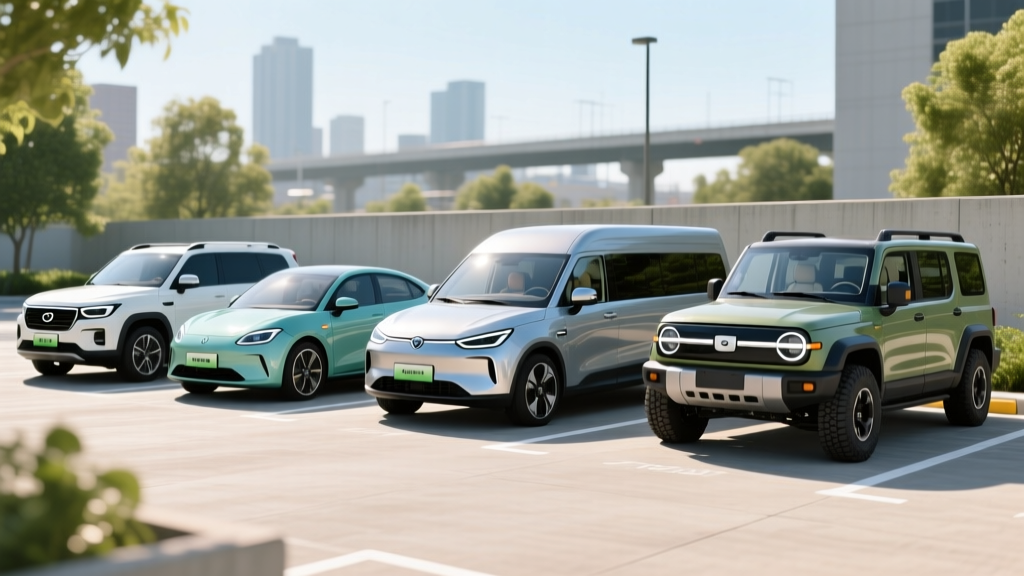
The phrase "group electric cars" covers several real-world scenarios, and the economics shift depending on which one applies to you:
- Multi-vehicle households: Two or three drivers replacing gas cars with EVs over a 1–3 year window, sharing a home charging setup.
- Small business fleets: Companies with 3–15 vehicles (service vans, commuter pools, delivery cars) evaluating EVs against ICE baselines.
- Community or co-op car-shares: Neighborhoods or housing complexes pooling 2–5 EVs with shared Level 2 infrastructure.
Each scenario shares a common constraint: charging infrastructure scales non-linearly. One Level 2 charger handles one car overnight. Two cars need either a dual-port charger, two separate circuits, or disciplined scheduling. Three or more cars on a single residential 200A panel may require a panel upgrade — a $2,000–$5,000 expense that catches many group buyers off guard.
Real Cost Breakdown: Group EV Ownership vs. Gas Fleets
Let's model a realistic scenario: a two-car household replacing a 2024 Honda CR-V AWD (28 MPG combined) and a 2023 Toyota Camry (32 MPG combined) with two 2026 EVs — a Hyundai Ioniq 5 SEL AWD and a Tesla Model Y Long Range AWD.
| Cost Category | 2 Gas Cars (CR-V + Camry) | 2 EVs (Ioniq 5 + Model Y) |
|---|---|---|
| Purchase Price (MSRP avg) | $72,500 | $96,400 |
| §30D Federal Tax Credit (both EVs eligible) | $0 | −$15,000 (if both buyers qualify) |
| Effective Purchase Price | $72,500 | $81,400 |
| Fuel/Energy (5 yrs, $3.40/gal gas, $0.14/kWh avg) | $23,400 | $7,350 |
| Maintenance (5 yrs) | $5,800 | $2,200 |
| Insurance (5 yrs, EV premium ~12% higher) | $14,000 | $15,680 |
| Home Charging Install (Level 2 × 2) | $0 | $2,400 |
| 5-Year Total | $115,700 | $109,030 |
The EV pair breaks even around year 3–4 and pulls ahead after that. The critical variable is tax credit eligibility: under current IRS §30D rules, each vehicle must meet battery sourcing and critical mineral requirements, the buyer's AGI must not exceed $150K (single) / $300K (joint), and the vehicle MSRP must stay under $55K (sedans) or $80K (SUVs/vans/trucks). If one EV's MSRP exceeds the cap or one buyer's income is too high, the savings narrow significantly.
Specs That Matter When Choosing Group Electric Cars
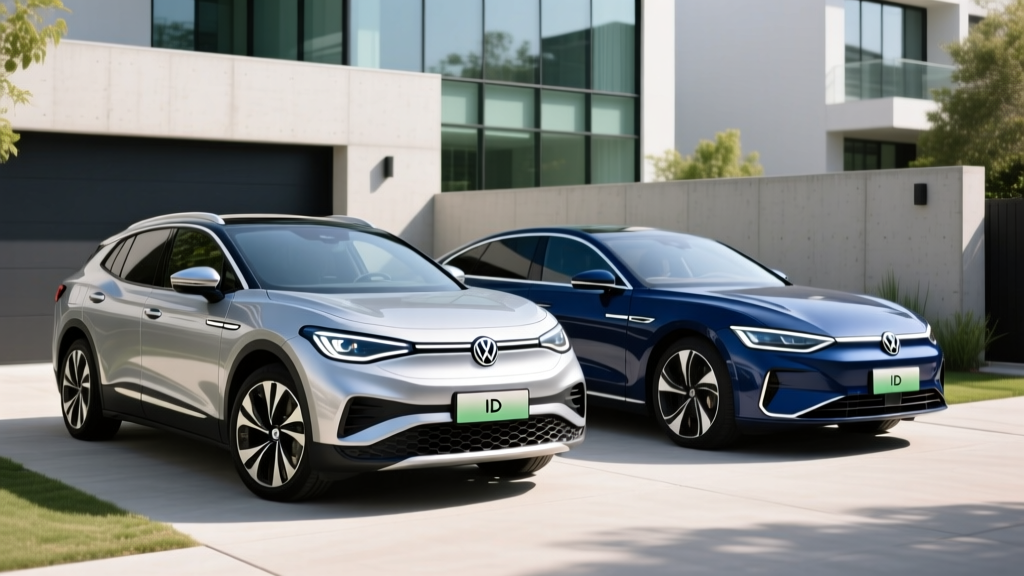
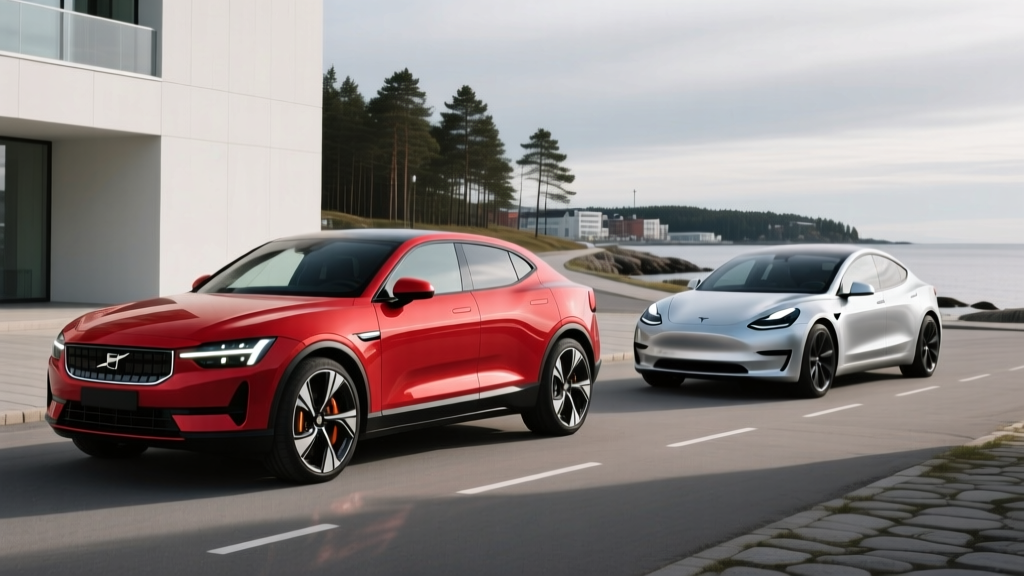
Not every EV suits a multi-vehicle household or fleet. Here's a side-by-side of four popular 2026 models that work well in group-buying scenarios, selected for range, charging speed, cargo practicality, and credit eligibility:
| Spec | Hyundai Ioniq 5 SEL AWD | Tesla Model Y LR AWD | Chevrolet Equinox EV LT | VW ID.4 Pro S AWD |
|---|---|---|---|---|
| EPA Range | 290 mi | 320 mi | 315 mi | 275 mi |
| Real-World Highway (~70 mph) | ~245 mi | ~275 mi | ~265 mi | ~235 mi |
| Battery (usable kWh) | 77.4 kWh (NMC) | 78.1 kWh (NMC) | 85 kWh (NMC) | 77 kWh (NMC) |
| Peak DC Fast Charge | 240 kW | 250 kW | 190 kW | 175 kW |
| 10–80% DC Charge Time | ~18 min | ~20 min | ~24 min | ~28 min |
| Level 2 Rate | 10.9 kW | 11.5 kW | 11.5 kW | 11 kW |
| 0–60 mph | 5.1 sec | 4.8 sec | 7.7 sec | 5.4 sec |
| Horsepower | 320 HP | 384 HP | 288 HP | 295 HP |
| Cargo Volume | 27.2 cu ft (rear up) | 30.2 cu ft (rear up) | 26.4 cu ft (rear up) | 30.3 cu ft (rear up) |
| Base MSRP | $47,400 | $48,990 | $33,000 | $45,290 |
| Battery/Powertrain Warranty | 10 yr / 100K mi | 8 yr / 120K mi | 8 yr / 100K mi | 8 yr / 100K mi |
Real-World Range Note: EPA estimates assume mixed driving at moderate temperatures. Expect 12–20% range reduction on sustained highway driving above 70 mph, and 20–35% loss in sub-freezing weather without preconditioning. For a group fleet, plan routes around the worst-case range (cold + highway), not the EPA sticker. Data from fueleconomy.gov and independent cold-weather testing.
Charging Infrastructure for Multiple EVs: What You Actually Need
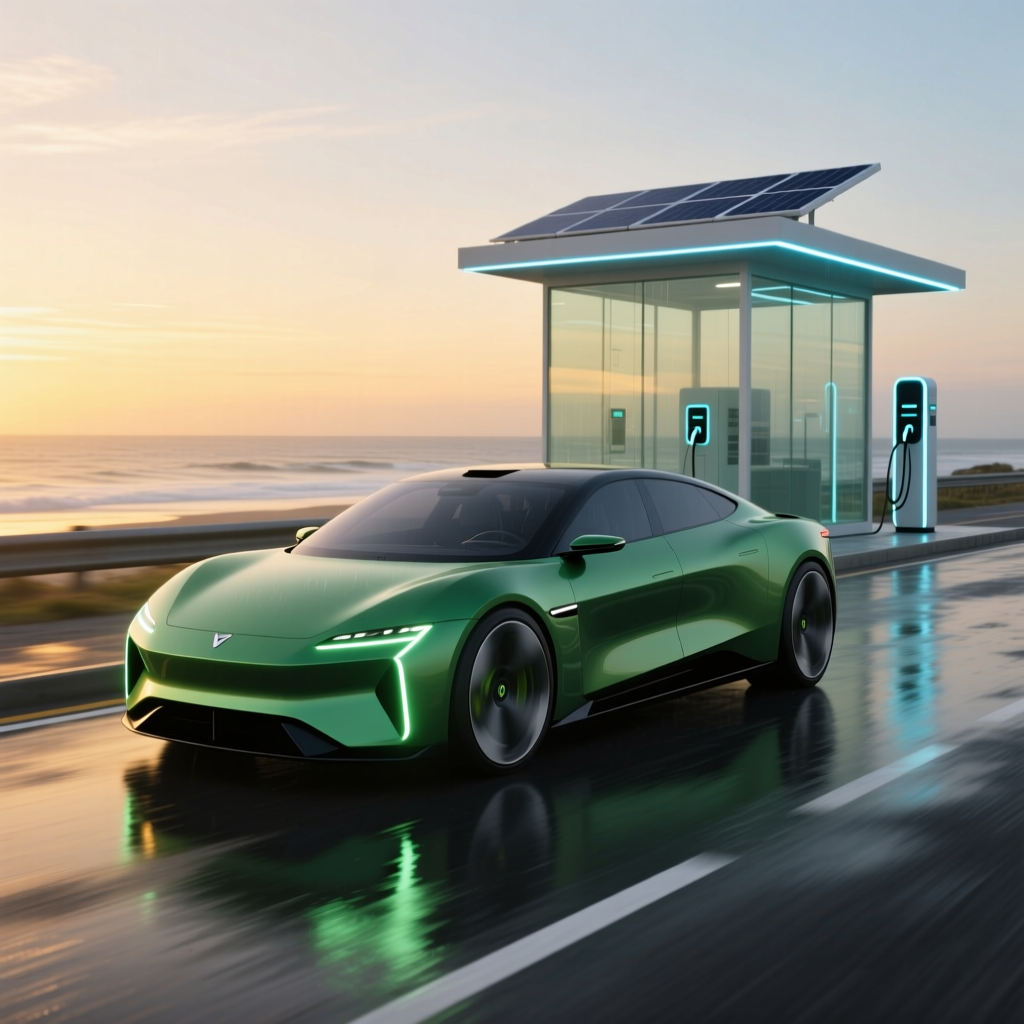
This is where group EV buying succeeds or fails. Here's the infrastructure reality:
| Level | Power (kW) | Miles Added/Hour | Multi-EV Notes |
|---|---|---|---|
| Level 1 (120V) | 1.4 kW | 3–5 mi/hr | Inadequate for daily use of 2+ EVs; only for overnight trickle on one car |
| Level 2 (240V, 40A) | 9.6 kW | 28–35 mi/hr | Minimum for one EV; two EVs need two circuits or a load-sharing dual-port charger |
| Level 2 (240V, 48A) | 11.5 kW | 35–44 mi/hr | Full overnight recovery for most EVs; requires 60A breaker |
| DC Fast Charge | 50–350 kW | 150–800+ mi/hr | Public only; not a substitute for home charging in a multi-EV household |
Electrical panel reality check: A typical 200A residential panel can support one 48A Level 2 charger (60A breaker) without issue. Two such chargers may exceed available headroom, especially if you're also running an electric dryer, range, and HVAC simultaneously. Solutions include:
- Load-sharing chargers (e.g., Wallbox Duo, Tesla Wall Connector with Power Sharing): two connectors on one circuit that dynamically split amperage. Cost: $700–$1,200 for hardware, plus install.
- Panel upgrade to 400A: $2,500–$5,000 depending on utility requirements. Necessary for 3+ EVs on one property.
- Scheduled charging via vehicle app: Set Car A to charge 10pm–2am and Car B to charge 2am–6am on one circuit. Free solution, but requires discipline.
Always have a licensed electrician evaluate your panel before purchasing multiple EVs. The cost of a panel upgrade is a real line item that doesn't appear in most EV buying guides.
Common Misconceptions About Buying Multiple EVs
| Myth | Fact |
|---|---|
| "We'll save $7,500 per car, no questions asked." | The §30D credit has MSRP caps ($80K for SUVs, $55K for sedans), buyer income caps ($300K joint AGI), and battery sourcing requirements. Each vehicle must independently qualify. Check the IRS qualified vehicles list before buying. |
| "Two EVs just need two chargers plugged into regular outlets." | Level 1 (120V) adds only 3–5 miles per hour. A 77 kWh battery from 20% would take 50+ hours on Level 1. Dedicated 240V circuits are mandatory for practical multi-EV ownership. |
| "EVs don't need maintenance, so costs are near zero." | EVs still need tire rotations (heavier vehicles wear tires faster — expect $800–$1,200/year for premium EV tires), cabin air filters, brake fluid checks, wiper fluid, and eventually coolant service. Budget ~$400–$600/year, not zero. |
| "Range is range — the EPA number is what we'll get." | EPA range is a laboratory estimate. Real-world highway driving at 70+ mph typically yields 80–88% of EPA. Cold weather (below 32°F) can reduce range by 20–35% without battery preconditioning. Plan your fleet around worst-case, not best-case. |
| "Insurance will be the same as our gas cars." | EV insurance premiums average 10–18% higher than comparable gas vehicles due to higher repair costs and battery replacement risk. Get quotes before purchasing. Multi-policy discounts can partially offset this. |
Decision Framework: Should Your Group Go All-EV, Mixed, or Hybrid?
Use This Framework to Decide
- If every driver has predictable daily routes under 150 miles round-trip AND you can install Level 2 charging at home/work → Go all-EV. The fuel and maintenance savings are decisive over 3–5 years.
- If one driver regularly exceeds 250 miles in a day (rural routes, frequent road trips) AND public DC charging is sparse in your area → Keep one gas or PHEV vehicle in the fleet for that driver; electrify the others.
- If you live in a region with sustained sub-20°F winters AND no garage parking (no preconditioning access) → Consider PHEVs for the longest-commute driver, or budget for 30% winter range loss and choose the largest-battery EV available.
- If your electrical panel is maxed out and a panel upgrade costs $4,000+ → Start with one EV and one PHEV. Add the second EV when you upgrade the panel or move.
- If your household AGI exceeds $300K (joint) or $150K (single) → You won't qualify for the §30D credit. Factor the full MSRP into your cost comparison. EVs may still win on fuel savings, but the break-even extends to year 5–6.
- If this is a business fleet → Investigate the §45W commercial clean vehicle credit separately. It has different eligibility rules and may cover vehicles that don't qualify under §30D. Consult a tax professional.
First-Time Group EV Buyer Checklist
Before signing for multiple EVs, work through these items in order:
- Electrical assessment: Have a licensed electrician evaluate your panel capacity for the number of Level 2 circuits you need. Get a written quote including any panel upgrade.
- Tax credit pre-check: Verify each vehicle on the fueleconomy.gov qualified list. Confirm each buyer's AGI is under the cap. Confirm MSRP compliance by vehicle class.
- Insurance quotes: Get quotes for each EV before purchase. Compare to your current gas car premiums. Factor the delta into your 5-year cost model.
- Charger selection: For 2 EVs, choose either a load-sharing dual-port charger or two separate Wall Connectors with power sharing. For 3+ EVs, plan a panel upgrade and dedicated circuits.
- Real-world range planning: Take the EPA range of each vehicle, multiply by 0.80 for highway driving or 0.70 for cold-weather highway driving. That's your planning number for trip logistics.
- Maintenance budget: Set aside $400–$600/year per EV for tires, cabin filters, and fluid checks. EVs aren't maintenance-free — they're maintenance-reduced.
- Charging network apps: Download and set up accounts with at least two DC fast-charging networks (e.g., Tesla Supercharger if NACS-equipped, Electrify America, EVgo) before your first road trip. Reliability varies by location.
Frequently Asked Questions
Can two people in the same household each claim the $7,500 EV tax credit?
Yes, but with conditions. The §30D credit is per taxpayer per vehicle, not per household. If two individuals (e.g., spouses filing jointly) each purchase a qualifying EV and their combined AGI is under $300K, both vehicles can qualify — provided each vehicle independently meets the battery sourcing, critical mineral, and MSRP cap requirements. If only one spouse is on the title, only that spouse's tax liability can use the credit. Starting in 2024, the credit can be transferred to the dealer at point of sale as an instant discount, which simplifies this — but the income and vehicle eligibility rules still apply.
What's the cheapest way to charge two EVs at home?
The lowest-cost approach is a single 240V/48A circuit with a load-sharing dual-port charger ($700–$1,200 hardware) and scheduled charging — Car A charges from 10pm–2am, Car B from 2am–6am. Total install cost: $800–$1,800 depending on conduit run length and local permit fees. This avoids a panel upgrade and works well if both cars don't need a full 0–100% charge every night. Most daily driving under 60 miles requires only 20–30 kWh of replenishment, which a shared 48A circuit handles easily in 4–6 hours total.
Are PHEVs better than BEVs for a multi-vehicle household?
It depends on the driver's pattern. A PHEV like the Toyota RAV4 Prime (42 mi electric-only, 38 MPG combined on gas) makes sense for the household member with the longest or most unpredictable commute, because it eliminates range risk entirely. For drivers with predictable sub-100-mile days and reliable home charging, a BEV delivers lower per-mile energy costs ($0.04–$0.06/mi vs. $0.10–$0.14/mi for gas) and near-zero drivetrain maintenance. A mixed fleet — one BEV + one PHEV — is a pragmatic choice for many two-car households in 2026.
How do I handle EV charging if I don't have a garage?
Outdoor-rated Level 2 chargers (NEMA 4 rated) are widely available and can be installed on an exterior wall or pedestal. The main challenges are cable management (you'll need a 20–25 ft cable to reach the charge port from a driveway-mounted charger) and winter charging efficiency (cold batteries charge slower and lose range faster). If you park on the street with no dedicated parking spot, home Level 2 charging isn't feasible — rely on workplace charging or public DC fast chargers, and choose an EV with fast DC charging capability (200+ kW peak) to minimize time spent charging.
What happens to my electricity bill with two EVs?
Assuming 15,000 combined miles per year at 3.5 miles/kWh (a reasonable fleet average), two EVs will consume roughly 4,285 kWh annually. At the US average residential rate of $0.16/kWh (as of early 2026), that's ~$686/year in additional electricity cost — replacing approximately $2,800 in gasoline. The net savings: roughly $2,100/year on energy alone. If your utility offers time-of-use (TOU) rates, charging overnight at off-peak rates ($0.08–$0.11/kWh in many areas) can cut the electricity cost to $340–$470/year, widening the savings further.