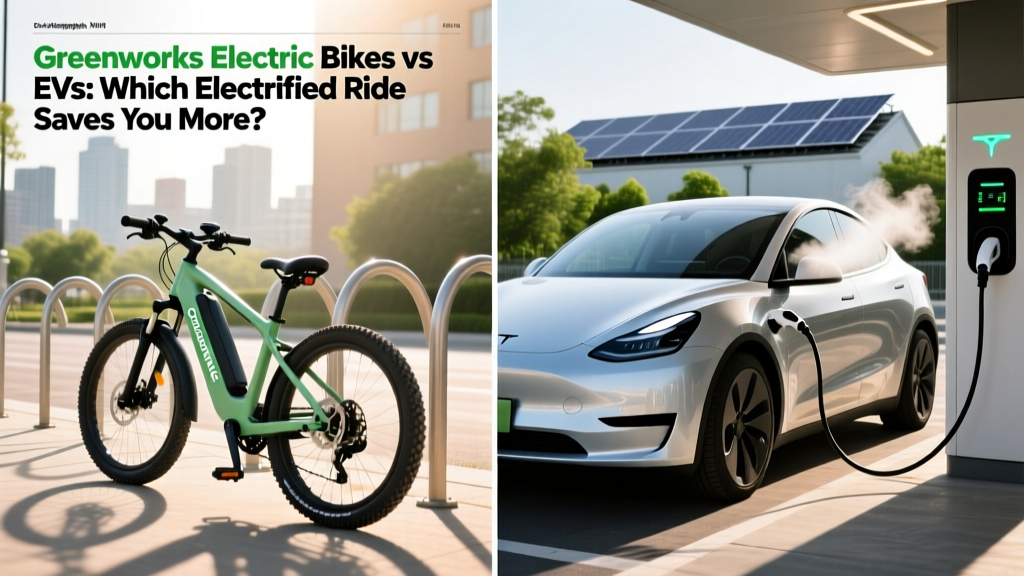
Electric mobility isn't one-size-fits-all. If you've been searching for Greenworks electric bikes and wondering whether an e-bike or a full electric vehicle makes more financial sense for your daily commute, the answer depends on three variables: trip distance, cargo needs, and weather tolerance. Here's the quick verdict before we break down the numbers.
Quick Answer: E-Bike vs EV
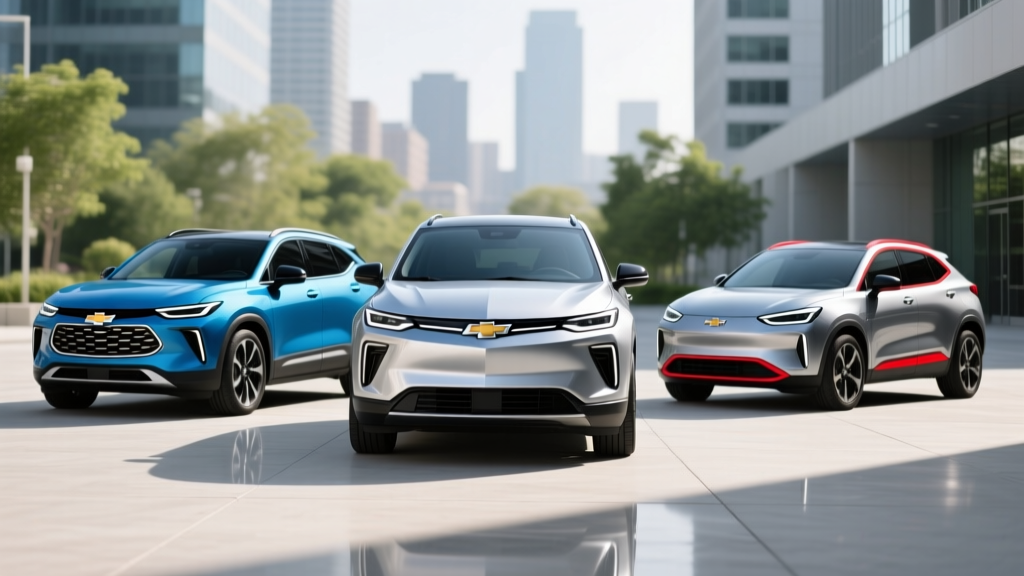
Greenworks electric bikes (typically 300–500W motors, 20–45 mile range, $800–$1,800 MSRP) are ideal for solo commutes under 15 miles each way in fair weather. A compact EV like the 2026 Chevrolet Equinox EV (EPA 319 mi, ~$33,000 base before credits) handles year-round commuting, highway speeds, passengers, and cargo. If your one-way commute exceeds 15 miles, requires highway travel, or you live in a cold/snowy climate, the EV is the practical choice. If you're covering 3–10 miles on bike-friendly roads, the e-bike saves dramatically on purchase price and operating cost.
Greenworks E-Bikes: What You're Actually Getting
Greenworks, primarily known for battery-powered outdoor power equipment, has entered the e-bike market with commuter-focused models. While Greenworks electric bikes aren't classified as motor vehicles by the NHTSA and therefore don't appear on fueleconomy.gov, their typical specifications place them in the Class 1 or Class 2 e-bike category:
- Motor: 300W–500W rear hub motor
- Battery: 36V–48V lithium-ion, typically 10–14 Ah (360–672 Wh usable capacity)
- Range: 20–45 miles (pedal-assist); 15–25 miles (throttle-only)
- Top speed: 20 mph (Class 2 throttle-assisted)
- Charge time: 3–6 hours on a standard 120V outlet
- MSRP: $800–$1,800 depending on model
These bikes are best understood as micromobility — filling the gap between a traditional bicycle and a car. They don't require registration, insurance, or a driver's license in most US states, and they can use bike lanes and paths where cars cannot.
Side-by-Side: Greenworks E-Bike vs Compact EV Cost Breakdown
The table below compares a representative Greenworks e-bike against a 2026 compact EV (using the Chevrolet Equinox EV 2LT as a benchmark) across a 5-year ownership horizon. We assume a 10-mile round-trip commute, 240 work days per year, plus weekend errands totaling 2,000 miles annually for the EV.
| Category | Greenworks E-Bike | 2026 Chevy Equinox EV 2LT |
|---|---|---|
| Purchase Price (MSRP) | $1,200 | $36,000 |
| Federal Tax Credit (§30D) | N/A (not a motor vehicle) | Up to $7,500 (see eligibility below) |
| Net Purchase Cost | $1,200 | ~$28,500 (if eligible) |
| Annual Fuel/Energy Cost | ~$18/yr (electricity) | ~$480/yr (electricity) |
| 5-Year Energy Cost | $90 | $2,400 |
| Insurance (Annual) | $0–$150 (optional) | ~$1,600/yr |
| 5-Year Insurance | $0–$750 | $8,000 |
| Maintenance (5-Year) | $300–$500 | $1,200–$1,800 |
| Registration/Taxes | $0 | ~$500–$1,500 (varies by state) |
| 5-Year Total Cost | $1,590–$2,540 | $40,600–$42,200 |
The takeaway: The e-bike costs roughly 95% less over five years. But this comparison only holds if the e-bike can actually replace the car trips you need to make. If you still need a car for weekends, road trips, or bad-weather days, you're paying for both — which changes the math entirely.
EV vs Gas Car vs E-Bike: When Each Makes Sense
Let's widen the lens to include a comparable gas car (2026 Honda Civic, EPA 35 MPG combined, ~$25,000 MSRP) so you can see where each option lands.
| Metric | Greenworks E-Bike | 2026 EV (Equinox) | 2026 Gas Car (Civic) |
|---|---|---|---|
| Energy/Fuel Cost per Mile | $0.004 | $0.04 | $0.11 |
| Annual Energy/Fuel | $18 | $192 | $528 |
| Insurance (Annual) | $0–$150 | $1,600 | $1,300 |
| Maintenance (Annual) | $60–$100 | $240–$360 | $400–$600 |
| Annual Total | $78–$268 | $2,032–$2,152 | $2,228–$2,428 |
| Weather Capability | Fair weather only | Year-round | Year-round |
| Cargo Capacity | Panniers/backpack (~2 cu ft) | ~26 cu ft (rear seats up) | ~14.8 cu ft trunk |
| Passenger Capacity | 1 (rider only) | 5 | 5 |
The EV costs only marginally less per year than the gas car when you factor in insurance (EV premiums remain higher on average). The real EV savings come from the §30D tax credit at purchase and lower long-term maintenance. The e-bike, meanwhile, operates at nearly zero marginal cost — but its limitations are severe.
Real-World Ownership Considerations
Specs on paper only tell part of the story. Here's what actually matters once you own either option.
Charging Access
E-bike: Charges on any standard 120V household outlet. You can charge at your desk, in your apartment, or at a coffee shop. No electrical work required. A full charge from empty takes 3–6 hours depending on battery capacity (Wh).
EV: Requires a dedicated 240V Level 2 home charger for practical daily use. Installation costs range from $500 (simple outlet near panel) to $2,500+ (panel upgrade, long conduit runs). If you live in an apartment or condo without charging access, you'll rely on public DC fast charging — which costs 2–4× more per kWh than home electricity and adds 20–40 minutes to your routine per session.
Climate and Weather
E-bike: Battery range drops 20–35% in temperatures below 40°F. Rain, snow, ice, and extreme heat make riding unsafe or uncomfortable for most commuters. If you live in Minneapolis, Chicago, or anywhere with real winters, an e-bike is a 6–8 month vehicle at best.
EV: Cold weather reduces EV range by 15–30% (the Equinox EV's EPA 319 miles may deliver 220–270 miles in sub-freezing highway driving). But the cabin stays warm, the vehicle is stable, and you're protected from the elements. EVs with heat pumps lose less range in cold than those using resistive heating.
Driving Patterns and Trip Length
If 90% of your trips are under 10 miles on roads with bike infrastructure, the e-bike is a legitimate car replacement. If you regularly drive 20+ miles, use highways, carry passengers, or haul groceries and gear, you need a car — and the question becomes EV vs gas, not e-bike vs car.
Federal Tax Credit: What Applies to What
A common misconception is that any electric vehicle purchase qualifies for the IRS §30D clean vehicle credit. Here's the reality:
§30D Credit Eligibility Checklist (2026 Rules)
- Vehicle type: Must be a four-wheeled motor vehicle with GVWR under 14,000 lbs — e-bikes do NOT qualify
- Battery capacity: Minimum 7 kWh (e-bike batteries are typically 0.36–0.67 kWh)
- MSRP cap: Vans/SUVs/pickups ≤ $80,000; sedans ≤ $55,000
- Buyer income cap: AGI ≤ $150K (single), $225K (head of household), $300K (joint)
- Battery sourcing: Critical minerals and battery components must meet phased domestic-content thresholds (check current-year IRS.gov for exact percentages)
- Point-of-sale transfer: Eligible buyers can apply the credit as a down-payment reduction at the dealer
Greenworks electric bikes may qualify for local e-bike incentive programs (some cities and states offer $300–$1,500 rebates), but these vary by jurisdiction and are separate from federal tax credits. Check your state and municipal transportation websites for current programs.
Common Misconceptions — Fact-Checked
| Myth | Fact |
|---|---|
| "E-bikes are just as green as EVs" | Both are zero tailpipe-emission, but upstream electricity generation matters. An e-bike uses ~0.01 kWh/mile vs an EV's ~0.28 kWh/mile — the e-bike is roughly 28× more energy-efficient per mile traveled. |
| "EVs need expensive battery replacements" | Modern EV batteries are warrantied for 8 years/100,000 miles (federal minimum). Data shows most EV batteries retain 85–92% capacity at 100K miles. Full replacement costs $8,000–$18,000 but is rare within the warranty period. |
| "I can commute by e-bike year-round anywhere" | Below 32°F, e-bike lithium-ion batteries lose significant output, and traction on ice is dangerous without studded tires. Most riders in northern climates switch to a car or transit for 3–5 months. |
| "EVs are always cheaper than gas cars" | Not upfront. The average EV transaction price in 2025 was ~$53,000 vs ~$47,000 for gas cars. Savings come over time through lower fuel/maintenance costs and tax credits — typically breaking even in 3–7 years depending on mileage. |
| "E-bikes don't need insurance" | Most states don't require it, but theft and crash liability are real. Homeowners/renters insurance may cover theft; dedicated e-bike insurance runs $100–$300/year and covers crash damage, liability, and theft. |
Decision Framework: Which Should You Buy?
Choose a Greenworks Electric Bike If:
- Your one-way commute is under 15 miles on roads with bike lanes or paths
- You live in a mild climate (rarely below 35°F, minimal ice/snow)
- You don't need to carry passengers or more than ~30 lbs of cargo
- You already own or have access to a car for longer trips and bad weather
- Your budget is under $2,000 and you want near-zero operating costs
- You have no access to EV home charging and don't want to rely on public chargers
Choose an Electric Vehicle If:
- Your commute exceeds 15 miles one way or includes highway driving
- You live in a region with cold winters, heavy rain, or extreme heat
- You regularly carry passengers, children, or significant cargo
- You need a single vehicle that handles all trips year-round
- You can install a Level 2 home charger (or have reliable workplace charging)
- You qualify for the §30D tax credit, reducing net cost by up to $7,500
Choose Both If:
- You're a two-vehicle household and can replace one gas car with an EV while adding an e-bike for short solo trips
- You want to minimize total household transportation cost — the EV handles 70% of miles, the e-bike handles 30%, and you eliminate one gas car entirely
First-Time Buyer Checklist: What to Verify Before You Purchase
Whether you're leaning toward a Greenworks electric bike or a full EV, run through these checks:
For E-Bike Buyers
- Measure your actual commute — use a mapping app to get the real distance, not your estimate. Add 20% for detours.
- Check local e-bike laws — Class 1/2/3 rules vary by state and city. Some bike paths ban throttle-equipped (Class 2) bikes.
- Verify battery replacement cost and availability — Greenworks batteries are proprietary. Confirm you can buy a replacement ($200–$400) when capacity degrades in 3–5 years.
- Test the route — ride it once before committing. Hills, traffic, and road surface matter more than distance.
For EV Buyers
- Get an electrician quote for Level 2 installation — before you buy the car. A 200-amp panel with space for a 50-amp breaker is the baseline. Older homes may need a $1,500–$3,000 panel upgrade.
- Check §30D eligibility — use the IRS clean vehicle credit tool and verify the specific VIN with your dealer. Battery sourcing requirements change annually.
- Compare real-world range to your longest regular trip — if your EPA-rated 319-mile EV delivers 240 miles in your winter highway conditions, does that cover your needs?
- Get insurance quotes before purchase — EV premiums average 15–25% higher than equivalent gas cars. This can erase fuel savings if you drive low annual miles.
Frequently Asked Questions
Can I use a Greenworks electric bike as my only vehicle?
Realistically, only if you live in a warm, flat city with excellent bike infrastructure, have a sub-10-mile commute, and rarely need to carry passengers or cargo. For most US commuters, an e-bike is a supplement to a car, not a replacement. According to NHTSA, e-bikes are not classified as motor vehicles, meaning they offer no crash protection, no airbags, and no structural safety cage.
How long do Greenworks e-bike batteries last?
Lithium-ion e-bike batteries typically retain 70–80% of original capacity after 500–800 full charge cycles. For a daily commuter charging once per day, that translates to roughly 2–3 years before noticeable range reduction. Replacement batteries cost $200–$400. Store the battery between 20–80% state of charge when not in use to maximize longevity.
Is an EV really cheaper than a gas car over 5 years?
It depends on your mileage, electricity rate, and whether you qualify for the §30D credit. At 15,000 miles/year with a $0.14/kWh home electricity rate, an EV saves roughly $800–$1,200/year in fuel vs a 28 MPG gas car. Add the $7,500 credit and reduced maintenance, and the EV typically breaks even in 4–6 years. Below 8,000 miles/year, the gas car often wins on total cost due to lower insurance and purchase price.
Do Greenworks electric bikes qualify for any tax incentives?
Not the federal §30D credit — that requires a four-wheeled vehicle with at least 7 kWh of battery capacity. However, some states and cities offer e-bike rebates (typically $300–$1,500). Denver, for example, has offered e-bike rebates up to $1,700 for income-qualified residents. Check your local transportation authority for current programs.
What's the real-world range of a Greenworks e-bike vs its advertised range?
Advertised ranges (often 40–45 miles) assume ideal conditions: flat terrain, 150-lb rider, moderate pedal-assist, 65°F, no wind. Real-world range on throttle-only with a 180-lb rider on mixed terrain typically lands at 50–65% of the sticker number — so expect 20–30 miles from a bike rated at 45 miles. Cold weather (below 40°F) reduces this further by 20–30%.