What Was the GM EV1 and Why Does It Matter in 2026?
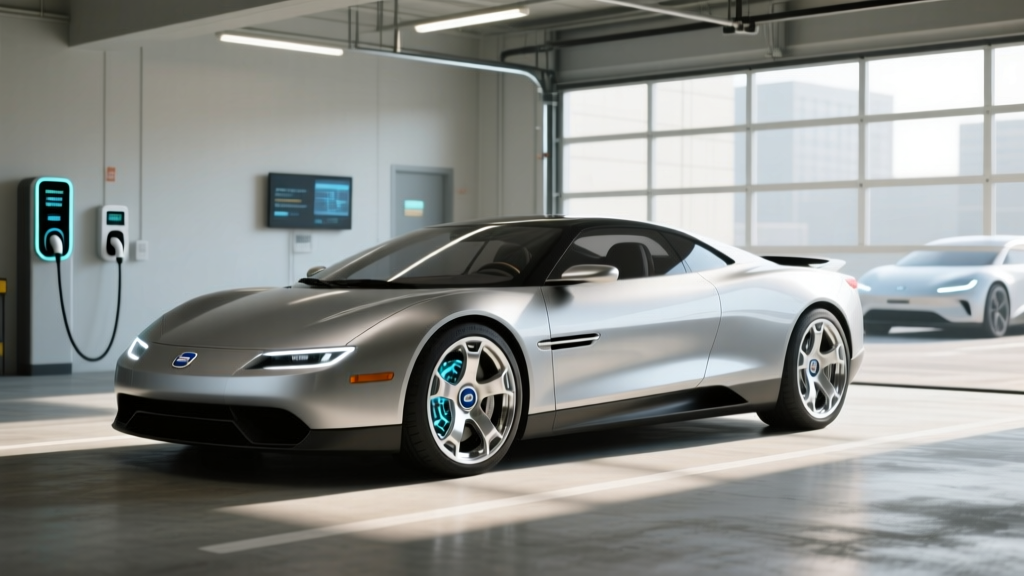
The GM EV1 was General Motors' first mass-produced electric vehicle, launched in 1996 as a two-seat coupe available only through lease in California and Arizona. It offered 60–80 miles of EPA-estimated range (Gen 1 lead-acid battery) and up to 142 miles with its later Gen 2 nickel-metal hydride (NiMH) pack. GM discontinued and recalled all units by 2003, making it unobtainable today. However, the EV1's engineering DNA — regenerative braking, aerodynamic efficiency, and dedicated EV platform design — directly influenced every modern GM electric vehicle, including the 2026 Chevrolet Equinox EV and Cadillac Lyriq. If you're researching the EV1 because you're considering a GM electric vehicle today, this guide connects the historical dots to current models, pricing, and ownership costs.
The GM EV1 by the Numbers: Original Specs vs. Modern GM EVs
To understand the EV1's significance — and how far GM's electric technology has come — here's a direct comparison between the original EV1 and two representative 2026 GM electric vehicles.
| Specification | GM EV1 Gen 2 (1999) | 2026 Chevy Equinox EV 3LT | 2026 Cadillac Lyriq AWD |
|---|---|---|---|
| EPA Range | ~142 mi (NiMH) | 319 mi | 314 mi |
| Battery Chemistry | Nickel-Metal Hydride | NMC (Ultium) | NMC (Ultium) |
| Battery Capacity | ~26.4 kWh | 85 kWh (usable) | 102 kWh (usable) |
| Peak DC Fast Charge | None (Level 1/2 only) | 150 kW | 190 kW |
| 10–80% DC Charge Time | N/A | ~30 min | ~28 min |
| Horsepower | 137 hp | 288 hp | 500 hp |
| 0–60 mph | ~8.0 sec | ~7.7 sec | 4.6 sec |
| Seats | 2 | 5 | 5 |
| MSRP (Base) | Lease only (~$349–$499/mo) | $43,900 | $58,590 |
| Federal Tax Credit (§30D) | N/A | Up to $7,500* | Up to $7,500* |
*§30D credit eligibility depends on buyer income, MSRP caps, battery sourcing, and point-of-sale transfer rules. Verify current-year rules at irs.gov.
What the EV1 Got Right — and Where It Fell Short
The EV1 was genuinely ahead of its time in several engineering areas that remain critical in 2026 EV design:
- Aerodynamics: A drag coefficient of 0.19 Cd — still among the lowest of any production car ever built. For reference, the 2026 Tesla Model 3 achieves 0.23 Cd.
- Regenerative braking: The EV1 pioneered the one-pedal-style regen that every modern EV uses to recapture kinetic energy and extend range.
- Dedicated EV platform: Unlike later compliance cars built on modified gas-car chassis, the EV1 was designed from the ground up as an electric vehicle — the same philosophy behind GM's current Ultium platform.
- Lightweight construction: Aluminum and composite body panels kept curb weight around 3,068 lbs — critical for maximizing limited battery capacity.
But the limitations were severe, and understanding them helps explain why modern EV adoption only took off once battery chemistry improved:
- Range: Even the upgraded NiMH pack delivered roughly 142 miles EPA — and real-world highway driving at 70 mph cut that to ~100–110 miles. Cold weather further reduced usable range by 20–30%.
- Charging infrastructure: The EV1 relied on GM's proprietary Magne Charge inductive paddle (Level 1 and Level 2). Public charging essentially didn't exist. There was no DC fast-charging capability whatsoever.
- Practicality: Two seats, minimal cargo space, and no fast-charging meant the EV1 was strictly a commuter car — not a family vehicle or road-trip option.
- Battery cost and longevity: The NiMH pack was expensive to manufacture, and lead-acid originals degraded significantly within 2–3 years.
EV Ownership Costs: Then vs. Now (and EV vs. Gas)
One of the most common questions from first-time EV buyers is whether the math actually works. Let's compare the operating economics of a modern GM electric vehicle against a comparable gas-powered crossover using concrete 2026 data.
| Cost Factor (5-Year / 75,000 mi) | 2026 Chevy Equinox EV 3LT | 2026 Chevy Equinox Gas (1.5T AWD) |
|---|---|---|
| Purchase Price (MSRP) | $43,900 | $33,400 |
| Federal Tax Credit (§30D) | –$7,500* | $0 |
| Effective Purchase Price | $36,400 | $33,400 |
| Fuel/Energy Cost (75k mi) | $3,750 (home L2, $0.14/kWh avg) | $9,375 (28 MPG avg, $3.50/gal) |
| Maintenance (5 yr) | $1,800 (tires, cabin filter, fluid top-off) | $4,200 (oil, brakes, filters, transmission) |
| Insurance (5 yr avg) | $9,500 | $7,800 |
| Estimated Depreciation | $16,000 | $13,500 |
| 5-Year Total Cost | $67,450 | $68,275 |
Energy costs based on national average residential electricity rate (~$0.14/kWh) and the Equinox EV's efficiency of ~3.3 mi/kWh. Gas costs assume $3.50/gal regular and 28 MPG combined per fueleconomy.gov. Insurance estimates from industry averages — actual premiums vary by state and driver profile.
The EV breaks roughly even over five years despite a higher sticker price, primarily due to fuel and maintenance savings. The equation shifts strongly in the EV's favor if you have access to off-peak electricity rates (as low as $0.06–$0.08/kWh in some utilities), solar panels, or state-level rebates stacking on top of the federal credit.
Real-World Ownership: What First-Time EV Buyers Must Know
The EV1 failed partly because GM couldn't solve the infrastructure problem. In 2026, that landscape is dramatically different — but it's not uniform. Here are the practical realities to evaluate before purchasing any EV:
Home Charging Access Is the Deciding Factor
If you can install a Level 2 (240V) home charger, daily EV ownership is effortless — you wake up every morning with a "full tank." A typical Level 2 installation (40-amp circuit, hardwired wall connector) costs $800–$2,200 including electrician labor and permits, depending on your panel capacity and wiring run. Homes with older 100-amp electrical panels may need a $1,500–$3,000 panel upgrade.
If you cannot charge at home (apartment, street parking, HOA restrictions), EV ownership becomes significantly more challenging. Public DC fast charging costs $0.30–$0.55/kWh — roughly 2–3x the cost of home charging — and adds time to your routine. Evaluate your local public charging network via PlugShare or the apps for Electrify America, EVgo, and ChargePoint before buying.
Cold Climate = Range Reduction
Lithium-ion batteries lose 15–30% of their EPA-estimated range in sustained sub-freezing temperatures. A 319-mile Equinox EV may realistically deliver 220–270 miles in January in Minnesota. Heat pumps (standard on many 2026 GM EVs) mitigate this loss by ~10% compared to resistive heating. If you live in a cold climate and regularly drive 200+ miles in winter, consider a model with 300+ EPA miles to maintain a comfortable buffer.
Charging Curves Matter More Than Peak kW
When manufacturers advertise "150 kW DC fast charging," that's the peak rate — typically available only between ~10–40% State of Charge (SoC). Above 80%, charging speed tapers significantly to protect battery longevity. A realistic metric is the 10–80% time: the Equinox EV achieves this in roughly 30 minutes, which translates to a practical 150–180 miles added during a half-hour highway rest stop.
Common EV Misconceptions — Addressed with Data
| Myth | Fact (with data) |
|---|---|
| "EV batteries need replacing every few years." | Modern NMC and LFP batteries are warrantied for 8 years/100,000 miles at 70%+ capacity retention (GM Ultium warranty). Real-world degradation data shows most packs retain 85–92% capacity at 100k miles. |
| "EVs are worse for the environment because of electricity generation." | Even on the US average grid mix, EVs produce ~50–60% fewer lifecycle emissions than comparable gas cars over 150k miles (Union of Concerned Scientists, 2025 update). As grids add renewables, that gap widens. |
| "You can't road-trip in an EV." | The US now has 50,000+ public DC fast chargers. GM EVs have full Tesla Supercharger (NACS) network access as of 2025. A 600-mile trip in an Equinox EV requires roughly 2 charging stops of ~25 minutes each. |
| "EVs are more expensive to own." | As shown in the cost table above, a modern EV reaches total-cost parity with a gas car within 4–5 years for average drivers — and sooner with low electricity rates or stacking incentives. |
| "The EV1 proved EVs don't work." | The EV1 proved that 1996 battery technology wasn't ready. Lithium-ion chemistry, which emerged commercially in the 2010s, solved the energy-density and cost problems that killed the EV1. |
Decision Framework: Is a Modern GM EV Right for You?
Choose a GM EV (Equinox EV, Blazer EV, Lyriq) if:
- You have access to Level 2 home charging (garage, driveway, or workplace)
- Your daily commute is under 80 miles round-trip (covers 95%+ of US commutes)
- You want to eliminate gas station visits and oil changes
- You qualify for the §30D federal tax credit (income ≤ $150k single / $300k joint; MSRP ≤ $55k sedans / $80k SUVs)
- You value a quiet, smooth, torque-heavy driving experience
Stick with a Gas Car or Consider a PHEV if:
- You cannot charge at home or at work reliably
- You regularly tow heavy loads (towing cuts EV range by 30–50%)
- You live in a rural area with sparse DC fast-charging infrastructure
- Your budget is strictly under $30,000 and you cannot wait for used-EV prices to drop
- You frequently drive 400+ miles in a single day in sub-zero weather
Consider a Plug-In Hybrid (PHEV) as a Bridge if:
- You want electric commuting (30–45 mi) but gas flexibility for road trips
- You're not ready to commit to full EV charging logistics
- You want lower upfront cost with partial fuel savings
From the EV1 to Ultium: The Direct Line to 2026 GM EVs
The EV1's legacy isn't nostalgia — it's engineering continuity. The lessons GM learned from the EV1's dedicated platform, regenerative braking, and thermal management directly fed into the Chevy Volt (2011), the Bolt EV (2017), and now the Ultium battery platform underpinning all current GM electric vehicles.
The Ultium platform uses NMC (nickel-manganese-cobalt) pouch cells arranged in a modular skateboard architecture, supporting 85–200+ kWh packs, 200–1,000 hp, and up to 450+ miles of range in larger applications. GM is also developing LFP (lithium iron phosphate) packs for lower-cost models, trading some energy density for longer cycle life and reduced reliance on cobalt — a chemistry trade-off the EV1's engineers could only dream about.
Frequently Asked Questions
Can I buy a GM EV1 today?
No. GM recalled and crushed nearly all 1,117 EV1 units by 2003. A handful survive in museums (e.g., the Smithsonian, Petersen Automotive Museum) and a few were reportedly donated to universities with deactivated drivetrains. None are street-legal or available for private purchase.
Why did GM cancel the EV1?
GM cited insufficient consumer demand, high production costs, the limitations of lead-acid and early NiMH batteries, and a lack of charging infrastructure. Industry analysts and the documentary Who Killed the Electric Car? (2006) also point to oil-industry pressure, California's weakening ZEV mandate, and GM's strategic focus on trucks and SUVs. The decision remains one of the most debated in automotive history.
How does the EV1's range compare to a 2026 EV?
The EV1 Gen 2's ~142-mile EPA range is roughly equivalent to a 2026 base Nissan LEAF or the shortest-range budget EVs. Mainstream 2026 EVs like the Equinox EV (319 mi), Tesla Model 3 (341 mi), and Hyundai Ioniq 5 (318 mi) deliver more than double the range, with DC fast charging the EV1 never had.
Do current GM EVs qualify for the federal tax credit?
Many do, but eligibility is nuanced. Under current IRS §30D rules, the vehicle must meet MSRP caps ($80,000 for SUVs, $55,000 for sedans), the buyer must fall under income limits ($150k single / $300k joint filing), and the battery must satisfy critical-mineral and component sourcing requirements that shift annually. The credit can now be transferred to the dealer at point of sale, reducing your purchase price directly. Always verify eligibility at irs.gov or with a tax professional before purchasing.
What should I budget for home charger installation?
A Level 2 (240V, 40-amp) home charger installation typically runs $800–$2,200 for the unit, wiring, electrician labor, and permit — assuming your electrical panel has spare capacity. If a panel upgrade from 100A to 200A is needed, add $1,500–$3,000. Some utilities offer rebates of $200–$500 for smart charger installations, offsetting part of the cost.