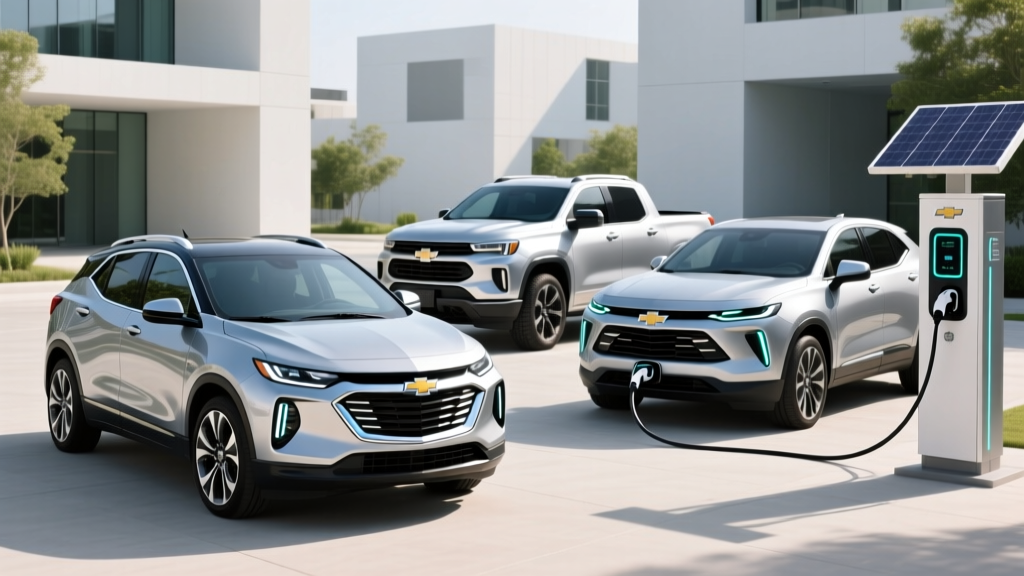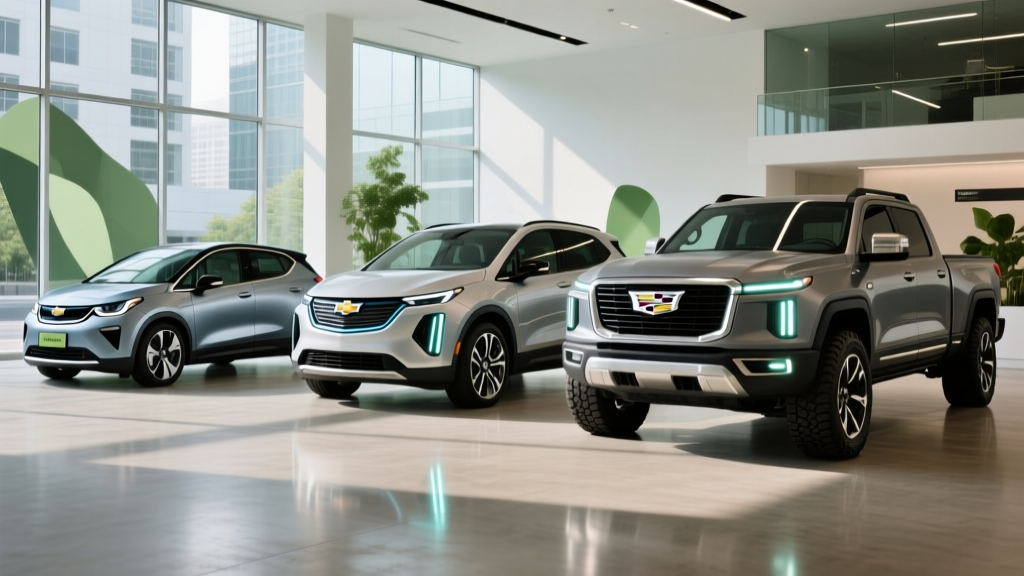
The short answer: General Motors currently sells seven core electric models across Chevrolet, Cadillac, and GMC for the 2026 model year. The most accessible entry point is the Chevrolet Equinox EV (EPA range up to 319 miles, starting around $33,600 before incentives). If you need truck capability, the Silverado EV and Sierra EV offer up to 460+ miles of range but start above $55,000. The Cadillac Lyriq and new Optiq serve luxury buyers, while the Blazer EV slots in as a sporty midsize crossover. All use GM's Ultium platform with NMC battery chemistry, and most qualify for some portion of the federal §30D tax credit — though exact eligibility depends on your income, the vehicle's MSRP, and battery-sourcing requirements that shift yearly.
The 2026 GM Electric Vehicle Lineup at a Glance
GM has committed more deeply to electrification than most legacy automakers, retiring the Bolt EV/EUV after 2023 and replacing it with a broader Ultium-based portfolio. Here is the current lineup with the specs that matter most to buyers:
| Model | Body Style | EPA Range | Battery (kWh usable) | Peak DC Charge | 0-60 mph | Starting MSRP |
|---|---|---|---|---|---|---|
| Chevrolet Equinox EV | Compact SUV | 285–319 mi | ~85 kWh (NMC) | ~150 kW | ~7.5 sec (FWD) | $33,600 |
| Chevrolet Blazer EV | Midsize SUV | 279–324 mi | ~85–102 kWh (NMC) | ~190 kW | ~4.0 sec (SS AWD) | $44,600 |
| Cadillac Optiq | Compact Luxury SUV | ~300 mi (est.) | ~85 kWh (NMC) | ~150 kW | ~5.5 sec (AWD) | $47,900 |
| Cadillac Lyriq | Midsize Luxury SUV | 303–314 mi | ~102 kWh (NMC) | ~190 kW | ~4.6 sec (AWD) | $58,590 |
| GMC Sierra EV | Full-Size Pickup | 390–460 mi | ~200 kWh (NMC, Denali) | ~350 kW | ~4.5 sec (Denali) | $55,400 |
| Chevrolet Silverado EV | Full-Size Pickup | 390–460 mi | ~200 kWh (NMC, RST) | ~350 kW | ~4.5 sec (RST) | $55,400 |
| Cadillac Celestiq | Ultra-Luxury Sedan | ~300 mi (est.) | ~111 kWh (NMC) | ~200 kW | ~3.8 sec | $340,000+ |
Sources: fueleconomy.gov, GM manufacturer spec sheets. Range varies by trim and drivetrain. Celestiq is a low-volume, built-to-order halo vehicle.
Real-World Range vs. the EPA Sticker
EPA range is a laboratory estimate — here's what to actually expect.
- Equinox EV (319 mi EPA): Expect ~260–280 mi on highway road trips at 70+ mph; ~220–240 mi in sub-freezing winter conditions.
- Blazer EV SS (279 mi EPA): Performance-oriented tuning and AWD drag reduce real-world highway range to ~230–250 mi.
- Lyriq (314 mi EPA): Owners report ~270–290 mi in mixed driving; the large 102 kWh pack provides a comfortable buffer.
- Silverado/Sierra EV (460 mi EPA on Max Range trims): Unladen highway driving yields ~370–400 mi; towing a 7,000-lb trailer can cut range by 40–50%, dropping to ~230–280 mi.
GM's Ultium batteries use NMC (nickel manganese cobalt) chemistry, which offers high energy density but is more sensitive to extreme cold than LFP. In testing, NMC packs typically lose 20–30% of range at 20°F compared to mild-weather performance. All GM EVs come with battery preconditioning for DC fast charging — enable it in the navigation system before arriving at a charger to warm the pack and hit peak charge rates.
Charging Speed and Infrastructure: What GM Owners Need to Know
One of the biggest shifts for GM EV buyers in 2025–2026: GM has adopted the NACS (North American Charging Standard) connector, meaning all new GM electric vehicles can charge natively at Tesla Superchargers using the included adapter (or with a native NACS port on later production runs). This dramatically expands the available fast-charging network.
| Charging Level | Power | Miles Added per Hour | Best For |
|---|---|---|---|
| Level 1 (120V household) | ~1.4 kW | 3–5 mi/hr | Overnight top-up, PHEVs |
| Level 2 (240V home/public) | 7.7–11.5 kW | 25–40 mi/hr | Daily home charging |
| DC Fast Charge (typical GM) | 150–190 kW peak | ~500–700 mi/hr (peak) | Road trips, 10–80% in ~25–30 min |
| DC Fast Charge (Silverado/Sierra Max) | Up to 350 kW peak | ~1,000+ mi/hr (peak) | 10–80% in ~20 min on capable chargers |
Charging curve reality check: The "peak" kW number is just that — a peak. On the Equinox EV, you might see 150 kW briefly between 10–30% state of charge, but the rate tapers significantly above 60% and drops to under 50 kW past 80%. A "10–80% in 25 minutes" claim assumes optimal battery temperature and a charger capable of delivering sustained power. Plan road-trip stops around 20–30 minutes each.
At home, a Level 2 charger on a 240V/48A circuit will fully replenish an Equinox EV overnight (~10 hours from near-empty). Installation costs typically range from $800–$2,500 depending on your electrical panel's capacity and the run distance from panel to garage. If your home has a 100A panel, expect a $1,500–$3,000 upgrade to 200A.
Cost Breakdown: GM Electric Vehicle vs. Gas Equivalent
The upfront price of a GM EV is higher than a comparable gas vehicle, but the total cost of ownership (TCO) can favor the EV over five years — especially with federal tax credits and lower fuel/maintenance costs.
| Cost Factor | Equinox EV 2LT ($38,600) | Equinox Gas (1.5T, ~$30,000) |
|---|---|---|
| Purchase price (after §30D credit) | $31,100 (if eligible for full $7,500) | $30,000 |
| Fuel/energy (5 yr, 15K mi/yr) | $3,750 (at $0.14/kWh home charging) | $9,375 (at $3.50/gal, 28 MPG combined) |
| Maintenance (5 yr) | ~$1,200 (tire rotation, cabin filter, fluid top-off) | ~$3,500 (oil changes, brakes, filters, transmission fluid) |
| Insurance (5 yr avg.) | ~$9,500 (EVs typically 15–20% more) | ~$8,000 |
| Estimated 5-yr depreciation | ~$15,500 | ~$13,500 |
| 5-Year Total Cost | ~$61,050 | ~$64,375 |
Assumptions: 75,000 total miles, home charging at national average residential rate (~$0.14/kWh, per EIA data), gas at $3.50/gal. Tax credit eligibility varies — see IRS §30D rules below. Depreciation estimates based on current EV market trends.
The EV wins on fuel and maintenance by roughly $7,900 over five years. The gas vehicle wins on insurance (~$1,500 less) and typically holds value slightly better in the current market. The tax credit, when available, essentially erases the purchase-price gap.
Federal Tax Credit Eligibility: §30D Rules for GM EVs
The federal EV tax credit under IRS §30D offers up to $7,500 for qualifying new EVs — and since 2024, buyers can transfer the credit to the dealer as a point-of-sale discount, reducing the purchase price directly rather than waiting for a tax refund. However, eligibility is not guaranteed. Here is the current framework:
- MSRP caps: SUVs, pickups, and vans must have an MSRP ≤ $80,000; sedans and other body styles ≤ $55,000.
- Buyer income limits: Modified AGI must not exceed $300,000 (joint), $225,000 (head of household), or $150,000 (single).
- Battery sourcing: Increasing percentages of critical minerals and battery components must be sourced from the U.S. or free-trade-agreement countries. This requirement tightens annually and has disqualified some trims/configurations in prior years.
- Final assembly: Vehicle must undergo final assembly in North America (all current GM EVs qualify).
- Point-of-sale transfer: You can assign the credit to the dealer at purchase for an immediate price reduction, even if your tax liability is less than $7,500.
Important: Battery-sourcing requirements have shifted year to year, and specific GM trims may or may not qualify for the full $7,500 in a given model year. Always verify current eligibility on the fueleconomy.gov tax credit page and consult a tax professional before relying on the credit in your purchase budget. Rules referenced here reflect the latest available IRS guidance — confirm at irs.gov.
Common Misconceptions About GM Electric Vehicles
| Myth | Fact |
|---|---|
| "GM EVs can't use Tesla Superchargers." | Since 2024, GM EVs can charge at Tesla Superchargers using a NACS adapter (included or available). GM is transitioning to native NACS ports on newer production. |
| "The battery will need replacing in 5 years." | GM warrants the Ultium battery for 8 years / 100,000 miles against defects and excessive capacity loss (typically below 70% retention). Real-world degradation for NMC packs averages ~1–2% per year with normal use. |
| "Electric vehicles cost more to insure." | Partially true — EV premiums average 15–20% higher than gas equivalents due to higher repair costs and battery replacement risk. However, the gap is narrowing as more collision shops gain EV certification. |
| "You need a 200A panel upgrade to charge at home." | Not always. Many homes with a 100A or 150A panel can support a 32A Level 2 charger (7.7 kW) without an upgrade. A licensed electrician should assess your panel's available capacity. |
| "Towing with an electric truck is pointless." | Towing does cut range dramatically (~40–50%), but the Silverado/Sierra EV's 400+ mi base range still provides 200+ mi while towing — viable for many boat and camper hauls with one charging stop. |
Decision Framework: Which GM Electric Vehicle Is Right for You?
Choose the Chevrolet Equinox EV if: You want the most affordable long-range GM EV for daily commuting and family duty. The 319-mile EPA range (LT3 trim) covers nearly all daily needs, and the ~$33,600 starting price (before credits) undercuts most competitors. Best for: suburban drivers with home charging access and road trips under 300 miles between stops.
Choose the Chevrolet Blazer EV if: You want a sportier midsize SUV with available performance (the SS trim does 0–60 in ~4 seconds) and don't mind slightly less range. The larger available battery (102 kWh) suits drivers who regularly carry passengers and cargo.
Choose the Cadillac Optiq if: You want luxury features and a premium interior at a price point below the Lyriq. At ~$47,900, it undercuts most luxury EV SUVs and still offers ~300 miles of range. Best for: luxury-curious buyers who don't need the Lyriq's extra interior volume.
Choose the Cadillac Lyriq if: You want a spacious, refined luxury SUV with a 33-inch LED dashboard display, Super Cruise hands-free driving capability, and the cachet of the Cadillac badge. The 102 kWh battery delivers confident real-world range.
Choose the Silverado EV or Sierra EV if: You need truck capability — towing (up to 10,000+ lbs on certain trims), a large bed, and the option for V2L (vehicle-to-load) power to run tools or a campsite. The 460-mile Max Range trims are expensive ($70,000+) but genuinely viable for daily driving and road trips. The Sierra EV targets a more premium buyer; the Silverado EV is the workhorse option.
Skip GM EVs and consider a PHEV instead if: You live in an apartment without charging access, regularly drive in areas with sparse charging infrastructure, or need 500+ miles of uninterrupted range for long rural routes. The Chevrolet Volt is discontinued, but competitors like the Toyota RAV4 Prime offer 42 miles of electric range plus a gas engine for total flexibility.
What First-Time GM EV Buyers Should Know Before Purchasing
1. Home charging is the single biggest ownership factor. If you can install a Level 2 charger at home, an EV transforms from a planning exercise into a "wake up with a full tank every morning" experience. If you cannot charge at home (apartment, street parking), rely on workplace charging or map your nearest reliable public chargers before buying. DC fast charging daily is more expensive and accelerates battery degradation.
2. Super Cruise is Level 2, not self-driving. GM's Super Cruise (available on the Lyriq, Sierra EV, and select trims) allows hands-free driving on over 750,000 miles of pre-mapped divided highways. However, it is an SAE Level 2 system — you must remain attentive, and the driver-monitoring camera will alert you if your eyes leave the road. It does not handle city streets, construction zones, or unmapped roads.
SAE Automation Level Reminder: Super Cruise, Tesla Autopilot, and Ford BlueCruise are all Level 2 — the driver is always responsible. Only Level 4 services (like Waymo robotaxis in limited cities) operate without a human driver. No consumer vehicle sold in 2026 is Level 3 or above for general use.
3. Battery warranty protects you. GM's Ultium battery warranty covers 8 years / 100,000 miles. If the pack degrades below the stated retention threshold (typically ~70% of original capacity), GM will repair or replace it. Out-of-warranty Ultium battery replacement costs are not yet well-established due to the platform's newness, but industry estimates for large NMC packs range from $12,000–$22,000 depending on kWh capacity.
4. Plan for cold weather if you live north of the Mason-Dixon line. NMC batteries lose efficiency in cold temperatures. Expect 20–30% range reduction at 20°F, mitigated somewhat by using the seat/steering wheel heaters (which draw far less energy than cabin air heating) and preconditioning the battery while still plugged in.
Frequently Asked Questions
Does GM still make the Chevrolet Bolt EV?
No. The Bolt EV and Bolt EUV were discontinued after the 2023 model year. GM has indicated a next-generation Bolt based on updated Ultium-derived architecture may return, but as of the 2026 model year, the Equinox EV is the most affordable GM electric vehicle available. A new Bolt is announced but not yet on sale — specs and pricing remain preliminary.
Can I charge a GM EV at any public charging station?
GM EVs produced in 2025–2026 come with a NACS charge port or a CCS-to-NACS adapter. With the adapter or native NACS port, you can use Tesla Superchargers, Electrify America, EVgo, ChargePoint, and most other networks. Confirm your specific model year's connector setup with your dealer.
How long does it take to charge a GM EV at home?
On a 240V Level 2 charger at 48A (~11.5 kW), expect ~9–11 hours for a full charge on the Equinox/Blazer EV and ~17–20 hours on the Silverado/Sierra EV with the larger 200 kWh pack. Most owners charge from 20–80% daily, which takes roughly 5–6 hours on Level 2 for crossover models.
Are GM Ultium batteries reliable?
The Ultium platform launched in 2022–2023 and is still early in its lifecycle. GM issued a recall on early Lyriq and Hummer EV packs for potential battery module defects, which were addressed via software updates and module replacements. Long-term reliability data (5+ years) is not yet available, but the 8-year/100,000-mile warranty provides substantial coverage. Check NHTSA.gov for the latest recall and complaint data on any specific model.
What is the cheapest GM electric vehicle in 2026?
The Chevrolet Equinox EV starts at approximately $33,600 for the base LT2 trim. After the maximum $7,500 federal tax credit (if eligible), the effective price drops to ~$26,100 — competitive with well-equipped gas compact SUVs. Verify current credit eligibility on fueleconomy.gov before purchasing.