Quick Answer: Which Genesis SUV EV Fits You?
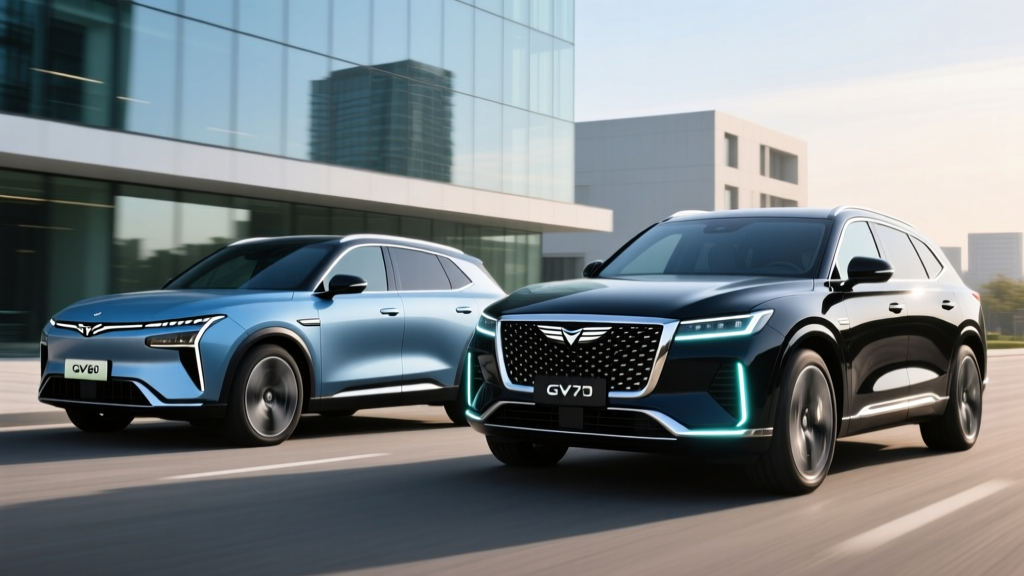
Genesis offers two battery-electric SUVs for 2026: the GV60 (dedicated EV platform, starts at $53,350) and the Electrified GV70 (converted gas platform, starts at $67,700). If you want the most range per dollar and the fastest charging, the GV60 Advanced (EPA 294 miles, 350 kW peak DC charging) is the stronger buy. If you need a midsize luxury SUV with more cargo room, a smoother ride, and don't mind paying a premium, the Electrified GV70 (EPA 236 miles, 350 kW peak) fills that role — but its shorter range and higher price demand a clear use-case justification.
The Genesis SUV EV Lineup at a Glance
Genesis entered the electric SUV market with two distinct approaches. The GV60 rides on Hyundai Motor Group's E-GMP (Electric Global Modular Platform), sharing its underpinnings with the Hyundai Ioniq 5 and Kia EV6. The Electrified GV70 adapts the existing gas-powered GV70 chassis to battery-electric duty. That engineering distinction matters: dedicated EV platforms typically deliver better packaging efficiency, faster charging architecture, and more interior space relative to footprint.
| Spec | GV60 Standard Range | GV60 Advanced (AWD) | GV60 Performance | Electrified GV70 |
|---|---|---|---|---|
| Battery (usable) | 77.4 kWh (NMC) | 77.4 kWh (NMC) | 77.4 kWh (NMC) | 77.4 kWh (NMC) |
| EPA Range | 264 mi | 294 mi | 248 mi | 236 mi |
| Combined MPGe | 103 MPGe | 95 MPGe | 85 MPGe | 87 MPGe |
| Horsepower | 225 hp (RWD) | 314 hp (AWD) | 429 hp (AWD) | 429 hp (AWD) |
| 0–60 mph | 7.0 sec | 5.0 sec | 3.9 sec | 4.2 sec |
| Peak DC Charge Rate | 350 kW | 350 kW | 350 kW | 350 kW |
| 10–80% DCFC Time | ~18 min | ~18 min | ~18 min | ~18 min |
| Level 2 Rate (kW) | 10.9 kW | 10.9 kW | 10.9 kW | 10.9 kW |
| Base MSRP | $53,350 | $61,350 | $70,350 | $67,700 |
| Cargo Volume | 24.0 cu ft / 54.7 cu ft | 24.0 cu ft / 54.7 cu ft | 24.0 cu ft / 54.7 cu ft | 28.7 cu ft / 56.9 cu ft |
| Battery Warranty | 10 yr / 100,000 mi | 10 yr / 100,000 mi | 10 yr / 100,000 mi | 10 yr / 100,000 mi |
Source: fueleconomy.gov, Genesis USA. Real-world highway range typically 10–15% below EPA; cold-weather range loss can reach 20–30% below 32°F.
Real-World Range: What the EPA Sticker Doesn't Tell You
GV60 Advanced: EPA 294 miles. Expect ~250–265 miles at sustained 75 mph highway speeds in mild weather. In freezing temperatures (below 32°F), plan for 200–220 miles between charges.
Electrified GV70: EPA 236 miles. Expect ~195–210 miles highway in mild weather. In freezing conditions, budget for 165–185 miles. The GV70's heavier curb weight (~4,850 lbs vs. ~4,500 lbs for the GV60 AWD) and less aerodynamic profile reduce efficiency noticeably at speed.
Both vehicles use the same 77.4 kWh NMC (nickel-manganese-cobalt) battery pack. NMC chemistry offers high energy density — critical for fitting 294 miles into the GV60's compact footprint — but it's more sensitive to extreme states of charge than LFP (lithium iron phosphate) chemistry. For longevity, Genesis recommends daily charging to 80% and reserving 100% charges for road trips. The battery management system includes a buffer (roughly 3–5 kWh above and below the usable window) to protect against deep discharge and overcharge degradation.
Preconditioning matters for fast-charging speed. Both models can precondition the battery when you set a DC fast-charger as your navigation destination, warming the pack to the optimal ~85–95°F window. Without preconditioning — especially in cold weather — peak charge rates may drop from 350 kW to under 100 kW until the battery warms, adding 15–25 minutes to your stop.
Charging Speeds and the 350 kW Reality
Both Genesis SUV EVs support an 800-volt architecture, enabling peak DC fast-charging rates up to 350 kW. That headline number requires important context:
| Level | Power | Miles Added per Hour | Typical Use Case |
|---|---|---|---|
| Level 1 (120V outlet) | ~1.4 kW | ~4–5 mi/hr | Emergency / overnight trickle |
| Level 2 (240V home) | 10.9 kW | ~33–37 mi/hr | Daily home charging (full charge in ~7–8 hrs) |
| DC Fast (50 kW station) | 50 kW | ~150 mi/hr | Older public chargers; 10–80% in ~55 min |
| DC Fast (150 kW station) | 150 kW (sustained) | ~400+ mi/hr | Common public chargers; 10–80% in ~28 min |
| DC Fast (350 kW station) | Peak 350 kW, sustained ~200 kW avg | ~600+ mi/hr (peak) | Ioniq/Electrify America 350 kW; 10–80% in ~18 min |
The 350 kW figure is a peak, not a sustained rate. In real-world testing on Electrify America and Ioniq 350 kW stalls, both vehicles typically ramp quickly to ~230–250 kW between 10–40% state of charge, then taper progressively. From 40–80%, the rate averages closer to 150–180 kW. Above 80%, charging slows dramatically — often below 50 kW — to protect the battery. This is why manufacturers quote 10–80% times rather than 0–100%: the final 20% can take as long as the first 70%.
For home Level 2 charging, both vehicles accept up to 10.9 kW on a 48-amp circuit (requiring a 60-amp breaker). A full overnight charge from 20% to 100% takes roughly 7–8 hours. Home installation for a hardwired Level 2 charger typically runs $500–$2,500 depending on panel proximity and local permit requirements. If your home has a 100-amp electrical panel, you may need a $1,500–$3,000 panel upgrade to 200 amps to safely support a 48-amp EV circuit alongside other household loads.
Cost of Ownership: Genesis SUV EV vs. Gas Equivalents
| Cost Category | GV60 Advanced (AWD) | Genesis GV70 2.5T (Gas) | BMW X3 xDrive30 (Gas) |
|---|---|---|---|
| Base MSRP | $61,350 | $48,350 | $50,200 |
| Fed. Tax Credit (§30D)* | $0–$3,750 | $0 | $0 |
| Effective Purchase Price | ~$57,600–$61,350 | $48,350 | $50,200 |
| Fuel / Electricity (5 yr) | ~$3,800 (home) / ~$6,200 (public mix) | ~$10,500 | ~$10,900 |
| Maintenance (5 yr) | ~$1,200 | ~$3,500 | ~$4,200 |
| Insurance (5 yr avg) | ~$12,500 | ~$9,800 | ~$10,400 |
| Est. 5-Year Depreciation | ~$28,000 | ~$21,000 | ~$23,500 |
| Total 5-Year Cost | ~$103,100–$106,850 | ~$93,150 | ~$99,200 |
*The §30D federal tax credit for 2026 depends on battery critical-mineral and component sourcing, buyer income caps ($150K single / $300K joint AGI), and MSRP caps ($80K for SUVs). The GV60 and Electrified GV70 may qualify for $3,750 (partial credit) or the full $7,500 depending on the model year's battery sourcing — verify current eligibility at IRS.gov or via the point-of-sale transfer at your dealer.
The EV wins on fuel and maintenance — home charging at $0.13/kWh nationally costs roughly $500–$600/year to drive 15,000 miles, versus $2,100+/year for gas at $3.50/gallon and 24 MPG combined. EVs eliminate oil changes, spark plugs, transmission fluid, and exhaust-system repairs. Regenerative braking significantly extends brake pad life (many EV owners see 80,000–100,000+ miles on original pads).
However, the EV loses ground on depreciation and insurance. EV depreciation has been steeper than comparable gas luxury SUVs in recent years, partly due to rapid technology iteration and Tesla-driven price wars compressing used-EV values. Insurance premiums for EVs run 15–30% higher on average due to repair complexity, expensive battery packs, and limited collision-repair networks trained on high-voltage systems.
Federal Tax Credit Eligibility: What Actually Applies
§30D Credit Requirements for 2026
- MSRP Cap: Vehicle base MSRP must not exceed $80,000 for SUVs (both GV60 and Electrified GV70 qualify on most trims)
- Buyer Income Cap: Modified AGI ≤ $150,000 (single) or ≤ $300,000 (married filing jointly)
- Battery Sourcing: $3,750 requires critical minerals sourced from US/FTA partners; additional $3,750 requires battery components manufactured/assembled in North America
- Assembly: Final assembly must occur in North America — both GV60 and Electrified GV70 are assembled in South Korea, which disqualifies them from the new-vehicle §30D credit as of current rules
- Point-of-Sale Transfer: If eligible, credit can be transferred to dealer at purchase for an immediate price reduction
This is a critical point many buyers miss: because Genesis manufactures both vehicles in South Korea (Ulsan and Asan plants), neither the GV60 nor the Electrified GV70 qualifies for the new-vehicle §30D federal tax credit under the final-assembly requirement. However, you may find them eligible as used EVs under the separate §25E credit (up to $4,000 or 30% of sale price, whichever is lower, for used EVs under $25,000) once they enter the pre-owned market. Some states also offer their own rebates regardless of assembly location — check your state energy office for current programs.
Genesis does offer complimentary charging partnerships (typically 3 years of complimentary 30-minute DC fast-charging sessions on Electrify America), which partially offsets the lost federal credit. Factor this into your purchase math.
Common Misconceptions About the Genesis SUV EVs
| Myth | Fact |
|---|---|
| "350 kW means it charges at 350 kW the entire session" | Peak rate occurs between ~10–40% SoC; sustained average is ~200 kW for a 10–80% session |
| "The Electrified GV70 is just as efficient as the GV60" | The GV70's converted platform adds weight (~350 lbs more) and worse aero, costing ~58 miles of EPA range vs. the GV60 Advanced |
| "I'll save $7,500 on taxes" | South Korean assembly disqualifies both from the new-vehicle §30D credit under current rules |
| "EVs need no maintenance" | Tires wear 15–20% faster due to instant torque and heavier weight; cabin air filters, brake fluid, coolant, and wiper systems still need service |
| "I can charge on any public charger" | Both use the CCS1 connector (2026 models). Tesla Superchargers require a NACS adapter — confirm your specific model year's adapter compatibility |
| "The battery will need expensive replacement" | Genesis warranties the battery for 10 years/100,000 miles against degradation below 70% capacity. Real-world NMC degradation averages ~10–15% over 100,000 miles based on fleet data from similar E-GMP vehicles |
Genesis SUV EV vs. Key Competitors
| Spec | GV60 Advanced | BMW iX xDrive50 | Mercedes EQB 350 | Cadillac Lyriq AWD |
|---|---|---|---|---|
| EPA Range | 294 mi | 324 mi | 225 mi | 307 mi |
| Battery | 77.4 kWh | 111.5 kWh | 66.5 kWh | 102 kWh |
| Peak DCFC | 350 kW | 200 kW | 100 kW | 190 kW |
| 10–80% Time | ~18 min | ~31 min | ~32 min | ~28 min |
| Base MSRP | $61,350 | $87,250 | $58,250 | $64,290 |
| 0–60 mph | 5.0 sec | 4.4 sec | 6.0 sec | 5.1 sec |
Sources: fueleconomy.gov, manufacturer specifications.
The GV60's standout advantage is its 350 kW charging capability — a class-leading spec shared only with its E-GMP siblings (Ioniq 5, Ioniq 6, EV6, EV9). The BMW iX offers more range and a larger battery but charges slower and costs $26,000 more. The EQB is cheaper but limited to 100 kW DC charging and a smaller battery. The Lyriq is a strong value competitor with more range, but its 190 kW peak charge rate means longer road-trip stops.
For the Electrified GV70, the competitive set includes the BMW iX, Audi Q8 e-tron (EPA 285 mi, $75,600), and Genesis's own upcoming dedicated-EV midsize SUV (announced, expected late 2026/2027 on the E-GMP platform — specs preliminary). If you're cross-shopping the Electrified GV70, the honest question is whether you should wait for a dedicated-EV Genesis midsize SUV rather than buying a converted-platform vehicle.
Who Should Buy Which — Decision Framework
Choose the GV60 Advanced if:
- You want the best range-to-price ratio in the Genesis EV lineup (294 mi for $61,350)
- Fastest possible DC charging is a priority for road trips (18-min 10–80% on a 350 kW stall)
- You're comfortable in a compact luxury crossover (similar footprint to a BMW X3 or Audi Q5)
- You have access to home Level 2 charging and drive under 250 miles daily
- The unique interior design (crystal sphere shifter, clamshell hood, facial recognition entry) appeals to you
Choose the GV60 Performance if:
- You want sports-car acceleration (3.9-sec 0–60) with Boost Mode and don't mind sacrificing 46 miles of range
- You value the electronic limited-slip differential and adaptive sport suspension
Choose the Electrified GV70 if:
- You need midsize SUV cargo volume (28.7 cu ft behind rear seats vs. 24.0 in the GV60)
- You prefer the GV70's more traditional luxury styling and quieter, heavier ride quality
- You mostly drive under 180 miles daily and road-trip infrequently
- You're a current GV70 owner wanting to go electric without relearning a new vehicle format
Wait or look elsewhere if:
- You need 300+ miles of real-world highway range — consider the BMW iX, Rivian R1S, or wait for Genesis's dedicated-EV midsize SUV
- You lack home charging access and rely solely on public infrastructure — the 236-mile Electrified GV70 will feel restrictive
- The §30D tax credit is essential to your budget — both Genesis EVs are disqualified by Korean assembly
- You live in extreme cold (frequent sub-20°F winters) and need maximum range buffer — expect 30%+ range loss, making the GV70's 236 EPA miles feel like ~165 in practice
What First-Time EV Buyers Should Know Before Purchase
Home charging is the ownership keystone. If you can install a Level 2 charger at home, EV ownership is dramatically more convenient than gas — you start every morning with a "full tank." Budget $500–$2,500 for a quality Level 2 unit (Emporia, ChargePoint, Wallbox) plus professional installation. If you rent or live in a condo without charging access, public-only EV ownership is viable but adds 2–4 hours per week of charging time and higher per-kWh costs ($0.35–$0.60/kWh at DC fast chargers vs. $0.13/kWh at home).
Plan for your worst-case drive, not your average commute. The average American drives 37 miles per day. But your EV needs to handle your longest regular trip. If you drive 250 miles to family every other month in winter, the Electrified GV70's real-world cold-weather range of ~165–185 miles means at least one charging stop. That's manageable with 18-minute DCFC capability — but only if chargers exist along your route. Use PlugShare or the Electrify America app to map your regular long trips before buying.
Tire costs are real. The GV60's instant 314 lb-ft of torque (AWD) and ~4,500-lb curb weight accelerate tire wear. Budget $1,200–$1,800 for a set of four premium all-season or EV-specific tires (Hankook iON, Michelin Pilot Sport EV) every 30,000–40,000 miles, versus 50,000+ miles on a lighter gas crossover.
Insurance quotes before you buy. Get actual quotes from your insurer for the specific VIN. Luxury EV insurance varies wildly — some carriers surcharge 30%+ for EVs, while others (like Lemonade or Root) offer competitive rates. The difference between your cheapest and most expensive quote can exceed $800/year.
Frequently Asked Questions
Does the Genesis GV60 qualify for the $7,500 federal tax credit?
No. Under current IRS §30D rules, the new-vehicle credit requires final assembly in North America. The GV60 is assembled in Ulsan, South Korea, which disqualifies it. The Electrified GV70 (assembled in Asan, South Korea) is also ineligible. State-level incentives may still apply — check your state's energy office.
Can I charge a Genesis EV at Tesla Superchargers?
The 2026 GV60 and Electrified GV70 use the CCS1 connector. Tesla's North American Charging Standard (NACS) is now available on some new EVs natively, but Genesis models currently require a CCS-to-NACS adapter for Supercharger access. Confirm adapter compatibility and warranty coverage with your dealer before relying on the Tesla network.
How long will the Genesis EV battery last?
Genesis warranties the high-voltage battery for 10 years or 100,000 miles against capacity loss below 70%. Real-world data from E-GMP platform vehicles (Ioniq 5, EV6) with the same 77.4 kWh NMC pack shows approximately 8–12% degradation at 100,000 miles under normal use. A full battery replacement outside warranty currently costs $15,000–$22,000 based on dealer estimates, though prices are expected to decline as cell costs drop.
Is the Electrified GV70 being discontinued?
Genesis has announced a transition to dedicated-EV platforms. The Electrified GV70 (a converted gas platform) is expected to be replaced by a next-generation midsize EV SUV on the E-GMP architecture, potentially arriving for the 2027–2028 model year. If you're considering the Electrified GV70, be aware that a more efficient, longer-range successor may be 12–24 months away.
What's the real cost to charge at home vs. gas?
At the US average residential electricity rate of ~$0.16/kWh (2025 EIA data), fully charging the 77.4 kWh battery costs about $12.38, yielding roughly 4.3–5.0 cents per mile in the GV60 Advanced. A gas GV70 2.5T at 24 MPG combined and $3.50/gallon costs about 14.6 cents per mile. Over 75,000 miles, that's roughly $3,150 in electricity vs. $10,950 in gas — a $7,800 fuel savings. Public DC fast charging at $0.48/kWh narrows the gap to ~$5,800 in electricity costs.
How does all-wheel drive affect range?
The GV60 Standard Range RWD achieves 264 EPA miles, while the Advanced AWD with the same battery gets 294 miles — paradoxically more, thanks to software and drivetrain efficiency tuning. The Performance AWD drops to 248 miles due to its more aggressive power delivery and sport-tuned calibration. In the Electrified GV70, AWD is standard and the 236-mile rating reflects its heavier curb weight and less aerodynamic shape.