Genesis GV60 vs BMW i4: Which Luxury Compact EV Should You Choose?
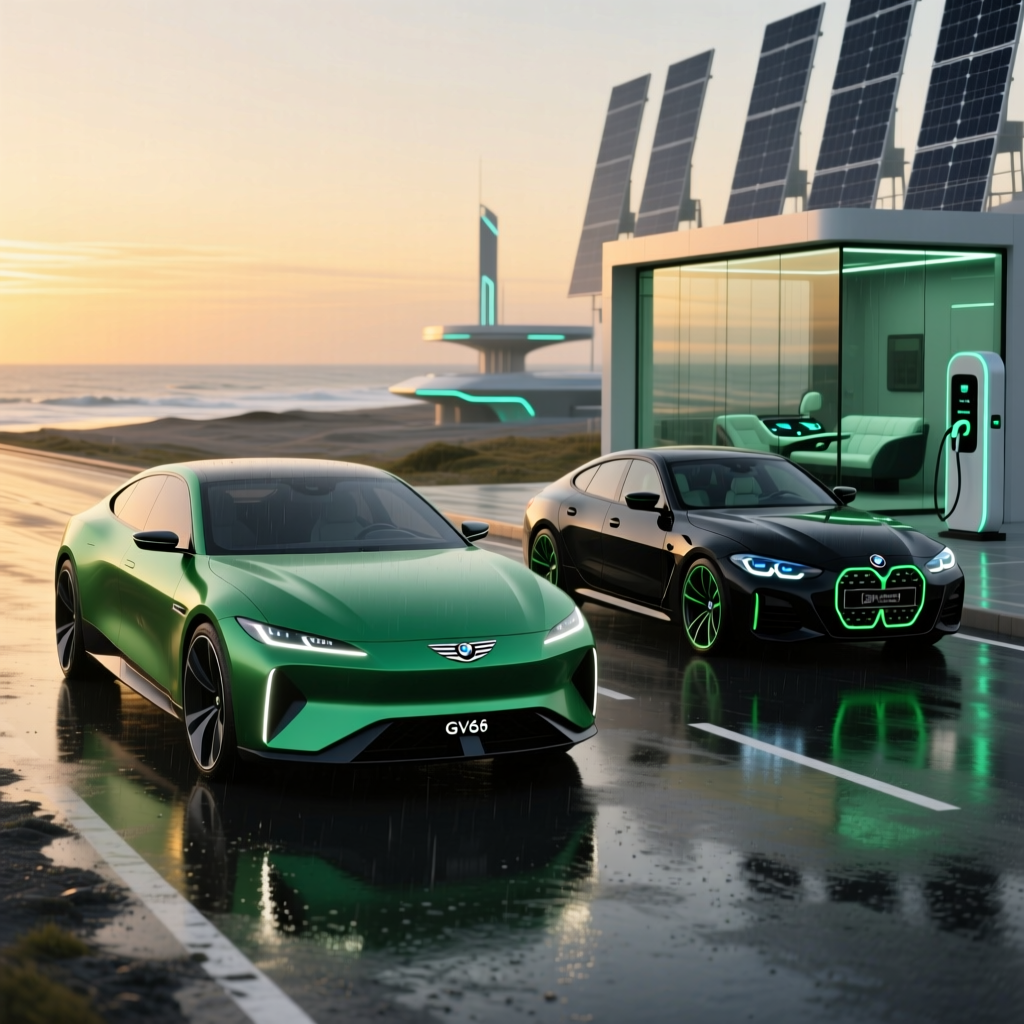
The luxury compact electric vehicle segment has become one of the most competitive spaces in the automotive world. Two standout contenders — the Genesis GV60 and the BMW i4 — each bring a distinct philosophy to the table. The GV60 arrives as a purpose-built electric crossover with cutting-edge design and a lavish interior, while the i4 takes the form of a sleek electric gran coupe that channels BMW's legendary driving dynamics into a zero-emission package.
If you're cross-shopping these two, you're likely weighing crossover practicality against sporty sedan aesthetics, and tech-forward luxury against traditional driving engagement. In this comprehensive comparison, we break down every critical category — from range and charging speed to interior space and warranty coverage — so you can make a confident decision. For more detailed analysis, check out our best luxury electric SUV rankings and our best electric sedan picks.
Overview: Two Visions of Electric Luxury
The Genesis GV60 is built on Hyundai Motor Group's dedicated Electric-Global Modular Platform (E-GMP), which it shares with the Hyundai Ioniq 5 and Kia EV6. However, the GV60 elevates that architecture with a uniquely luxurious execution. Its crossover body style provides a higher seating position, generous cargo space, and a cabin that blends minimalist modernism with high-end materials. Genesis offers the GV60 in Standard Range, Advanced, and Performance trims, with single-motor rear-wheel-drive and dual-motor all-wheel-drive configurations available.
The BMW i4 adapts BMW's proven CLAR platform — originally designed for internal combustion vehicles — to accommodate an electric powertrain. Available as the i4 eDrive40 (single-motor, rear-wheel drive) and the high-performance i4 M50 (dual-motor, all-wheel drive), the i4 wears a gran coupe body with a sloping roofline and a sporty stance. Inside, it features BMW's latest iDrive infotainment system on a dramatic curved display, blending technology with the brand's driver-focused heritage.
While both vehicles compete in the luxury compact EV space, they appeal to slightly different sensibilities. The GV60 targets buyers who want a futuristic, feature-rich crossover with standout design. The i4 attracts driving enthusiasts who want an electric vehicle that still feels like a BMW at heart. Explore our full Genesis GV60 review and full BMW i4 review for deeper dives into each model individually.
Side-by-Side Specifications Comparison
| Specification | Genesis GV60 (Advanced AWD) | BMW i4 (eDrive40) |
|---|---|---|
| Body Style | Compact Crossover SUV | Gran Coupe (Liftback) |
| Drivetrain | Dual-Motor AWD | Single-Motor RWD |
| Horsepower | 314 hp | 335 hp |
| Torque | 446 lb-ft | 317 lb-ft |
| 0–60 mph | ~5.3 seconds | ~5.5 seconds |
| Battery Capacity (Usable) | 77.4 kWh | 81.5 kWh |
| EPA-Estimated Range | 248 miles | 301 miles |
| Max DC Fast Charging | 233 kW (800V) | 205 kW (400V) |
| 10–80% Charge Time (DC) | ~18 minutes | ~31 minutes |
| Cargo Volume (Behind Rear Seats) | 24.0 cu ft | 16.6 cu ft |
| Cargo Volume (Seats Folded) | 54.7 cu ft | 45.6 cu ft |
| Wheelbase | 114.2 in | 112.4 in |
| Starting MSRP (Approx.) | ~$52,000 | ~$55,000 |
| Basic Warranty | 5 years / 60,000 miles | 4 years / 50,000 miles |
| Battery Warranty | 10 years / 100,000 miles | 8 years / 80,000 miles |
Note: Specifications reflect commonly equipped trims. Exact figures vary by configuration and optional equipment. Always consult the manufacturer for the latest data.
Range and Efficiency: The BMW i4 Goes the Distance
Range anxiety remains one of the top concerns for EV shoppers, and in this comparison, the BMW i4 holds a clear advantage. The i4 eDrive40, with its single rear motor and 81.5 kWh usable battery capacity, achieves an EPA-estimated range of approximately 301 miles on a full charge. That figure places the i4 among the more efficient luxury electric vehicles in its class, and real-world highway testing by independent reviewers has shown results close to that EPA number under moderate driving conditions.
The Genesis GV60 Advanced AWD, with its dual-motor setup and 77.4 kWh battery, delivers an EPA-estimated 248 miles of range. Opting for the Standard Range RWD variant pushes that number slightly higher, but the AWD models — which most luxury buyers prefer — sit below the 260-mile mark. The GV60's heavier crossover body and the energy demands of all-wheel drive contribute to this gap.
In terms of efficiency measured in MPGe (miles per gallon equivalent), the i4 eDrive40 typically achieves around 97 MPGe combined, while the GV60 Advanced AWD lands near 90 MPGe combined. If daily commuting and longer road trips are priorities, the i4's range advantage is meaningful. That said, the GV60's range is more than adequate for most daily driving needs, and its charging speed — which we'll cover next — helps mitigate the deficit on longer journeys.
For a broader look at range champions, see our longest-range electric vehicles rankings.
Charging Speed: Genesis GV60's 800-Volt Advantage
This is where the Genesis GV60 strikes back decisively. Thanks to its 800-volt electrical architecture, the GV60 supports DC fast charging at up to 233 kW. Under ideal conditions at a compatible 350 kW charger (such as Electrify America stations), the GV60 can charge from 10% to 80% in approximately 18 minutes. That's remarkably quick and among the fastest charging times available in any luxury EV at this price point.
The BMW i4, by contrast, uses a conventional 400-volt architecture with a maximum DC fast-charging rate of 205 kW. A 10–80% charge takes roughly 31 minutes under optimal conditions. While that's respectable and on par with many competitors, it's notably slower than the GV60's blistering pace.
Both vehicles support Level 2 AC home charging at 11 kW, meaning a full overnight charge is easily achievable with a properly installed home wallbox. The GV60 also supports vehicle-to-load (V2L) functionality, allowing owners to power external devices — a handy feature for camping or emergency use that the i4 does not offer.
For road-trippers who frequently rely on public DC fast chargers, the GV60's 800-volt system is a tangible, time-saving benefit. If you mostly charge at home and only occasionally fast-charge on the go, the i4's slower speed is less of a concern. Browse our fastest-charging EVs list to see how these models stack up against the broader market.
Performance and Driving Dynamics: Sport vs. Serenity
Performance is where the philosophies of these two vehicles diverge most sharply. The BMW i4 was engineered to deliver the kind of engaging, responsive driving experience that has defined the brand for decades. Its low center of gravity, rear-biased weight distribution (in eDrive40 form), and precisely tuned adaptive suspension give it a planted, athletic feel through corners. The steering is communicative, and the chassis strikes an impressive balance between ride comfort and sportiness. The i4 M50 variant cranks things up significantly with 536 horsepower and a 0–60 mph time of approximately 3.7 seconds, placing it in genuine sports car territory.
The Genesis GV60 takes a different approach. Its Performance AWD trim offers a Boost mode that temporarily unlocks 429 horsepower and 446 lb-ft of torque, dropping the 0–60 mph time to around 4.0 seconds. That's genuinely quick, and the instant torque delivery from its dual motors makes the GV60 feel effortlessly rapid in everyday driving. However, the GV60's steering is less communicative than the BMW's, and its taller crossover body means more body roll through aggressive cornering.
Ride quality is a strong suit for both vehicles. The GV60's E-GMP platform delivers a smooth, well-damped ride that isolates occupants from road imperfections effectively. The i4's adaptive dampers (available on higher trims) allow drivers to toggle between comfort and sport settings, giving it a broader range of personality. If you prioritize driving engagement and the thrill of a well-sorted chassis, the i4 is the clear winner. If you prefer effortless acceleration with a comfortable, serene ride, the GV60 delivers beautifully.
Interior Space, Comfort, and Cargo Practicality
Interior space is one of the most significant differentiators between these two vehicles, and it largely comes down to body style. The Genesis GV60, as a compact crossover, offers a higher seating position that many buyers prefer for visibility and ease of entry. Its flat floor — a benefit of the dedicated EV platform — creates a spacious, airy cabin with generous rear-seat legroom. The 114.2-inch wheelbase translates to comfortable accommodations for four adults, and the rear seats recline slightly for added comfort on longer trips.
Cargo capacity is a GV60 stronghold. With 24.0 cubic feet behind the rear seats and 54.7 cubic feet with the seats folded, it offers practicality that the i4 simply can't match. A front trunk (frunk) adds a small amount of additional storage for charging cables or a small bag.
The BMW i4's gran coupe profile means a lower, sleeker roofline that compromises rear headroom somewhat. Taller passengers may find the back seat less accommodating than the GV60's. Cargo volume stands at 16.6 cubic feet behind the rear seats and 45.6 cubic feet with them folded — adequate for a sporty liftback, but noticeably less than the GV60. The i4 also lacks a frunk entirely.
In terms of material quality and cabin ambiance, both vehicles impress. The GV60 features a distinctive rotating crystal shifter, open-pore wood or aluminum trim options, and available Nappa leather with quilted stitching. The i4 offers BMW's typical high-grade materials, with options for Vernasca or Merino leather, aluminum mesh trim, and a panoramic glass roof. Both cabins are well-insulated from wind and road noise, though independent testing has shown the GV60 to be marginally quieter at highway speeds.
Technology and Infotainment
Both the Genesis GV60 and BMW i4 are packed with advanced technology, but they take distinctly different approaches to the user experience.
The Genesis GV60 features a dual-screen setup with a 12.3-inch digital instrument cluster and a 12.3-inch touchscreen housed in a single curved panel. The system supports wireless Apple CarPlay and Android Auto, and it includes Genesis Connected Services with remote features via a smartphone app. The GV60 also offers a head-up display with augmented reality capability, a fingerprint authentication system that can save driver profiles, and an available Digital Key that lets you use your smartphone as a key. A 17-speaker Bang & Olufsen audio system is available on higher trims, delivering concert-hall sound quality.
The BMW i4 runs BMW's iDrive 8 system on a striking curved display that combines a 12.3-inch instrument cluster with a 14.9-inch touchscreen. The system is powerful, visually impressive, and features BMW's Intelligent Personal Assistant voice control. Wireless Apple CarPlay and Android Auto are standard, and the available Harman Kardon surround sound system is excellent. However, iDrive 8 has drawn criticism from some reviewers for burying climate controls within the touchscreen rather than providing physical buttons — a common complaint among traditional BMW fans.
On the driver assistance front, both vehicles come well-equipped. The GV60 includes Genesis Active Safety Control with features like adaptive cruise control with stop-and-go, lane-keeping assist, blind-spot monitoring, and highway driving assist. The i4 offers BMW's Active Driving Assistant with similar capabilities, plus an available Parking Assistant Plus with a 3D surround-view camera and remote-controlled parking. Both vehicles offer over-the-air (OTA) software updates to keep systems current without dealer visits.
If you value cutting-edge novelty features like the crystal shifter and fingerprint authentication, the GV60 feels more futuristic. If you prefer a proven, robust infotainment ecosystem with deep customization, the i4's iDrive system is hard to beat. For more tech-focused comparisons, visit our best EV infotainment systems guide.
Pricing and Warranty: Value That Matters
Pricing in the luxury EV segment is always a nuanced topic because options and packages can significantly alter the final transaction price. As a baseline, the Genesis GV60 starts at approximately $52,000 for the Standard Range RWD model, with the popular Advanced AWD trim landing around $60,000 and the Performance AWD approaching $65,000.
The BMW i4 eDrive40 starts around $55,000, while the high-performance i4 M50 begins near $70,000. BMW's options structure — which packages many desirable features into premium tiers — can push a well-equipped i4 well past $65,000 quickly.
Where Genesis pulls ahead decisively is in warranty coverage. The GV60 comes with a 5-year/60,000-mile basic warranty, a 10-year/100,000-mile powertrain warranty, and a 10-year/100,000-mile battery warranty. Genesis also includes complimentary scheduled maintenance for three years or 36,000 miles and offers a generous complimentary charging credit with Electrify America.
BMW provides a 4-year/50,000-mile basic warranty and an 8-year/80,000-mile battery warranty. While adequate, these terms are noticeably shorter than Genesis's coverage. BMW does include some complimentary maintenance, but the overall ownership safety net is more generous with Genesis.
When factoring in the GV60's lower starting price, richer standard equipment list, and substantially better warranty coverage, it presents a compelling value proposition. The i4 justifies its premium with brand cachet and driving dynamics, but on paper, the GV60 delivers more for the money. Check our best EVs under $60,000 list for more value-focused picks.
The Verdict: Which Luxury Compact EV Is Right for You?
Choosing between the Genesis GV60 and the BMW i4 ultimately comes down to your priorities and lifestyle.
Choose the Genesis GV60 if you:
- Prefer a crossover seating position with superior cargo space and rear-seat room
- Want the fastest possible DC charging speeds for road trips
- Value industry-leading warranty coverage and included maintenance
- Appreciate futuristic design and unique technology features like the crystal shifter and V2L capability
- Want a luxurious, feature-rich EV at a relatively competitive price
Choose the BMW i4 if you:
- Prioritize maximum driving range for long commutes and road trips
- Want engaging, sporty driving dynamics and responsive handling
- Prefer the sleek, low-slung aesthetic of a gran coupe
- Value BMW's brand prestige and the proven iDrive infotainment ecosystem
- Are interested in the high-performance M50 variant for sports-car-level acceleration
Both vehicles are excellent choices that represent the best of what the luxury compact EV segment has to offer. The GV60 is the smarter, more practical, and better-value pick for most buyers, while the i4 is the driver's choice for those who refuse to compromise on engagement. Whichever you select, you're getting a refined, well-built electric vehicle that should serve you well for years to come.
Ready to explore more options? Browse our complete electric vehicle buying guide and our best luxury electric SUV rankings for additional recommendations.
Frequently Asked Questions
Which has better range: the Genesis GV60 or the BMW i4?
The BMW i4 eDrive40 offers significantly better range, with an EPA-estimated 301 miles compared to the Genesis GV60 Advanced AWD's 248 miles. The i4's more efficient single-motor powertrain and larger usable battery capacity contribute to this advantage. If maximum range is your top priority, the i4 is the clear winner in this matchup.
Does the Genesis GV60 charge faster than the BMW i4?
Yes, the GV60 charges considerably faster thanks to its 800-volt architecture. It can charge from 10% to 80% in approximately 18 minutes on a compatible 350 kW DC fast charger, while the i4 (limited to 400-volt charging) takes around 31 minutes for the same interval. For frequent road-trippers, the GV60's speed advantage is substantial and can save meaningful time on long journeys.
Is the BMW i4 more fun to drive than the Genesis GV60?
Most automotive reviewers and independent test data agree that the BMW i4 delivers a more engaging driving experience. Its lower center of gravity, rear-biased weight distribution, precise steering, and well-tuned chassis give it a sportier character. The available i4 M50 variant takes performance to another level entirely. The GV60 is quick and comfortable but prioritizes serenity over sportiness, making the i4 the better pick for driving enthusiasts.
Which offers better warranty coverage: Genesis GV60 or BMW i4?
The Genesis GV60 provides significantly better warranty coverage. It includes a 5-year/60,000-mile basic warranty and a 10-year/100,000-mile battery warranty, compared to the BMW i4's 4-year/50,000-mile basic warranty and 8-year/80,000-mile battery warranty. Genesis also includes three years of complimentary scheduled maintenance, making the GV60 the more worry-free ownership proposition over the long term.