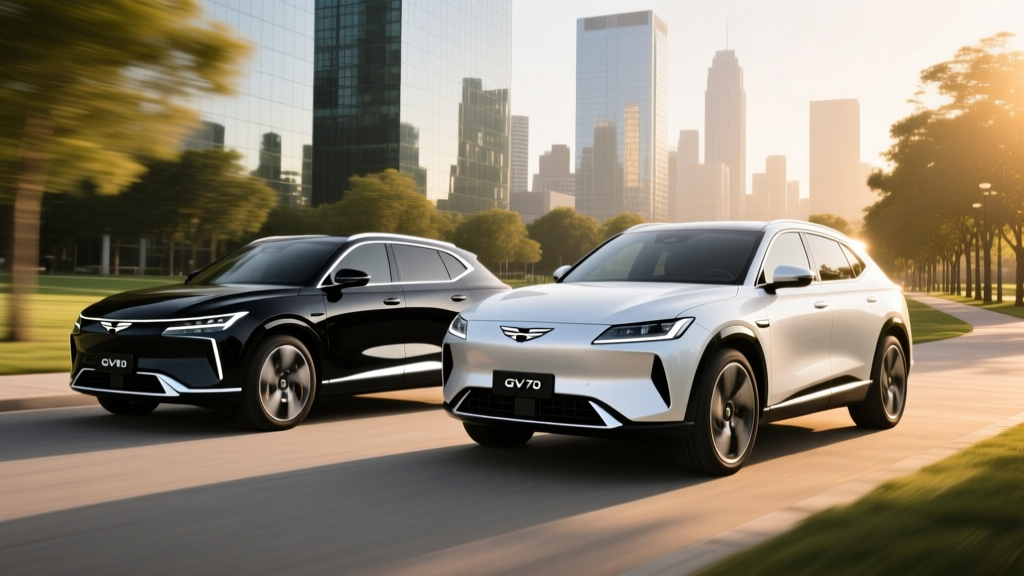
If you are researching a Genesis electric SUV in 2026, you have two distinct paths: the purpose-built Genesis GV60 (dedicated EV on Hyundai's E-GMP platform) and the Electrified GV70 (a converted gas crossover). The GV60 delivers up to an EPA-estimated 264 miles of range, 800V DC fast charging that adds 10-80% in about 18 minutes, and starts around $53,350. The Electrified GV70 offers 236 miles of EPA range, similar charging speed, and starts near $67,850. Neither currently qualifies for the full §30D federal tax credit due to battery-sourcing rules, so budget accordingly and check the latest IRS clean vehicle credit guidance before committing.
Quick Verdict: Which Genesis Electric SUV Fits You?
Choose the GV60 if you want the most range per dollar, the newest E-GMP architecture, and a compact luxury footprint.
Choose the Electrified GV70 if you need more cargo space, prefer the traditional Genesis grille-and-leather aesthetic, and don't mind paying a premium for a converted platform.
Wait or look elsewhere if you rely exclusively on public charging in a cold climate — both models lose roughly 20-30% of range below freezing, and the Electrified GV70's smaller 77.4 kWh battery makes that hit more painful.
Genesis EV Lineup at a Glance: Specs That Matter
Genesis currently sells two electric SUVs in the US market. Both share 800V electrical architectures (enabling ultra-fast DC charging without a heavy step-up converter), dual-motor AWD options, and Genesis's luxury interior treatment. But their platforms, efficiency, and pricing differ meaningfully.
| Spec | GV60 Advanced AWD | GV60 Performance | Electrified GV70 |
|---|---|---|---|
| EPA Range | 264 mi | 235 mi | 236 mi |
| Battery (usable) | 77.4 kWh NMC | 77.4 kWh NMC | 77.4 kWh NMC |
| Horsepower | 314 hp | 429 hp (490 Boost) | 429 hp |
| 0-60 mph | 5.3 sec | 3.9 sec (Boost mode) | 4.2 sec |
| Peak DC Charge Rate | ~240 kW | ~240 kW | ~240 kW |
| 10-80% DCFC Time | ~18 min | ~18 min | ~18 min |
| Level 2 (240V) Rate | 10.9 kW | 10.9 kW | 10.9 kW |
| MPGe (combined) | 95 MPGe | 85 MPGe | 87 MPGe |
| Cargo Volume | 24.0 cu ft / 54.7 cu ft | 24.0 cu ft / 54.7 cu ft | 28.7 cu ft / 56.9 cu ft |
| Base MSRP | $53,350 | $65,850 | $67,850 |
| Battery/Powertrain Warranty | 10 yr / 100,000 mi | 10 yr / 100,000 mi | 10 yr / 100,000 mi |
Source: Genesis USA specifications, fueleconomy.gov. Real-world highway range typically 10-15% below EPA; cold-weather (below 30°F) can reduce range 20-30%.
Real-World Range: What the EPA Sticker Doesn't Tell You
EPA range estimates are a useful baseline, but they are derived from a mix of city and highway driving cycles at moderate temperatures. Your actual experience in a Genesis electric SUV will vary based on three factors: speed, temperature, and terrain.
Range Reality Check
- GV60 Advanced AWD (EPA 264 mi): Expect ~225-240 mi on a flat highway at 70 mph in 65°F weather. In winter conditions (25°F), plan for ~185-210 mi before needing to charge.
- Electrified GV70 (EPA 236 mi): Expect ~200-215 mi highway in mild weather. In cold conditions, that drops to ~165-185 mi. The GV70's heavier curb weight (~4,900 lbs vs the GV60's ~4,500 lbs) and less aerodynamic converted platform hurt efficiency.
- Charge curve taper: Both models peak near 240 kW only between roughly 10-45% state of charge. Above 60%, charging slows significantly — expect 80-100% to take as long as 10-60%. Always plan road-trip stops to charge from 10-80%, not to a full battery.
The GV60 benefits from E-GMP's dedicated skateboard architecture, which positions the battery low and flat for better packaging and thermal management. The Electrified GV70, by contrast, shoehorns batteries into a platform originally designed for an inline-four and a driveshaft tunnel. That means slightly higher energy consumption per mile and less optimized cooling under sustained DC fast charging.
Genesis EV vs Gas vs Hybrid: 5-Year Cost Breakdown
One of the most common questions from luxury SUV shoppers is whether going electric actually saves money. The answer depends on your electricity rate, annual mileage, and whether you can charge at home. Below is a comparison of the GV60 Advanced AWD against its closest gas sibling, the GV70 2.5T AWD, and the GV70 hybrid variant (where available), over 5 years and 75,000 miles.
| Cost Category | GV60 Adv. AWD (EV) | GV70 2.5T AWD (Gas) | GV70 Hybrid (HEV) |
|---|---|---|---|
| Purchase Price (MSRP) | $53,350 | $48,250 | $52,000 |
| Federal Tax Credit (§30D) | $0* | N/A | N/A |
| Fuel/Energy (75k mi) | $3,400 (home L2, $0.14/kWh) | $11,250 ($3.75/gal, 25 MPG) | $7,500 ($3.75/gal, 37 MPG) |
| Maintenance (5 yr) | $1,200 | $3,800 | $3,200 |
| Insurance (est. avg) | $10,500 | $8,750 | $9,000 |
| Estimated 5-Year Total | $68,450 | $72,050 | $71,700 |
*As of 2026, Genesis electric SUVs do not meet §30D battery-component and critical-mineral sourcing requirements for the $7,500 credit. Verify current eligibility at irs.gov. Fuel costs assume 80% home charging at national average residential rate. Insurance estimates are averages; get quotes for your ZIP code.
The EV wins on fuel and maintenance — electric motors have no oil changes, no spark plugs, no transmission fluid swaps, and regenerative braking extends pad life by 2-3x. However, EV insurance premiums typically run 15-25% higher than gas equivalents due to higher repair costs and battery replacement risk. Over five years, the GV60 comes out modestly ahead of the gas GV70, but the margin is thin without a tax credit. If you can access workplace or free public charging, the EV's advantage grows substantially.
Charging at Home and on the Road: What Genesis Owners Actually Experience
Both Genesis electric SUVs use the CCS1 connector for DC fast charging (though newer 2025+ models may ship with NACS ports as the industry transitions to Tesla's standard — verify with your dealer). Here's what charging looks like in practice:
| Level | Power | Miles Added/Hour | Typical Use Case |
|---|---|---|---|
| Level 1 (120V) | 1.4 kW | ~4 mi/hr | Emergency/trickle only |
| Level 2 (240V, 48A) | 10.9 kW | ~32 mi/hr | Overnight home charging (full in ~7 hr) |
| DC Fast Charge | Up to 240 kW | ~700+ mi/hr (peak) | Road trips; 10-80% in ~18 min |
Home charging setup: A Level 2 home charger (such as a ChargePoint Home Flex or Emporia Vue) on a 60A circuit delivers the full 10.9 kW the GV60 and GV70 can accept. Installation typically costs $800-$2,500 depending on panel proximity and whether your home needs a 200A service upgrade. Genesis includes a complimentary portable charger that can handle both 120V and 240V outlets.
Public charging caveat: The 800V architecture means these vehicles can charge at 350 kW Electrify America stalls at near-peak speed. However, not all public chargers deliver their rated power consistently. In real-world testing, expect an average of 120-160 kW over a 10-80% session at a 350 kW stall, not the full 240 kW sustained. Always use battery preconditioning (navigate to the charger in the car's nav system) to warm the battery and unlock peak charge rates — skipping this can cut your charge speed in half in cool weather.
Federal Tax Credit Reality for Genesis EVs
This is where the math gets frustrating for Genesis buyers. Under current IRS §30D rules, a new EV must meet three criteria to qualify for up to $7,500:
- MSRP cap: SUVs must be under $80,000 (both GV60 and Electrified GV70 qualify on most trims).
- Buyer income cap: Modified AGI must not exceed $150,000 (single) or $300,000 (joint).
- Battery sourcing: Battery components must be manufactured or assembled in North America, and critical minerals must be sourced from the US or FTA partners — with percentages increasing each year.
As of 2026, Genesis electric SUVs use battery cells manufactured by SK On, but the module and pack assembly, as well as critical-mineral sourcing, do not fully meet the escalating thresholds. The result: neither the GV60 nor the Electrified GV70 currently qualifies for the §30D credit. This could change if Hyundai Motor Group shifts more battery production to the Georgia/Hyundai Metaplant facilities, but buyers should not count on it at purchase time.
However, used Genesis EVs (at least 2 model years old) may qualify for the up-to-$4,000 used clean vehicle credit (30% of sale price, capped at $4,000) if purchased from a dealer and the buyer meets income requirements. A 2023 GV60 selling for $35,000 could net a $4,000 credit at point of sale.
Genesis EV vs the Competition: Where They Stand
The luxury compact electric SUV segment is crowded. Here's how the Genesis models stack up against key rivals:
| Model | EPA Range | 10-80% DCFC | Base MSRP | §30D Credit |
|---|---|---|---|---|
| Genesis GV60 Adv. AWD | 264 mi | ~18 min | $53,350 | No |
| Tesla Model Y LR AWD | 308 mi | ~22 min | $46,630 | Yes ($7,500) |
| BMW iX xDrive50 | 307 mi | ~31 min | $87,250 | No (over MSRP cap) |
| Cadillac Lyriq AWD | 307 mi | ~27 min | $61,295 | Yes ($7,500) |
| Hyundai Ioniq 5 Limited AWD | 260 mi | ~18 min | $54,300 | Yes ($7,500) |
The GV60 shares its E-GMP platform with the Hyundai Ioniq 5 and Kia EV6 but wraps it in a more luxurious interior with higher-quality materials, a crystal-sphere shifter, and Genesis's concierge-level service model (including complimentary scheduled maintenance for 3 years/36,000 miles and valet pickup for service). The trade-off is that the Ioniq 5 qualifies for the tax credit while the GV60 does not — a $7,500 gap that's hard to justify on pure economics.
Against the Tesla Model Y, the GV60 offers a quieter cabin, more traditional luxury materials, and faster DC charging. The Model Y counters with significantly more range, Supercharger network access, and the federal credit. The Cadillac Lyriq is a strong alternative if you want a larger vehicle with US-built battery sourcing and the credit.
Common Misconceptions About Genesis Electric SUVs
| Myth | Fact |
|---|---|
| "Genesis EVs get the $7,500 tax credit." | As of 2026, neither qualifies due to battery-sourcing rules. Always verify at irs.gov before purchasing. |
| "The Electrified GV70 is the same as the gas GV70." | It shares the body shell and interior but has dual electric motors, no engine, a 77.4 kWh battery, and different weight distribution. Cargo space is slightly reduced due to battery placement. |
| "I can charge to 100% in 18 minutes." | The 18-minute figure is for 10-80% only. Charging from 80-100% can take another 20+ minutes due to the charge curve taper. Plan trips around 80% stops. |
| "The battery will need expensive replacement in 5 years." | Genesis warranties the battery for 10 years/100,000 miles against degradation below 70% capacity. Real-world NMC degradation is typically 8-12% over 100,000 miles. Full replacement (rare) costs $12,000-$18,000. |
| "Genesis EVs are self-driving." | Genesis Highway Driving Assist II is an SAE Level 2 system — it assists with steering and speed on highways but requires the driver to remain engaged and hands on or near the wheel at all times. |
Decision Framework: Which Genesis Electric SUV (or Alternative) Is Right for You?
If-Then Buying Guide
- If you charge at home and drive under 40 miles/day: Either Genesis EV works well. The GV60 Advanced offers the best value with 264 miles of range and the lowest MSRP.
- If you take frequent 200+ mile road trips: The GV60's 18-minute 10-80% charging is excellent, but the Tesla Model Y's 308-mile range and Supercharger network still make it the road-trip king. Consider the GV60 if you have Electrify America access along your routes.
- If you need maximum cargo space: The Electrified GV70 offers 28.7 cu ft behind the rear seats vs the GV60's 24.0. For serious hauling, look at the Cadillac Lyriq or BMW iX instead.
- If the tax credit is a deal-breaker: The Ioniq 5 (same platform, $7,500 credit) or Tesla Model Y are more financially rational choices. The GV60's luxury premium only makes sense if you value the brand experience and service model.
- If you live in a cold climate without home charging: Proceed with caution. Cold weather cuts range 20-30%, and relying on public chargers in winter is frustrating. A PHEV like the Volvo XC60 Recharge may be a better bridge.
- If you want Genesis luxury but aren't ready for full EV: Genesis doesn't currently offer a PHEV SUV in the US. The GV70 2.5T gas model remains the fallback, but watch for the upcoming GV70 hybrid variant.
Frequently Asked Questions
Is the Genesis GV60 a good electric SUV for first-time EV buyers?
Yes, with caveats. The GV60 is well-built, quiet, and charges quickly. Its 264-mile EPA range is sufficient for most daily driving and moderate road trips. The main concern for first-time buyers is the lack of a federal tax credit, which makes the effective price higher than competitors like the Ioniq 5 or Model Y. If you can charge at home and don't need the credit, the GV60's luxury experience and Genesis's complimentary maintenance program make it an excellent entry point.
How long does a Genesis EV battery last?
Genesis warranties the high-voltage battery for 10 years or 100,000 miles, guaranteeing it will retain at least 70% of its original capacity. In practice, NMC lithium-ion batteries in well-managed thermal systems (like E-GMP) typically lose 8-12% capacity over 100,000 miles. To maximize longevity, avoid routinely charging to 100% — set your daily charge limit to 80-90% and only charge to full before long trips.
Can I use Tesla Superchargers with a Genesis electric SUV?
As of 2026, Tesla has begun opening select Superchargers to non-Tesla EVs via the built-in Magic Dock (CCS1 adapter). Additionally, Genesis has announced NACS adoption for future models. Check the Tesla app or in-car navigation for compatible Supercharger stations near you. Using a third-party CCS-to-NACS adapter (such as those from Lectron or A2Z) is also an option for accessing the Supercharger network, though charge speeds may vary.
What is the real cost to charge a Genesis GV60 at home?
At the US average residential electricity rate of ~$0.16/kWh (2026), fully charging the GV60's 77.4 kWh battery costs about $12.38 — enough for roughly 230 real-world miles. That works out to about $0.054 per mile, compared to $0.15 per mile for the gas GV70 at $3.75/gallon. Over 15,000 miles per year, home charging saves approximately $1,440 in fuel costs.
Does the Electrified GV70 have a frunk (front trunk)?
Yes, but it's small — about 0.7 cu ft, enough for charging cables and a small bag. The GV60 offers a slightly larger 1.8 cu ft frunk. Neither matches the Tesla Model Y's 4.1 cu ft front trunk.
Specifications and pricing reflect the latest available data for the 2025-2026 model year. Tax credit eligibility changes frequently — always confirm with the IRS and a qualified tax professional before purchasing. Real-world range and efficiency vary based on driving conditions, weather, and vehicle configuration.