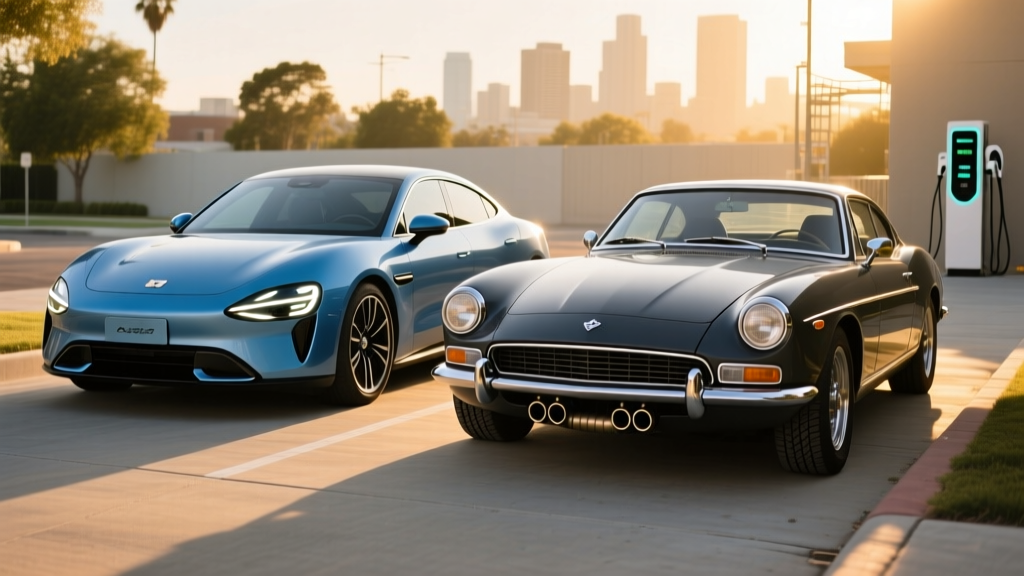
Whether gas cars are better than electric depends entirely on your driving patterns, home-charging access, and budget. For drivers who can install a Level 2 home charger, mostly drive under 250 miles a day, and live in moderate climates, a battery-electric vehicle (BEV) typically delivers lower 5-year operating costs and comparable or better total cost of ownership. For apartment dwellers without reliable charging, frequent long-distance road trippers, or buyers in extreme cold climates with tight budgets, a gas car or hybrid may still be the more practical choice in 2026.
Quick Verdict: Are Gas Cars Better Than Electric?
Gas cars win on: lower upfront price, simpler refueling for those without home charging, no cold-weather range loss, and widely available cheap repairs.
Electric cars win on: lower per-mile energy cost (typically $0.04–$0.06/mi vs. $0.12–$0.16/mi for gas), far less routine maintenance, smoother performance, and available federal tax credits up to $7,500 for eligible buyers and vehicles.
Where Gas Cars Still Hold a Real Advantage
The argument that gas cars are better than electric isn't baseless — it's just situational. Internal combustion engine (ICE) vehicles retain concrete advantages in specific ownership scenarios that EV buyers should honestly weigh before signing a purchase agreement.
Upfront purchase price. The average new gas car transaction price in early 2026 sits around $44,000, while the average EV transaction price hovers near $53,000 before incentives, according to Kelley Blue Book industry data. Even with the federal §30D tax credit (up to $7,500 for eligible new EVs, subject to MSRP caps, buyer income limits, and battery-sourcing requirements — see IRS guidelines), the effective price gap narrows but rarely disappears entirely. Budget-focused buyers shopping under $30,000 will find far more gas options than EV ones.
Refueling infrastructure ubiquity. There are roughly 145,000 gas stations in the U.S. compared to approximately 70,000 public EV charging ports (Level 2 and DC fast combined). For drivers who cannot charge at home — roughly 30% of U.S. households, particularly apartment and condo dwellers — relying on public charging introduces time cost, reliability risk, and often higher per-kWh pricing that erodes the EV cost advantage.
Cold-weather consistency. Lithium-ion batteries lose efficiency in freezing temperatures. Real-world testing consistently shows 20–30% range reduction at 20°F compared to EPA estimates, particularly on short trips where the cabin heater draws heavily from the traction battery. Gas vehicles also lose some efficiency in cold weather, but the loss is smaller (roughly 10–15%) and refueling takes the same 3 minutes regardless of temperature.
Repair accessibility. Any independent shop can service a gas car's brakes, suspension, and basic mechanicals. EV-specific repairs — traction battery issues, inverter faults, onboard charger failures — currently require dealer-level or specialist diagnostics, and parts availability can mean longer downtime.
The Case for Electric: Where EVs Genuinely Outperform
The case for EVs rests on operating economics, daily driving experience, and long-term ownership costs — areas where concrete data strongly favors electrification for the right buyer.
Per-mile energy cost. Electricity prices vary by state, but the U.S. residential average in 2026 is approximately $0.17/kWh. An efficient EV consuming 30 kWh/100 miles costs roughly $0.051 per mile to fuel at home. A comparable gas car averaging 28 MPG at $3.30/gallon costs about $0.118 per mile — more than double. Over 15,000 annual miles, that's a fuel savings of roughly $1,005 per year, or $5,025 over five years. (Public DC fast charging at $0.35–$0.50/kWh narrows this gap significantly, which is why home charging access matters so much.)
Maintenance reduction. EVs eliminate oil changes, spark plugs, timing belts, exhaust systems, and transmission fluid services. Regenerative braking dramatically extends brake pad life — many EV owners report original brake pads at 80,000+ miles. Consumer Reports estimates average lifetime maintenance savings of $4,600 for an EV compared to a gas car, with annual maintenance costs running roughly $0.061/mile for EVs vs. $0.101/mile for gas vehicles.
Performance and refinement. Electric motors deliver peak torque from 0 RPM, producing quick, smooth acceleration without gear shifts. A $45,000 EV routinely posts 0–60 mph times in the 5–6 second range, matching gas cars costing significantly more. The absence of engine vibration and exhaust noise makes for a noticeably quieter cabin, especially at city speeds.
Tax incentives. The federal §30D clean vehicle credit provides up to $7,500 for eligible new EVs and up to $4,000 for eligible used EVs. However, eligibility is complex: the vehicle must meet MSRP caps ($55,000 for sedans, $80,000 for SUVs/trucks/vans), the buyer must fall under income caps ($150K single / $300K joint), and the battery must meet critical-mineral and component-sourcing thresholds that shift annually. As of 2026, buyers can transfer the credit to the dealer at point of sale for an immediate price reduction. Always verify current eligibility on IRS.gov before purchase.
5-Year Cost Breakdown: Gas vs. Electric vs. Hybrid
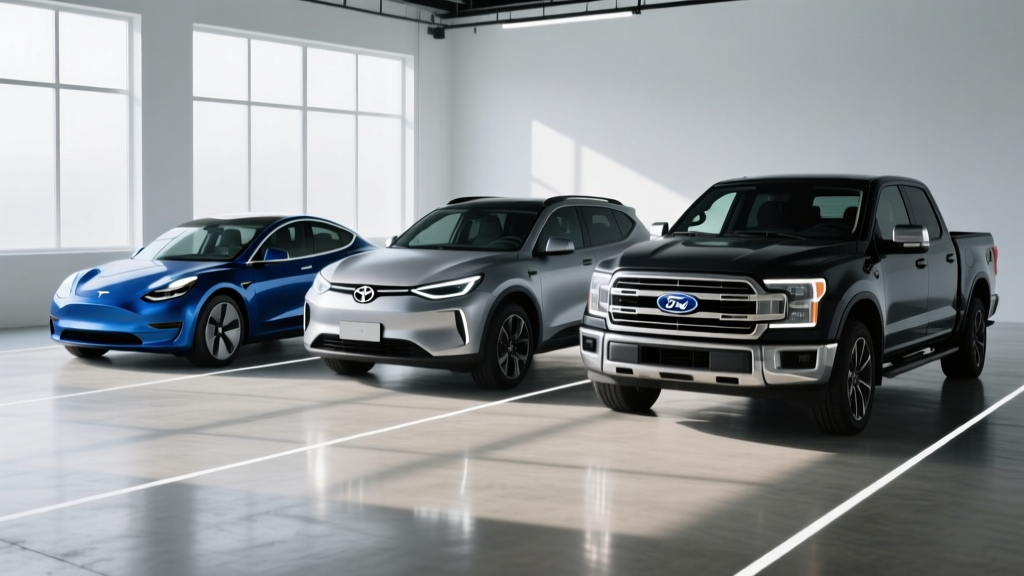
Abstract arguments settle nothing. Here's a concrete 5-year / 75,000-mile cost comparison using three representative 2026 vehicles: a Toyota Camry LE (gas), a Toyota Camry Hybrid LE (HEV), and a Tesla Model 3 RWD (BEV). All figures assume 15,000 miles/year, national-average fuel and electricity prices, and standard insurance estimates.
| Cost Category | 2026 Camry LE (Gas) | 2026 Camry Hybrid LE | 2026 Tesla Model 3 RWD |
|---|---|---|---|
| Base MSRP | $29,500 | $31,200 | $38,990 |
| Federal Tax Credit | $0 | $0 | Up to $7,500* |
| Effective Purchase Price | $29,500 | $31,200 | ~$31,490* |
| EPA Combined Efficiency | 28 MPG (est.) | 52 MPG (est.) | 132 MPGe / 25 kWh/100mi |
| 5-Year Fuel/Energy Cost | $8,839 | $4,758 | $1,913 (home L2) |
| 5-Year Maintenance | $3,750 | $3,400 | $1,800 |
| 5-Year Insurance (est.) | $7,500 | $7,500 | $9,250 |
| 5-Year Total (excl. purchase) | $20,089 | $15,658 | $12,963 |
| Total with Purchase Price | $49,589 | $46,858 | $44,453 |
*Tax credit eligibility depends on buyer income, vehicle MSRP, and battery sourcing requirements. Verify at IRS.gov. Insurance estimates are averages; actual premiums vary significantly by state, driver profile, and insurer. Fuel costs based on $3.30/gal and $0.17/kWh national averages.
The data shows a clear pattern: the EV's higher sticker price is offset within 3–4 years through fuel and maintenance savings for a buyer who qualifies for the tax credit and charges primarily at home. The hybrid splits the difference — lower upfront cost than the EV, meaningful fuel savings over gas, and zero charging infrastructure requirements. For buyers who don't qualify for the credit or must rely on expensive public charging, the hybrid often becomes the math winner.
Real-World Ownership Factors That Change the Math
Spec sheets and cost calculators don't capture the full picture. These practical considerations frequently determine whether an EV or gas car is genuinely the better choice for a specific household.
Home Charging Access Is the Single Biggest Factor
If you can install a Level 2 (240V) home charger — whether in a garage, driveway, or dedicated parking spot — an EV's convenience advantage is enormous. You start every morning with a full battery, and your "fueling" takes zero extra time. A typical Level 2 installation (charger unit plus electrical work) runs $800–$2,500 depending on panel capacity and run length. Homes with older 100-amp electrical panels may need a $1,500–$3,000 panel upgrade to support a 48-amp charger circuit.
If you cannot charge at home, the calculus shifts dramatically. Public DC fast charging costs $0.35–$0.50/kWh (sometimes more), which pushes per-mile costs to $0.09–$0.15 — approaching or matching gas. You'll also spend 20–40 minutes per session at a fast charger, 2–4 times per week depending on your commute. For these households, a hybrid (HEV or PHEV) is usually the smarter electrified choice.
Driving Patterns: Daily Miles and Road Trips
The average American drives roughly 37 miles per day. Virtually every EV sold in 2026 (with EPA ranges from 230 to 400+ miles) handles this with margin to spare. If your daily driving stays under 200 miles and you take road trips a few times a year, a modern EV with DC fast charging capability (10–80% in 18–30 minutes at 150–250 kW peak) works well — plan charging stops around meals or rest breaks.
If you regularly drive 300+ miles in a single day, tow a trailer (which can cut EV range by 30–50%), or cover remote routes with sparse charging infrastructure, a gas car or diesel still offers time and logistics advantages that are hard to argue against.
Climate and Geography
Mild-climate EV owners in coastal California, the Southeast, or the Pacific Northwest will see range figures close to EPA estimates year-round. Owners in the upper Midwest, Mountain West, or New England should budget for 20–30% winter range loss and factor in that DC fast charging also slows in cold temperatures unless the vehicle has active battery preconditioning (Tesla, Hyundai/Kia, and BMW currently lead here).
High-altitude driving actually favors EVs — electric motors don't lose power with thinner air the way naturally aspirated gas engines do. Mountain drivers also benefit heavily from regenerative braking on descents, which can recover meaningful energy on long downhill grades.
Common Misconceptions: Myths vs. Facts
Both sides of the gas-vs-electric debate carry persistent misinformation. Here's what the data actually shows.
| Myth | Fact (with data) |
|---|---|
| "EV batteries need replacing every few years like a phone." | Modern EV batteries are designed for 150,000–200,000+ miles with 70–80% capacity retention. Federal law mandates a minimum 8-year/100,000-mile battery warranty (10 years/150,000 miles in CARB states). Real-world degradation data from sources like Recurrent shows most EVs retaining 90%+ capacity at 100,000 miles. |
| "EVs are worse for the environment because of battery mining." | Lifecycle analyses from Argonne National Laboratory and the ICCT consistently show EVs produce fewer total emissions over their lifetime than gas cars in every U.S. grid region — even on coal-heavy grids — because electric motors are 3–4x more energy-efficient than combustion engines. The emissions "payback" for battery manufacturing typically occurs within 1–2 years of average driving. |
| "Gas cars are always cheaper to own." | As shown in the cost table above, a qualifying EV with home charging can deliver lower 5-year total cost despite a higher sticker price. The break-even point varies by state electricity rates, annual mileage, and credit eligibility — but the blanket claim that gas is always cheaper doesn't hold up to arithmetic. |
| "EVs leave you stranded with no warning." | Modern EVs provide detailed range estimates that account for driving style, terrain, and temperature, plus integrated navigation that routes through charging stations. Running out of charge is almost always a planning failure, not a sudden surprise — and the same is true of running out of gas. |
| "Charging takes hours, so road trips are impractical." | At a 250 kW DC fast charger, a 2026 Hyundai Ioniq 5 or Tesla Model 3 charges from 10–80% in approximately 18–22 minutes. On a 500-mile trip, that's roughly two 20-minute stops — comparable to the rest breaks most drivers take anyway. The real limitation is charger availability in rural corridors, not charging speed. |
Decision Framework: Which Should You Buy?
Rather than a one-size-fits-all answer, use this practical framework based on your actual situation.
Choose an Electric Vehicle (BEV) If:
- You can install a Level 2 charger at home or have reliable workplace charging
- Your daily driving is under 200 miles round-trip
- You qualify for the §30D federal tax credit (check income and vehicle eligibility)
- You want the lowest per-mile operating cost and minimal maintenance
- You value instant torque, quiet operation, and one-pedal driving
- You live in a moderate climate or your EV has battery preconditioning for cold weather
Choose a Hybrid (HEV or PHEV) If:
- You cannot charge at home but still want better fuel economy
- You frequently drive 300+ miles in a day or tow regularly
- You want electrification benefits without range or charging logistics concerns
- Your budget is under $35,000 and you need maximum vehicle selection
- A PHEV gives you 25–45 miles of electric-only range for daily commuting with gas backup for longer trips
Choose a Gas Car If:
- You have no access to home or workplace charging and public charging is sparse in your area
- You regularly drive in extreme cold (below 10°F) with short trip patterns
- Your budget is tight and you prioritize lowest upfront purchase price
- You drive very low annual miles (under 5,000/year) — fuel savings won't offset the EV price premium
- You need a specialized vehicle (heavy towing, off-road, commercial fleet) where EV options remain limited in 2026
What First-Time EV Buyers Must Know Before Purchasing
If you're leaning electric, these practical realities will shape your ownership experience far more than spec-sheet numbers.
Understand kW vs. kWh. This is the single most common point of confusion. kWh (kilowatt-hours) measures battery capacity — how much energy the car stores, like gallons in a gas tank. A 75 kWh battery holding 70 kWh of usable energy is typical for a midsize EV. kW (kilowatts) measures power flow rate — how fast energy moves into or out of the battery, like gallons-per-minute at a fuel pump. A 250 kW DC fast charger delivers energy much faster than a 7.7 kW Level 2 home charger. Confusing these leads to wildly wrong expectations about charging time.
Plan your home charging before you buy the car. Contact a licensed electrician to assess your panel capacity (100A vs. 200A), available circuit breaker slots, and the run distance from your panel to your desired charger location. A 48-amp Level 2 charger requires a dedicated 60-amp circuit. Getting this assessment done before vehicle purchase prevents unpleasant post-delivery surprises and lets you negotiate charger installation into your budget.
EPA range is a ceiling, not a guarantee. Expect 10–15% less range on sustained highway driving (70–80 mph), 20–30% less in freezing temperatures, and additional reduction when carrying heavy cargo or towing. If your daily needs require 200 miles of range, buy an EV rated for at least 270–300 miles EPA to maintain a comfortable buffer year-round.
Charging speed isn't a single number. Manufacturers advertise peak DC fast charge rates (e.g., "up to 250 kW"), but batteries can only accept peak rates at low state of charge (typically 10–30%). Above 50% SoC, the charge rate tapers significantly, and above 80% it drops sharply to protect battery health. This is called the charge curve, and it's why 10–80% charge time is a more useful metric than peak kW alone. A car with a "flatter" charge curve (like the Hyundai/Kia E-GMP platform) may charge faster in practice than one with a higher peak number but steep taper.
Budget for higher insurance premiums. EV insurance costs 15–25% more on average than comparable gas cars, driven by higher repair costs for collision damage (especially battery-adjacent structural repairs) and higher vehicle values. Get insurance quotes before committing to a specific model — premiums vary significantly between EVs even at similar price points.
Frequently Asked Questions
Do gas cars last longer than electric cars?
There's no evidence that gas cars outlast modern EVs. Electric motors have far fewer moving parts than internal combustion engines (roughly 20 vs. 2,000+), and EV batteries are warrantied for 8–10 years / 100,000–150,000 miles with designed lifespans exceeding 200,000 miles. Gas cars require more frequent maintenance to reach high mileage, while EVs require less — but both can exceed 200,000 miles with proper care. The limiting factor for EVs long-term will likely be the cost of out-of-warranty battery replacement ($5,000–$15,000 depending on the model), though prices continue to decline.
Is it cheaper to charge an EV at home or fill up a gas car?
Home charging is almost always cheaper per mile. At $0.17/kWh and 30 kWh/100mi efficiency, home charging costs roughly $0.051/mile. Gas at $3.30/gallon in a 28 MPG car costs $0.118/mile — more than double. The exception is public DC fast charging at $0.40+/kWh, which pushes costs to $0.12–$0.15/mile, comparable to gas. This is why home charging access is the single most important factor in EV economics.
Are hybrids a better compromise than going fully electric?
For many buyers in 2026, yes — particularly those without home charging or with unpredictable driving patterns. A standard hybrid (HEV) like the Toyota Camry Hybrid delivers 50+ MPG with zero behavior change. A plug-in hybrid (PHEV) like the Toyota RAV4 Prime offers 42 miles of electric-only range for daily commuting with a gas engine for longer trips, covering most commutes on electricity while eliminating range anxiety entirely. The trade-off is continued oil changes and engine maintenance that a BEV avoids.
What happens if an EV battery fails out of warranty?
Out-of-warranty battery replacement currently costs $5,000–$15,000 depending on the vehicle and battery size. However, complete battery failures are rare — most degradation is gradual capacity loss, not sudden failure. Many EVs retain 85–92% capacity at 150,000 miles based on fleet data. If capacity loss does become problematic, individual module replacement (rather than full pack swap) is increasingly available at lower cost, and third-party refurbishment options are expanding. As of 2026, LFP (lithium iron phosphate) battery chemistry — used in standard-range Teslas and several other models — offers even longer cycle life with slower degradation than NMC chemistry.
Will I save money buying an EV in 2026?
The honest answer: it depends on your specific numbers. If you drive 15,000 miles/year, charge at home, and qualify for the $7,500 federal credit, you'll likely save $1,000–$1,500/year in fuel and maintenance, breaking even on the price premium within 3–5 years. If you drive under 8,000 miles/year, can't charge at home, or don't qualify for incentives, the savings may never offset the higher purchase price. Run your own numbers with your local electricity rate, annual mileage, and specific vehicle prices before deciding. Tools on fueleconomy.gov let you compare specific models with your state's energy costs.
The Bottom Line
The claim that "gas cars are better than electric" is neither universally true nor universally false — it's a personal calculation. The data clearly shows that for households with home charging access, moderate daily mileage, and tax-credit eligibility, EVs deliver lower total cost of ownership, less maintenance, and a superior daily driving experience in 2026. For those without charging access, extreme cold-weather needs, or very tight budgets, gas cars and hybrids retain legitimate advantages that EV technology hasn't yet eliminated.
The most reliable decision method is arithmetic, not ideology: calculate your actual 5-year costs using your mileage, your electricity rate, your charging situation, and your eligible incentives. The numbers will tell you which powertrain genuinely serves your life better.