Ford F-150 Lightning vs Rivian R1T: The Ultimate Electric Truck Comparison
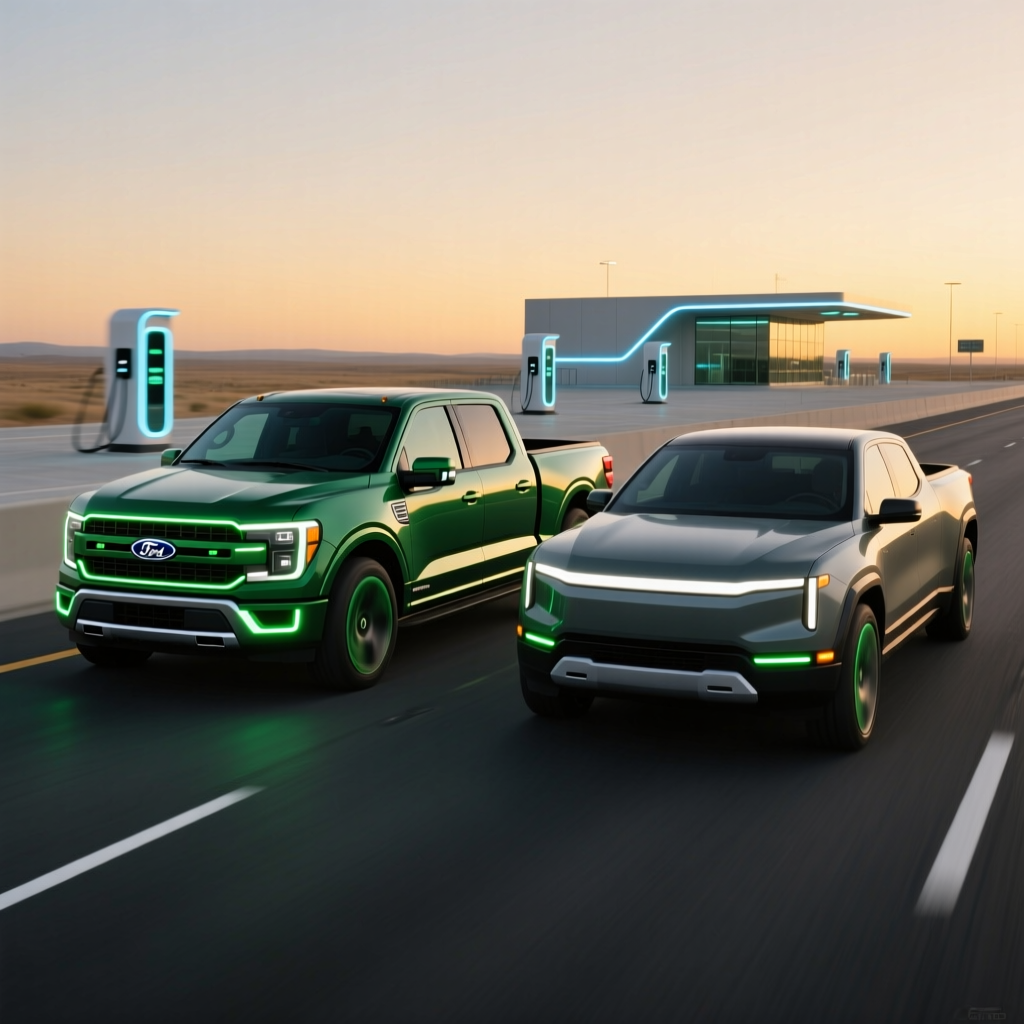
The electric truck revolution has brought two heavy hitters to the forefront of the pickup segment. The Ford F-150 Lightning and the Rivian R1T represent two very different philosophies about what an electric pickup can and should be. One is a legacy automaker's electrified workhorse built on decades of truck-building expertise; the other is a tech-forward adventure machine from a startup that reimagined the pickup from the ground up.
If you're cross-shopping these two, you're not alone. They're consistently the most compared electric trucks on the market, and for good reason. Both offer impressive capability, cutting-edge technology, and real-world utility. But they serve different buyers in meaningful ways. In this comprehensive comparison, we'll break down every critical category — from range and charging to performance and interior space — so you can make the right call for your needs.
For more in-depth coverage, check out our full Ford F-150 Lightning review and our complete Rivian R1T review. You can also see how both trucks stack up in our best electric trucks rankings.
Overview: Two Visions of the Electric Pickup
The Ford F-150 Lightning debuted as the electric version of America's best-selling vehicle. Ford took a deliberate approach: keep the F-150's familiar design, its body-on-frame architecture (modified for EV duty), and its work-truck DNA, then add a dual-motor powertrain and a massive battery pack. The result is a truck that feels instantly familiar to anyone who's driven an F-150, but with the instant torque and smoothness that only an electric drivetrain can deliver. It's offered in multiple trims ranging from the work-oriented Pro to the luxurious Platinum.
The Rivian R1T, by contrast, was conceived as an electric vehicle from day one. Built on Rivian's skateboard platform, the R1T is smaller than a traditional full-size truck — slotting somewhere between a midsize and full-size pickup — but it compensates with clever engineering, including a quad-motor option, a gear tunnel for unique storage, and an air suspension system that can raise the truck for serious off-road duty. The R1T targets the adventure-lifestyle buyer who wants a vehicle equally at home on a rocky trail and at a campsite.
Both trucks have earned critical acclaim and strong owner satisfaction scores. The question isn't whether one is objectively better — it's which one is better for you.
Side-by-Side Specification Comparison
Before diving into each category, here's a quick-reference table comparing the key specifications of the Ford F-150 Lightning (Extended Range) and the Rivian R1T (Dual-Motor with Large Battery). Note that both vehicles offer multiple configurations, so we've selected the most popular comparable trims.
| Specification | Ford F-150 Lightning (Extended Range) | Rivian R1T (Dual-Motor Large) |
|---|---|---|
| Drivetrain | Dual-Motor AWD | Dual-Motor AWD |
| Horsepower | 580 hp | 533 hp |
| Torque | 775 lb-ft | 610 lb-ft |
| EPA Range | Up to 320 miles | Up to 352 miles |
| Battery Capacity | 131 kWh (usable) | 128.9 kWh (usable) |
| Max Towing Capacity | 10,000 lbs | 11,000 lbs |
| Payload Capacity | Up to 2,235 lbs | Up to 1,760 lbs |
| Bed Length | 5.5 feet | 4.5 feet (+ Gear Tunnel) |
| Max DC Fast Charging | ~150 kW (peak) | ~200 kW (peak) |
| 0–60 mph | ~3.8 seconds | ~4.5 seconds |
| Starting MSRP | ~$55,000 (base Pro, Standard Range) | ~$73,000 (Dual-Motor Standard) |
| Front Trunk (Frunk) | 14.1 cu ft (400 L) | 11.0 cu ft (311 L) |
Note: Specifications vary by trim and configuration. Always verify current specs with the manufacturer. For the latest updates, visit our EV specs comparison tool.
Range & Efficiency: How Far Can Each Truck Go?
Range anxiety is one of the most common concerns for EV buyers, especially those considering a truck for road trips or job-site commutes. Both the F-150 Lightning and the R1T offer competitive range, but the Rivian edges ahead in most configurations.
Ford F-150 Lightning Range
The F-150 Lightning with the Extended Range battery pack achieves an EPA-estimated range of up to 320 miles. That figure applies to the XLT trim with the Extended Range pack; higher trims like the Lariat and Platinum see slight reductions due to added weight and larger wheels. The Standard Range battery delivers approximately 240 miles, which is adequate for daily driving but may feel limiting on longer trips.
In real-world highway testing conducted by independent reviewers, the Lightning typically achieves between 250 and 290 miles at sustained highway speeds, depending on temperature, terrain, and load. Towing significantly reduces range — expect a 40–50% reduction when pulling a heavy trailer, which is consistent with all electric trucks currently on the market.
Rivian R1T Range
The Rivian R1T with the Dual-Motor and Large Battery pack earns an EPA-estimated range of up to 352 miles, giving it a meaningful advantage over the Lightning in this category. The Max Battery pack (available in certain configurations) pushes range even higher. The Standard battery pack offers approximately 270 miles.
Real-world testing shows the R1T achieving roughly 280–320 miles on the highway under normal conditions. The R1T's more aerodynamic design and slightly lighter curb weight contribute to its efficiency advantage. Like the Lightning, towing substantially cuts into range.
For a deeper look at how these trucks compare on long road trips, see our EV road trip range guide.
Range Verdict
The Rivian R1T wins on range. Its 352-mile EPA rating with the Large Battery gives it a roughly 30-mile advantage over the Lightning's best configuration. For buyers who frequently drive long distances or live in areas with sparse charging infrastructure, that extra buffer matters.
Price & Value: What Does Each Truck Cost?
Price is where the Ford F-150 Lightning makes its strongest argument. Ford's strategy has been to offer an electric truck that's accessible to a broader range of buyers, and the pricing reflects that commitment.
Ford F-150 Lightning Pricing
The F-150 Lightning Pro starts at approximately $55,000, making it one of the most affordable electric trucks available. Moving up to the XLT with the Extended Range battery brings the price to roughly $70,000–$75,000, depending on options. The top-tier Platinum trim can exceed $95,000 when fully loaded.
Ford also qualifies for various federal and state EV incentives, which can reduce the effective cost by several thousand dollars. For fleet buyers and tradespeople, the Lightning Pro represents exceptional value — it offers full-size truck capability, a massive frunk, and over-the-air updates at a price point that undercuts most competitors.
Rivian R1T Pricing
The Rivian R1T starts at approximately $73,000 for the Dual-Motor with the Standard Battery. Adding the Large Battery pushes the starting price closer to $80,000, and the Quad-Motor configuration with the Max Battery can exceed $100,000. Rivian positions the R1T as a premium product, and the pricing reflects that positioning.
That said, the R1T includes a substantial amount of standard equipment that Ford charges extra for, including air suspension, a more advanced driver-assistance suite, and premium interior materials. When you compare similarly equipped models, the price gap narrows somewhat — but the Lightning still holds a clear advantage in affordability.
Value Verdict
The Ford F-150 Lightning wins on price and value. If budget is a primary concern — and for most truck buyers, it is — the Lightning offers more truck for less money. The Rivian R1T justifies its premium with superior materials, unique features, and a more distinctive ownership experience, but it's undeniably the more expensive option.
Charging Speed & Infrastructure
How quickly an electric truck can recharge is just as important as how far it can go. Both trucks support DC fast charging, but their charging architectures differ in meaningful ways.
Ford F-150 Lightning Charging
The F-150 Lightning supports DC fast charging at a peak rate of approximately 150 kW with the Extended Range battery. In practice, this means a 15–80% charge takes roughly 40–45 minutes at a compatible fast charger. The Standard Range battery charges at a slightly lower peak rate.
For Level 2 home charging, the Lightning supports up to 19.2 kW with Ford's Charge Station Pro, which can fully recharge the Extended Range battery in about 8 hours. Ford has partnered with multiple charging networks and provides access to the FordPass Charging Network, which aggregates thousands of public chargers across the country. The Lightning also gained access to Tesla's Supercharger network via an adapter, significantly expanding its fast-charging options.
Rivian R1T Charging
The Rivian R1T supports DC fast charging at a peak rate of approximately 200 kW with the Large Battery pack, allowing a 15–80% charge in roughly 30–35 minutes under optimal conditions. This gives the R1T a meaningful advantage at public fast chargers, especially on road trips where every minute counts.
Rivian has built its own Rivian Adventure Network of chargers positioned near popular outdoor destinations, which is a unique perk for adventure-oriented buyers. The R1T also supports NACS charging via adapter, granting access to Tesla Superchargers. Level 2 home charging supports up to 11.5 kW with the standard Wall Charger.
Charging Verdict
The Rivian R1T charges faster at DC fast chargers, which gives it the edge in this category. However, the F-150 Lightning's access to the broader FordPass network and its superior Level 2 home charging capability make it a strong contender for daily use. The real-world difference in charging speed is noticeable but not dramatic — both trucks can recharge comfortably during a lunch stop on a road trip.
Performance & Capability: Power, Towing, and Off-Roading
Electric trucks deliver instant torque, which translates to impressive acceleration and towing performance. Both the Lightning and the R1T are seriously quick, but they approach capability from different angles.
Acceleration & On-Road Performance
The Ford F-150 Lightning Extended Range produces 580 horsepower and 775 lb-ft of torque, propelling it from 0 to 60 mph in approximately 3.8 seconds. That's supercar territory in a truck that weighs over 6,500 pounds, and it never fails to impress. The power delivery is linear and relentless, making highway merging and passing effortless.
The Rivian R1T Dual-Motor delivers 533 horsepower and 610 lb-ft of torque, reaching 60 mph in roughly 4.5 seconds. While that's slower than the Lightning on paper, it's still remarkably quick for a pickup. The R1T's Quad-Motor variant, with over 1,000 horsepower, drops the 0–60 time to around 3.0 seconds — making it one of the quickest production trucks ever built.
Towing & Payload
The F-150 Lightning is rated to tow up to 10,000 pounds (with the Extended Range battery and Max Trailer Tow Package), while the Rivian R1T can tow up to 11,000 pounds. Both trucks offer integrated trailer brake controllers, trailer backup assist, and hitch cameras.
In payload capacity, the Lightning takes the lead at up to 2,235 pounds compared to the R1T's 1,760 pounds. For buyers who regularly haul heavy loads in the bed, the Ford has a practical advantage.
Off-Roading
This is where the Rivian R1T truly shines. Its air suspension can raise the ride height to provide over 14 inches of ground clearance, and the available quad-motor system enables precise torque vectoring to individual wheels. The R1T's approach, departure, and breakover angles are competitive with dedicated off-road vehicles. Rivian's Gear Guard system and built-in air compressor add to the truck's backcountry utility.
The F-150 Lightning is no slouch off-road — it offers decent ground clearance and the benefits of dual-motor AWD — but it's primarily designed as a street and job-site truck. It lacks the adjustable suspension and off-road-focused engineering of the R1T.
Performance Verdict
It depends on your priorities. The F-150 Lightning wins on straight-line acceleration and payload capacity. The Rivian R1T wins on towing (slightly) and dominates in off-road capability. If you plan to take your truck on trails, the R1T is the clear choice. If you want the quickest, most powerful truck for on-road driving, the Lightning takes the crown.
Interior Space, Cargo & Design
The interior experience of these two trucks reflects their different philosophies. The Lightning prioritizes familiarity and practicality; the R1T prioritizes innovation and adventure-ready features.
Ford F-150 Lightning Interior
The Lightning's cabin is largely carried over from the conventional F-150, which is both its greatest strength and its greatest limitation. The layout is intuitive, the controls are where you'd expect them, and the available 15.5-inch vertical touchscreen (on higher trims) running Ford's SYNC 4A system is responsive and feature-rich. The interior materials are durable and practical, though some reviewers note that lower trims feel more utilitarian than premium.
The Lightning's mega frunk is a standout feature. At 14.1 cubic feet, it's large enough to hold multiple carry-on bags or a full set of tools, and it includes a drain plug, power outlets, and a powered tailgate. The 5.5-foot bed is shorter than a conventional F-150 bed, but it's usable and includes a built-in scale and available onboard power (Pro Power Onboard) with up to 9.6 kW of output — enough to power tools at a job site or appliances during a blackout.
Rivian R1T Interior
The R1T's interior feels more like a premium SUV than a traditional truck. The materials are upscale — think open-pore wood, vegan leather, and aluminum accents — and the design is minimalist and modern. The 15.6-inch central touchscreen and 12.3-inch digital instrument cluster are crisp and responsive. Rivian's software receives frequent over-the-air updates that add features and improve functionality.
The R1T's bed is only 4.5 feet long, which is a limitation for anyone hauling long items. However, Rivian's ingenious Gear Tunnel — a pass-through storage compartment that spans the width of the truck behind the cab — adds approximately 11 cubic feet of secure, lockable storage. It's perfect for skis, camping gear, or groceries. The R1T's frunk is slightly smaller than the Lightning's at 11 cubic feet but still highly practical.
Rivian also offers the Camp Kitchen accessory, which slides out of the Gear Tunnel and includes an induction cooktop, sink, and utensil set — a feature that perfectly encapsulates the R1T's adventure-first ethos.
Interior Verdict
The F-150 Lightning wins on pure practicality — its larger bed, bigger frunk, and higher payload make it the better work truck. The Rivian R1T wins on interior quality, innovative storage solutions, and lifestyle-oriented design. If you're using your truck primarily for work, the Lightning is the more capable tool. If you're using it for weekend adventures, the R1T's clever features are hard to beat.
Technology, Safety & Driver Assistance
Both trucks are loaded with technology, but they approach the tech experience differently.
Ford F-150 Lightning Technology
The Lightning runs Ford's SYNC 4A infotainment system, which supports wireless Apple CarPlay and Android Auto, voice recognition, and a wide range of connected services. The available 15.5-inch portrait touchscreen is shared with the Mustang Mach-E and is one of the best interfaces in the industry. Ford's BlueCruise hands-free driving system is available on the Lightning and works on over 130,000 miles of pre-qualified divided highways across the United States.
The Lightning also features Pro Power Onboard, which turns the truck into a mobile generator. The available 9.6 kW system can power everything from circular saws to refrigerators, making the Lightning genuinely useful as a backup power source for your home during outages.
Rivian R1T Technology
Rivian's software platform is proprietary and designed in-house, which allows for deep integration between hardware and software. The infotainment system is clean, responsive, and regularly enhanced through over-the-air updates. The R1T includes built-in navigation with charger routing, a Wi-Fi hotspot, and an impressive array of cameras that provide 360-degree views — invaluable on tight trails.
Rivian's driver-assistance suite, called Driver+, includes adaptive cruise control, lane-keeping assist, and automatic emergency braking. While capable, it doesn't yet offer the hands-free highway driving that Ford's BlueCruise provides. Rivian has been steadily improving its ADAS features through software updates, and the system is expected to continue evolving.
Safety Ratings
The F-150 Lightning has earned high marks from the National Highway Traffic Safety Administration (NHTSA), receiving a 5-star overall safety rating. The Rivian R1T has also performed well in independent crash testing, earning top marks from the Insurance Institute for Highway Safety (IIHS). Both trucks come standard with automatic emergency braking, blind-spot monitoring, rear cross-traffic alert, and multiple airbags.
Technology Verdict
The F-150 Lightning has the edge in hands-free driving technology and the unique Pro Power Onboard feature. The Rivian R1T offers a more cohesive software experience and superior camera systems. Both are well-equipped, and the choice comes down to which features matter most to you.
Warranty & Ownership Experience
Buying an electric truck is a significant investment, and the ownership experience matters as much as the vehicle itself.
Ford F-150 Lightning Warranty
Ford covers the Lightning with a 3-year/36,000-mile basic warranty and a 5-year/60,000-mile powertrain warranty. The battery is covered for 8 years or 100,000 miles, whichever comes first, with a guarantee that it will retain at least 70% of its original capacity. Ford's dealer network is one of the largest in the country, which means service and parts are widely accessible — a significant advantage for buyers in rural areas.
Rivian R1T Warranty
Rivian offers a 5-year/60,000-mile limited warranty and an 8-year/175,000-mile battery warranty, which is more generous than Ford's battery coverage. Rivian's service model includes mobile service vans that can perform many repairs at your home or office, reducing the need to visit a service center. However, Rivian's service center network is still growing, and some owners in less populated areas have reported longer wait times for service appointments.
Ownership Verdict
Ford wins on service accessibility thanks to its vast dealer network. Rivian wins on warranty terms, particularly the battery coverage. For buyers who value convenience and established infrastructure, Ford has the advantage. For those who prioritize comprehensive coverage and don't mind a newer service model, Rivian is compelling.
The Verdict: Which Electric Truck Should You Buy?
After comparing every critical category, here's our recommendation based on buyer type:
Choose the Ford F-150 Lightning If:
- Budget is a priority. The Lightning starts significantly lower and offers more configurations at accessible price points.
- You need a work truck. The larger bed, higher payload, and Pro Power Onboard make the Lightning the superior job-site companion.
- You want a familiar experience. If you've driven an F-150 before, the Lightning will feel like home — just quieter and quicker.
- Service accessibility matters. Ford's nationwide dealer network ensures you're never far from a qualified technician.
- You want hands-free highway driving. BlueCruise is currently more advanced than Rivian's Driver+ system.
Choose the Rivian R1T If:
- Off-road adventures are a priority. The R1T's air suspension, ground clearance, and trail-focused features are unmatched in the electric truck segment.
- Range is your top concern. The R1T's 352-mile EPA rating gives it the longest range of any electric truck in its class.
- You value premium materials and design. The R1T's interior quality and innovative storage solutions feel a class above.
- You want something unique. The R1T stands out in a parking lot in a way the conventionally styled Lightning does not.
- You're an outdoor enthusiast. The Gear Tunnel, Camp Kitchen, and Rivian Adventure Network are designed for people who live for weekends in the wilderness.
Both trucks are excellent vehicles that have earned their places in our best electric trucks rankings. The right choice depends entirely on how you plan to use your truck and what you value most in a vehicle. For more comparisons, check out our F-150 Lightning vs Chevy Silverado EV and Rivian R1T vs Tesla Cybertruck guides.
Frequently Asked Questions
Is the Ford F-150 Lightning bigger than the Rivian R1T?
Yes, the F-150 Lightning is a full-size pickup truck, while the Rivian R1T falls between midsize and full-size. The Lightning has a longer bed (5.5 feet vs. 4.5 feet), a wider cabin, and a higher payload capacity. However, the R1T compensates with its Gear Tunnel storage system and a more maneuverable footprint that's advantageous on tight trails and in urban environments. If maximum cargo volume is your priority, the Lightning is the bigger truck. If you want a truck that's easier to park and trail-drive, the R1T's compact dimensions are an asset.
Which truck is better for towing — the Lightning or the R1T?
The Rivian R1T has a slightly higher maximum towing rating at 11,000 pounds compared to the Lightning's 10,000 pounds. However, both trucks can handle most recreational towing tasks — boats, campers, and horse trailers — with ease. It's important to remember that towing significantly reduces range in any electric vehicle. Expect a 40–50% reduction in range when towing near maximum capacity. Both trucks offer excellent towing technology, including integrated trailer brake controllers and camera systems that make hitching and backing up easier.
Can either truck power my home during an outage?
The Ford F-150 Lightning with the available 9.6 kW Pro Power Onboard system and Ford Intelligent Backup Power can supply power to your home during an outage through a professionally installed home integration system. This is one of the Lightning's most compelling and unique features. The Rivian R1T offers power outlets in the bed and Gear Tunnel for running equipment, but it does not currently offer a whole-home backup power solution comparable to Ford's system. If home backup power is a priority, the Lightning has a clear advantage.
Which electric truck holds its value better?
Long-term depreciation data for electric trucks is still evolving, but early indicators suggest that both trucks hold their value reasonably well compared to early-generation EVs. The F-150 nameplate carries significant brand equity, which historically supports strong resale values. Rivian's limited production volumes and strong demand have also helped the R1T maintain strong resale values. Factors like battery health, mileage, and market conditions will play significant roles in long-term depreciation for both vehicles. We recommend checking our EV depreciation guide for the latest data and trends.