Ford F-150 Lightning vs Chevrolet Silverado EV: The Ultimate Electric Truck Showdown
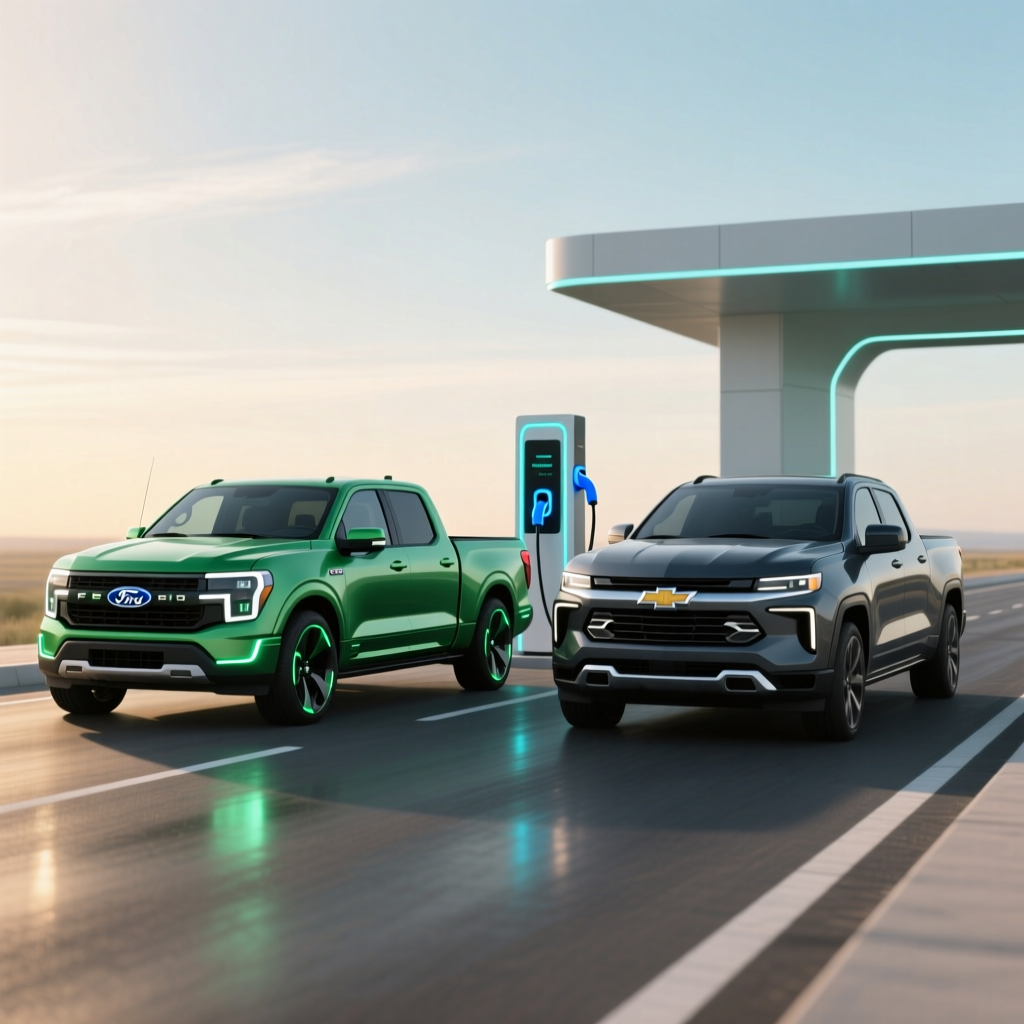
The transition from internal combustion to battery-electric powertrains has sparked one of the most intense rivalries in the modern automotive industry. On one side, we have the Ford F-150 Lightning, a vehicle that took the best-selling nameplate in America and successfully electrified it without alienating its core, traditionalist fanbase. On the other side stands the Chevrolet Silverado EV, a ground-up reimagining of the bowtie brand’s full-size truck, built on the revolutionary Ultium skateboard platform. Both trucks promise zero-emissions commuting, massive towing capabilities, and enough onboard power to run a job site or a luxury campsite. But which one deserves your hard-earned money?
In this comprehensive head-to-head comparison, we break down the engineering, utility, technology, and real-world usability of these two segment heavyweights. For more context on how they rank against the broader market, be sure to check out our constantly updated list of the best electric trucks.
Side-by-Side Specification Comparison
Before diving into the nuances of daily driving and job-site utility, let’s look at the raw numbers. The table below highlights the core differences in hardware & software between the top-tier and standard configurations of both electric pickups.
| Feature | Ford F-150 Lightning | Chevrolet Silverado EV |
|---|---|---|
| Platform Architecture | Modified Body-on-Frame | Skateboard (BT1 / Ultium) |
| Max EPA Range | ~320 miles (Extended Range) | ~440 miles (Max Range) |
| Max Horsepower | 580 hp | 754 hp (RST Edition) |
| Max Torque | 775 lb-ft | 785 lb-ft (RST Edition) |
| Max Towing Capacity | 10,000 lbs | 10,000 lbs (up to 12,500 lbs w/ Max Tow) |
| Max Payload Capacity | 2,235 lbs | 1,800 lbs |
| Front Trunk (Frunk) | 400 lbs capacity, Mega Power Frunk | eTrunk (smaller, weather-sealed) |
| Hands-Free Driving | Ford BlueCruise | GM Super Cruise |
Range and Battery Options: Going the Distance
Range anxiety is magnified when you are hauling a heavy load or towing a trailer, making battery capacity a critical deciding factor for truck buyers. The Ford F-150 Lightning offers a Standard Range battery (targeting roughly 230 miles of EPA-estimated range) and an Extended Range battery that pushes the envelope to approximately 320 miles. For the vast majority of daily commuters and light-duty users, the Extended Range pack provides more than enough buffer for highway road trips and weekend excursions.
Chevrolet, leveraging the flexibility of its Ultium battery architecture, takes a slightly different approach. The Silverado EV offers standard battery packs that comfortably clear the 250-mile mark, but its headline-grabbing achievement is the available Max Range battery. When equipped with the largest battery pack, the Silverado EV can achieve an EPA-estimated range of over 440 miles. This makes the Chevy the undisputed king of long-distance electric travel in the pickup segment, significantly reducing the need for mid-trip charging stops on cross-country hauls.
However, it is vital to remember that towing drastically reduces these numbers. As detailed in our electric truck towing guide, pulling a heavy trailer can cut EV range by 40% to 50%. In those scenarios, the Silverado EV’s massive battery advantage becomes a crucial safety net for long-haul tower.
Performance, Towing, and Payload Capabilities
The engineering philosophies behind these two trucks dictate how they perform on the pavement and the dirt. The Ford F-150 Lightning is built on a heavily modified version of the traditional F-150 body-on-frame chassis. This gives it a familiar, rugged feel that longtime truck owners appreciate, complete with a solid rear axle feel (though it utilizes an independent rear suspension for better ride quality and packaging). The Lightning delivers a robust 580 horsepower and 775 lb-ft of torque in its dual-motor, Extended Range configuration, allowing it to hit 60 mph in the low four-second range.
Conversely, the Chevrolet Silverado EV shares its BT1 skateboard platform with the GMC Hummer EV. This clean-sheet design places the battery pack low in the chassis, resulting in a dramatically lower center of gravity and a fully independent rear suspension. The top-tier Silverado EV RST produces a staggering 754 horsepower and 785 lb-ft of torque, launching the massive truck to 60 mph in a supercar-rivaling 4.5 seconds. The ride quality of the Silverado EV is noticeably smoother over broken pavement, thanks to the skateboard architecture and available adaptive air suspension.
When it comes to work, the Ford Lightning holds a slight edge in maximum payload capacity, topping out around 2,235 lbs compared to the Chevy’s 1,800 lbs. However, the Silverado EV strikes back in towing. While both trucks offer a standard 10,000-lb towing capacity, the Silverado EV’s available Max Tow package pushes its limit to an impressive 12,500 lbs, giving it a distinct advantage for those hauling large boat or heavy equipment trailers.
Charging Speed and Infrastructure
A massive battery is only as good as the speed at which it can be replenished. The Chevrolet Silverado EV features an advanced 800-volt electrical architecture, allowing it to accept DC fast-charging rates of up to 350 kW. Under ideal conditions at a high-speed charger, the Silverado EV can add roughly 100 miles of range in just 10 minutes. This ultra-fast charging capability is a game-changer for commercial fleets and frequent road-trippers.
The Ford F-150 Lightning operates on a more traditional 400-volt architecture, capping its DC fast-charging speeds at around 150 kW. While it can still charge from 15% to 80% in roughly 40 minutes, it cannot match the sheer electron-guzzling speed of the Chevy’s 800-volt system. For a deeper understanding of public networks and home setups, consult our comprehensive EV charging guide.
Where the Lightning truly shines is in its onboard power capabilities. Ford’s Pro Power Onboard system is an industry benchmark, offering up to 9.6 kW of exportable power. You can plug in power tools, run a campsite, or even wire your house for backup power via a bi-directional home charging system. The Silverado EV counters with its PowerBase system, offering up to 10.2 kW of off-board power, complete with outlets in the bed and the cabin. Both trucks act as phenomenal mobile generators, making them invaluable for job sites and emergency backup scenarios.
Interior Space, Cargo, and the Frunk Factor
The absence of a massive internal combustion engine up front has given both automakers the opportunity to rethink cargo storage, but they have executed this in vastly different ways. The Ford F-150 Lightning features the Mega Power Frunk. This front trunk is enormous, offering 400 pounds of payload capacity, a drain plug for use as a cooler, and multiple 120V outlets. It opens via a powered clamshell hood, providing waist-level access to your gear and even doubling as a tailgate seating area or workbench. It is, without a doubt, one of the most practical and beloved features of the Lightning.
Chevrolet took a more conservative approach with the Silverado EV’s eTrunk. It is smaller, fully weather-sealed, and operates more like a traditional car trunk. While it is excellent for securing luggage or groceries away from the elements, it lacks the sheer volume and utility of the Ford’s Mega Power Frunk.
However, Chevrolet strikes back in the rear with the Multi-Flex Midgate and Multi-Flex Tailgate. The Midgate allows you to fold down the rear cabin wall and the rear seats, extending the bed floor directly into the passenger compartment. This enables the Silverado EV to carry items up to nearly 11 feet long with the tailgate closed, or even longer with the tailgate open. For contractors carrying lumber, or outdoor enthusiasts hauling kayaks and paddleboards, the Silverado EV’s Midgate is a transformative feature that the traditional bed of the F-150 Lightning simply cannot match. For more on how these trucks handle daily utility, read our full Chevrolet Silverado EV review and Ford F-150 Lightning review.
Technology, Software, and Driver Assistance
Inside the cabin, both trucks offer expansive, tech-forward environments, but their software ecosystems differ significantly. The Ford F-150 Lightning (on higher trims) features a massive 15.5-inch portrait-oriented touchscreen running SYNC 4A. The interface is highly intuitive, features a dedicated tablet-style layout, and supports wireless Apple CarPlay and Android Auto. Ford’s BlueCruise hands-free driving system is excellent, allowing for true hands-off driving on hundreds of thousands of miles of pre-qualified divided highways.
The Chevrolet Silverado EV dominates in sheer screen real estate with an available 17.7-inch infotainment display angled slightly toward the driver. More importantly, it features Google Built-in. This means Google Maps, Google Assistant, and the Google Play Store are natively integrated into the truck’s operating system. The native Google Maps integration is particularly brilliant for EV owners, as it automatically factors in charging stops, elevation changes, and battery preconditioning when routing long trips. On the driver-assistance front, GM’s Super Cruise remains the gold standard for hands-free highway driving, offering a slightly more extensive mapped network and incredibly smooth lane-change execution.
Pricing, Trims, and Warranty Coverage
Pricing in the electric truck segment spans a massive spectrum, from utilitarian work trucks to six-figure luxury cruisers. The Ford F-150 Lightning Pro serves as an excellent entry point for commercial fleets and budget-conscious buyers, offering robust utility at a relatively accessible price point. As you climb the ladder through the XLT, Lariat, and up to the luxurious Platinum trim, the Lightning transitions from a rugged workhorse to a premium, leather-lined luxury vehicle.
Chevrolet’s strategy begins with the Silverado EV WT (Work Truck), which is heavily targeted at commercial fleets with its durable interiors and fleet-management software. The consumer-focused trims, like the LT and the range-topping RST, push the Silverado EV into premium territory, with the RST commanding a luxury-tier price tag that reflects its 440-mile range and 754-horsepower output.
Both manufacturers back their electric powertrains with competitive warranties. You can expect an 8-year or 100,000-mile warranty on the high-voltage battery components for both the Lightning and the Silverado EV, ensuring long-term peace of mind regarding battery degradation and replacement costs.
The Verdict: Which Electric Truck Should You Buy?
Choosing between the Ford F-150 Lightning and the Chevrolet Silverado EV ultimately comes down to your specific lifestyle, work requirements, and engineering preferences.
Buy the Ford F-150 Lightning if: You value the familiar, rugged aesthetics of a traditional pickup truck. The Lightning is the undisputed champion of front-end cargo utility thanks to the Mega Power Frunk. It is the better choice for buyers who want a seamless transition from gas to electric without relearning how their truck looks, feels, and operates. It is also the superior pick for those who prioritize maximum payload capacity for heavy bed loads.
Buy the Chevrolet Silverado EV if: You prioritize maximum range, cutting-edge platform engineering, and innovative cargo solutions. The 440-mile Max Range battery eliminates almost all road-trip anxiety, while the 800-volt fast-charging architecture gets you back on the road faster. Furthermore, if you frequently haul long items like lumber, ladders, or kayaks, the Multi-Flex Midgate is an absolute necessity that the Ford simply does not offer.
Both vehicles are monumental achievements in automotive engineering, proving that electric pickups are not just viable alternatives to gas trucks, but superior machines in terms of torque, ride quality, and off-grid power capabilities.
Frequently Asked Questions
Which electric truck has better real-world towing range?
While towing significantly reduces the range of any electric vehicle, the Chevrolet Silverado EV holds a distinct advantage in real-world towing scenarios. Thanks to its available Max Range battery pack (capable of over 440 miles unladen), the Silverado EV starts with a much larger buffer. When you factor in the 40% to 50% range reduction caused by pulling a heavy, aerodynamic trailer, the Chevy’s massive battery allows it to travel further between charging stops than the Ford F-150 Lightning’s Extended Range pack.
Can I use these trucks to power my house during an outage?
Yes, both trucks offer bi-directional charging capabilities, but they require specific home hardware installations. The Ford F-150 Lightning’s Pro Power Onboard system, when paired with the Ford Charge Station Pro and a compatible home transfer switch, can seamlessly power your home for up to three days during an outage. The Chevrolet Silverado EV offers similar vehicle-to-home (V2H) capabilities via its PowerBase system, provided you have the requisite bi-directional home charger and electrical panel integration installed by a certified electrician.
How does the ride quality compare between the two trucks?
The Chevrolet Silverado EV generally offers a smoother, more refined ride quality. Because it is built on a dedicated skateboard platform with a low center of gravity and a fully independent rear suspension, it handles bumps and broken pavement with car-like composure. The Ford F-150 Lightning also utilizes an independent rear suspension, which is a massive upgrade over traditional solid-axle leaf springs, but its modified body-on-frame roots give it a slightly more traditional, truck-like feel over harsh terrain.
Which truck is better for commercial fleets?
Both the Ford F-150 Lightning Pro and the Chevrolet Silverado EV WT (Work Truck) are exceptional fleet vehicles. The Ford is often preferred by fleets that require maximum payload capacity and the immense utility of the Mega Power Frunk for secure tool storage. The Chevrolet, however, appeals to fleets focused on long-distance routing and extended range, as well as those who need the Midgate for transporting long materials like piping and lumber. Fleet managers should weigh the specific cargo dimensions and daily mileage routes of their operations before making a bulk purchase.