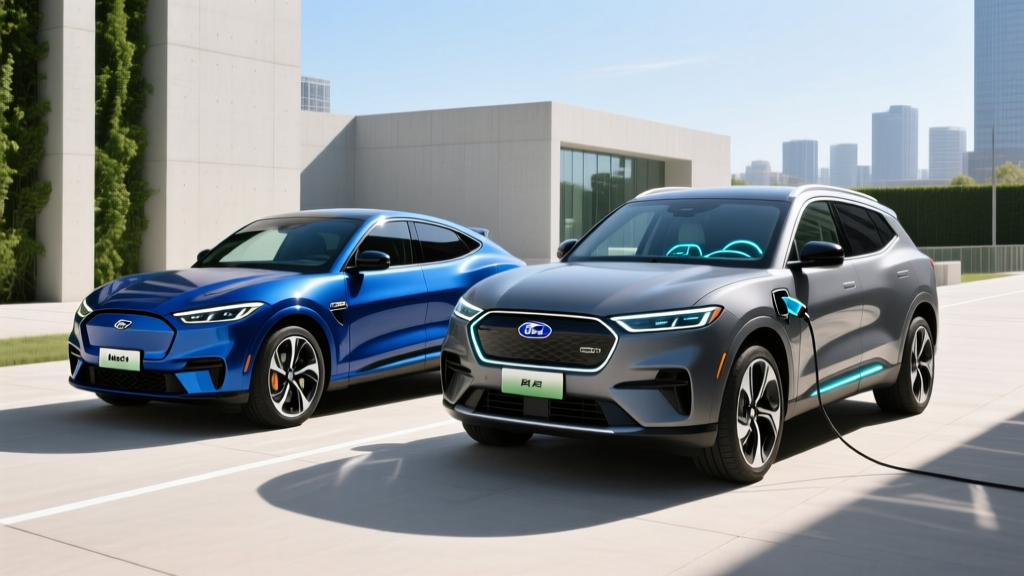
Ford currently offers two main electric SUVs: the Mustang Mach-E and the Explorer EV (Europe-only as of 2026). For U.S. buyers, the Mustang Mach-E remains Ford's sole EV SUV offering, with EPA ranges from 250 to 320 miles depending on trim and battery size, starting at $42,995 before incentives.
Quick Answer: Is a Ford EV SUV Right for You?
Buy the Mustang Mach-E if: You want a sporty, well-equipped electric crossover with 250-320 miles of range, fast DC charging (up to 150 kW), and access to Tesla Superchargers via NACS adapter.
Consider alternatives if: You need three-row seating (look at the Ford Explorer Hybrid or wait for Ford's upcoming three-row EV), regularly tow over 2,000 lbs, or live in an apartment without home charging access.
2026 Mustang Mach-E: Current Specs and Pricing
The Mustang Mach-E enters 2026 with minor updates but retains the powertrain options that have made it competitive in the midsize EV crossover segment. Ford offers four main configurations across Select, Premium, GT, and Rally trims.
| Trim | Battery (kWh) | EPA Range | 0-60 mph | Peak DC Charge | MSRP |
|---|---|---|---|---|---|
| Select RWD | 75.7 (usable) | 250 mi | 6.1 sec | 115 kW | $42,995 |
| Premium RWD (Ext Range) | 91.0 (usable) | 320 mi | 5.8 sec | 150 kW | $48,995 |
| GT AWD (Ext Range) | 91.0 (usable) | 280 mi | 3.5 sec | 150 kW | $59,995 |
| Rally AWD | 91.0 (usable) | 275 mi | 3.7 sec | 150 kW | $57,995 |
Battery chemistry: All trims use NMC (nickel-manganese-cobalt) lithium-ion cells. Ford warranties the battery for 8 years/100,000 miles with a 70% capacity retention threshold.
Real-World Range Expectations
EPA estimates assume mixed city/highway driving at moderate temperatures. Expect different results in practice:
- Highway-only at 75 mph: Subtract 15-20% from EPA figures. The Extended Range RWD delivers roughly 260-270 miles.
- Cold weather (below 30°F): Range drops 20-30% without preconditioning, 10-15% with battery warming enabled.
- Mountain driving: Regenerative braking on descents partially offsets uphill consumption.
The Mach-E's charge curve peaks at 150 kW (Extended Range) but tapers significantly above 80% state of charge. Expect 10-80% charging in roughly 35-40 minutes at a 150+ kW station, but plan for 45-50 minutes if you need to charge past 90%.
Ford Explorer EV: U.S. Availability Status
Ford launched the Explorer EV in Europe in 2024, built on Volkswagen's MEB platform. However, Ford has not announced U.S. availability as of 2026. The company's American EV strategy has pivoted toward larger vehicles and commercial applications, leaving the Explorer EV as a Europe-exclusive model for now.
U.S. buyers seeking a three-row Ford SUV must currently choose between:
- Ford Explorer Hybrid: 23 mpg combined, $54,000+ starting price, no electric-only range
- Wait for Ford's next-gen three-row EV: Announced but with no firm release date or pricing
Cost Comparison: Mach-E vs Gas Crossovers
Comparing the Mustang Mach-E Premium Extended Range RWD ($48,995) against similarly sized gas crossovers like the Honda Passport or Toyota Highlander reveals where EV ownership economics make sense—and where they don't.
| Cost Factor | Mustang Mach-E Premium ER | Honda Passport AWD |
|---|---|---|
| Purchase Price | $48,995 | $44,000 |
| Federal Tax Credit (§30D) | -$7,500 (if eligible) | $0 |
| Net Purchase | $41,495 | $44,000 |
| Fuel/Energy (5 years) | $4,500 (home charging) | $12,750 (22 mpg avg) |
| Maintenance (5 years) | $1,200 | $3,500 |
| Insurance (5 years) | $9,500 | $7,500 |
| Estimated Depreciation | $18,000 | $15,000 |
| 5-Year Total | $74,695 | $82,750 |
Key assumptions: Electricity at $0.14/kWh (national average), gas at $3.50/gallon, home Level 2 charging available. Public DC fast charging exclusively would increase Mach-E energy costs to roughly $7,000 over 5 years.
Federal Tax Credit Eligibility (2026 Rules)
The Mustang Mach-E qualifies for the full $7,500 §30D federal tax credit if you meet these requirements:
- Income caps: Modified AGI under $150,000 (single), $225,000 (head of household), $300,000 (married filing jointly)
- MSRP cap: SUVs/vans capped at $80,000 (all Mach-E trims qualify)
- Battery sourcing: Critical minerals and battery components must meet phased percentage thresholds from U.S. or FTA partners
- Point-of-sale transfer: You can transfer the credit to the dealer for an immediate price reduction
Critical minerals sourcing requirements tighten annually. Verify current-year eligibility on fueleconomy.gov before purchasing, as component sourcing can change mid-year.
Home Charging: The Make-or-Break Factor
The Mach-E's 10.5 kW onboard charger (Level 2) adds roughly 32 miles of range per hour. A full charge from 10% takes about 9 hours on a 48-amp home station.
Home charging setup costs:
- Level 2 charger (48-amp): $500-$800
- Electrician installation (240V/50A circuit): $800-$2,000
- Panel upgrade (if needed): $1,500-$3,000
- Permit and inspection: $100-$300
Total home charging investment: $1,900-$5,100 depending on your electrical panel capacity and distance from panel to garage.
If you live in an apartment or lack dedicated parking, public charging becomes your primary option. This fundamentally changes the economics:
- DC fast charging costs $0.35-$0.50/kWh in most markets
- Time cost: 30-45 minutes per session, 1-2 times per week
- Annual cost increase vs home charging: $1,500-$2,500
The Mach-E's NACS charge port (standard since 2025) provides access to Tesla Superchargers via adapter, significantly expanding public charging options in many regions.
Common Misconceptions About Ford's EV SUVs
| Myth | Fact |
|---|---|
| "The Mach-E isn't a real Mustang" | Irrelevant to ownership. It's a well-executed electric crossover with genuine performance credentials (GT: 480 hp, 3.5-second 0-60). |
| "EV batteries need replacement every 5 years" | Ford warranties the battery for 8 years/100,000 miles to 70% capacity. Real-world data shows NMC batteries retain 85-90% capacity at 100,000 miles with proper charging habits. |
| "You can't take EVs on road trips" | The Mach-E Extended Range handles 300-mile road trips with one 20-30 minute charging stop. Tesla Supercharger access makes route planning easier than most non-Tesla EVs. |
| "EVs are worse in winter" | Range drops 20-30% in cold weather, but the Mach-E's heat pump and battery preconditioning mitigate this. Remote preconditioning while plugged in preserves range and warms the cabin. |
| "Charging takes too long" | Home charging happens overnight while you sleep. Road trip charging aligns with natural rest stops. The issue is access, not time. |
Decision Framework: Should You Buy a Ford EV SUV?
Buy the Mustang Mach-E if:
- You have home charging access (garage or dedicated parking with 240V outlet capability)
- Your daily commute is under 80 miles round-trip
- You take 2-4 road trips per year under 400 miles each
- You qualify for the $7,500 federal tax credit (income and sourcing requirements)
- You want a sporty, tech-forward crossover with strong acceleration
- You live in a region with reliable public charging infrastructure
Consider alternatives if:
- You lack home charging and rely solely on public infrastructure
- You regularly tow over 2,000 lbs (Mach-E max towing: 2,200 lbs with factory hitch)
- You need three-row seating for more than 5 passengers
- You live in a rural area with limited DC fast charging access
- Your budget is under $35,000 (consider used Mach-E or wait for price reductions)
- You drive over 300 miles daily without charging breaks
Frequently Asked Questions
How long does the Mustang Mach-E battery last?
Ford warranties the battery for 8 years/100,000 miles with a 70% capacity retention guarantee. Real-world data from early 2021 models shows most vehicles retain 85-90% capacity at 80,000-100,000 miles. Proper charging habits (avoiding frequent 100% charges, using battery preconditioning) extend longevity. Battery replacement costs $15,000-$20,000 out of warranty, though few owners need this within the vehicle's typical lifespan.
Can I charge the Mach-E at Tesla Superchargers?
Yes. Since 2025, all new Mach-E models ship with the NACS (North American Charging Standard) port, providing native access to Tesla Superchargers. Older CCS-equipped models can use Ford's official NACS adapter ($230) for Supercharger access. This dramatically expands public charging options, especially in rural areas where Tesla has stronger coverage than Electrify America or EVgo.
What's the real-world range on the highway?
Expect 15-20% less than EPA estimates during sustained highway driving at 70-75 mph. The Extended Range RWD (320 EPA) delivers roughly 260-270 real highway miles. Cold weather compounds this loss. Plan road trips assuming 240-250 miles between stops for comfort margin.
Is the Mach-E cheaper to own than a gas SUV?
Over 5 years, yes—assuming home charging access and tax credit eligibility. The Mach-E saves $8,000-$12,000 in fuel and maintenance costs versus a comparable gas crossover. However, higher insurance premiums ($2,000+ over 5 years) and potentially steeper depreciation narrow the gap. Break-even typically occurs at 60,000-80,000 miles.
Does the Mach-E qualify for state incentives?
State incentives vary widely and change frequently. California, Colorado, Massachusetts, and New York offer additional rebates ($1,000-$5,000) with their own income and residency requirements. Check your state's energy or environmental agency website for current programs. Some utilities also offer $500-$1,000 rebates for home charger installation.
How does BlueCruise work, and is it self-driving?
BlueCruise is Ford's Level 2 driver-assistance system (SAE classification). It provides hands-free driving on pre-mapped divided highways but requires continuous driver attention via eye monitoring. You remain legally responsible for the vehicle. It's not autonomous driving—it's advanced cruise control with lane centering. BlueCruise costs $2,100 for a 3-year subscription or $75/month after the initial trial period.