Quick Answer: For most drivers covering 12,000–15,000 miles/year with home Level 2 charging access, a battery-electric vehicle (BEV) delivers the lowest 5-year cost of ownership in 2026 — typically saving $4,000–$9,000 over a comparable gas car after factoring in the §30D federal tax credit (up to $7,500), lower electricity costs, and reduced maintenance. Plug-in hybrids (PHEVs) are the best bridge option for drivers without reliable home charging or those in extreme cold climates. Traditional hybrids (HEVs) win on upfront price and simplicity but forfeit electric-only driving and federal purchase incentives.
The Real 5-Year Cost Breakdown: EV vs Gas vs Hybrid
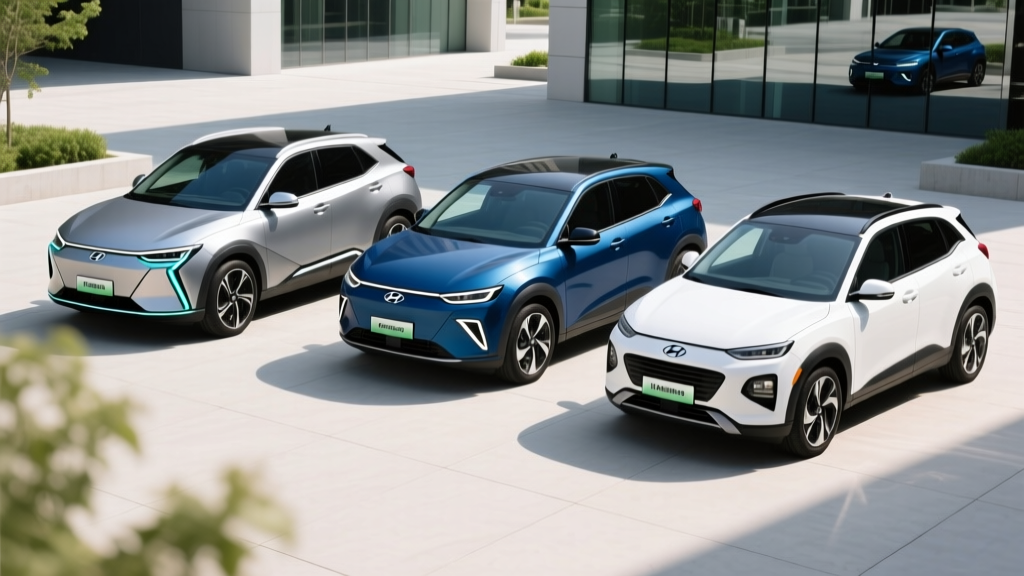
Sticker price is only the starting point. To make an informed decision, you need to compare total cost of ownership (TCO) across five years and 60,000 miles. Below is a representative comparison using three popular 2026 models in the compact SUV segment: the Hyundai Ioniq 5 (BEV), Toyota RAV4 Hybrid (HEV), and Toyota RAV4 (gas AWD).
| Cost Category | Hyundai Ioniq 5 SE (BEV) | Toyota RAV4 Hybrid XLE (HEV) | Toyota RAV4 LE AWD (Gas) |
|---|---|---|---|
| Base MSRP | $42,600 | $33,425 | $30,425 |
| Federal Tax Credit (§30D) | −$3,750 to $7,500* | $0 | $0 |
| Effective Purchase Price | $35,100–$38,850 | $33,425 | $30,425 |
| Fuel/Energy (60k mi) | $2,700–$4,200† | $5,400 | $7,800 |
| Maintenance (5 yr) | $1,200 | $3,100 | $3,800 |
| Insurance (5 yr avg) | $9,500 | $7,800 | $7,500 |
| Estimated Depreciation | $14,500 | $12,200 | $13,000 |
| 5-Year TCO | $53,000–$63,050 | $61,925 | $62,525 |
*§30D credit eligibility depends on buyer income caps ($150k single / $300k joint MAGI), vehicle MSRP caps ($55k SUVs), battery critical-mineral and component sourcing, and point-of-sale transfer. Verify current-year rules at IRS.gov §30D. The Ioniq 5 qualifies for a partial or full credit depending on the sourcing phase-out schedule in effect for 2026.
†EV energy cost assumes $0.14/kWh home charging (national avg per EIA) with 15% DC fast charging at $0.35/kWh. Ranges reflect 3.5–4.0 mi/kWh real-world efficiency.
EV vs Gas: Efficiency and Fueling Costs Compared
The single biggest ongoing savings with an EV comes from energy cost per mile. A kilowatt-hour (kWh) of electricity — the unit measuring energy stored in an EV battery — costs far less than a gallon of gasoline for equivalent distance.
| Metric | BEV (e.g., Ioniq 5) | HEV (e.g., RAV4 Hybrid) | Gas (e.g., RAV4 AWD) |
|---|---|---|---|
| EPA Combined | 114 MPGe (3.8 mi/kWh) | 39 MPG combined | 28 MPG combined |
| Energy/Fuel Cost per Unit | $0.14/kWh (home) / $0.35/kWh (DCFC) | $3.45/gal | $3.45/gal |
| Cost per Mile | $0.04–$0.09/mi | $0.09/mi | $0.12/mi |
| Annual Fuel/Energy (12k mi) | $480–$1,080 | $1,060 | $1,480 |
| 5-Year Fuel/Energy (60k mi) | $2,400–$5,400 | $5,300 | $7,400 |
MPGe (miles-per-gallon-equivalent) lets you compare EVs to gas cars on a common scale: 33.7 kWh of electricity equals one gallon of gasoline. The Ioniq 5's 114 MPGe means it travels the same distance on 33.7 kWh that a gas car would on one gallon — but that 33.7 kWh costs roughly $4.70 at home versus $3.45 for gas. The gap widens further if your utility offers off-peak EV rates ($0.08–$0.10/kWh in many regions).
However, public DC fast charging narrows the advantage. If you rely exclusively on networks like Electrify America or EVgo at $0.35–$0.48/kWh, your per-mile cost can approach or exceed that of a hybrid. Home charging access is the single largest variable in EV economics.
What First-Time EV Buyers Must Know Before Purchasing
Buying your first EV involves considerations that don't exist with gas cars. Here are the non-negotiable factors to evaluate:
Home Charging: The Make-or-Break Factor
Over 80% of EV charging happens at home. A Level 2 home charger (240V, 32–48 amps) adds roughly 25–44 miles of range per hour of charging, meaning a full overnight session easily replenishes daily driving. Installation costs range from $500–$2,500 depending on whether your electrical panel needs an upgrade from 100A to 200A service. If you rent, live in a condo without charging access, or rely solely on street parking, an EV becomes significantly less convenient — and a PHEV or HEV may be the smarter choice.
Real-World Range vs. EPA Stickers
EPA range estimates are measured under controlled conditions. In real-world driving, expect:
- Highway driving at 75+ mph: 10–15% less than EPA (a 310-mile EPA rating yields ~265–280 miles)
- Cold weather (below 32°F): 20–35% reduction due to battery chemistry and cabin heating demands — a 310-mile EV may deliver 200–245 miles in January in Minnesota
- Moderate city/suburban driving (55–65 mph, 60°F): Often matches or slightly exceeds EPA ratings thanks to regenerative braking
This is not a flaw — it's physics. Battery internal resistance increases in cold temperatures, and EVs must use energy for cabin heat (unlike gas cars that use waste engine heat). A heat pump, standard on most 2026 models including the Ioniq 5 and Tesla Model Y, recovers some of this loss but doesn't eliminate it.
Charging Speed: Peak kW vs. Sustained Reality
Manufacturers advertise peak DC fast-charge rates (e.g., "up to 250 kW"), but the charge curve tapers significantly above 50–60% state of charge. The Ioniq 5, for example, peaks near 240 kW on an 800V-compatible charger and can reach 10–80% in approximately 18 minutes — but that last 20% (80–100%) can take an additional 25–30 minutes. Plan road-trip stops around 10–80% charges for optimal efficiency.
§30D Federal Tax Credit: Eligibility Is Not Guaranteed
The federal clean vehicle credit under IRS §30D offers up to $7,500, but eligibility requires meeting all of these conditions:
- Income caps: Modified AGI ≤ $150,000 (single) / $225,000 (head of household) / $300,000 (joint)
- MSRP caps: ≤ $55,000 for sedans; ≤ $80,000 for SUVs, vans, and trucks
- Battery sourcing: Critical minerals and battery components must meet escalating domestic/free-trade-partner thresholds — these requirements tighten annually, and some models that qualified in 2024 may not in 2026
- Point-of-sale transfer: You can transfer the credit to the dealer at purchase for an immediate price reduction, or claim it on your tax return
Always verify a specific VIN's eligibility through the dealer and cross-reference with IRS guidance before signing a purchase agreement. Tax professionals can confirm your income eligibility.
EV vs Hybrid vs Gas: The Decision Framework
There is no universally "best" powertrain — only the best one for your specific situation. Use this framework:
Choose a BEV (full electric) if:
- You have reliable home Level 2 charging (garage, driveway, or workplace)
- Your daily driving is under 200 miles round-trip
- You want the lowest per-mile operating cost and minimal maintenance
- You qualify for the §30D tax credit (bringing effective purchase price near or below a hybrid)
- You live in a moderate climate or accept cold-weather range trade-offs
Choose a PHEV (plug-in hybrid) if:
- You have home charging but also take frequent 300+ mile road trips
- You want 25–45 miles of electric-only commuting with a gas backup for longer drives
- You live in an area with sparse DC fast-charging infrastructure
- You want EV-like daily driving without range anxiety (e.g., Toyota RAV4 Prime: 42 mi EV range, 38 MPG gas)
Choose an HEV (standard hybrid) if:
- You cannot charge at home (apartment, street parking, no garage)
- You want maximum simplicity with no plug, no charging apps, no range planning
- Your budget prioritizes lowest upfront cost
- You drive in extreme cold where EV range loss would be impractical
Choose a gas vehicle if:
- You drive very low annual mileage (under 6,000 miles) where fuel savings never offset EV premiums
- You need maximum towing capacity in a segment where EV options carry significant weight and price penalties
- You live in a charging desert with no realistic home or public charging options
Common EV Ownership Myths — Addressed with Data
| Myth | Fact |
|---|---|
| "EV batteries need replacing every 5 years and cost $20,000" | Federal law mandates battery warranties of at least 8 years/100,000 miles. Most NMC and LFP packs retain 85–92% capacity at 100k miles based on fleet data. Full replacements are rare and declining in cost — a 2026 Ioniq 5 pack replacement runs approximately $8,000–$12,000 if needed out of warranty. |
| "EVs are worse for the environment because of battery mining" | Lifecycle analyses (including battery production) show BEVs produce 50–70% fewer greenhouse gas emissions over 150,000 miles compared to gas cars on the current US grid mix, per EPA and ICCT data. The gap widens as the grid decarbonizes. |
| "Charging takes too long for road trips" | Modern 800V-architecture EVs (Ioniq 5, EV6, Tesla models) add 150–200 miles in 15–18 minutes at a compatible DC fast charger. Combined with natural rest/food stops, road-trip time penalty is 10–15 minutes per 200-mile leg. |
| "EVs don't work in cold climates" | EVs operate in Norwegian winters (average January temp: 20°F) where they represent over 80% of new car sales. Range drops 20–35%, but preconditioning (heating the battery while plugged in) and heat pumps mitigate this. Plan for the loss; it's manageable. |
| "The power grid can't handle everyone driving EVs" | The US Department of Energy estimates that even with 50% EV adoption, total electricity demand would increase only ~10–15%. Most charging occurs overnight during off-peak hours when grid capacity is underutilized. Local transformer upgrades are the real bottleneck, not generation capacity. |
| "EV insurance is unaffordable" | EV insurance premiums run 10–25% higher than gas equivalents due to higher repair costs and parts pricing. However, some insurers offer EV-specific discounts. Budget $150–$250/month depending on model, location, and driving record — and shop quotes before purchasing. |
Maintenance Savings: Where EVs Pull Ahead
EVs eliminate most routine maintenance associated with internal combustion engines:
- No oil changes — saves $150–$300/year
- No spark plugs, timing belts, or fuel filters
- Regenerative braking extends brake pad life to 80,000–120,000+ miles in many cases (vs. 30,000–50,000 for gas cars)
- No transmission fluid — most EVs use a single-speed reduction gear requiring no service
- Cabin air filter replacement every 15,000–20,000 miles (~$30–$50) and tire rotation every 7,500 miles remain the primary recurring costs
Over five years, these savings typically total $1,500–$2,600 compared to a gas car, according to fueleconomy.gov maintenance comparisons. Tire wear can be slightly higher on EVs due to vehicle weight (the Ioniq 5 weighs ~4,500 lbs vs. ~3,600 lbs for a RAV4 gas), so budget for one extra set of tires over 60,000 miles.
Frequently Asked Questions
Is an EV cheaper than a gas car over 5 years?
In most cases, yes — if you qualify for the §30D tax credit and charge primarily at home. The Ioniq 5 example above shows a 5-year TCO of $53,000–$63,050 vs. $62,525 for the gas RAV4. Without the tax credit or with exclusive DC fast charging, the EV advantage narrows or disappears. Run the numbers for your specific electricity rate, annual mileage, and credit eligibility.
What happens if my EV battery degrades?
Battery degradation is gradual and typically modest. Most 2026 EVs use either NMC (nickel-manganese-cobalt) or LFP (lithium iron phosphate) chemistry. LFP batteries, found in standard-range Tesla Model 3/Y and some Ford models, degrade more slowly and tolerate regular 100% charging but offer lower energy density (shorter range per kWh). NMC packs offer more range but benefit from charging to 80% daily. Federal warranty mandates require manufacturers to cover battery capacity below 70% of original for at least 8 years/100,000 miles. In practice, most packs retain 85–92% at 100,000 miles.
Can I tow with an EV?
Yes, but with trade-offs. The Ford F-150 Lightning tows up to 10,000 lbs, and the Rivian R1T handles 11,000 lbs. However, towing cuts EV range by 40–55% due to aerodynamic drag and weight. A 320-mile EPA truck may deliver only 150–180 miles while towing a 5,000-lb trailer. Gas trucks lose efficiency too, but refueling infrastructure for long towing trips remains more practical in 2026.
Should I buy or lease an EV in 2026?
Leasing can be advantageous if: (a) the vehicle doesn't qualify for the §30D purchase credit but the leasing company can pass through the commercial clean vehicle credit (§45W) as a lease incentive, (b) you want to hedge against rapid EV depreciation as technology improves, or (c) you want to upgrade every 3 years. Buying makes more sense if you qualify for the full credit, plan to keep the vehicle 5+ years, and drive high annual mileage where lease overage penalties would apply.
Do I need to upgrade my electrical panel for a home charger?
Maybe. A Level 2 charger drawing 32–48 amps requires a dedicated 40–60 amp circuit. Homes with 100-amp electrical service may need a panel upgrade to 200 amps, costing $1,500–$3,000. Homes with existing 200-amp service typically need only the circuit installation ($500–$1,200 for wiring and breaker). Always consult a licensed electrician for a load calculation before purchasing equipment. Some utilities offer rebates that offset panel-upgrade costs.
How does a PHEV compare to a full EV for daily commuting?
A PHEV like the RAV4 Prime (42 miles EPA electric-only range) covers most commutes under 40 miles round-trip on electricity alone, then operates as a 38-MPG hybrid for longer trips. You get EV-like daily fuel costs ($0.50–$1.20/day for electricity) without range anxiety. The trade-off: PHEVs have smaller batteries (18–20 kWh) that don't qualify for the full §30D credit in all cases, and they carry the maintenance burden of both a gas engine and an electric drivetrain long-term.