Why E-Bike Shoppers Are Cross-Shopping Electric Cars
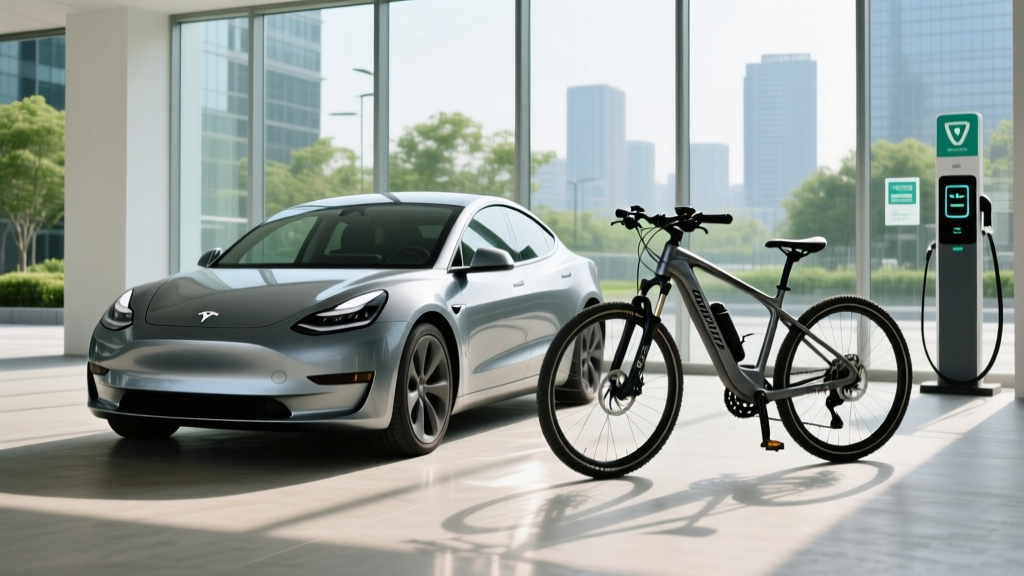
If you've searched how much do electric bicycles cost in 2026, you've probably seen the sticker range: $1,000 for a basic commuter e-bike up to $8,000+ for a cargo model. That overlaps with the post-incentive price of some entry-level electric vehicles, which raises a fair question — should your next "vehicle" have two wheels or four?
This guide answers that question with real numbers. We'll map out what e-bikes actually cost to buy and run, then put them head-to-head with a mainstream EV (the 2026 Hyundai Ioniq 5 and Chevrolet Equinox EV) on purchase price, fueling, insurance, maintenance, and depreciation over five years. The goal: help you decide whether an e-bike replaces a car, complements one, or sits in a completely different lane.
How Much Do Electric Bicycles Actually Cost in 2026?
The e-bike market has stratified sharply. Here's what you'll pay by category, based on current retail pricing from major brands (Rad Power, Lectric, Trek, Specialized, Tern, Riese & Müller):
- Budget commuters (hub-drive, 250–500W, 20–35 mile range): $1,000–$2,000
- Mid-range commuters (mid-drive or quality hub, 40–60 mile range, hydraulic disc brakes): $2,000–$4,000
- Cargo / family haulers (long-tail, 500–750W, 400-lb payload): $3,500–$6,000
- Premium / European touring (mid-drive, belt drive, integrated lights, 80+ mile range): $5,000–$9,000+
Battery replacement — the biggest long-term cost — runs $500–$900 for a quality pack and is typically needed once between years 4 and 7 depending on cycle count. Most reputable brands use UL 2849-certified systems; avoid unbranded imports that skip this safety standard.
5-Year Total Cost of Ownership: E-Bike vs EV vs Gas Car
| Cost Category | E-Bike (Mid-Range Commuter) | 2026 Chevy Equinox EV 2LT | 2026 Honda CR-V AWD (Gas) |
|---|---|---|---|
| Purchase Price (MSRP) | $2,800 | $36,200 | $34,500 |
| Federal Tax Credit (§30D / §25C*) | — | Up to $7,500 (if eligible) | — |
| Net Purchase After Incentives | $2,800 | ~$28,700 (best case) | $34,500 |
| Energy/Fuel (5 yrs, 12k mi/yr EV & gas, 2k mi/yr e-bike) | $120 | $3,600 | $8,250 |
| Insurance (5 yrs) | $0–$600 (rider's policy) | $9,500 | $7,200 |
| Maintenance (5 yrs) | $750 (tires, chain, tune-ups) | $1,800 | $3,600 |
| Depreciation (5-yr resale loss) | ~$1,700 | ~$14,500 | ~$13,800 |
| Total 5-Year Cost | ~$5,370 | ~$58,100 | ~$67,350 |
| Cost Per Mile (all-in) | $0.54/mi | $0.97/mi | $1.12/mi |
*E-bikes no longer qualify for a federal purchase credit as of 2026. EVs use IRS §30D; the Equinox EV eligibility depends on battery sourcing and buyer income. Source: IRS.gov §30D.
The Federal EV Tax Credit: What Actually Applies (and What Doesn't)
A common misconception: the federal credit applies to e-bikes. It doesn't. The §30D Clean Vehicle Credit covers four-wheeled plug-in vehicles; a brief e-bike credit proposed in Congress never passed. So the "how much do electric bicycles cost" answer is simply the retail price minus any state/local/utility rebate.
For EVs, the §30D credit remains up to $7,500 in 2026, but eligibility is a moving target with strict guardrails:
§30D Eligibility Checklist (2026 Model Year)
- Income caps (MAGI): $150k single / $225k head of household / $300k joint — no credit above these
- MSRP caps: $55,000 for sedans; $80,000 for SUVs, pickups, and vans
- Battery sourcing: Critical minerals and battery components must meet phased-in domestic/free-trade thresholds that tighten annually
- Assembly: Final assembly must occur in North America
- Transfer option: You can transfer the credit to the dealer at point-of-sale as a down-payment reduction (effective since Jan 1, 2024)
- VIN registration: Required at time of sale via the IRS Energy Credits Online portal
The Equinox EV, built in Mexico with GM's Ultium pack, has qualified for the full $7,500 in recent years — but battery-component sourcing rules tighten every January. Always verify current eligibility on fueleconomy.gov before signing paperwork.
State, Local, and Utility Rebates: Highly Variable
Where incentives really diverge is below the federal level. Examples as of early 2026:
- California (CVRP): Up to $7,000 for income-qualified EV buyers; some air-district programs stack on top
- Colorado: $5,000 state credit (refundable) + potential utility rebates (Xcel Energy up to $500)
- New York: Drive Clean Rebate up to $2,000 at point-of-sale
- E-bike rebates: Denver, Boulder, and several CA/VT programs offer $300–$1,500 e-bike vouchers, often income-tiered
- Utility home-charging rebates: Common $250–$1,000 toward Level 2 hardware/install; check your local co-op or IOU
These change frequently and can stack — but confirm directly with your state energy office and utility before committing.
Charging an EV vs Fueling a Gas Car vs Charging an E-Bike
The per-mile math is where electrification shines — at both the two-wheel and four-wheel scale. Here's the breakdown using realistic 2026 rates:
Cost Per Mile: Energy/Fuel Only
| Vehicle | Efficiency | Energy Price Assumption | Cost Per Mile |
|---|---|---|---|
| E-bike (mid-range) | 20 Wh/mi (0.02 kWh/mi) | $0.17/kWh (home avg) | $0.003/mi |
| Equinox EV AWD | 3.4 mi/kWh (29 kWh/100mi) | $0.17/kWh home / $0.48/kWh DCFC blended | $0.06–$0.14/mi |
| Honda CR-V AWD (gas) | 28 MPG combined | $3.30/gal | $0.12/mi |
EPA combined figures via fueleconomy.gov. Real-world EV highway efficiency is typically 10–15% worse than EPA, especially below 40°F.
For a 12,000-mile/year driver charging mostly at home, the Equinox EV costs roughly $600–$720/year in electricity versus $1,400–$1,650/year in gasoline for the CR-V. Heavy DC fast-charging users (road-trip dominant, apartment dwellers) can see EV energy costs climb to $1,200+/year — still below gas, but the gap narrows sharply.
Maintenance Savings: Where EVs (and E-Bikes) Quietly Win
Typical Maintenance: 5-Year / 60,000-Mile Horizon
| Service Item | EV | Gas Car | E-Bike |
|---|---|---|---|
| Oil changes | $0 | $600–$900 | $0 |
| Brake pads/rotors | $200–$400 (regen extends life 2–3×) | $800–$1,400 | $150–$250 |
| Transmission fluid | $0 (single-speed reduction gear) | $150–$300 | $0 |
| Spark plugs / ignition | $0 | $300–$500 | $0 |
| Tires (EVs wear faster due to torque + weight) | $1,200–$1,800 | $800–$1,200 | $200–$400 |
| Coolant, cabin filter, wipers | $400–$600 | $400–$600 | $0 |
| Chain/belt + cassette (e-bike) | — | — | $200–$350 |
| 5-Year Total | ~$1,800–$2,800 | ~$3,000–$4,900 | ~$550–$1,000 |
Two caveats worth naming. First, EV tires wear 20–30% faster than on comparable gas cars — instant torque and 4,500–5,500-lb curb weights are brutal on rubber. Budget for EV-specific tires (Michelin Pilot Sport EV, Hankook iON) at $250–$400 per corner. Second, e-bike drivetrains need regular attention; a neglected chain will eat a cassette in a single wet season.
The Insurance Reality: EVs Cost More to Insure (E-Bikes, Less So)
Here's where the EV narrative flips. Average EV insurance premiums in 2026 run 15–25% higher than equivalent gas vehicles, according to industry analyses. Why?
- Repair costs: High-voltage battery packs, aluminum structures, and ADAS sensor recalibration make even minor collisions expensive
- Total-loss thresholds: A dented battery enclosure can push a repairable gas car into "total loss" territory on an EV
- Parts scarcity: OEM EV body panels and proprietary charge-port assemblies often have longer lead times
- Specialized labor: High-voltage-certified technicians command higher shop rates
Expect to pay $1,700–$2,200/year for an Equinox EV with a clean record in a mid-cost state, versus $1,300–$1,700 for the gas CR-V. Multi-policy bundling and EV-specific insurers (Tesla Insurance where available, Lemonade EV, Progressive's EV endorsement) can narrow the gap.
E-bike insurance is a different story. Most homeowner's/renter's policies cover theft (with a deductible) at no extra premium. Dedicated e-bike policies from providers like Velosurance or Sundays run $100–$250/year and add liability and crash coverage — a fraction of car insurance.
Depreciation and Resale: The EV Market Has Reset
EV depreciation was brutal in 2023–2024 as Tesla's price cuts cascaded through used values. By 2026 the curve has stabilized but still differs from gas cars:
- Mainstream EVs (Ioniq 5, Equinox EV, ID.4): ~45–55% retained value at 5 years / 60,000 miles
- Tesla Model Y / Model 3: ~40–50% retained (high supply, frequent new-model repricing)
- Gas crossovers (CR-V, RAV4): ~55–65% retained
- E-bikes: ~35–45% retained at 5 years, heavily brand-dependent (Trek/Specialized hold better than Amazon brands)
The wild card is battery State of Health (SoH). Buyers of a 5-year-old EV want documented SoH above 80% — request a diagnostic report from the dealer or use OBD tools like OBDeleven with EV-specific apps. Federal law mandates an 8-year / 100,000-mile battery warranty (capacity retention typically ≥70%), which does protect resale somewhat.
Decision Framework: E-Bike, EV, or Both?
Choose an E-Bike If…
- Your commute is under 15 miles each way with bike-lane infrastructure
- You want sub-$3,000 all-in purchase and near-zero fuel cost ($0.003/mi)
- You already own a car and want to eliminate 60–80% of short trips
- You live in a city with congestion pricing or scarce parking
Choose an EV If…
- You need year-round, all-weather, highway-capable transportation
- You can charge at home (Level 2 install: $600–$2,000 typical)
- You qualify for §30D and/or state incentives, bringing net cost closer to gas
- You drive 12,000+ miles/year, where the per-mile savings compound
Choose Both If…
- You're a two-vehicle household: use the EV for highway/family/cold-weather trips and the e-bike for daily commuting — this is often the lowest total-cost, lowest-emission setup available
Frequently Asked Questions
How much does it really cost to own an EV over 5 years?
For a mainstream model like the 2026 Equinox EV with the full $7,500 federal credit, expect roughly $55,000–$60,000 all-in over five years at 12,000 miles/year — purchase, energy, insurance, maintenance, and depreciation combined. Without the credit (income above caps, ineligible battery sourcing), add $7,500 back in. Per-mile cost typically lands between $0.90 and $1.10.
Do I qualify for the federal EV tax credit?
Check three gates: (1) your MAGI is under $150k/$225k/$300k by filing status; (2) the vehicle MSRP is under $55k (sedans) or $80k (SUVs/trucks); (3) the specific VIN passes the critical-minerals and battery-component sourcing thresholds on the IRS Energy Credits Online portal. The cleanest verification path is the dealer's point-of-sale attestation at signing.
How much do I save on fuel and maintenance vs gas?
Typical 5-year savings versus a 28-MPG gas crossover: $4,500–$5,500 in fuel (home-charging dominant) and $1,200–$2,100 in maintenance. Combined savings of $6,000–$7,500 are realistic — but they're partially offset by $2,000–$3,500 in higher insurance premiums over the same period.
Are EVs more expensive to insure?
Yes, typically 15–25% higher premiums than equivalent gas vehicles due to higher repair costs, battery replacement risk, and ADAS recalibration expenses. Quote from at least three insurers and ask specifically about EV endorsements and bundled home-charger coverage.
How well do EVs hold their value?
Mainstream EVs retain roughly 45–55% of MSRP at 5 years / 60k miles — below comparable gas crossovers (55–65%) but improved from the 2023–2024 crash. Documented battery SoH above 80% and remaining powertrain warranty are the two biggest resale-value levers.
How much do electric bicycles cost to run annually?
At 2,000 miles/year and $0.17/kWh home electricity, an e-bike uses about $7/year in electricity. Add $150–$200/year for tune-ups, tires, and chain service, plus optional $100–$250 insurance — total running cost around $250–$450/year, or roughly 15–22 cents per mile all-in.