The Quick Answer: Are EV Rides Worth It in 2026?
If you can charge at home and drive under 40 miles daily, EV rides cost roughly $0.04–$0.06 per mile on electricity versus $0.12–$0.16 per mile on gasoline for a comparable 28 MPG sedan — saving most owners $900–$1,400 annually on energy alone. Add near-zero routine maintenance (no oil changes, fewer brake replacements thanks to regenerative braking), and the 5-year savings can offset a higher sticker price. However, EV rides still carry higher upfront costs, potentially higher insurance premiums, and real range limitations in cold weather or on sustained highway trips. This guide gives you the exact numbers to decide.
What "EV Rides" Actually Means for Today's Buyer
When people search for "EV rides," they're usually asking one of two things: should I buy an electric vehicle for my daily commute, or how do EV rides compare to the gas car I already own? Both questions hinge on the same data points — energy cost per mile, total cost of ownership, range adequacy, and charging access.
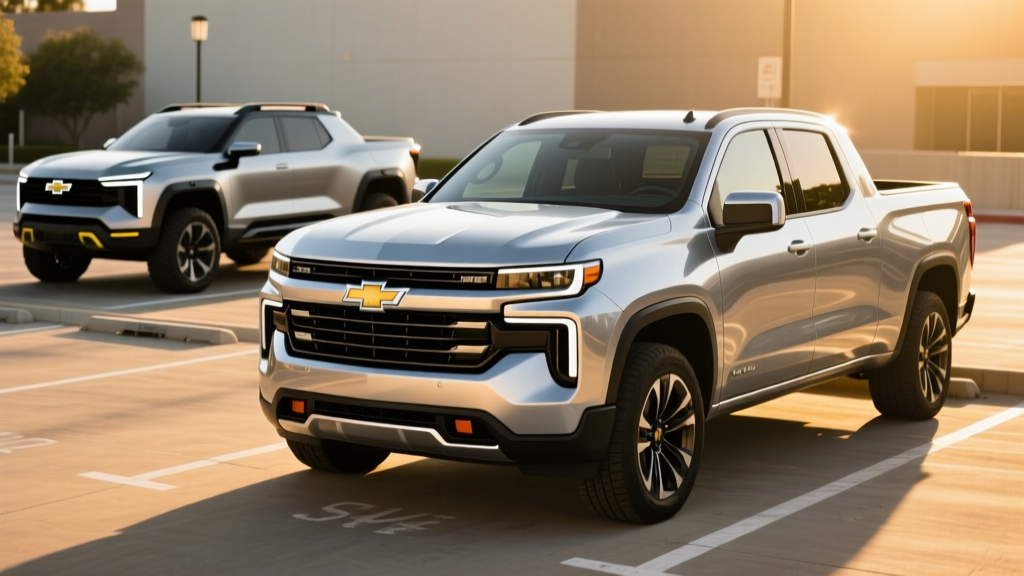
The EV market in 2026 offers genuine variety. A base Chevrolet Equinox EV starts around $33,600 MSRP with an EPA-estimated 319 miles of range. A Hyundai Ioniq 5 starts near $42,600 with up to 318 miles EPA on the Long Range RWD trim. A Tesla Model 3 Long Range starts at approximately $44,130 with 363 miles EPA. Meanwhile, a comparably equipped Toyota Camry LE (gas) starts around $29,995 and delivers 32 MPG combined per fueleconomy.gov.
The gap in sticker price is real — but so is the gap in operating cost. Let's quantify it.
EV Rides vs Gas: The Cost-per-Mile Breakdown
Here's where the math gets concrete. We'll compare a mainstream EV against a mainstream gas sedan using 2026 national averages: electricity at $0.17/kWh (residential average) and gasoline at $3.45/gallon.
| Metric | EV (e.g., Ioniq 5 RWD) | Gas Sedan (28 MPG Combined) |
|---|---|---|
| Energy Efficiency | 3.0 mi/kWh (112 MPGe) | 28 MPG combined |
| Energy Cost per Unit | $0.17/kWh (home) | $3.45/gallon |
| Cost per Mile (Energy) | $0.057 | $0.123 |
| Annual Energy Cost (12,000 mi) | $684 | $1,479 |
| Annual Savings (EV) | ~$795/year | |
Important nuance: These figures assume home Level 2 charging at residential electricity rates. If you rely exclusively on DC fast charging at public stations — where rates often run $0.35–$0.55/kWh — your per-mile cost jumps to $0.12–$0.18, essentially matching or exceeding gasoline. Home charging access is the single biggest variable in whether EV rides save you money.
Total Cost of Ownership: 5-Year Projection
Energy is just one line item. A proper comparison includes purchase price, depreciation, insurance, maintenance, and any applicable tax credits.
| Cost Category | EV (Ioniq 5 SEL, ~$47,000) | Gas (Camry SE, ~$33,000) |
|---|---|---|
| Purchase Price (MSRP) | $47,000 | $33,000 |
| Federal Tax Credit (§30D) | −$3,750 to −$7,500* | $0 |
| Effective Purchase Price | ~$39,500–$43,250 | $33,000 |
| Energy (5 years, home charging) | $3,420 | $7,395 |
| Maintenance (5 years) | ~$1,800 | ~$3,600 |
| Insurance (5-year avg premium) | ~$12,500 | ~$9,500 |
| Estimated Depreciation (5 yr) | ~$19,000 | ~$13,000 |
| 5-Year Total | ~$76,220–$79,970 | ~$66,495 |
*The IRS §30D credit ranges from $3,750 to $7,500 depending on battery sourcing and critical-mineral requirements. Buyer income caps ($150K single / $300K joint) and MSRP caps ($55K sedans / $80K SUVs) apply. Verify eligibility with a tax professional before purchase.
The honest takeaway: over five years, the EV still costs more in total — but the gap narrows significantly when you factor in the tax credit, and it continues to shrink in years 6–10 as energy and maintenance savings compound while depreciation flattens.
Range Reality: EPA Stickers vs Real-World EV Rides
This is where marketing meets physics. EPA range estimates are measured under controlled conditions that include city and highway driving at moderate temperatures. Your actual range depends heavily on speed, climate, terrain, and battery preconditioning.
Real-World Range Expectations
EPA Sticker: 318 miles (Ioniq 5 Long Range RWD, 84 kWh battery, NMC chemistry)
Real-World Scenarios:
- Mixed city/highway, 65–75°F: ~275–295 miles
- Sustained 75 MPH highway: ~240–265 miles
- Cold weather (below 30°F), highway: ~195–230 miles (30–40% reduction is normal for NMC packs without a heat pump; the Ioniq 5 includes one, which helps)
- Mountain driving with elevation gain: Varies widely; regen recovers some energy on descents
For context, most Americans drive 37 miles per day on average according to FHWA data. Even with cold-weather losses, a 300-mile EPA-rated EV covers a week of commuting before needing a charge. The range question isn't really about daily driving — it's about the 5% of trips that exceed 200 miles, where DC fast charging infrastructure becomes the deciding factor.
Charging Speed: The Numbers That Matter
Peak charge rate (measured in kW — the power flowing into the battery) is not sustained across the entire session. Here's what a typical DC fast charging session looks like:
- Ioniq 5 (800V architecture): Peaks at ~235 kW, charges 10–80% in approximately 18 minutes at a 350 kW-capable station
- Tesla Model 3 Long Range: Peaks at ~250 kW on V3 Superchargers, 10–80% in approximately 25 minutes
- Chevy Equinox EV: Peaks at ~150 kW, 10–80% in approximately 30–34 minutes
The charge curve tapers significantly above 80% State of Charge (SoC) to protect battery health. Charging from 80–100% can take as long as 10–80%. For road trips, the practical strategy is to charge to 80% and resume driving.
First-Time EV Buyer: What You Need to Know Before Purchasing
| Myth | Fact |
|---|---|
| "EV batteries need replacing every few years" | Federal law mandates battery warranties of at least 8 years/100,000 miles. Real-world data shows most NMC packs retain 85–92% capacity after 100K miles. Replacement costs $8,000–$18,000 but is rarely needed within the warranty period. |
| "EVs are worse in cold weather" | Range drops 20–40% in sub-freezing temps — this is real. But EVs start instantly, don't need warm-up idling, and models with heat pumps (like the Ioniq 5 and Model 3) minimize cabin-heating energy drain. Preconditioning while plugged in restores much of the range loss. |
| "There aren't enough charging stations" | The U.S. has over 70,000 public charging ports as of early 2026, with the Tesla Supercharger network (now open to NACS-equipped non-Tesla EVs) being the most reliable. However, rural corridors and apartment-dweller access remain genuine gaps. |
| "EVs are slower than gas cars" | Electric motors deliver instant torque. A Tesla Model 3 Performance does 0–60 in 2.9 seconds. Even the base Ioniq 5 hits 60 in 7.2 seconds — competitive with most gas crossovers. |
| "EVs are worse for the environment because of electricity generation" | Even on a coal-heavy grid, lifecycle emissions for EVs are typically 50–70% lower than gas cars per Union of Concerned Scientists analysis. On cleaner grids, the advantage widens further. |
Home Charging: The Make-or-Break Factor
Owning EV rides without home charging is possible but significantly less convenient and more expensive. Here's what home setup costs look like:
- Level 1 (120V outlet): Adds ~3–5 miles per hour. Free if you already have an outlet near your parking spot. Adequate for PHEVs or very low daily mileage.
- Level 2 (240V, 40–48A circuit): Adds ~25–35 miles per hour. Equipment costs $300–$700; professional installation runs $500–$2,000 depending on panel capacity and run distance. A 200-amp panel upgrade, if needed, can add $1,500–$3,500.
For most EV owners, a Level 2 home charger is the baseline for practical daily use. You plug in when you get home and wake up to a full battery — no gas station stops required for daily driving.
Decision Framework: Are EV Rides Right for Your Situation?
Choose an EV If:
- You have home charging access (garage, driveway, or employer-provided charging) — this is the single strongest predictor of EV satisfaction
- Your daily round-trip commute is under 80 miles — easily covered by any current EV, even in cold weather
- You drive 10,000+ miles annually — higher mileage means faster payback on energy savings
- You qualify for the §30D tax credit — check income caps ($150K single/$300K joint), MSRP limits, and battery sourcing requirements on irs.gov
- You want lower maintenance costs — no oil changes, fewer brake pad replacements, no transmission fluid
Consider a Hybrid or PHEV Instead If:
- You live in an apartment without charging access and public infrastructure near you is sparse
- You regularly drive 300+ miles in a single day in areas with limited DC fast chargers
- You experience extreme cold (consistently below 10°F) and cannot garage your vehicle
- Your budget is under $30,000 — a Toyota Prius hybrid at ~$29,000 MSRP and 57 MPG combined may be the more practical electrified choice
Wait or Reassess If:
- You're considering a used EV with unknown battery health — always request a State of Health (SoH) reading before purchase
- Your only vehicle must tow heavy loads — towing cuts EV range by 40–60%, making most current EVs impractical for frequent heavy towing
Frequently Asked Questions About EV Rides
How long do EV batteries actually last?
Most modern NMC and LFP battery packs are engineered for 1,500–3,000 charge cycles before reaching 70–80% of original capacity. In real-world terms, that translates to 150,000–300,000+ miles before significant degradation. Federal warranty requirements mandate coverage for at least 8 years or 100,000 miles against capacity loss below a manufacturer-defined threshold (typically 70% retention). Many owners report 90%+ retention at the 100K-mile mark.
Do EV rides save money compared to Uber or Lyft?
If you're asking whether owning an EV is cheaper than ride-hailing services: yes, dramatically so. Uber and Lyft rides average $1.50–$3.00 per mile depending on market and time. Even the most expensive public DC fast charging for a personal EV runs about $0.18 per mile. For daily commuting, EV ownership costs a fraction of regular ride-hailing.
What's the cheapest EV I can buy in 2026?
The Nissan LEAF S starts around $28,140 with 149 miles of EPA range. The Chevrolet Equinox EV LT starts near $33,600 with 319 miles EPA. If you qualify for the full $7,500 §30D credit (available as a point-of-sale rebate), the effective price drops substantially. Note that the LEAF uses a CHAdeMO connector, which has limited fast-charging infrastructure compared to NACS and CCS — a practical consideration for road trips.
Are EV insurance costs really higher?
On average, yes — EV insurance premiums run 15–25% higher than comparable gas vehicles, primarily due to higher repair costs after collisions (specialized parts, high-voltage safety protocols, and battery replacement risk). However, this varies significantly by insurer, model, and driver profile. Always get quotes before purchasing.
Can I take an EV on a road trip?
Absolutely — with planning. On the Tesla Supercharger network (now accessible to NACS-equipped vehicles from Ford, GM, Rivian, and others), you'll typically stop for 15–25 minutes every 200–250 miles. Apps like A Better Routeplanner and PlugShare help map charger locations. The experience is different from gas — you'll plan stops around chargers rather than gas stations — but it's entirely practical for most corridors. Rural routes in the Mountain West and parts of the South remain the biggest gap.
The Bottom Line on EV Rides in 2026
EV rides deliver measurable savings on energy and maintenance for drivers with home charging and typical commutes. The technology has matured: ranges exceed 300 miles on mainstream models, fast charging reaches 10–80% in under 20 minutes on 800V platforms, and battery longevity data is reassuring. The limitations — higher upfront cost, cold-weather range loss, apartment-charging challenges, and insurance premiums — are real and quantifiable, not deal-breakers for most buyers but genuine factors to weigh.
Run your own numbers: multiply your annual miles by $0.057 (EV home charging) versus $0.123 (gas at 28 MPG), subtract any applicable tax credit from the EV purchase price, and add five years of each. The math will tell you whether EV rides make financial sense for your specific situation — and for a growing majority of American drivers, it does.