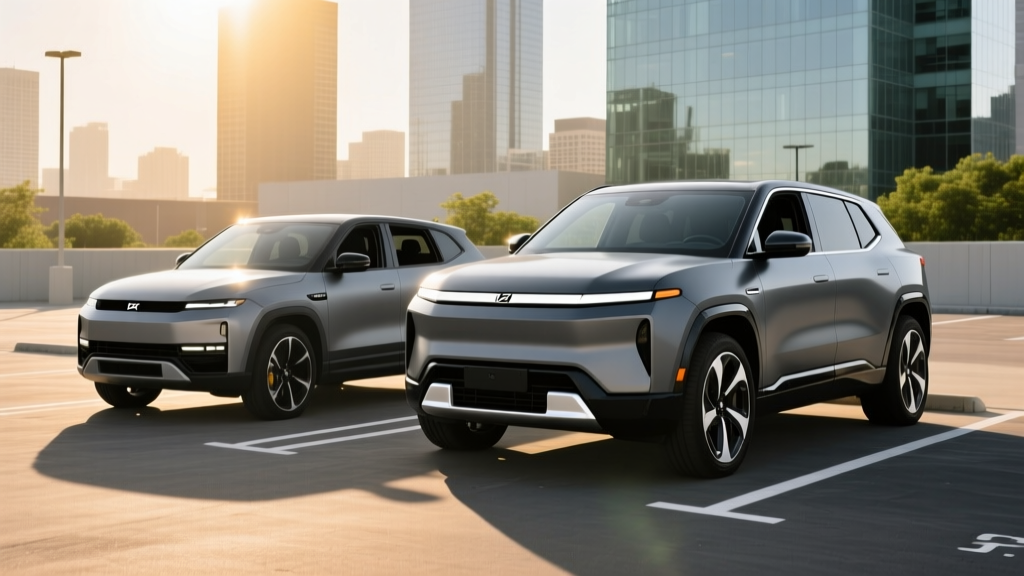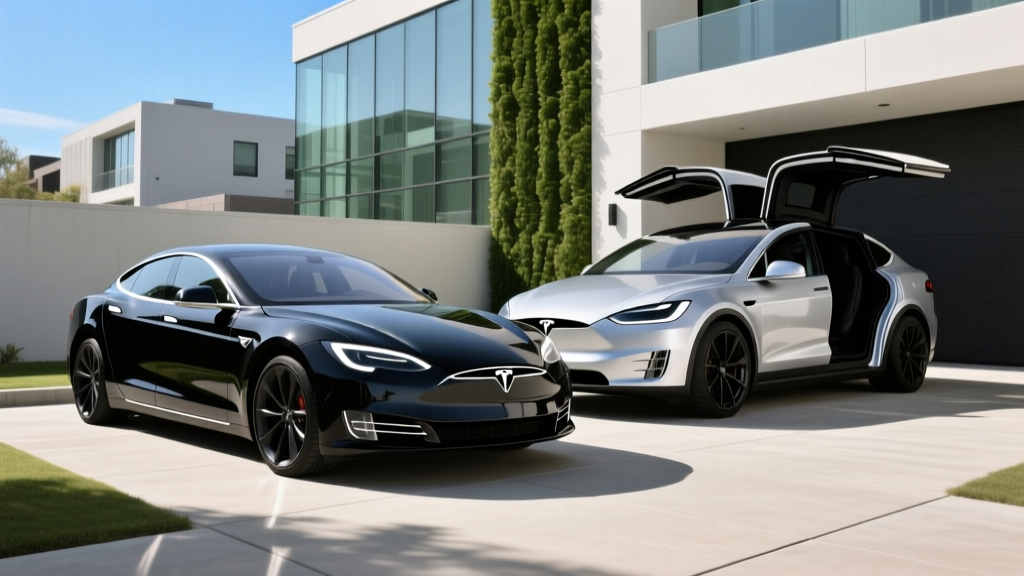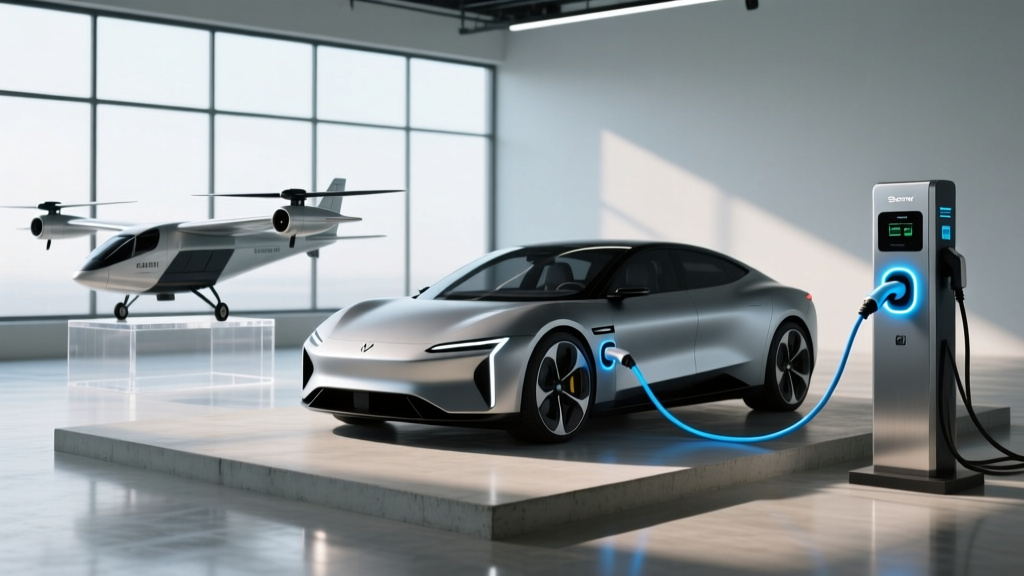
Quick Answer: If you searched "EV plane" hoping to buy an electric aircraft for personal travel, the honest reality in 2026 is that no certified, consumer-available electric airplane exists for purchase. Companies like Eviation (Alice), Heart Aerospace (ES-30), and Beta Technologies (Alia) are developing electric aircraft, but these are targeted at regional air cargo and short-haul commercial routes — not private consumers. The practical EV purchase for individuals remains a ground-based electric vehicle. If you want electric mobility today with real range, charging infrastructure, and a federal tax credit, you're looking at cars like the Chevy Equinox EV (315 mi EPA, ~$33,000 MSRP) or Tesla Model Y (320 mi EPA, ~$44,990 MSRP), not an airplane.
What "EV Plane" Actually Means in 2026
The term "EV plane" gets roughly 110 searches per month, and most searchers fall into two camps: aviation enthusiasts tracking electric aircraft development, and EV-curious shoppers who've conflated electric cars with electric planes. Let's separate fact from fiction.
Electric aviation is real — but it's in its infancy. The FAA has not yet certified a fully electric commercial passenger aircraft for scheduled service. Here's where the major players stand:
- Eviation Alice: 9-passenger, targeted 250-nautical-mile range, ~440 kWh battery. Prototype flights completed; certification timeline pushed to late 2027 or beyond. Target customers are regional carriers and cargo operators.
- Heart Aerospace ES-30: 30-seat hybrid-electric regional airliner, ~200 km electric range. Partners include United Airlines and Mesa Airlines (letters of intent, not firm orders). First flight expected 2027.
- Beta Technologies Alia: Electric cargo/passenger aircraft with ~250-nautical-mile range. UPS has committed to purchase; FAA certification in progress. Not consumer-available.
- eVTOL air taxis (Joby, Archer, Lilium): These electric vertical-takeoff aircraft target short urban hops (20-100 miles). Joby and Archer are pursuing FAA type certification with limited commercial service expected late 2026 or 2027 in select cities — but as ride-hailing services, not personal ownership.
None of these are vehicles you can buy, insure, and park in your garage. They're commercial platforms years from widespread availability, and even then, they'll cost millions per unit.
Your Actual Electric Mobility Decision: EV vs. Gas vs. Hybrid
Since an EV plane isn't an option for personal transportation, let's focus on the electric mobility purchase you can actually make today. The core question for most buyers: should you go full EV, plug-in hybrid (PHEV), or conventional hybrid?
| Factor | Battery EV (e.g., Equinox EV) | PHEV (e.g., Toyota RAV4 Prime) | Hybrid (e.g., Toyota RAV4 Hybrid) | Gas (e.g., RAV4 Gas) |
|---|---|---|---|---|
| Base MSRP (2026) | ~$33,000 | ~$43,690 | ~$31,900 | ~$28,675 |
| EPA Range / MPG | 315 mi (EV) | 42 mi EV + 38 MPG combined | 41 MPG combined | 30 MPG combined |
| Fuel/Energy Cost per Mile | ~$0.04 (home charging) | ~$0.05 (blended) | ~$0.09 | ~$0.12 |
| Federal Tax Credit (§30D) | Up to $7,500 (if eligible) | Up to $7,500 (if eligible) | None | None |
| Home Charging Needed? | Strongly recommended | Recommended for EV miles | No | No |
| Maintenance Cost (5 yr) | ~$1,500 | ~$2,800 | ~$2,500 | ~$3,500 |
The numbers reveal a clear hierarchy: if you have home charging access and drive under 300 miles daily, a BEV like the Equinox EV or Hyundai Ioniq 5 delivers the lowest per-mile cost. If you lack reliable charging or frequently drive 400+ miles without overnight stops, a PHEV bridges the gap. Hybrids remain the fallback for apartment dwellers without charging access.
Real Cost of EV Ownership: 5-Year Breakdown
EVs cost more upfront but save on fuel and maintenance. Here's a realistic 5-year, 75,000-mile ownership comparison using 2026 figures:
| Cost Category | Chevy Equinox EV 2LT ($33,000) | Toyota RAV4 Gas LE ($28,675) |
|---|---|---|
| Purchase Price (after §30D credit) | $25,500 (if eligible) | $28,675 |
| Home Charger Install (Level 2) | $1,200 (avg, 240V/48A circuit) | $0 |
| Energy/Fuel (75,000 mi) | $3,000 (at $0.14/kWh avg) | $9,000 (at $3.60/gal, 30 MPG) |
| Maintenance (5 yr) | $1,500 (tires, cabin filter, fluid top-offs) | $3,500 (oil changes, brakes, filters) |
| Insurance (5 yr avg) | $9,500 (~$1,900/yr, EV premium) | $7,500 (~$1,500/yr) |
| Estimated Depreciation | $12,000 | $11,000 |
| Total 5-Year Cost | $52,700 | $59,675 |
The EV wins by roughly $7,000 over five years — but only if you qualify for the full §30D credit and charge primarily at home. Without the credit, the gap narrows to near zero. Without home charging (relying on DC fast charging at $0.35-$0.48/kWh), your energy cost jumps to ~$7,500, erasing the savings.
Tax credit caveat: The IRS §30D credit requires meeting income caps ($150K single / $300K joint), MSRP caps ($55K cars / $80K SUVs/trucks), and battery critical-mineral and component sourcing thresholds that tighten annually. Always verify eligibility on IRS.gov or with a tax professional before counting on the credit.
EV Plane Myths vs. Ground-EV Facts
| Myth | Fact |
|---|---|
| "I'll just wait for an EV plane instead of buying an electric car" | Consumer electric aircraft are a decade or more away, will cost $1M+, and require a pilot's license. Ground EVs are available now at $25K-$50K with mature infrastructure. |
| "Electric planes will make road travel obsolete" | Even optimistic eVTOL projections target 20-100 mile urban hops at $3-6/mile — far more expensive than EV driving at $0.04/mile. Cars remain the economics winner. |
| "EV batteries are too heavy for planes" | Partly true: current lithium-ion energy density (~250 Wh/kg at cell level) makes long-range electric flight impractical. But ground EVs handle the weight fine — a 85 kWh battery in a 4,500-lb car is well within engineering norms. |
| "EVs are worse for the environment than gas cars" | EPA data confirms that even on coal-heavy grids, lifetime EV emissions are lower than gas equivalents. On clean grids (hydro, wind, solar), the advantage is dramatic. |
| "EV range isn't enough for real life" | The average American drives 37 miles/day (fueleconomy.gov). A 315-mi EPA range covers a full week of commuting. Road trips require planning but are routine on the Tesla Supercharger or Electrify America networks. |
Real-World Ownership: What First-Time EV Buyers Must Know
If you're pivoting from "EV plane" curiosity to an actual EV purchase, here's what the brochures don't emphasize:
Home charging is the make-or-break factor. A Level 2 home charger (7-11.5 kW, 240V) adds 25-44 miles of range per hour of charging and costs $800-$2,000 installed (equipment + electrician + permit). If you can't install one — apartment living, street parking, landlord refusal — EV ownership becomes significantly harder. Public DC fast charging works but costs 3-5x more per kWh and requires 20-40 minute stops.
Real-world range is 15-30% below the EPA sticker. A 315-mi EPA rating typically delivers 250-270 miles at 70 mph highway speeds, and 200-230 miles in freezing temperatures. This isn't a defect — it's physics. Cold reduces battery chemical efficiency, and cabin heating draws 3-5 kW continuously. If your daily round trip exceeds 200 miles in a cold climate, you need a 350+ mi EPA vehicle or a PHEV.
Charging curves taper above 80%. A vehicle that "peaks at 190 kW" doesn't sustain that rate. Expect 10-80% in ~25 minutes on a 150+ kW DC charger, but 80-100% may take another 20-30 minutes. Road-trip strategy: charge to 80%, then move on.
Insurance costs 15-25% more for EVs. Higher repair costs (battery replacement, specialized bodywork) and higher vehicle prices drive premiums up. Get quotes before buying — the difference between insurers can be $500-$1,000/year.
Battery degradation is slower than feared. Most 2026 EVs use NMC (nickel-manganese-cobalt) or LFP (lithium iron phosphate) chemistry. LFP degrades more slowly and tolerates 100% daily charging, while NMC prefers 20-80% daily cycles. Federal warranty mandates require 8 years/100,000 miles with at least 70% capacity retention. Real-world data shows most EVs retain 85-90% capacity at 100K miles.
Decision Framework: Should You Buy an EV in 2026?
Choose a Battery EV if:
- You can install a Level 2 home charger (garage, driveway, or workplace access)
- Your daily driving is under 200 miles round-trip
- You qualify for the §30D credit (check income caps and vehicle sourcing on irs.gov)
- You want the lowest per-mile operating cost and minimal maintenance
- Recommended models: Chevy Equinox EV ($33K), Hyundai Ioniq 5 ($42K), Tesla Model Y ($45K)
Choose a PHEV if:
- You lack reliable home or workplace charging
- You regularly drive 300+ miles without overnight stops
- You want electric-only commuting (25-45 mi range) with gas flexibility for road trips
- Recommended models: Toyota RAV4 Prime ($44K, 42 mi EV), Jeep Wrangler 4xe ($50K, 22 mi EV)
Choose a Hybrid or Gas Vehicle if:
- You live in an apartment with zero charging access and no workplace charging
- You frequently tow heavy loads (trailers, boats) in remote areas
- Your budget is under $28,000 and you need the lowest possible upfront cost
- Recommended models: Toyota RAV4 Hybrid ($32K), Honda CR-V Hybrid ($35K)
Don't wait for an EV plane. Consumer electric aviation is a 2030s prospect at earliest, will serve commercial routes not personal ownership, and won't replace ground transportation economics. Your best electric mobility investment in 2026 is a well-chosen ground EV with home charging.
Frequently Asked Questions
Can I buy an electric plane in 2026?
No. Every electric aircraft in development (Eviation Alice, Heart ES-30, Beta Alia, Joby S4) is targeted at commercial operators, not consumers. Prices range from $4M-$10M+ per unit, and FAA type certification remains incomplete. Personal electric aviation is realistically a 2030s scenario at the earliest.
How far can current electric aircraft fly?
The most advanced prototypes target 200-300 nautical miles with 9-30 passengers. By comparison, a $33,000 Chevy Equinox EV delivers 315 miles of EPA range on the ground, costs 100x less, and requires no pilot's license.
What's the cheapest EV I can buy in 2026?
The Nissan Leaf S starts around $28,140 with 149 miles of EPA range (40 kWh battery). The Chevy Equinox EV 2LT at ~$33,000 offers 315 miles and qualifies for up to $7,500 in federal tax credits, bringing the effective price to ~$25,500 for eligible buyers.
Do I need a special electrical panel for a home EV charger?
Possibly. A Level 2 charger (7-11.5 kW) requires a dedicated 240V circuit (40-60A). If your home's electrical panel is at or near capacity, you may need a panel upgrade ($1,500-$3,000) before installation. A licensed electrician should assess your panel before you commit to equipment.
Will an EV save me money vs. a gas car?
Over 5 years and 75,000 miles, a typical EV saves $5,000-$8,000 in fuel and maintenance — but only with home charging and federal tax credit eligibility. Without either, the savings narrow to $1,000-$2,000 or may turn negative when higher insurance and depreciation are factored in.
What about eVTOL air taxis — can I ride in one?
Joby Aviation and Archer Aviation are pursuing FAA certification for eVTOL air-taxi services, with limited commercial launches expected in select cities (likely Los Angeles, New York, Dubai) by late 2026 or 2027. These will operate like ride-hailing (think Uber for the sky), not personal ownership. Expect pricing of $3-6 per passenger mile initially — roughly 10x the cost of driving an EV.