The Short Answer
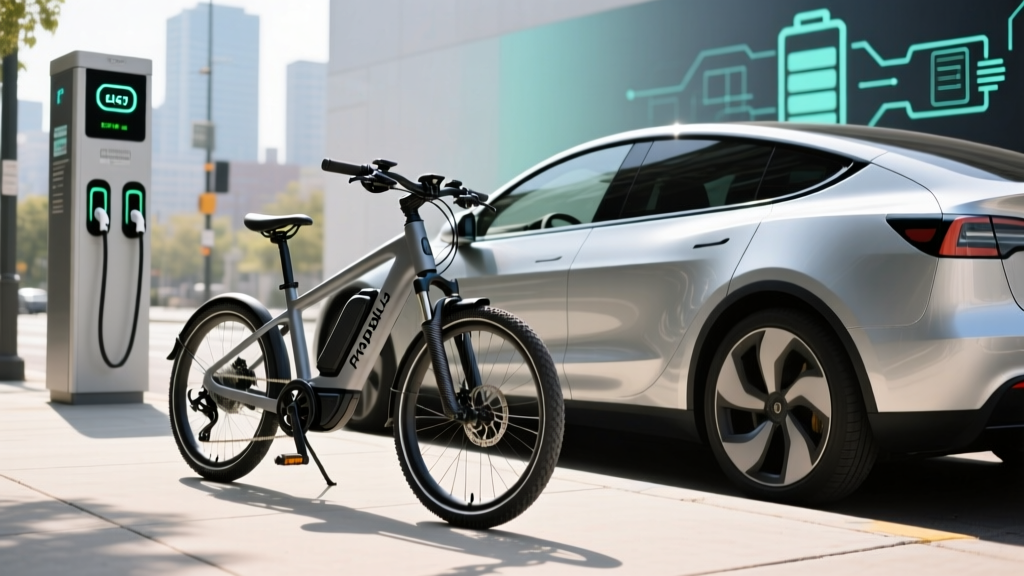
If you're researching the Gotrax Approach step-over electric mountain bike as a commuter alternative, here's the practical math: the Approach delivers roughly 30-40 miles of assisted range per charge at a cost of about $0.01 per mile in electricity. A typical 2026 EV like the Chevrolet Equinox EV costs roughly $0.04-$0.06 per mile to charge at home but offers 300+ miles of all-weather range, highway capability, climate control, and cargo space. An e-bike wins on upfront cost ($1,200-$1,600 vs. $33,000+) and parking; an EV wins on safety, weather protection, range, and year-round practicality. For many households, the answer isn't either/or — it's both, with the e-bike handling short fair-weather trips and the EV covering everything else.
What the Gotrax Approach Step-Over Electric Mountain Bike Actually Offers
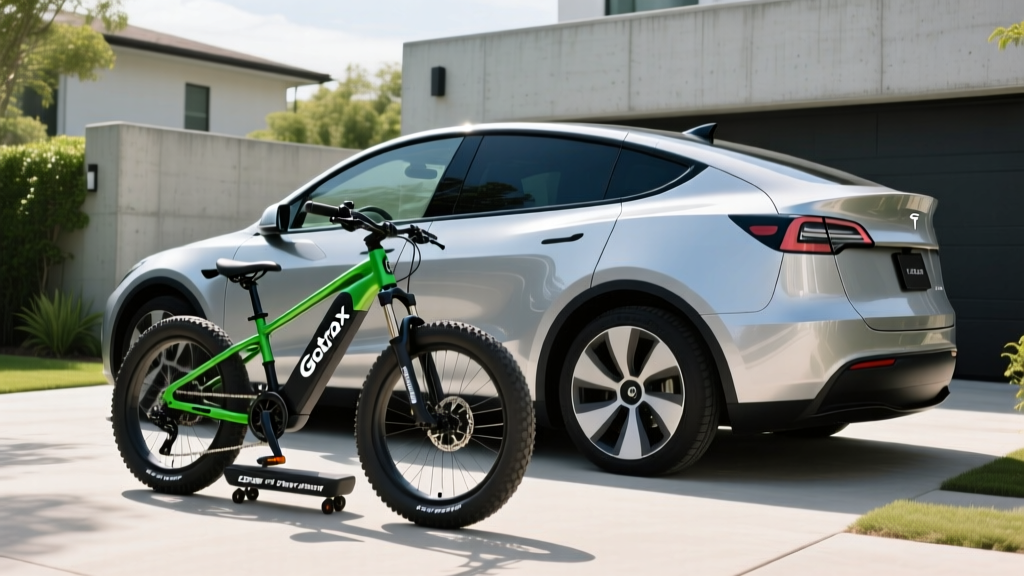
The Gotrax Approach is a Class 2/Class 3 e-bike (depending on local classification) with a 350W rear hub motor, a 36V 10.4 Ah lithium-ion battery (roughly 0.37 kWh of usable energy), and pedal assist up to 20 mph. Gotrax advertises up to 40 miles of range under optimal conditions — flat terrain, mild weather, light rider, lower assist levels. In real-world commuting with moderate assist and some hills, expect 25-35 miles before the battery is depleted.
At a retail price hovering around $1,299 (frequently on sale for $999-$1,199), the Approach undercuts even the most affordable new EVs by a factor of 25 or more. It charges from a standard 120V outlet in about 5-6 hours using the included 2A charger — pulling roughly 70-80W during peak charging. That means a full charge costs approximately $0.05-$0.08 at the US average residential electricity rate of ~$0.17/kWh (per EIA data).
EV vs. E-Bike: A Concrete Cost Comparison
To make this decision real, let's compare the Gotrax Approach against a representative affordable EV — the 2026 Chevrolet Equinox EV LT (EPA-estimated 315 miles of range, 85 kWh usable battery) — over a typical 15-mile round-trip commute, 250 workdays per year.
| Factor | Gotrax Approach E-Bike | 2026 Chevy Equinox EV LT |
|---|---|---|
| Purchase Price (MSRP) | ~$1,299 | $33,600 |
| Federal Tax Credit (§30D) | Not eligible | Up to $7,500 (subject to IRS §30D income, MSRP, and sourcing rules) |
| Effective Purchase Price | $1,299 | ~$26,100 (with full credit, point-of-sale transfer) |
| Battery Capacity | 0.37 kWh (36V / 10.4 Ah) | 85 kWh usable (NMC) |
| Real-World Range | 25-35 mi (assist dependent) | ~260-290 mi highway; ~220 mi cold weather |
| Cost Per Full Charge | ~$0.06 | ~$14.45 (home, $0.17/kWh) |
| Cost Per Mile (energy) | ~$0.002 | ~$0.049 |
| Annual Energy Cost (7,500 mi/yr) | ~$15 | ~$368 |
| Annual Insurance | $0-$150 (optional renter's add-on) | $1,400-$2,200 (varies by state, driver) |
| Annual Maintenance | $50-$150 (tires, brake pads, chain) | $300-$500 (tires, cabin filter, wiper fluid, brake inspection) |
| 5-Year Total Operating Cost | ~$1,000-$2,250 | ~$10,340-$14,840 (energy + insurance + maintenance) |
The e-bike is dramatically cheaper to operate. But the comparison only works if the e-bike can actually replace the trips you need to make — which depends on weather, distance, cargo, and road conditions.
When an E-Bike Can (and Can't) Replace Car Trips
According to NHTS data, the average American drives roughly 37 miles per day, with about 60% of trips under 6 miles. For that short-trip majority, an e-bike like the Gotrax Approach is a legitimate car replacement — under the right conditions.
Where the e-bike wins:
- Fair-weather urban commutes under 15 miles one-way — the Approach's 25-35 mile real range covers this comfortably
- Parking-congested areas — an e-bike parks anywhere, often for free
- Short errands — grocery runs with panniers, pharmacy trips, school drop-offs
- Low-speed roads with bike infrastructure — protected lanes, multi-use paths
Where the EV is non-negotiable:
- Highway travel — e-bikes are unsafe (and often illegal) on roads with 45+ mph speed limits
- Cold/rainy weather — the Approach has no weather protection; battery range drops 15-30% below 40°F
- Trips over 20 miles one-way — range anxiety on an e-bike is real, and there's no public charging network for 36V batteries
- Passenger or large cargo needs — car seats, week's groceries, furniture
- Night riding on unlit roads — visibility and safety concerns outweigh the savings
Real-World Ownership Considerations Most Buyers Overlook
Home Charging Access
The Gotrax Approach charges from any standard 120V outlet — no electrician needed, no panel upgrade, no $500-$2,000 Level 2 install. This is a genuine advantage for apartment dwellers who can't install EV charging hardware. If you can bring the battery indoors (it's removable), you can charge anywhere. For EV ownership without home charging, public DC fast charging costs $0.30-$0.50/kWh, pushing per-mile costs to $0.09-$0.15 — still cheaper than gas but 10-15x the e-bike's energy cost.
Climate Impact
In Phoenix or San Diego, an e-bike commute is viable 300+ days per year. In Minneapolis or Chicago, realistic e-bike commuting drops to roughly 150-180 days. The Approach's battery loses meaningful capacity below freezing — a 35-mile summer range can shrink to 22-25 miles at 25°F. An EV with a heat pump (increasingly standard on 2026 models) loses 15-25% of range in cold weather but still delivers 200+ miles with full cabin heating.
Battery Longevity and Replacement
The Approach's 0.37 kWh battery will degrade over time. Expect 500-800 full charge cycles before capacity drops to 80% — roughly 3-5 years of daily commuting. A replacement battery costs $200-$350. By comparison, a 2026 EV battery is warranted for 8 years/100,000 miles (federally mandated minimum) and is designed for 1,500-3,000 cycles. Replacement costs $8,000-$18,000 out of warranty, but most EV batteries retain 85-90% capacity at 100,000 miles based on current fleet data.
Common Misconceptions — Fact vs. Myth
| Myth | Fact |
|---|---|
| "E-bikes are just as green as EVs" | Per mile, e-bikes use ~95% less energy. But an EV charged on a clean grid (hydro, wind, solar) has a lower lifetime carbon footprint per passenger-mile if you factor in the e-bike's shorter lifespan and battery replacements. |
| "An e-bike can fully replace my car" | For ~30% of US households (single occupants in bikeable cities with mild climates), yes. For most households, it replaces 30-50% of trips, not all of them. |
| "EVs are too expensive to be practical" | After the §30D credit (up to $7,500), state rebates, and fuel savings, a 2026 Equinox EV can reach cost-parity with a comparable gas SUV within 4-5 years of ownership, per fueleconomy.gov TCO tools. |
| "E-bike batteries are easily recyclable" | Small-format lithium-ion batteries from e-bikes are harder to recycle through established channels than EV batteries, which have mature take-back programs from manufacturers and dedicated recyclers like Redwood Materials and Li-Cycle. |
| "I don't need insurance for an e-bike" | Most states don't require it, but a $500 e-bike theft or a collision with a pedestrian can be financially devastating. Specialty e-bike insurance (e.g., Velosurance, Sundance) runs $100-$300/year. |
Federal Tax Credits and Incentives: What Applies Where
The Gotrax Approach and similar e-bikes do not qualify for the federal §30D Clean Vehicle Credit — that credit applies only to four-wheeled vehicles meeting specific battery sourcing, MSRP, and buyer income thresholds. However, some e-bikes may qualify under the proposed E-BIKE Act or local utility rebates (check your municipal utility's website). Several states and cities — including Denver, Boulder, and parts of California — have offered point-of-sale e-bike rebates of $300-$1,400.
For the EV side of the equation, the 2026 §30D credit remains up to $7,500, transferable at the point of sale (effectively a discount at the dealership), subject to:
- Buyer AGI caps: $150,000 single / $300,000 joint
- MSRP caps: $55,000 for sedans, $80,000 for SUVs/pickups
- Battery critical-mineral and component sourcing requirements (phased in annually through 2030)
Always verify current eligibility on IRS.gov before purchasing — sourcing rules tighten each year.
Decision Framework: Which Should You Choose?
Choose the Gotrax Approach (or similar e-bike) if:
- Your one-way commute is under 15 miles on roads with bike lanes or low speed limits
- You live in a mild climate where cycling 200+ days/year is realistic
- You already own a car (or have access to one) for longer trips and bad weather
- Your budget is under $2,000 and you want immediate transportation savings
- You lack home EV charging access and don't want to rely on public DC fast chargers
Choose an EV if:
- You need a primary vehicle for all weather, all distances, all cargo needs
- Your commute includes highway segments or roads without bike infrastructure
- You regularly carry passengers, car seats, or large cargo
- You can install Level 2 home charging (or have reliable workplace charging)
- You qualify for the §30D credit, bringing effective cost into the $25,000-$35,000 range
Choose both if:
- You're a two-vehicle household considering dropping to one car plus an e-bike — this is the sweet spot many urban households are finding. Keep the EV for road trips, weather, and hauling; use the e-bike for 60% of daily trips and save $2,000-$4,000 annually on fuel, insurance, and parking.
Frequently Asked Questions
Does the Gotrax Approach qualify for any federal tax credit?
No. The federal §30D Clean Vehicle Credit applies only to four-wheeled motor vehicles. E-bikes are not eligible. However, check your state, city, and local utility — some offer e-bike rebates of $200-$1,400 that stack with sales.
How does the Gotrax Approach's range compare to an EV in winter?
The Approach's advertised 40-mile range drops to roughly 22-28 miles in freezing temperatures due to lithium-ion chemistry limitations and increased rider effort in heavy clothing. A 2026 EV with a heat pump (e.g., Hyundai Ioniq 5, Tesla Model Y) loses 15-25% of its EPA range in cold weather — from 315 to roughly 240-265 miles — while maintaining full cabin heating and defrost.
What does it cost to charge the Gotrax Approach vs. an EV per month?
Charging the Approach daily (0.37 kWh per charge) costs roughly $1.25-$1.90 per month at US average electricity rates. Charging an EV daily (30 kWh for a typical 100-mile daily drive) costs $150-$175/month at home. However, the EV replaces $180-$250/month in gasoline for the same mileage, so net savings still favor the EV over a gas car — just not over the e-bike.
Can I ride the Gotrax Approach in the rain?
The Approach has an IP54 water-resistance rating, meaning it handles splashing and light rain. It is not waterproof — heavy downpours, puddle submersion, or pressure washing can damage the motor controller or battery contacts. An EV, by contrast, is fully sealed and designed for all weather conditions.
Is an e-bike safer than driving a car?
Per mile traveled, e-bike riders face higher injury risk than car occupants due to lack of structural protection. IIHS data shows e-bike and e-scooter injuries have risen significantly since 2020. Helmet use, front/rear lights, high-visibility clothing, and route selection (protected bike lanes over arterial roads) are essential risk mitigations. An EV's crumple zones, airbags, and ADAS features (AEB, blind-spot monitoring, lane-keep) provide far more occupant protection.
What's the total 5-year cost of owning both an EV and an e-bike?
Purchase: ~$27,400 (Equinox EV after credit + $1,299 e-bike). Annual operating costs: ~$2,200 for the EV (insurance, energy, maintenance) + ~$250 for the e-bike. Five-year total: approximately $39,650. Compare that to a gas-only SUV at ~$48,000-$55,000 over the same period (fuel, higher maintenance, depreciation). The EV + e-bike combo typically saves $8,000-$15,000 over five years while covering virtually every transportation need.