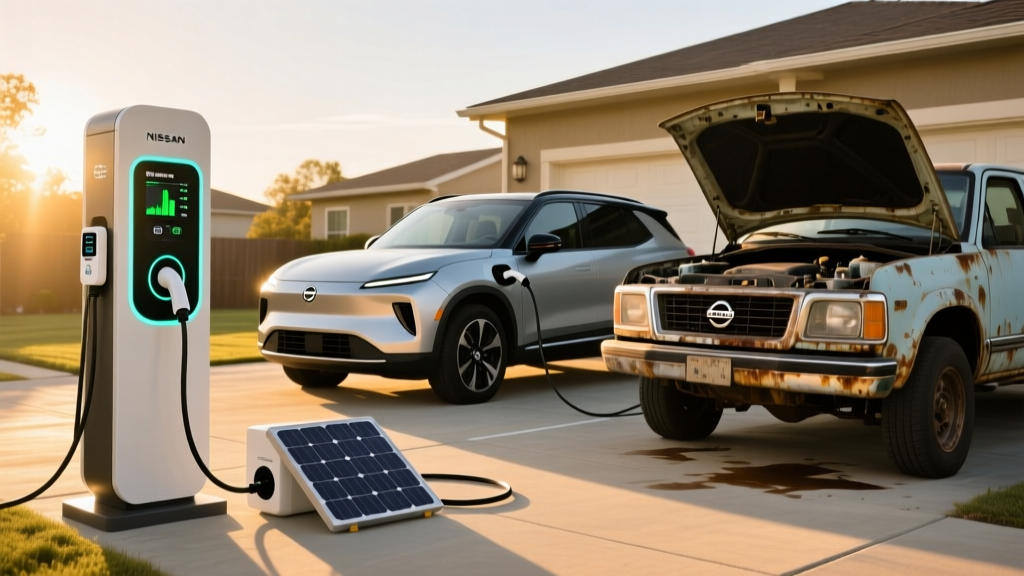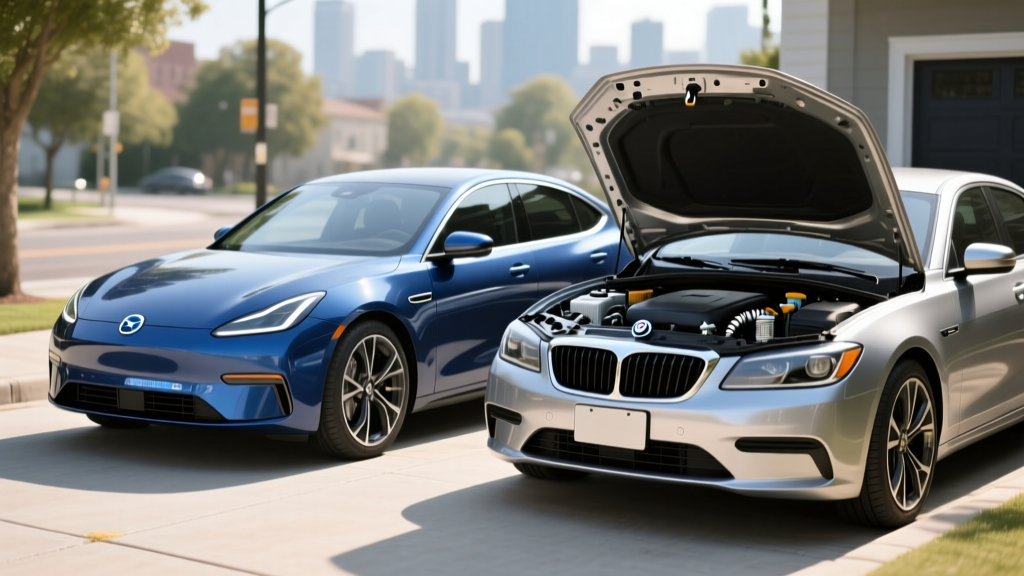
The short answer: Battery-electric vehicles cost roughly 40% less to maintain than comparable gasoline cars. According to the U.S. Department of Energy, EV owners spend an average of $0.061 per mile on maintenance versus $0.101 per mile for internal combustion vehicles. Over a 5-year/75,000-mile ownership cycle, that translates to approximately $4,575 for an EV versus $7,575 for a gas car — a savings of around $3,000. The reason is simple: an EV powertrain has roughly 20 moving parts where a gas engine has over 2,000.
But lower maintenance doesn't mean zero maintenance, and the savings aren't distributed evenly across every ownership year. As someone who has owned three EVs over the past decade and tracked every service receipt, I'll walk you through exactly what wears out, what doesn't, what you'll actually pay, and the edge cases where EV maintenance can surprise you with a big bill.
Why EVs Need Less Maintenance: The Mechanical Reality
A gasoline powertrain is a controlled explosion machine. It requires engine oil, oil filters, air filters, spark plugs, fuel injectors, a catalytic converter, an exhaust system, a multi-speed transmission with fluid, a timing belt or chain, and an array of sensors and emissions equipment. Every one of those components has a scheduled service interval — and every one can fail.
A battery-electric vehicle eliminates all of that. The electric motor has one moving part (the rotor). There is no transmission in the traditional sense — most EVs use a single-speed reduction gear. There is no exhaust system, no catalytic converter, no oxygen sensor, no fuel pump, and no spark plugs.
What remains on the maintenance schedule:
- Cabin air filter: Replace every 15,000–20,000 miles ($15–$40 part, DIY-friendly)
- Wiper blades: Every 6–12 months ($20–$50)
- Tire rotation: Every 5,000–7,500 miles — more critical on EVs due to instant torque and added weight ($25–$50 per rotation)
- Brake fluid: Check annually, flush every 2–3 years ($80–$150)
- Coolant: Battery thermal management loop — typically checked at intervals of 40,000+ miles, with replacement around 100,000–150,000 miles depending on manufacturer ($100–$250)
- 12V auxiliary battery: Replace every 3–5 years ($150–$300) — yes, EVs still have a standard 12V battery for accessories and computers
- Windshield washer fluid: As needed ($5)
That's essentially the full list. Compare that to a gas car's schedule, which adds oil changes every 5,000–10,000 miles ($40–$80 each), transmission fluid every 30,000–60,000 miles ($150–$300), spark plugs every 30,000–100,000 miles ($100–$400), engine air filter every 15,000–30,000 miles ($20–$50), fuel filter, timing belt at 60,000–100,000 miles ($500–$1,000+), and emissions system components that can fail at great expense.
EV vs. Gas Car: Maintenance Cost Comparison Table
The table below compares estimated 5-year/75,000-mile maintenance costs for a typical compact EV (similar to a Hyundai Ioniq 6 or Tesla Model 3) versus a comparable gas sedan (similar to a Honda Civic or Toyota Camry). Data synthesized from AAA's Your Driving Costs reports and manufacturer service schedules.
| Service Item | EV (5-yr cost) | Gas Car (5-yr cost) | Notes |
|---|---|---|---|
| Oil changes | $0 | $600–$1,200 | EVs have no engine oil |
| Tire rotation & replacement | $1,800–$2,600 | $1,400–$2,000 | EV tires wear 10–20% faster (weight + torque) |
| Brake pads & rotors | $0–$300 | $400–$800 | Regen braking saves EV pads; often last 100k+ mi |
| Brake fluid | $200–$400 | $200–$400 | Both require periodic flush |
| Cabin air filter | $75–$200 | $75–$200 | Same interval and cost |
| Engine air filter | $0 | $100–$250 | EVs don't have one |
| Spark plugs | $0 | $100–$400 | EVs don't have them |
| Transmission fluid | $0–$150 | $150–$450 | Most EVs use a sealed single-speed unit |
| Coolant | $100–$250 | $100–$250 | Similar intervals, though EV loop services battery |
| 12V battery | $150–$300 | $150–$300 | Both need periodic replacement |
| Exhaust / emissions | $0 | $0–$1,200 | Catalytic converters, O2 sensors, EGR valves |
| Timing belt/chain | $0 | $500–$1,200 | If equipped, typically due at 60k–100k miles |
| Total Estimated 5-yr | $2,325–$4,200 | $3,675–$8,450 | Midpoint: ~$3,100 vs ~$5,700 |
The biggest single cost disadvantage for EVs is tires. A Tesla Model Y weighs approximately 4,400 lbs — roughly 500–700 lbs more than a similarly sized gas crossover — and delivers instant torque from a standstill. Both factors accelerate tread wear. Expect to replace tires every 25,000–40,000 miles on an EV versus 40,000–60,000 miles on a gas car. EV-optimized tires (like the Michelin Pilot Sport EV or Hankook iON) cost $200–$350 per tire, so a set-of-four replacement runs $800–$1,400. Over five years, you may buy two sets on an EV versus one on a gas car.
The biggest advantage is brakes. Regenerative braking — where the electric motor slows the car and recaptures energy — handles 80–90% of deceleration in normal driving. Physical brake pads and rotors are barely used. It's common for EV brake pads to last 100,000–150,000 miles. Some Tesla owners have reported original brake pads at 120,000 miles with over 50% life remaining. The trade-off: if you live in a region that uses road salt, brake calipers can seize from disuse, so periodic brake inspections and "conditioning" drives (using the friction brakes deliberately) are recommended.
What About the Battery? Degradation vs. Replacement Costs
The number-one maintenance fear among prospective EV buyers is battery replacement. Let's address this with actual data.
Modern EV batteries (NMC and LFP chemistries) are engineered to outlast the vehicle. According to data compiled by fueleconomy.gov and long-term fleet studies, the average EV battery loses approximately 1.5–2.5% of total capacity per year under normal use. After 100,000 miles, most EVs retain 88–93% of their original range. After 200,000 miles, retention typically sits at 80–88%.
Federal law mandates that EV batteries carry a warranty of at least 8 years / 100,000 miles (10 years / 150,000 miles in California Air Resources Board states). Most manufacturers warrant the battery to retain at least 70% of its original capacity during that period. Some go further:
- Tesla: 8 years / 120,000 miles (Model 3/Y), 8 years / 150,000 miles (Model S/X), 70% retention
- Hyundai/Kia: 10 years / 100,000 miles, 70% retention
- Ford: 8 years / 100,000 miles, 70% retention
- Rivian: 8 years / 175,000 miles (Max pack), 70% retention
If a battery does require out-of-warranty replacement, costs in 2026 range from approximately $5,000 for a smaller pack (e.g., Chevy Bolt EV, ~65 kWh) to $15,000–$22,000 for a large pack (e.g., Ford F-150 Lightning Extended Range, ~131 kWh, or GMC Hummer EV). However, out-of-warranty battery failures remain statistically rare — far less common than out-of-warranty engine or transmission failures on gas vehicles. A study by Recurrent Auto analyzing over 15,000 EVs found that fewer than 1.5% of EV batteries had been replaced outside of recalls as of 2025.
Practical tip: You can minimize degradation by keeping daily state of charge (SoC) between 20% and 80% for NMC batteries. LFP batteries (found in base Tesla Model 3 RWD, some BYD models) tolerate 100% daily charging without meaningful penalty — one of the key trade-offs between the two chemistries.
The Full 5-Year Cost Picture: Purchase, Fuel, Maintenance, Insurance
Maintenance savings matter, but they're one line item in the total cost of ownership (TCO). Here's a realistic 5-year/75,000-mile breakdown comparing a 2026 Tesla Model 3 Long Range (AWD, EPA 341 miles, ~$47,740 MSRP before incentives) against a 2026 Toyota Camry SE (gas, 28/39 MPG combined ~32 MPG, ~$30,000 MSRP). Assumes $3.50/gallon gas and $0.16/kWh home charging average.
| Cost Category | 2026 Tesla Model 3 LR | 2026 Toyota Camry SE |
|---|---|---|
| Purchase price (MSRP) | $47,740 | $30,000 |
| Federal tax credit (§30D, if eligible) | −$7,500* | $0 |
| Effective purchase price | $40,240 | $30,000 |
| Energy/fuel (75,000 mi) | $3,000 (home charging) | $8,200 (gas) |
| Maintenance (5 yr) | $3,100 | $5,700 |
| Insurance (5 yr est.) | $9,500–$12,000 | $6,500–$8,500 |
| Depreciation (est. 5-yr) | $18,000–$22,000 | $12,000–$15,000 |
| Estimated 5-yr TCO | $55,840–$62,840 | $52,400–$59,400 |
*Federal §30D credit eligibility depends on buyer income limits ($150k single / $300k joint MAGI), vehicle MSRP caps ($55k for sedans), and battery component/critical mineral sourcing requirements. Rules are current for 2026 but subject to legislative change. Verify at IRS.gov §30D guidelines and consult a tax professional.
The key takeaway: maintenance and fuel savings together save the EV owner roughly $7,800 over five years, but higher insurance premiums (typically 15–30% more for EVs due to repair costs and parts pricing) and steeper depreciation can erode a significant portion of that advantage. The TCO gap has narrowed considerably, and in some scenarios — particularly with point-of-sale credit transfer, low electricity rates, and favorable insurance quotes — the EV wins outright.
Common EV Maintenance Myths, Addressed with Facts
| Myth | Fact |
|---|---|
| "EV batteries need replacing every few years like phone batteries." | EV battery packs are liquid-cooled, actively managed, and designed for 200,000+ mile lifespans. Average degradation is 1.5–2.5% per year. Fewer than 1.5% have required out-of-warranty replacement. |
| "EVs are maintenance-free." | Tires, cabin filters, wiper blades, brake fluid, coolant, and the 12V battery all need regular attention. Skipping tire rotation on a heavy EV leads to premature, expensive tire replacement. |
| "Brake jobs on EVs cost the same as gas cars." | Regenerative braking means friction brakes are used minimally. Pads commonly last 100,000+ miles. However, calipers can corrode from disuse in salt-belt states — an annual inspection is wise. |
| "You'll save money on every maintenance category." | Tires cost more on EVs due to weight and torque. Insurance is typically 15–30% higher. These partially offset savings from eliminated oil changes, spark plugs, and exhaust repairs. |
| "EV coolant systems don't need service." | The battery thermal management loop uses specialized coolant that degrades over time. Most manufacturers specify a check at 40,000–60,000 mile intervals and a flush around 100,000–150,000 miles. |
| "Dealers overcharge for EV service — go independent." | For tires, wipers, and cabin filters, independent shops are fine. For anything touching the high-voltage system (battery, inverter, drive unit), use a certified EV technician. High-voltage systems carry lethal current. |
Real-World Ownership Considerations That Affect Maintenance
Climate Impact
Cold-weather EV owners face a few unique maintenance considerations. Battery preconditioning (warming the pack before fast charging) is essential for charge speed and longevity — most modern EVs handle this automatically when you navigate to a charger. But cabin heating draws significant power; a heat pump (standard on many 2026 models including Hyundai Ioniq 5, Tesla Model Y, and VW ID.4) reduces this penalty by 30–40% versus resistive heating. In sub-zero climates, 12V battery failures are more common because the DC-DC converter may not activate frequently enough to keep the auxiliary battery topped off. A $50 trickle charger for the 12V during extended cold-weather parking can prevent a $200 replacement.
Home Charging vs. DC Fast Charging Wear
Exclusively DC fast charging (Level 3, 50–350 kW) accelerates battery degradation modestly compared to Level 2 home charging (7–19 kW). Studies show a difference of roughly 2–4% additional capacity loss over 100,000 miles for vehicles that fast-charge daily versus those that primarily charge at home. The practical implication: if you have access to home or workplace Level 2 charging, use it for daily needs and reserve DC fast charging for road trips. Your battery will thank you with a few extra percentage points of SoH (state of health) over the long term.
Driving Patterns
Stop-and-go city driving is where EVs shine maintenance-wise — regenerative braking handles nearly all deceleration, saving brake pads almost entirely. Highway-heavy driving (70+ mph sustained) uses the friction brakes more for final stopping and increases tire wear due to higher speeds. If you commute 80% highway, budget for tire replacement at the lower end of the mileage range (25,000–30,000 miles).
Your EV Maintenance Decision Framework
Choose an EV and expect minimal maintenance costs if:
- You have access to home or workplace Level 2 charging (reduces battery stress and eliminates gas station visits)
- Your daily commute is under 60 miles round-trip (easily within range, minimal fast-charging needed)
- You live in a moderate climate or your EV has a heat pump for cold-weather efficiency
- You're comfortable rotating tires every 5,000–7,500 miles and replacing them more frequently than on a gas car
- You plan to own the vehicle for 5+ years (maintenance savings compound over time)
Proceed with caution or consider a PHEV instead if:
- You lack home or workplace charging and would rely entirely on public DC fast chargers (higher battery stress, higher per-mile energy cost)
- You regularly tow heavy loads (accelerates tire, brake, and suspension wear beyond typical EV maintenance estimates)
- You live in an extreme cold climate (below -20°F regularly) without a garage — 12V battery and coolant loop issues become more common
- You plan to keep the vehicle beyond 150,000 miles and want to avoid any risk of out-of-warranty battery replacement costs ($5,000–$22,000)
EV Maintenance FAQ
Do electric cars need oil changes?
No. Battery-electric vehicles have no engine oil because they have no internal combustion engine. The electric motor uses sealed bearings that require no lubrication service. Plug-in hybrids (PHEVs) do have a gas engine and still need oil changes, though at longer intervals since the engine runs less frequently.
How often do EV tires need to be replaced?
Expect 25,000–40,000 miles from a set of tires on most EVs, versus 40,000–60,000 miles on a comparable gas car. The added weight (typically 400–800 lbs more than a gas equivalent) and instant torque delivery accelerate tread wear. EV-specific tires with reinforced sidewalls and low-rolling-resistance compounds (such as the Michelin e.Primacy or Hankook iON evo) can extend life by 10–15%.
How long do EV brakes last?
Friction brake pads on EVs commonly last 100,000–150,000 miles thanks to regenerative braking handling the majority of deceleration. However, in regions that use road salt, calipers should be inspected annually and the friction brakes should be applied deliberately at least once a week to prevent corrosion and seizing from disuse.
What is the most expensive maintenance item on an EV?
Over a typical 5-year ownership period, tires are the most expensive routine maintenance item for EV owners, costing $1,600–$2,800 for two sets of four. The most expensive potential repair is out-of-warranty battery replacement ($5,000–$22,000 depending on pack size), but this is statistically rare — fewer than 1.5% of EVs have needed it. The high-voltage battery warranty (minimum 8 years/100,000 miles by federal mandate) covers premature degradation.
Do I need to take my EV to the dealer for service?
For tires, wipers, cabin air filters, washer fluid, and 12V battery replacement, any competent shop or DIY approach works. For anything involving the high-voltage battery, electric motor, power electronics, or thermal management system, use a technician certified for high-voltage EV service. These systems carry voltages of 400V (or 800V in vehicles like the Hyundai Ioniq 5 and Kia EV6) — lethal if handled improperly. The National Institute for Automotive Service Excellence (ASE) offers an L3 Light Duty Hybrid/Electric Vehicle Specialist certification; look for shops with ASE L3-certified technicians.
Does using DC fast charging damage my EV battery?
Exclusively relying on DC fast charging (50–350 kW) causes modestly more degradation than Level 2 home charging (7–19 kW) — approximately 2–4% additional capacity loss over 100,000 miles according to data from Recurrent Auto. Occasional fast charging on road trips has negligible impact. The key practice: use Level 2 for daily charging and reserve DC fast charging for when you actually need it. Also, preconditioning the battery before a fast charge session (most EVs do this automatically when a charger is set as your navigation destination) reduces stress by bringing the cells to optimal temperature.
EV maintenance is genuinely simpler and cheaper than gas car maintenance — the physics and the data both confirm it. But "simpler" isn't "nothing." Budget for tires, stay on top of the 12V battery, keep an eye on coolant service intervals, and don't skip tire rotations. Do those few things, and your EV will reward you with years of quiet, inexpensive operation.