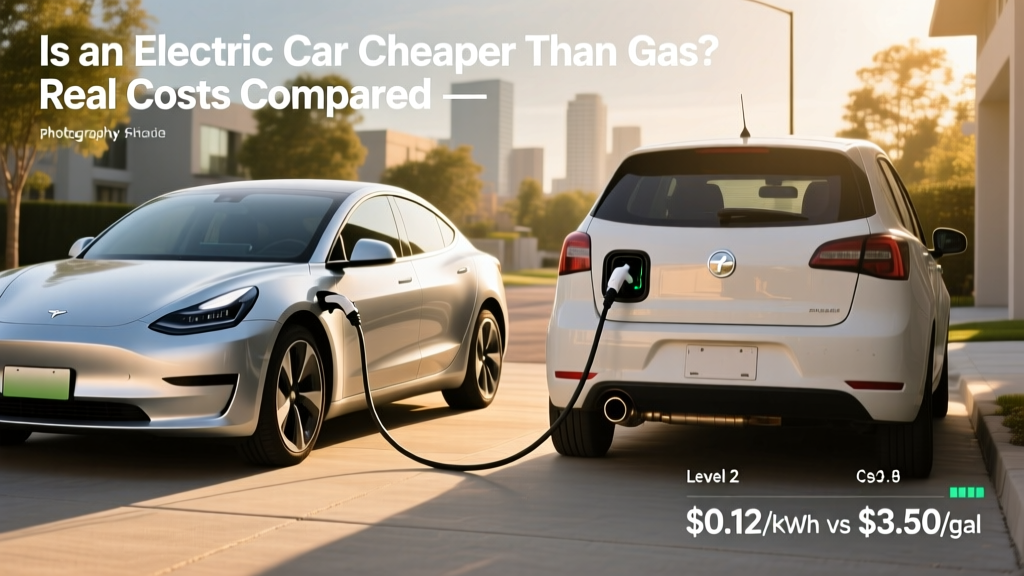
If you've been searching for "EV engines," you're not alone—but technically, electric vehicles don't have engines at all. They use electric motors powered by a high-voltage battery pack. A gas car's internal combustion engine (ICE) burns fuel to create motion; an EV's motor converts stored electrical energy directly into rotational force. The distinction matters because it explains why EVs deliver instant torque, skip the oil changes, and cost roughly $0.04–$0.06 per mile to "fuel" at home versus $0.12–$0.16 per mile for a gas car at $3.50/gallon and 25 MPG.
Quick Answer: Do EVs Have Engines?
No. EVs use one or more electric motors (typically AC permanent-magnet or induction) paired with a lithium-ion battery pack (usually 60–100 kWh). There is no combustion, no multi-speed transmission, no exhaust system, and no engine oil. When people say "EV engine," they mean the electric motor and powertrain.
How an Electric Motor Compares to a Gas Engine
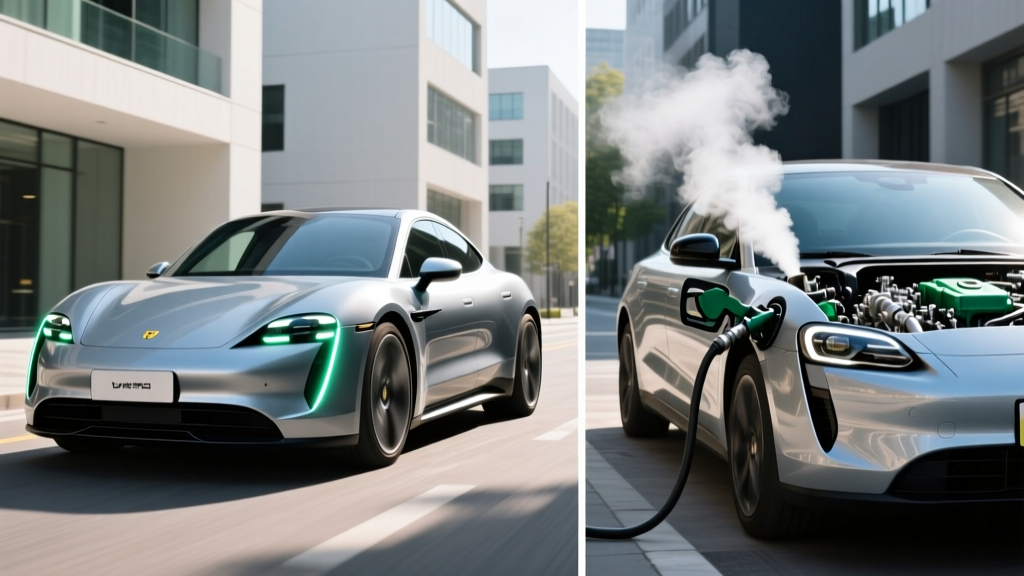
The physics couldn't be more different. A 2.5L four-cylinder gas engine converts roughly 20–35% of the energy in gasoline into forward motion—the rest becomes waste heat. An electric motor converts 85–95% of battery energy into motion. This is the single biggest reason EVs feel quicker off the line and cost less per mile to operate.
| Attribute | Electric Motor (EV) | Gas Engine (ICE) |
|---|---|---|
| Energy Conversion Efficiency | 85–95% | 20–35% |
| Peak Torque Delivery | Instant (0 RPM) | Requires RPM buildup (~1,500–4,500 RPM) |
| Moving Parts (drivetrain) | ~20 | ~2,000+ |
| Transmission | Single-speed reduction gear | 6–10 speed automatic or CVT |
| Typical Power Output | 150–500+ HP | 150–400 HP (mainstream) |
| Energy Storage | 60–100 kWh battery (LFP or NMC) | 12–20 gallon fuel tank |
| "Refuel" Time | 18–45 min (DC fast charge 10–80%) | 3–5 min (gas station) |
| Home Refueling | Yes (Level 1 or Level 2) | No |
| EPA Efficiency (typical midsize) | 100–130 MPGe | 25–35 MPG combined |
That efficiency gap shows up at the pump—or the charger. According to fueleconomy.gov, the average EV converts over 77% of the electrical energy from the grid to power at the wheels, while conventional gas vehicles convert only about 12–30% of the energy stored in gasoline.
Real-World Cost Breakdown: EV vs Gas Over 5 Years
Upfront, EVs still carry a price premium, though it has narrowed significantly. A 2026 Hyundai Ioniq 6 SE starts around $38,000; a comparably equipped gas Sonata starts near $29,000. But purchase price is only the beginning. Here's what 5 years / 75,000 miles actually looks like, assuming home Level 2 charging at the national average electricity rate of ~$0.17/kWh and gas at ~$3.50/gallon.
| Cost Category | EV (e.g., Ioniq 6 SE) | Gas Car (e.g., Sonata 2.5L) |
|---|---|---|
| Purchase Price (MSRP) | $38,000 | $29,000 |
| Federal Tax Credit (§30D)* | –$3,750 to $7,500 | $0 |
| Fuel/Energy (75,000 mi) | $3,800 (home charging) | $10,500 (at 28 MPG avg) |
| Maintenance (5 yrs) | $1,500 (tires, cabin filter, wipers) | $4,200 (oil, filters, brakes, belts) |
| Insurance (5 yrs avg) | $9,500 | $7,500 |
| Estimated 5-Yr Total | ~$45,300 – $49,050 | ~$51,200 |
*Federal §30D tax credit eligibility depends on MSRP caps ($55,000 sedans / $80,000 SUVs/trucks), buyer income limits ($150K single / $300K joint), battery critical-mineral and component sourcing rules, and point-of-sale transfer availability. Check current rules at irs.gov and verify with a tax professional. Credit amounts vary by vehicle and model year.
The EV wins on operating costs by roughly $6,700–$9,400 over five years, but loses on insurance premiums (typically 15–25% higher for EVs due to repair costs and battery replacement risk). The break-even point versus a gas car typically falls between years 3 and 5, depending on how much you drive and whether you can charge at home.
What About Hybrids? The Middle Ground
If you can't charge at home or regularly drive in areas with sparse charging infrastructure, a hybrid (HEV) or plug-in hybrid (PHEV) may make more sense. Hybrids use a smaller battery and electric motor alongside a gas engine—no plug required for standard HEVs, while PHEVs offer 25–50 miles of electric-only range before the gas engine kicks in.
A 2026 Toyota RAV4 Hybrid delivers ~39 MPG combined for around $33,000. A RAV4 Prime PHEV offers 42 miles of electric range and 38 MPG after the battery depletes, starting near $44,000. Neither requires any change to your fueling habits, but you'll never match the per-mile energy cost of a home-charged BEV.
EV vs Hybrid vs Gas: Which Fits Your Situation?
- Choose a BEV (full EV) if: You have home or workplace Level 2 charging access, drive under 300 miles daily, and want the lowest per-mile cost and zero tailpipe emissions.
- Choose a PHEV if: You can plug in at home most nights (for 25–50 mi electric commuting) but need gas-engine flexibility for longer road trips or live in a charging-desert region.
- Choose an HEV (standard hybrid) if: You have no access to plug-in charging, want better MPG without changing habits, and prioritize lower upfront cost.
- Stick with gas if: You drive very low annual miles (under 5,000), where the EV premium won't pay back in fuel savings, or you regularly tow heavy loads in remote areas.
Common Misconceptions About "EV Engines"
| Myth | Fact |
|---|---|
| "EVs need oil changes and engine maintenance." | EVs have no engine oil, no spark plugs, no timing belts, and no exhaust system. Maintenance is limited to tires, cabin air filters, wiper fluid, brake fluid checks, and occasional coolant service. |
| "EV batteries need replacing every few years." | Modern LFP and NMC battery packs are warrantied for 8 years / 100,000 miles (10 years in California-emissions states) to retain at least 70% capacity. Real-world data from Recurrent and manufacturer telemetry shows most packs retain 85–92% capacity after 100,000 miles. |
| "EVs are slower than gas cars." | EVs deliver peak torque at 0 RPM, producing quicker 0–60 times in most segments. A Tesla Model 3 Performance hits 0–60 in 2.9 seconds; even the base Ioniq 6 SE does it in ~5.1 seconds—faster than most gas sedans in its price class. |
| "Charging an EV takes hours on road trips." | Modern EVs on 350 kW-capable DC fast chargers can add 10–80% in 18–25 minutes (e.g., Hyundai E-GMP platform peaks at ~240 kW). Charging slows above 80% due to the charge curve taper—most road-trippers charge to 80% and move on. |
| "EVs are worse for the environment because of electricity generation." | Even on a coal-heavy grid, EVs produce fewer lifecycle emissions than gas cars (per the Union of Concerned Scientists). On a grid with significant renewables, the advantage grows substantially. Tailpipe emissions are always zero. |
What First-Time EV Buyers Need to Know
If you're considering your first EV, here are the practical realities that spec sheets don't always highlight:
1. Home Charging Is the Foundation
Over 80% of EV charging happens at home. A Level 2 home charger (240V, 32–48 amps) adds roughly 25–40 miles of range per hour of charging—enough to fully replenish any EV overnight. Installation costs range from $500–$2,500 depending on your electrical panel capacity. If your home has a 200-amp panel with spare capacity, expect the lower end. A panel upgrade to 200A can add $1,500–$3,500. Always get a quote from a licensed electrician before committing to a vehicle.
2. EPA Range ≠ Real-World Range
EPA estimates are useful baselines, but real-world range depends on speed, temperature, terrain, and climate control use. Expect:
- Highway driving (75+ mph): 10–20% less than EPA combined range
- Cold weather (below 30°F): 15–30% reduction, mitigated partially by preconditioning and heat pump systems
- City/moderate driving: Often matches or slightly exceeds EPA estimates thanks to regenerative braking
A 310-mile EPA-rated EV may realistically deliver 250–270 miles on a highway road trip in mild weather, and 220–250 in winter conditions. Plan road trips around 200-mile charging intervals for comfort.
3. DC Fast Charging Speeds Vary Wildly
Not all EVs charge at the same rate, and peak kW is not sustained kW. A vehicle advertising "250 kW peak" may only sustain that rate between 10–30% state of charge, then taper significantly. Look for the 10–80% charge time as a more honest metric:
- Hyundai Ioniq 5/6 (800V architecture): ~18 minutes at a 350 kW charger
- Tesla Model 3/Y (NACS): ~25–30 minutes at a V3 Supercharger (250 kW)
- Chevrolet Equinox EV: ~30–35 minutes at a 150+ kW charger
- Nissan Ariya: ~35–40 minutes at a 130 kW charger
4. Battery Chemistry Matters
LFP (Lithium Iron Phosphate) batteries are heavier and slightly less energy-dense but last longer (more charge cycles), tolerate regular 100% charging, and cost less. Tesla uses LFP in base Model 3/Y RWD trims. NMC (Nickel Manganese Cobalt) packs offer more range per pound but degrade faster if routinely charged to 100%—manufacturers recommend daily charging to 80% for longevity.
5. The Tax Credit Is Not Guaranteed
The federal §30D credit of up to $7,500 has strict eligibility requirements that change frequently. As of 2026, vehicles must meet battery component and critical-mineral sourcing thresholds (phasing in progressively), fall under MSRP caps, and buyers must fall under income caps. Many popular EVs qualify for only $3,750 or nothing at all depending on the model year and manufacturing date. Always verify eligibility on fueleconomy.gov's tax credit tracker for the specific vehicle and trim you're buying.
EV Ownership: The Practical Verdict
Electric motors are fundamentally simpler, more efficient, and more durable than internal combustion engines. The total cost of ownership favors an EV if you can charge at home, drive 10,000+ miles per year, and keep the vehicle for 4–5 years. The math gets tighter—or flips against the EV—if you lack home charging, drive very few miles annually, or need to replace the vehicle within 2–3 years before the fuel savings offset the purchase premium.
For buyers in apartments or areas without reliable public charging, a PHEV or HEV remains a practical bridge. For everyone else, the "EV engine" (motor) delivers a quieter, quicker, and cheaper-to-operate driving experience—backed by fewer moving parts and an 8-year/100,000-mile battery warranty that outlasts most gas powertrain warranties.
Do electric cars have engines?
No. Electric cars use electric motors, not internal combustion engines. The motor converts electrical energy from the battery into rotational motion with 85–95% efficiency, compared to 20–35% for a gas engine. There is no combustion, no exhaust, and no multi-gear transmission.
How long do EV motors last compared to gas engines?
Electric motors have very few moving parts and routinely last 300,000+ miles with minimal maintenance. Gas engines typically require major service or replacement between 150,000–250,000 miles. The battery pack is the EV's most expensive component, but modern packs are warrantied for 8–10 years / 100,000–150,000 miles and real-world data shows most retain 85%+ capacity well past 100,000 miles.
Is it cheaper to charge an EV or fill up a gas car?
Charging at home is significantly cheaper. At the national average of $0.17/kWh, an EV consuming 3.5 miles/kWh costs about $0.049 per mile. A gas car averaging 28 MPG at $3.50/gallon costs $0.125 per mile—roughly 2.5× more. Public DC fast charging is more expensive ($0.30–$0.50/kWh), narrowing the gap, but most daily charging happens at home.
Can I convert a gas car to an EV engine?
Technically yes, but EV conversions cost $15,000–$40,000+, void all safety certifications, and are impractical for most buyers. Purpose-built EVs offer better range, safety, warranty, and charging infrastructure compatibility. Conversions are a niche hobbyist pursuit, not a practical buying strategy.
Do EVs lose range in cold weather?
Yes. Battery chemistry slows in cold temperatures, and cabin heating draws significant power. Expect a 15–30% range reduction below 30°F. EVs equipped with heat pumps (standard on most 2024+ models) and battery preconditioning recover some of this loss. Plugging in while parked and preconditioning the cabin while still on grid power before departure minimizes the impact.