Quick Answer: What Is a Car Electric Power Steering System?
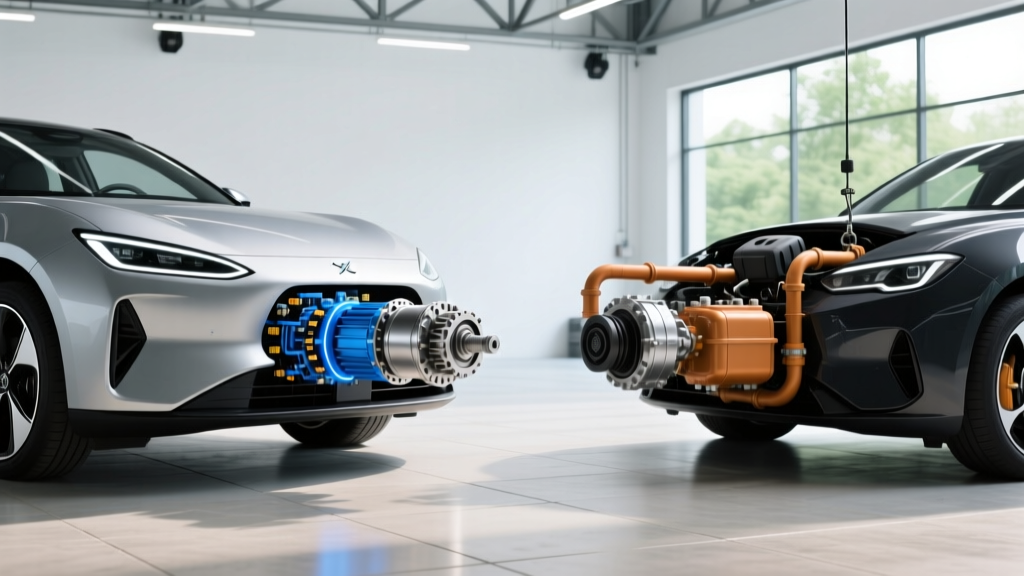
A car electric power steering system (EPS) replaces the traditional hydraulic pump and fluid with an electric motor mounted on or near the steering rack. In an EV, EPS draws power directly from the high-voltage traction battery (via a DC-DC converter stepping voltage down to 12V or 48V) rather than relying on a belt-driven hydraulic pump connected to an internal combustion engine. Nearly every EV sold in 2026 — from the Tesla Model 3 to the Hyundai Ioniq 5 to the Ford F-150 Lightning — uses EPS exclusively. The result: zero steering fluid to change, slightly improved efficiency (roughly 0.5–1.5% range gain vs. hydraulic), and the ability to integrate advanced driver-assistance features like lane-centering and automated parking.
Why Every Modern EV Uses Electric Power Steering
The shift from hydraulic to electric power steering wasn't driven by EVs alone — most gas-powered cars built after 2015 also adopted EPS to meet fuel-economy standards. But in an electric vehicle, EPS is essentially mandatory for three reasons:
- No engine to drive a pump. Hydraulic power steering requires a serpentine belt connected to a running crankshaft. An EV has no crankshaft, so a hydraulic pump would need its own dedicated electric motor anyway — adding weight and complexity for no benefit.
- Efficiency gains matter for range. A hydraulic pump runs continuously whenever the engine is on, consuming roughly 2–5 kW of mechanical power. EPS only draws electricity when the driver is actively turning the wheel or when ADAS applies steering torque, averaging under 0.1 kW over a typical drive cycle. According to fueleconomy.gov, parasitic losses from accessories like steering, climate, and coolant pumps directly reduce an EV's miles per kWh.
- ADAS integration. Features like Tesla Autopilot, GM Super Cruise, and Ford BlueCruise require the ability to apply precise steering torque electronically. A hydraulic system can't receive digital torque commands without an expensive electro-hydraulic hybrid setup. EPS enables SAE Level 2 driver-assistance natively.
EPS vs. Hydraulic Steering: A Cost and Maintenance Comparison
One of the most common ownership questions is whether electric power steering introduces new maintenance costs or failure points compared to hydraulic systems. Here's a data-driven breakdown:
| Factor | Electric Power Steering (EV) | Hydraulic Power Steering (Gas Car) |
|---|---|---|
| Fluid changes | None required | Every 30,000–60,000 miles (~$80–$150) |
| Belt/pump replacement | N/A | Pump: $400–$800; Belt: $100–$250 |
| Hose/leak repairs | N/A | $200–$600 per leak event |
| Typical EPS motor replacement | $800–$2,200 (rare, usually 100k+ mi) | N/A |
| Rack-and-pinion replacement | $1,200–$3,000 (same as gas) | $1,200–$3,000 |
| 10-year maintenance cost (steering only) | ~$0–$200 | ~$600–$1,800 |
| Weight | ~8–15 lbs lighter | Heavier (pump, fluid, hoses, cooler) |
The data is clear: EPS eliminates the most common steering-related maintenance items — fluid, pump, belt, and hoses. The tradeoff is that when an EPS motor or control module does fail (typically well past 100,000 miles), the replacement is an electronic component rather than a mechanical one, and labor plus parts can exceed $1,500 at a dealership. However, failure rates for modern EPS systems are low. NHTSA recall databases show isolated EPS-related recalls for specific model years rather than systemic issues.
Does Electric Power Steering Affect EV Range?
Yes, but the impact is small. Here's how EPS factors into an EV's energy budget on a typical 70°F day at 65 mph:
- Traction motor (propulsion): ~15–20 kW continuous
- Thermal management (battery cooling/heating): 0.5–3 kW
- HVAC cabin climate: 1–5 kW
- EPS (steering): 0.02–0.15 kW average (spikes to ~1 kW during low-speed parking maneuvers)
- Lights, infotainment, 12V systems: 0.3–0.8 kW
EPS accounts for roughly 0.3–0.8% of total energy consumption during highway driving. In city driving with frequent turning, that figure can rise to 1.5%. For a vehicle like the 2026 Hyundai Ioniq 5 (84 kWh usable battery, EPA-estimated 310-mile range, ~270 Wh/mi), steering consumption represents approximately 1–2.5 miles of range on a full charge. It's measurable but not something that will strand you.
Common EPS Myths vs. Facts
| Myth | Fact |
|---|---|
| "EPS feels numb compared to hydraulic" | Early EPS (2010–2015) had valid criticism. Modern systems from Bosch, ZF, and JTEKT use variable-ratio racks and torque-overlay algorithms that closely mimic hydraulic feedback. The 2026 Porsche Taycan and BMW i4 use rear-wheel steering and rack-mounted EPS that enthusiasts rate highly. |
| "EPS drains the battery when parked" | EPS only activates when the vehicle is ON (ready to drive). It draws zero power when parked and powered off. |
| "If the 12V battery dies, you lose steering" | Modern EVs use a DC-DC converter that supplies EPS from the high-voltage traction battery. If the 12V auxiliary battery fails, the car typically won't start, but EPS itself is not solely 12V-dependent in most architectures. |
| "EPS is less reliable than hydraulic" | J.D. Power and Consumer Reports data show comparable or better long-term reliability for EPS, primarily because there are no fluid leaks or pump failures to contend with. |
Real-World Ownership: What First-Time EV Buyers Should Know About EPS
If you're transitioning from a gas car with hydraulic steering to an EV with EPS, here's what to expect in daily driving:
Steering Feel and Adaptation
Most EVs use speed-sensitive EPS that provides more assist at low speeds (parking, U-turns) and firms up at highway speeds. The transition is seamless for most drivers, though those accustomed to the road feedback of a hydraulic system in a sports sedan may notice the difference initially. Test-driving multiple EVs back-to-back — say, a Tesla Model 3, a Kia EV6, and a BMW iX — reveals that steering tuning varies significantly by manufacturer. This is a subjective preference, not a technology limitation.
One-Pedal Driving and Steering Synergy
Many EVs pair aggressive regenerative braking with EPS to enable one-pedal driving. When you lift off the accelerator, regen slows the car while EPS maintains precise directional control without the weight transfer lurch common in gas cars transitioning from throttle to brake. This integration is one reason EVs feel smoother in stop-and-go traffic.
Cold-Weather Considerations
EPS performance is largely unaffected by cold temperatures, unlike hydraulic fluid which thickens below freezing and can make steering feel sluggish for the first few minutes of a cold-weather drive. However, the EV's overall range drops 20–30% in sub-freezing conditions due to battery chemistry and cabin heating demands — the steering system itself is not a contributing factor to that loss.
ADAS and Steering: SAE Level 2 Reality
Features like Tesla's Autopilot, GM's Super Cruise, and Ford's BlueCruise use the EPS motor to apply lane-centering torque. These are all SAE Level 2 systems — meaning you must keep your hands on or near the wheel and remain fully attentive. The EPS enables these features but does not make the car self-driving. Only Level 4 robotaxi services like Waymo One (available in Phoenix, San Francisco, and Los Angeles as of 2026) operate without a driver. Never confuse Level 2 lane-centering with autonomous driving.
Cost of Ownership: EV with EPS vs. Gas Car with Hydraulic Steering
Let's put steering maintenance into the broader context of EV vs. gas total cost of ownership over 5 years and 75,000 miles:
| Cost Category | 2026 EV (e.g., Tesla Model 3 LR, ~$42,500 MSRP) | 2026 Gas Sedan (e.g., Toyota Camry LE, ~$29,500 MSRP) |
|---|---|---|
| Purchase price (after §30D credit) | ~$35,000 (if eligible; income/MSRP/sourcing rules apply per IRS §30D) | $29,500 |
| Fuel/charging (75k mi) | ~$2,250 (home L2 at $0.14/kWh, 270 Wh/mi) | ~$8,400 (30 MPG avg, $3.36/gal) |
| Steering maintenance (5 yr) | $0 | ~$300 (fluid + inspection) |
| Oil changes | $0 | ~$750 (15 changes at $50) |
| Brake pads (regen extends life) | ~$0–$200 | ~$400–$800 |
| Insurance (avg) | ~$9,500 (EVs ~15–25% higher) | ~$7,200 |
| Estimated 5-year total | ~$46,950 | ~$46,150 |
The steering-specific savings are modest (~$300 over 5 years), but they're part of a broader maintenance advantage. The EV's fuel savings (~$6,150) are offset partially by higher insurance premiums and a higher purchase price (before tax credits). Whether the EV wins on total cost depends heavily on your home charging access, annual mileage, local electricity rates, and tax credit eligibility.
Decision Framework: Should EPS Factor Into Your EV Purchase?
If / Then Steering and EV Buying Guide
- If you prioritize low maintenance: EPS is a clear advantage — no fluid, no pump, no belt. Choose any mainstream EV; all use EPS.
- If you're an enthusiast who values steering feedback: Test-drive EVs with performance-tuned EPS. The Porsche Taycan, BMW i4 M50, and Tesla Model 3 Performance (2026 refresh) consistently receive high marks for steering feel. Avoid base-trim crossovers if feedback matters to you.
- If you want ADAS lane-centering: Every EV with lane-centering (Autopilot, BlueCruise, Super Cruise, Toyota Safety Sense 3.0) relies on EPS. This feature is standard or available on nearly all 2026 EVs above $35,000.
- If you're worried about EPS repair costs: Factor in that EPS failures are rare before 100,000 miles, and most EVs carry a 5-year/60,000-mile bumper-to-bumper warranty plus an 8-year/100,000-mile battery and powertrain warranty that may cover EPS if it's integrated with the drive unit. Check your specific warranty terms.
- If you live in a cold climate: EPS outperforms hydraulic in freezing temps (no fluid thickening). Your bigger concern should be overall range loss (20–30%) and whether you have a heat pump equipped EV (standard on most 2026 models, optional on some).
Frequently Asked Questions
Can I still steer my EV if the electrical system fails?
Yes. All EPS systems are designed with a mechanical fallback — the steering column physically connects to the rack. If the EPS motor or electronics fail, you retain manual steering, though it will require significantly more effort, especially at low speeds. A dashboard warning light (typically a yellow or red steering wheel icon) will alert you. Pull over safely and have the vehicle towed to a service center.
Does EPS use the 12V battery or the main traction battery?
In most EV architectures, the EPS motor runs on power supplied by the DC-DC converter, which steps down the high-voltage traction battery (typically 400V or 800V) to 12V or 48V. This means that as long as the main battery has charge and the vehicle is powered on, EPS will function regardless of the 12V auxiliary battery's state. However, if the 12V battery is completely dead, the vehicle's computers may not boot, preventing the car from entering a drive-ready state.
Are there any EVs that still use hydraulic steering?
No mainstream production EV in 2026 uses hydraulic power steering. Some early conversions and low-volume specialty vehicles used electro-hydraulic systems, but every major manufacturer — Tesla, Hyundai/Kia, Ford, GM, BMW, Mercedes, Rivian, Lucid — has standardized on fully electric power steering for its battery-electric vehicles.
How much does it cost to repair or replace an EPS unit in an EV?
EPS module or motor replacement typically costs $800–$2,200 at a dealership, including parts and labor. Full steering rack replacement (which includes the integrated EPS motor on most designs) runs $1,200–$3,000. These are comparable to gas-car steering rack costs. Independent EV shops may offer lower labor rates. Failures before 100,000 miles are uncommon and may be covered under warranty.
Does electric power steering affect my EV's eligibility for the federal tax credit?
No. The IRS §30D clean vehicle credit is based on battery component sourcing, critical minerals origin, MSRP caps ($55,000 for sedans, $80,000 for SUVs/trucks/vans), and buyer income limits ($150K single / $300K joint). Steering system type is not a factor. Always verify current-year eligibility on the IRS website and consult a tax professional before relying on the credit.
Bottom Line
The car electric power steering system is one of the quietest advantages of EV ownership. It eliminates fluid changes, reduces parasitic energy loss, enables advanced driver-assistance features, and performs reliably across temperature extremes. While it's not a headline spec like range or charging speed, EPS is a technology that works exactly as intended every time you turn the wheel — and saves you a few hundred dollars in maintenance over the life of the vehicle. When comparing EVs, steering feel and tuning vary by manufacturer and trim, so test-driving remains the best way to evaluate whether a particular system suits your preferences.