Quick Answer: What Makes an EV Electric Motor Different?
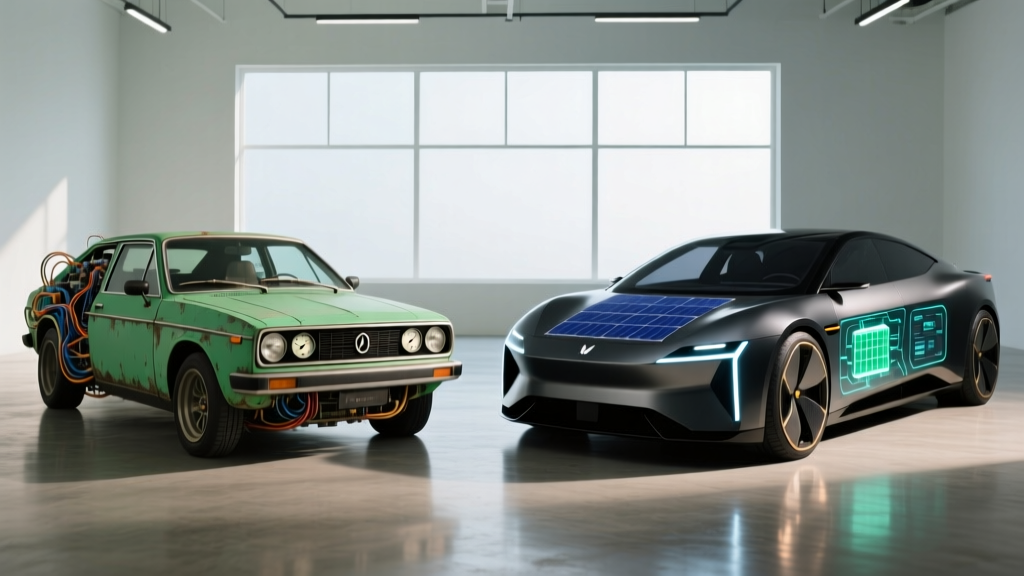
An EV electric motor converts electrical energy from a battery pack into mechanical motion using electromagnetic force — no pistons, no combustion, no multi-speed transmission. While a gas engine operates at roughly 20-30% thermal efficiency, an EV electric motor achieves 85-95% efficiency from battery to wheels. This means an EV motor delivers instant torque from 0 RPM, requires almost no routine maintenance (no oil changes, no spark plugs, no timing belts), and typically lasts the lifetime of the vehicle. The tradeoff: EVs carry higher upfront purchase costs and depend on charging infrastructure, which remains uneven in rural areas and apartment complexes.
How an EV Electric Motor Actually Works
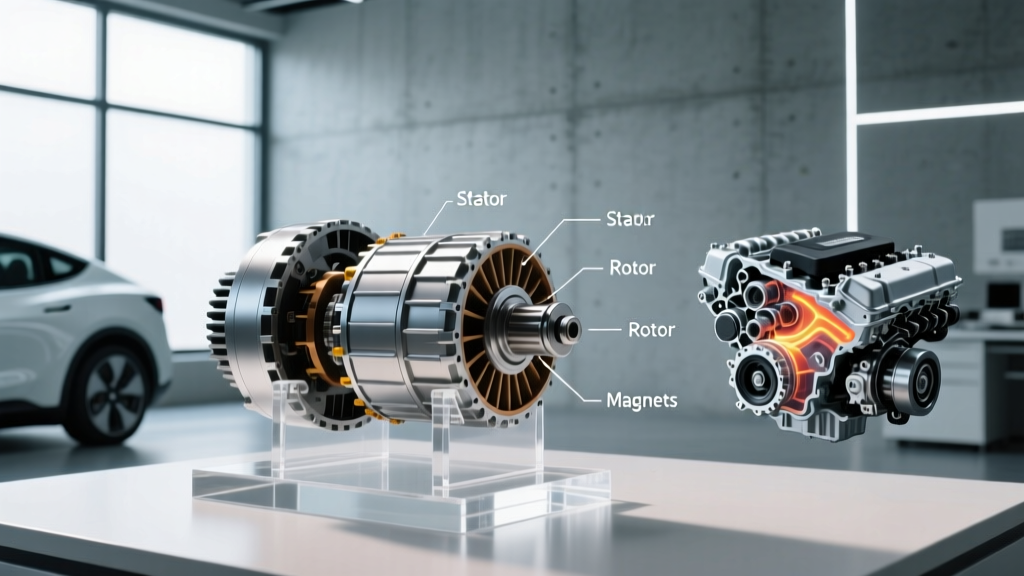
Strip away the marketing, and an EV electric motor is elegantly simple. A stationary component called the stator contains copper windings. When alternating current flows through those windings, it creates a rotating magnetic field. Inside the stator sits the rotor, which either uses permanent magnets (in permanent-magnet synchronous motors, or PMSMs) or induced current (in AC induction motors). The magnetic interaction spins the rotor, which turns the wheels through a single-speed reduction gear.
Most 2026 EVs use one of two motor architectures:
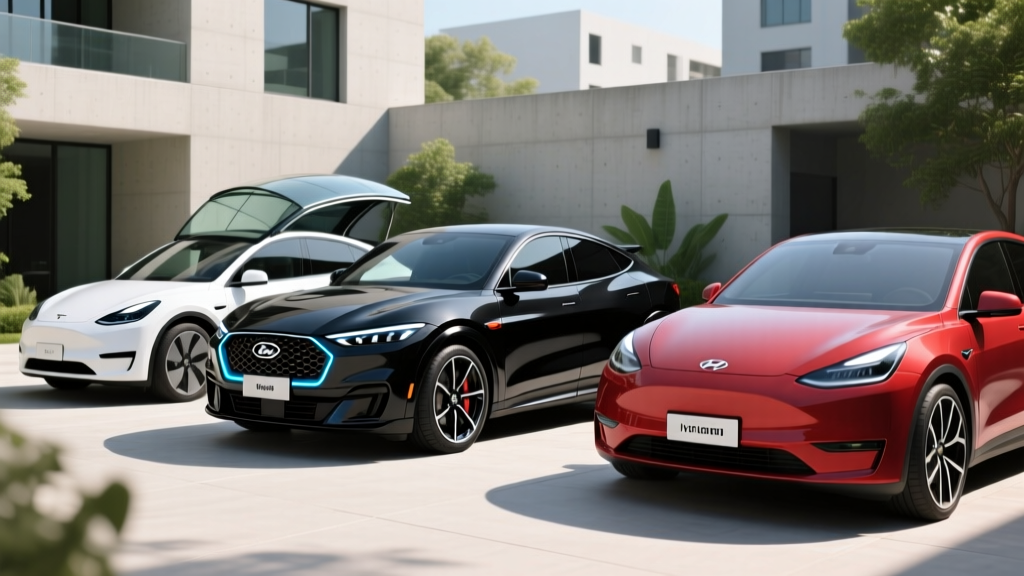
- Permanent-Magnet Synchronous Motor (PMSM): Used in the Hyundai Ioniq 5, Tesla Model 3 rear motor, and most Chinese-market EVs. Higher efficiency at low and mid speeds, but relies on rare-earth magnets (neodymium, dysprosium) — a supply-chain concern.
- AC Induction Motor: Used in Tesla's front motor on dual-motor models and older Audi e-trons. Slightly lower peak efficiency but no rare-earth materials, and it freewheels with near-zero drag when not energized, which benefits dual-motor setups.
Some newer platforms — like the Tesla Model Y with its carbon-sleeved rotor and the Lucid Air's miniaturized motors — push power density past 10 kW per kilogram, meaning a motor the size of a carry-on suitcase can produce over 600 horsepower.
EV Electric Motor vs Gas Engine: By the Numbers
The table below compares a representative 2026 EV motor against a typical 2.0L turbocharged gas engine — the kind found in a Toyota RAV4 or Honda CR-V.
| Metric | EV Electric Motor (e.g., Tesla Model 3 RWD) | 2.0L Turbo Gas Engine (e.g., Toyota RAV4) |
|---|---|---|
| Power Output | 271 hp (single motor) | 203 hp |
| Torque | 317 lb-ft @ 0 RPM | 184 lb-ft @ 5,000 RPM |
| Energy Efficiency (tank/battery to wheels) | 85-95% | 20-30% |
| 0-60 mph | 5.8 seconds | 8.2 seconds |
| Moving Parts in Drivetrain | ~20 (motor + reduction gear) | ~2,000+ (engine + 8-speed trans) |
| Transmission | Single-speed reduction gear | 8-speed automatic (or CVT) |
| Regenerative Braking | Yes — recaptures kinetic energy | No — friction brakes waste energy as heat |
| Emissions at Tailpipe | None | CO₂, NOx, particulates |
| Expected Drivetrain Lifespan | 300,000+ miles (motor); battery may need replacement at 150-200k | 150,000-250,000 miles before major engine/transmission work |
The efficiency gap is the headline. A gas engine wastes 70-80% of the energy in gasoline as heat, noise, and friction. An EV motor wastes only 5-15%. According to fueleconomy.gov, this translates to an EV traveling roughly 3-4 miles per kWh of battery energy, while a gas car at 30 MPG travels about 0.88 miles per equivalent kWh of gasoline energy.
Real Costs: EV Motor Ownership vs Gas Engine Maintenance
EV electric motors themselves almost never fail. The U.S. Department of Energy notes that electric motors have been used industrially for over a century with minimal maintenance. What EV owners actually spend money on is the broader system: battery degradation, cooling systems, power electronics (the inverter that converts DC battery power to AC motor power), and tires.
| Cost Category | EV (2026 Tesla Model 3 RWD, 5 yr / 75,000 mi) | Gas (2026 Toyota RAV4 LE, 5 yr / 75,000 mi) |
|---|---|---|
| Purchase Price (MSRP) | $38,990 | $30,395 |
| Federal Tax Credit (§30D) | Up to $7,500 (eligibility varies — see IRS sourcing rules) | $0 |
| Effective Purchase | ~$31,490 (if full credit applies) | $30,395 |
| Fuel/Energy (75k mi) | $2,625 (home charging at $0.14/kWh, 4 mi/kWh) | $8,125 (gas at $3.25/gal, 30 MPG combined) |
| Oil Changes | $0 | $750 (10 changes @ $75) |
| Transmission Fluid / Service | $0 (sealed reduction gear) | $300 |
| Brake Pads | $150 (regen extends pad life 2-3x) | $600 (2 sets) |
| Coolant / Spark Plugs / Belts | $100 (coolant check only) | $500 |
| Tires | $1,400 (EVs are heavier; tires wear ~20% faster) | $1,000 |
| Insurance (5 yr avg) | $9,500 | $7,500 |
| 5-Year Total (purchase + fuel + maint + ins) | ~$45,265 | ~$49,170 |
The EV wins on running costs by roughly $3,900 over five years even before factoring in state incentives, HOV lane access, or time saved skipping gas stations. But two caveats matter:
- Insurance is higher for EVs — typically 15-25% more — because repair costs after collisions are elevated (battery pack damage often triggers total-loss declarations).
- Tire costs are higher due to the vehicle's weight (the Model 3 weighs ~3,862 lbs vs the RAV4 at ~3,615 lbs) and the instant torque delivery that accelerates tread wear.
If you rely exclusively on DC fast charging at public stations ($0.35-$0.50/kWh), your fuel cost jumps to $6,500-$9,400 over 75,000 miles, erasing much of the savings. Home charging is where the economics work best.
Motor Longevity and What Actually Wears Out
The electric motor itself is arguably the most durable component in any vehicle. Industrial AC motors routinely run for 100,000+ hours — equivalent to millions of miles. In automotive use, the motor bearings and the reduction-gear lubricant are the only wear items, and both are designed for 200,000+ mile service intervals.
What does degrade is the system around the motor:
- The inverter: Converts DC from the battery to AC for the motor. Power semiconductors (IGBTs or silicon-carbide MOSFETs) handle extreme thermal cycling. Failure before 150,000 miles is rare but can cost $2,000-$4,000 to replace out of warranty.
- The battery pack: This is the real longevity variable. NMC (nickel-manganese-cobalt) chemistries typically retain 80-85% capacity after 150,000 miles. LFP (lithium iron phosphate) packs, used in the base Tesla Model 3 and many 2026 Chinese-market EVs, often retain 90%+ at the same mileage. All new EVs carry a federally mandated minimum battery warranty of 8 years / 100,000 miles (10 years / 150,000 miles in California and states that follow CARB rules).
- Cooling system: EV motors and batteries use liquid cooling loops. Coolant should be checked per the manufacturer schedule — typically every 5 years or 60,000 miles — and the electric water pumps can fail, though replacement is usually under $500.
Common Misconceptions About EV Motors
| Myth | Fact |
|---|---|
| "EV motors need to be replaced like engines." | EV motors have no combustion, no timing chain, no head gasket. They are among the longest-lasting components in the car. Bearing replacement after 200k+ miles is possible but uncommon. |
| "Electric motors lose power over time." | The motor itself does not degrade. Range loss over time is caused by battery degradation, not motor wear. A 10-year-old EV motor produces the same torque it did on day one. |
| "EVs are slow at highway speeds." | Single-speed EV motors do lose some efficiency above 80 mph compared to multi-speed gas transmissions, but power delivery remains strong. The Tesla Model 3 RWD hits 0-60 in 5.8 seconds and sustains 125+ mph. Dual-motor EVs (like the Model Y Long Range at 4.8 seconds 0-60) have even less high-speed falloff. |
| "Rare-earth magnets make EV motors an environmental disaster." | Not all EV motors use rare-earth materials. AC induction motors (Tesla front motor) and externally excited synchronous motors (BMW iX, Renault Megane E-Tech) eliminate rare-earth magnets entirely. PMSMs do use them, but recycling programs and alternative magnet chemistries (e.g., iron-nitride) are in active development. |
| "EV motors can't tow or haul heavy loads." | The Ford F-150 Lightning's dual motors produce 775 lb-ft of torque and tow up to 10,000 lbs. However, towing cuts range by 30-50% — a real limitation gas trucks don't face to the same degree. |
Who Should Buy an EV (and Who Shouldn't): A Decision Framework
Choose an EV if:
- You can charge at home (garage, driveway, or workplace Level 2). This single factor determines whether EV ownership is convenient or frustrating.
- Your daily driving is under 250 miles. Most 2026 EVs offer 250-350 miles of EPA range. Real-world highway range is typically 15-20% less, and cold weather (below 30°F) can cut range another 20-30%.
- You want to minimize maintenance. No oil changes, no transmission service, brake pads lasting 100,000+ miles thanks to regenerative braking.
- You qualify for the §30D federal tax credit. Check current IRS eligibility rules — income caps ($150k single / $300k joint), MSRP caps ($55k cars / $80k SUVs and trucks), and battery-sourcing requirements all apply. The credit can now be transferred to the dealer at point of sale.
- You value instant torque and quiet operation. The driving experience is fundamentally different — smooth, silent, and responsive in a way gas powertrains can't match at this price point.
Stick with gas or a hybrid if:
- You live in an apartment without charging access and your area has sparse public DC fast-charging infrastructure. Check the Alternative Fuels Data Center for charger density near you.
- You regularly drive 400+ miles in a day through rural areas. Even the best 2026 EVs require a 20-30 minute charging stop every 200-280 real-world miles.
- You frequently tow heavy trailers. Range drops dramatically; a plug-in hybrid (PHEV) like the Toyota RAV4 Prime (42 miles electric-only, then gas) may serve you better.
- Your budget is strictly under $28,000 and you can't access the used-EV tax credit (up to $4,000 for vehicles under $25,000). New EV pricing starts around $29,990 for the base Nissan Leaf in 2026.
First-Time EV Buyer Essentials
If you're transitioning from gas to electric, here are the non-obvious realities that spec sheets don't highlight:
- EPA range is optimistic for highway driving. A 330-mile EPA rating typically yields 260-280 miles at sustained 70-75 mph. In winter at 20°F, expect 200-240 miles from that same pack.
- DC fast charging slows above 80%. A "peak 250 kW" charge rate is sustained only between roughly 10-50% state of charge. The 50-80% portion may average 80-120 kW. Plan charging stops to 80%, not 100%.
- Preconditioning matters. Most EVs let you warm the battery before arriving at a fast charger (via navigation or app). A cold battery charges 30-50% slower. Always precondition in cold weather.
- Home Level 2 charging is the foundation. A 240V / 48A home charger (like a ChargePoint Home Flex or Tesla Wall Connector) adds 30-44 miles of range per hour. Installation typically costs $500-$2,000, but can reach $3,000-$5,000 if your electrical panel needs an upgrade from 100A to 200A service.
- The motor is the least of your worries. Spend your research time on battery chemistry (LFP vs NMC), charging network reliability in your area, and total cost of ownership — not on motor specs, which are remarkably consistent and durable across brands.
Frequently Asked Questions
Do EV electric motors need oil changes?
No. EV motors have no engine oil, no oil filter, and no combustion byproducts. The reduction gear uses a sealed lubricant that typically does not require service for the life of the vehicle. You will never visit a shop for an oil change in an EV.
How much horsepower does a typical EV electric motor produce?
Single-motor EVs in 2026 range from 147 hp (Nissan Leaf S) to 340 hp (BMW i4 eDrive40). Dual-motor configurations push well beyond 500 hp — the Tesla Model Y Performance delivers 510 hp, and the Lucid Air Grand Touring produces 1,050 hp across its dual motors. Torque is available instantly from 0 RPM, which is why even modest-horsepower EVs feel quicker than gas cars with similar power ratings.
Can an EV electric motor overheat?
Under extreme sustained load — like repeated full-power launches or extended mountain towing — the motor and inverter can thermally throttle. Modern EVs use liquid cooling loops to manage this, and thermal throttling reduces power output rather than causing damage. In normal driving, overheating is virtually unheard of.
What happens if the EV motor fails?
Motor failure is extremely rare before 200,000 miles. If it does fail, replacement costs range from $3,000 to $8,000 depending on the vehicle. However, this is covered under the powertrain warranty (typically 8 years / 100,000 miles) for most manufacturers. Compare this to a gas engine replacement at $5,000-$10,000, which is far more common at high mileage.
Are EV motors affected by cold weather?
The motor itself operates normally in cold weather. However, the battery's ability to deliver and accept charge is reduced at low temperatures. This means less range and slower charging — not because the motor is weaker, but because the battery is the bottleneck. Using your EV's preconditioning feature warms the battery before driving or charging, mitigating most cold-weather losses.
Do all EVs use the same type of electric motor?
No. The two dominant types are permanent-magnet synchronous motors (PMSMs — used by Hyundai, Kia, most Chinese OEMs, and Tesla's rear motor) and AC induction motors (used by Tesla's front motor on dual-motor models). BMW and Renault use externally excited synchronous motors (EESMs) that avoid rare-earth magnets. Each type has different efficiency curves, cost profiles, and material dependencies, but from a driver's perspective, the feel is nearly identical: instant, smooth torque.