What Is an EV Drivetrain?
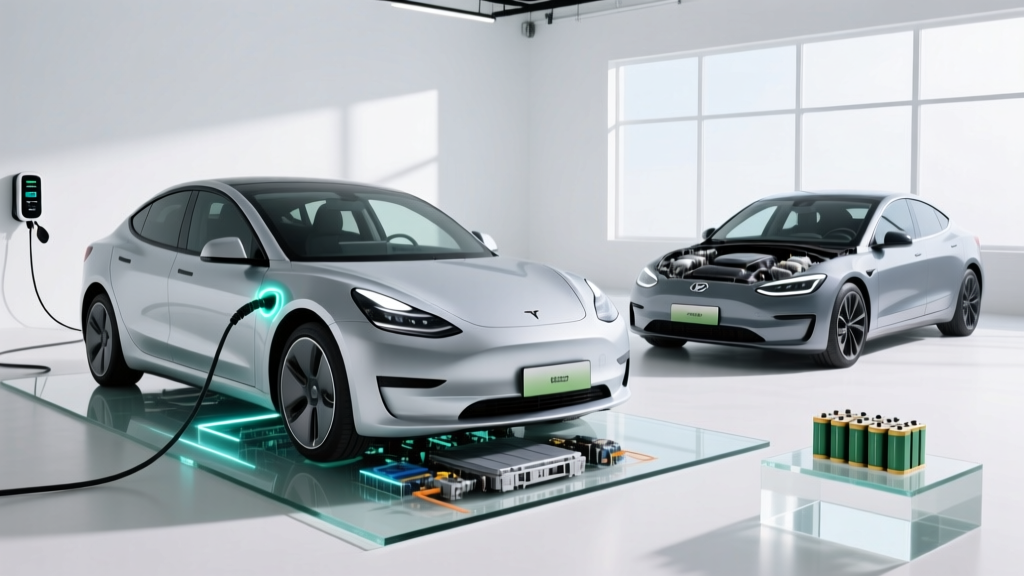
An EV drivetrain replaces the engine, transmission, driveshaft, and differential of a gas car with three core components: a lithium-ion battery pack (measured in kWh of stored energy), one or two electric motors (measured in kW of power output), and a single-speed reduction gear. This setup delivers instant torque, eliminates multi-gear shifting, and converts roughly 85–90% of stored electrical energy into motion — compared to just 20–30% thermal efficiency in a gasoline powertrain. For buyers, this means fewer moving parts, lower routine maintenance, and fueling costs that average 3–5 cents per mile on home electricity versus 12–18 cents per mile on gasoline.
How the EV Drivetrain Actually Works
Strip away the marketing, and every battery-electric vehicle (BEV) uses the same fundamental architecture. The traction battery — typically 58 to 100+ kWh of usable capacity in current 2026 models — stores direct-current (DC) electricity. When you press the accelerator, an inverter converts that DC to alternating current (AC) and sends it to the motor(s), which spin the wheels through a single-ratio gear reduction (usually around 10:1).
Regenerative braking reverses the process: the motor acts as a generator, slowing the car and feeding energy back into the battery. This is what enables one-pedal driving in models like the Tesla Model 3, Hyundai Ioniq 5, and BMW i4.
There are three common motor layouts:
- Single motor, front- or rear-wheel drive: Lighter, more efficient, lower cost. Example: base Hyundai Ioniq 5 (168 kW / 225 hp, RWD).
- Dual motor, all-wheel drive: Two independent motors (one per axle) for traction and performance. Example: Tesla Model Y Long Range AWD (384 hp combined).
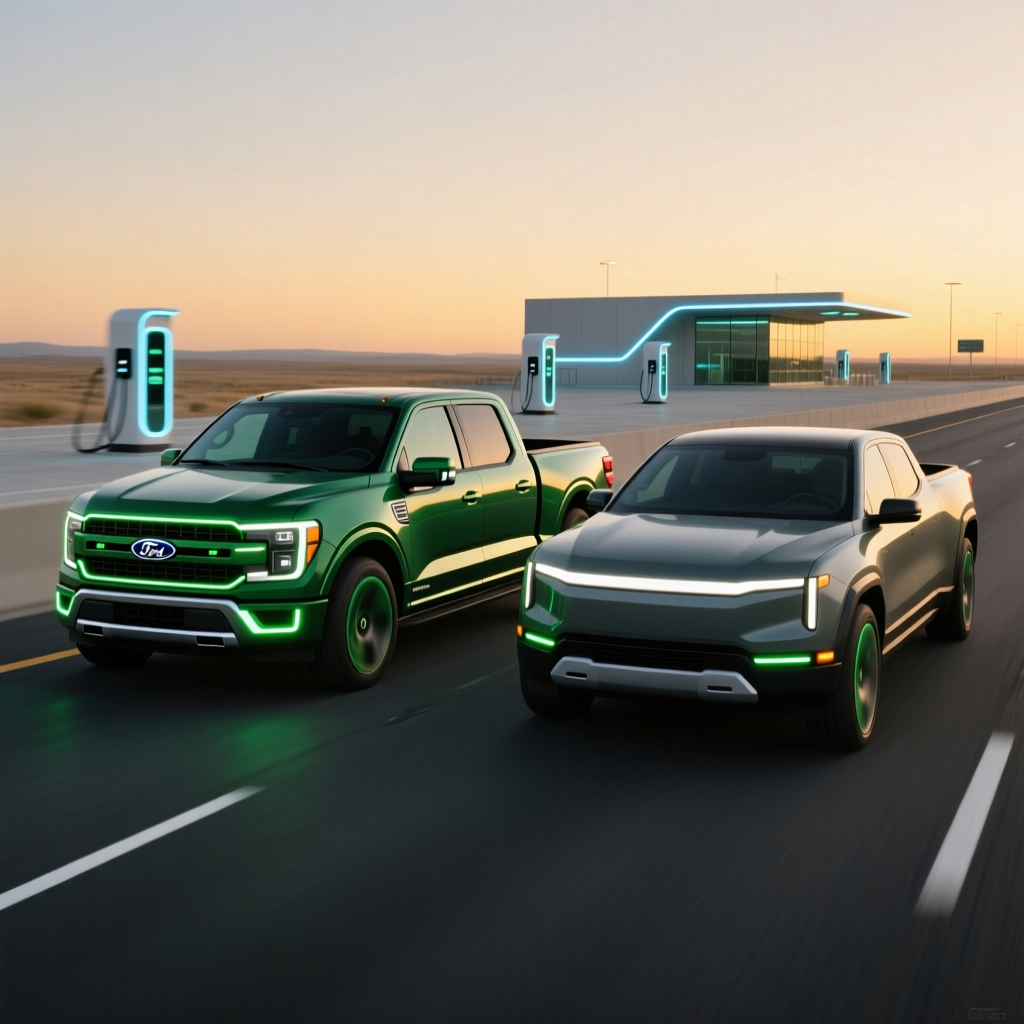
- Tri-motor or quad-motor: Reserved for high-performance trucks and SUVs like the Rivian R1T Tri-Motor (850 hp) or GMC Hummer EV (up to 1,200 hp).
Most 2026 BEVs use either NMC (nickel manganese cobalt) or LFP (lithium iron phosphate) battery chemistry. NMC offers higher energy density — more range per pound — while LFP is cheaper, longer-lasting, and tolerates daily 100% charging. Tesla, Ford, and several Chinese-market brands now use LFP in base trims.
EV Drivetrain vs Gas Drivetrain: By the Numbers
The table below compares a representative 2026 midsize electric SUV against a similarly sized gasoline crossover, using EPA and manufacturer data.
| Metric | 2026 Hyundai Ioniq 5 (RWD, 84 kWh NMC) | 2026 Toyota RAV4 (2.5L AWD) |
|---|---|---|
| Powertrain type | Single electric motor + single-speed gear | 2.5L I4 + 8-speed auto + AWD |
| Power | 168 kW (225 hp) | 203 hp |
| 0–60 mph | 7.2 sec | 8.1 sec |
| EPA range / fuel economy | 303 mi / 114 MPGe combined | 29 MPG combined |
| Fuel / energy cost per mile | ~$0.04 (home L2 at $0.14/kWh) | ~$0.12 ($3.50/gal gas) |
| Moving parts in drivetrain | ~20 (motor, inverter, gear) | ~200+ (engine, trans, exhaust, etc.) |
| Routine maintenance (5 yr) | ~$600 (cabin filter, wipers, tires, fluid top-off) | ~$3,200 (oil, filters, belts, spark plugs, trans fluid) |
| Base MSRP | $42,600 | $31,900 |
Sources: fueleconomy.gov, Hyundai USA spec sheet, Toyota USA spec sheet. Fuel costs based on U.S. average electricity ($0.14/kWh) and gasoline ($3.50/gal) as of early 2026.
Real Costs: Purchase, Charging, Maintenance & Insurance
Sticker price is only the start. Here's a five-year / 75,000-mile total-cost-of-ownership (TCO) breakdown for the Ioniq 5 RWD versus the RAV4 AWD, assuming 15,000 miles/year and home Level 2 charging.
| Cost Category | 2026 Ioniq 5 (RWD) | 2026 RAV4 (AWD) |
|---|---|---|
| Purchase price (after $7,500 §30D credit) | $35,100* | $31,900 |
| Fuel / electricity (5 yr) | $2,850 | $9,000 |
| Maintenance (5 yr) | $600 | $3,200 |
| Insurance (5 yr avg) | $9,500 | $7,200 |
| Home L2 charger install (one-time) | $1,200 | $0 |
| Estimated depreciation (5 yr) | $14,000 | $12,500 |
| Total 5-year cost | $63,250 | $63,800 |
*§30D credit eligibility requires buyer income ≤$150K (single) / $300K (joint), vehicle MSRP ≤$55K (sedan) or $80K (SUV/truck), and compliant battery sourcing. Verify current rules at irs.gov. Credit can be applied at point of sale.
Key takeaways:
- Fuel savings are massive — roughly $6,150 over five years if you charge mostly at home.
- Insurance costs 15–30% more for EVs due to higher repair costs and battery replacement risk.
- Home charger installation ($800–$2,500 depending on panel capacity and conduit run) is a one-time cost that pays back within 2–3 years of fuel savings.
- Tax credit can flip the upfront equation, but sourcing and income rules disqualify some buyers. Always check before purchasing.
Real-World Ownership: What the Sticker Doesn't Tell You
EPA range is a starting point, not a guarantee. Here's what actually affects your EV drivetrain in daily use:
Cold-Weather Range Loss
Battery chemistry slows in cold temperatures. Expect 20–35% range reduction at 20°F compared to the EPA sticker. A 303-mile Ioniq 5 may deliver 200–240 miles in a Minnesota winter. Vehicles with a heat pump (standard on most 2026 Hyundai, Kia, Tesla, and BMW EVs) lose less range than those using resistive cabin heating. Preconditioning the battery while plugged in — a feature in every major EV app — recovers some of this loss.
Highway Efficiency Drop
EVs are most efficient in stop-and-go city driving thanks to regenerative braking. At sustained 75 mph, aerodynamic drag dominates, and real-world range drops 10–15% below the EPA combined figure. Plan for ~250–270 highway miles from a 303-mile-rated Ioniq 5.
Charging Speed Reality
The Ioniq 5's 800-volt architecture allows a peak DC fast-charge rate of 233 kW, achieving 10–80% in approximately 18 minutes at a compatible 350 kW station. But peak rate is not sustained rate — the charge curve tapers sharply above 60% SoC to protect battery health. On a road trip, plan stops around 20–25 minutes each, and avoid charging past 80% unless you need the extra miles.
Home Charging Access
If you can install a Level 2 (240V) home charger — typically 7.4 to 11.5 kW — you'll wake up every morning with a full battery, effectively eliminating range anxiety for daily driving. If you live in an apartment without charging access, relying on public DC fast charging is viable but adds time (20–40 min per session) and cost ($0.30–$0.50/kWh at networks like Electrify America or EVgo), which narrows the fuel-cost advantage significantly.
EV Drivetrain Myths vs Facts
| Myth | Fact |
|---|---|
| "EV batteries need replacing every few years." | Most 2026 EVs carry an 8-year / 100,000-mile battery warranty guaranteeing ≥70% capacity retention. Real-world data shows average degradation of 5–8% over 100K miles for NMC and even less for LFP. |
| "EVs are worse for the environment because of battery mining." | Lifecycle analyses by the ICCT and Argonne National Lab show EVs produce 50–70% fewer lifetime emissions than gas cars in the U.S., even accounting for battery manufacturing and grid electricity mix. |
| "You can't take an EV on a road trip." | The U.S. now has 6,500+ DC fast-charging stations. With 250+ mile range and 20-minute charge stops, 300-mile highway trips require one stop — comparable to a gas-and-restroom break. |
| "EV drivetrains are unproven and unreliable." | Electric motors have one moving part (the rotor). Consumer Reports data consistently shows EVs have fewer powertrain-related problems than ICE vehicles. The main wear items are tires (which wear ~20% faster due to instant torque and heavier weight) and the 12V auxiliary battery. |
| "All EVs qualify for the $7,500 tax credit." | The §30D credit has MSRP caps ($55K sedans, $80K SUVs/trucks), buyer income caps, and battery critical-mineral sourcing requirements that change annually. Many popular EVs qualify for only $3,750 or $0 depending on the model year and manufacturing source. |
Decision Framework: Is an EV Drivetrain Right for You?
Choose a full EV drivetrain if:
- You have access to home or workplace Level 2 charging (the single biggest ownership factor).
- Your daily driving is under 200 miles round-trip (covers 95% of American commutes).
- You drive 12,000+ miles per year, maximizing fuel savings to offset higher purchase price.
- You live in a state with clean-electricity grids or time-of-use rates that make overnight charging cheap ($0.06–$0.10/kWh).
- You qualify for the §30D federal credit or a state rebate (check fueleconomy.gov for current eligibility).
Choose a PHEV (plug-in hybrid) instead if:
- You can't install a home charger and public charging is sparse in your area.
- You regularly take 400+ mile road trips through charging deserts (rural Mountain West, parts of the South).
- You want 25–45 miles of electric commuting with a gas backup for longer trips — the Toyota RAV4 Prime (42 mi EV range, 38 MPG gas) or Hyundai Tucson PHEV (33 mi EV) bridge both worlds.
Stick with a gas car or HEV if:
- Your budget is under $28,000 and you need a new vehicle (the used EV market and $4,000 §25E used-EV credit are options, but selection is limited).
- You live in extreme cold (-20°F regular winters) without a garage, where range loss and charging slowdowns compound.
- You tow heavy loads regularly — EV towing range drops 40–50%, and few public chargers accommodate trailers.
Frequently Asked Questions
How long does an EV drivetrain last?
Electric motors routinely last 300,000+ miles with minimal maintenance. The battery is the limiting factor: expect 80–90% original capacity at 150,000 miles for NMC chemistry, and even better retention for LFP. Federal law mandates an 8-year / 100,000-mile battery warranty (10 years in CARB states). Full battery replacement costs $8,000–$18,000 depending on pack size but is rarely needed within the vehicle's useful life.
Do EVs need oil changes or transmission fluid?
No. There is no engine oil, no multi-speed transmission, no timing belt, no spark plugs, and no exhaust system. The only fluids are battery coolant (checked at service intervals, replaced around 100K miles), windshield washer fluid, and brake fluid. Brake pads last 80,000–120,000+ miles because regenerative braking handles most deceleration.
What's the difference between kW and kWh in an EV?
kW (kilowatts) measures power — how fast the motor can deliver energy or how fast the car can charge. kWh (kilowatt-hours) measures energy — the total capacity of the battery, analogous to gallons in a gas tank. A 84 kWh battery powering a 168 kW motor can theoretically deliver full power for 30 minutes. Think of kWh as the size of the tank, and kW as the size of the hose filling it.
Is an EV drivetrain cheaper to maintain than gas?
Yes, significantly. The U.S. Department of Energy estimates EV maintenance costs at $0.061 per mile versus $0.101 per mile for gasoline vehicles — a 40% savings. Over 100,000 miles, that's a $4,000 difference. The main EV-specific expense is tire replacement, which comes 15–25% sooner due to the vehicle's heavier weight and instant torque delivery.
Can I charge an EV from a regular wall outlet?
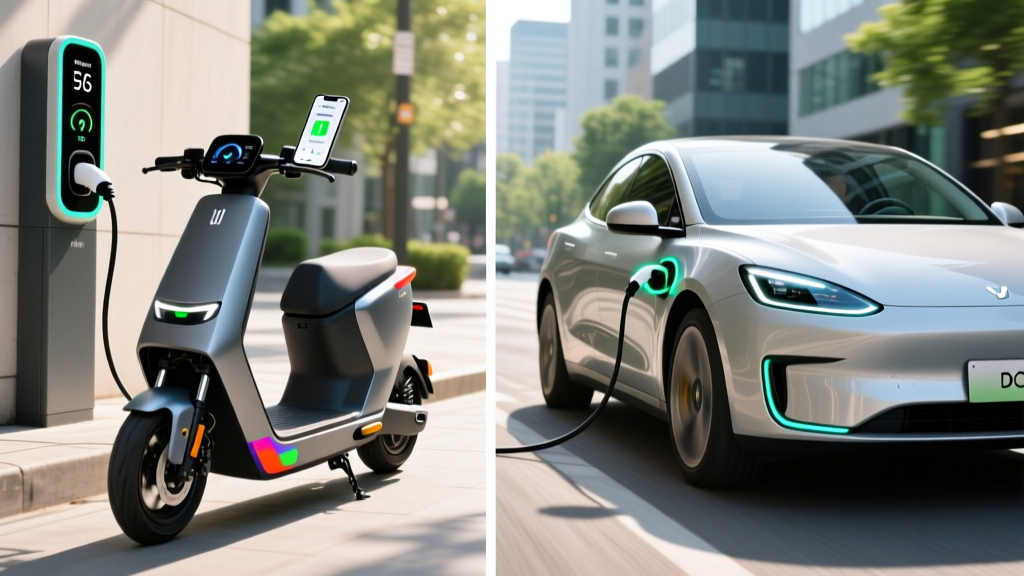
Yes, but slowly. Level 1 charging (120V, ~1.4 kW) adds about 3–5 miles of range per hour — roughly 30–50 miles overnight. This works for plug-in hybrids with small batteries or EVs driven under 30 miles daily. For full EVs, a Level 2 home charger (240V, 7.4–11.5 kW) adding 25–45 miles per hour is strongly recommended. Professional installation typically costs $800–$2,500 depending on your electrical panel and the distance to your parking spot.