The Short Answer on EV Aircraft
If you searched for "EV aircraft" hoping to buy an electric plane for personal travel, the honest 2026 answer is: you can't yet. Certified, commercially available electric aircraft for consumers remain limited to two-seat trainers like the Pipistrel Velis Electro (~$130,000, ~50-minute flight endurance). Meanwhile, the technology powering electric aviation — lithium-based battery packs, electric motors, and charging infrastructure — is the same ecosystem that makes today's electric cars viable. This guide breaks down where electric aviation actually stands, how the underlying battery and motor tech compares to road-going EVs, and what EV buyers should take away from the aircraft sector's progress.
What "EV Aircraft" Actually Means in 2026
The term "EV aircraft" covers a wide spectrum, and conflating these categories leads to bad expectations. Here's what exists right now:
- Certified electric trainers: The Pipistrel Velis Electro is the only fully electric airplane to receive EASA (European) and limited FAA type certification. It uses a 34.5 kWh battery pack, a 57.6 kW electric motor, and offers roughly 50 minutes of flight time plus reserves. Price: approximately $130,000.
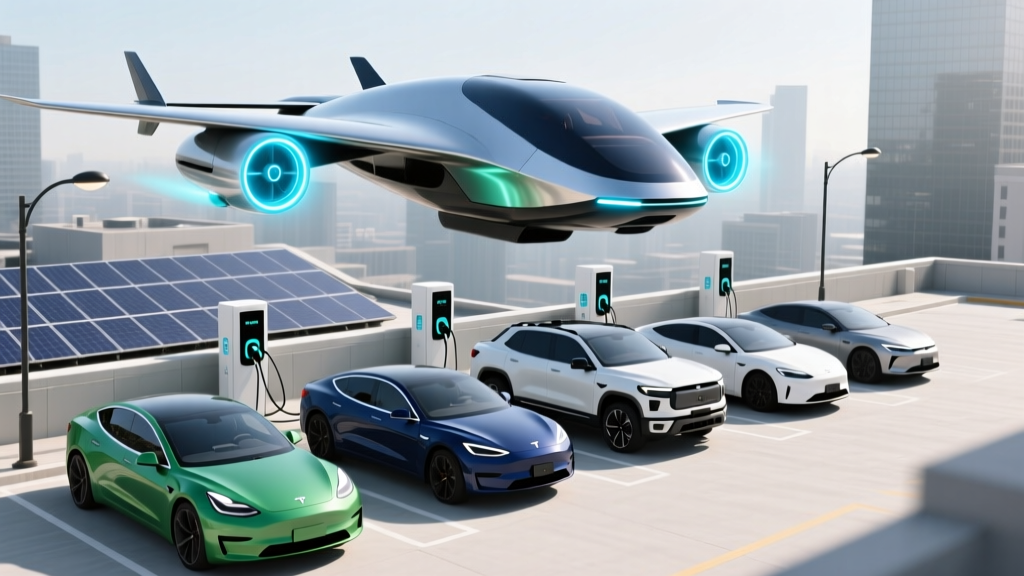
- eVTOL air taxis (announced/early certification): Companies like Joby Aviation, Archer Aviation, and Volocopter are pursuing electric vertical takeoff and landing aircraft for urban air mobility. As of early 2026, Joby has begun limited commercial operations in select markets, but these are ride services, not consumer purchases. Expect per-seat pricing comparable to Uber Black, not personal ownership.
- Electric regional aircraft (in development): Heart Aerospace's ES-30 (30-seat, ~200 km range) and similar projects target short-haul regional routes. These remain in testing or early certification phases.
- Experimental/hobbyist electric aircraft: A small community of builders have converted light aircraft to electric powertrains, but these lack certification and are not practical for transportation.
The key takeaway: when most people search "EV aircraft," they're encountering marketing from eVTOL startups or speculative journalism. The practical, purchasable electric aircraft market is essentially a single certified trainer — useful for flight schools, not commuters.
Battery Tech: Where Aircraft and Road EVs Diverge
Electric aircraft face a physics problem that electric cars largely solved years ago: energy density. Here's the comparison that matters.
| Metric | Pipistrel Velis Electro | 2026 Tesla Model 3 LR | 2026 Hyundai Ioniq 6 LR |
|---|---|---|---|
| Battery capacity (usable) | 34.5 kWh | 75 kWh (NMC) | 77.4 kWh (NMC) |
| Motor output | 57.6 kW (77 hp) | ~250 kW (~335 hp) | 168 kW (225 hp) |
| Energy density (pack-level) | ~170 Wh/kg | ~260 Wh/kg | ~250 Wh/kg |
| Range / endurance | ~50 min flight (~80 mi) | EPA 341 mi | EPA 361 mi |
| Weight (battery) | ~155 lbs (70 kg) | ~1,050 lbs (476 kg) | ~1,020 lbs (463 kg) |
| Recharge time (full) | ~2 hrs (ground power) | ~30 min (10-80% @ 250 kW DC) | ~18 min (10-80% @ 350 kW DC) |
| Price | ~$130,000 | ~$42,380 MSRP | ~$42,450 MSRP |
The Velis Electro's pack-level energy density of roughly 170 Wh/kg reflects aviation's extreme weight sensitivity — every kilogram matters when you're fighting gravity. Road EVs in 2026 benefit from NMC (nickel-manganese-cobalt) cells at 250-260+ Wh/kg, with EPA-verified efficiency figures that make 300+ mile ranges routine.
For EV buyers, the relevant insight is that automotive battery development is ahead of aviation. The same cell suppliers (CATL, LG Energy Solution, Panasonic) serve both markets, but automotive volumes drive cost reduction and energy-density improvements faster than aviation's tiny production runs can support.
The Real Cost Comparison: Electric Car vs. Gas vs. the EV Aircraft Dream
Since personal EV aircraft aren't a purchasing option, let's ground this in the decision most readers actually face: electric car vs. gas car vs. hybrid. Here's a realistic 5-year cost breakdown for a midsize sedan driven 15,000 miles/year.
| Category | 2026 Tesla Model 3 RWD | 2026 Toyota Camry LE (Gas) | 2026 Toyota Camry Hybrid LE |
|---|---|---|---|
| Base MSRP | $38,990 | $28,400 | $30,400 |
| Federal tax credit (§30D) | Up to $7,500* | $0 | $0 |
| Net purchase price | ~$31,490* | $28,400 | $30,400 |
| Fuel/energy (5 yrs, 75k mi) | ~$3,750 (home L2, $0.15/kWh) | ~$10,500 ($3.50/gal, 30 MPG) | ~$5,775 ($3.50/gal, 52 MPG) |
| Maintenance (5 yrs) | ~$1,500 | ~$3,500 | ~$3,200 |
| Insurance (5 yrs avg) | ~$9,000 | ~$7,000 | ~$7,200 |
| Depreciation (est. 5 yr) | ~$14,000 | ~$11,000 | ~$12,000 |
| Total 5-yr cost | ~$59,740 | ~$60,400 | ~$58,575 |
*Federal §30D credit eligibility depends on buyer income caps ($150k single / $300k joint), vehicle MSRP caps ($55k sedans), battery sourcing requirements, and point-of-sale transfer. Verify current rules at IRS.gov before purchasing. Credit availability varies by model year and manufacturer sourcing compliance.
The numbers show that a 2026 EV like the Model 3 RWD reaches cost parity with a gas Camry within 5 years when you factor in the federal credit and dramatically lower fuel/maintenance costs. The hybrid sits between them — excellent MPG but no tax credit and ongoing fuel expense.
What Electric Aviation Teaches EV Car Buyers
Even though you can't buy an EV aircraft for personal use, the aviation sector's struggles and solutions illuminate key EV car ownership considerations:
Thermal Management Is Everything
Electric aircraft must manage battery temperature under extreme discharge rates (takeoff demands peak power for sustained minutes). Road EVs face the same challenge during DC fast charging and track driving. Vehicles with active liquid cooling — Tesla, Hyundai/Kia E-GMP, Ford — sustain higher charge rates longer. Passive-cooled packs (some older or budget models) taper charging speed aggressively to protect cells.
Energy Density vs. Cost: The Eternal Tradeoff
Aviation pays extreme premiums for energy density because weight is existential. Car buyers face a softer version: LFP (lithium iron phosphate) batteries are cheaper, heavier, and longer-lasting; NMC packs are lighter and more energy-dense but costlier. In 2026, LFP is increasingly common in standard-range trims (Tesla Model 3 RWD, Ford Mustang Mach-E Select), while NMC dominates long-range variants.
Charging Infrastructure: Ground vs. Sky
eVTOL developers are building "vertiport" charging hubs with 600+ kW chargers — technology that will eventually trickle down to highway rest stops. Today's EV buyers benefit from the expanding public charging network, with NACS (Tesla's connector standard) now adopted by Ford, GM, Rivian, Hyundai, and most major automakers, opening access to 17,000+ Supercharger stalls nationwide.
EV Aircraft Myths vs. Facts
| Myth | Fact |
|---|---|
| "I can buy an electric plane for personal travel" | The only certified option is the ~$130,000 Pipistrel Velis Electro, a 2-seat trainer with 50-min endurance. Not practical for transportation. |
| "eVTOL air taxis will replace Uber by 2027" | Joby and Archer target limited commercial routes in 2026-2027, but scale, regulation, and vertiport infrastructure will limit availability to a handful of metro areas for years. |
| "Electric aircraft batteries are more advanced than car batteries" | Automotive battery tech leads in energy density, cost/kWh, and charging speed due to vastly larger production volumes and R&D investment. |
| "EVs and electric planes use the same charging" | Aircraft require specialized ground power units or high-voltage DC systems not compatible with consumer EV chargers (NACS/CCS/J1772). |
| "Solid-state batteries will make electric planes practical soon" | Solid-state cells (Toyota, QuantumScape) may reach automotive production by 2028-2030, but aviation certification adds 5-10 years of testing. Don't hold your breath. |
Decision Framework: Should You Buy an EV, a Hybrid, or Wait for Electric Aviation?
Choose a Battery EV (BEV) If:
- You have reliable home charging access (Level 2, 240V, 32-48A circuit)
- Your daily driving is under 200 miles and you take road trips 2-4 times/year
- You qualify for the §30D federal credit (income under $150k single / $300k joint) and the vehicle meets MSRP and sourcing requirements
- You want the lowest per-mile energy cost (~$0.04-0.06/mi on home electricity vs. $0.12-0.15/mi on gas)
- You're willing to plan charging on long road trips (30-min stops every 200-250 mi)
Choose a Hybrid (HEV) If:
- You lack home charging access and rely on street parking or apartments without EV infrastructure
- You drive in extreme cold regularly (below 10°F), where EV range can drop 20-30%
- You want zero behavior change — just fill up at gas stations, but get 45-55 MPG
- Your budget is tighter and you can't absorb the EV's higher upfront cost even after tax credits
Choose a Plug-In Hybrid (PHEV) If:
- You can charge at home but also take frequent long road trips where charging infrastructure is sparse
- You want 25-45 miles of electric-only commuting with a gas engine backup (e.g., Toyota RAV4 Prime: 42 mi EV, 38 MPG combined after depletion)
- You want to "practice" EV ownership before committing to a full BEV
Wait for Electric Aviation If:
- You're a licensed pilot seeking a certified electric trainer for flight instruction — the Velis Electro is real and available now
- You live in a metro area where eVTOL air taxi services (Joby, Archer) are launching in 2026-2028 and you want early-adopter rides
- You're an investor evaluating the supply chain — battery, motor, and power-electronics companies serve both automotive and aviation
First-Time EV Buyer Essentials: What the Aircraft Hype Won't Tell You
If the EV aircraft conversation brought you here, and you're actually shopping for an electric car, here are the practical realities no startup pitch deck will mention:
Home Charging Is Non-Negotiable for Most Owners
Over 80% of EV charging happens at home. Budget $500-$2,500 for a Level 2 home charger installation (equipment: $300-$700; electrician: $200-$1,800 depending on panel capacity and conduit run). If your electrical panel is maxed out at 100A, a panel upgrade to 200A can add $1,500-$3,000. Get a quote from a licensed electrician before buying the car.
Real-World Range Is Not EPA Range
The EPA test cycle is generous. Expect 85-95% of sticker range in mild weather at mixed speeds, 70-80% at sustained 75+ mph highway driving, and 60-75% in sub-freezing temperatures. A 341-mile EPA Model 3 might deliver 250 miles on a cold-weather highway road trip. Plan accordingly.
Charging Speed Is About the Curve, Not the Peak
A vehicle advertising "250 kW peak charging" may only sustain that rate from 10-30% SoC before tapering. What matters is the 10-80% time. The Hyundai Ioniq 6 (350 kW peak, ~18 min 10-80%) outperforms many vehicles with nominally similar peak rates because its charge curve stays flatter longer. Always check 10-80% minutes, not just peak kW.
Insurance Costs More for EVs
Expect 15-30% higher insurance premiums for EVs vs. comparable gas cars, driven by higher repair costs (specialized body shops, battery replacement risk, aluminum-intensive structures). Get quotes before purchasing — the difference can eat into fuel savings.
Frequently Asked Questions
Can I buy an electric airplane in 2026?
The Pipistrel Velis Electro is the only fully electric, type-certified aircraft available for purchase (~$130,000). It's a two-seat trainer with approximately 50 minutes of flight endurance — designed for flight schools, not personal transportation. No consumer-grade electric aircraft suitable for commuting or travel currently exists.
When will eVTOL air taxis like Joby be available?
Joby Aviation began limited commercial service in select markets in 2025-2026, with Archer Aviation targeting similar timelines. However, widespread availability across multiple cities with competitive pricing is likely a 2028-2030+ proposition. These will be ride-hailing services (think Uber), not personal aircraft you can own.
Does electric aircraft technology improve EV cars?
Indirectly, yes. High-discharge battery cells, lightweight motor designs, and advanced thermal management systems developed for aviation sometimes transfer to automotive applications. But the flow is mostly the other direction: automotive battery production scale drives down costs that eventually benefit aviation. The car market is 100x larger and moves faster.
What's the cheapest way to get into electric transportation in 2026?
A used EV qualifying for the §25E used clean vehicle credit (up to $4,000, 30% of sale price, income-capped) can bring a 2-3 year old Tesla Model 3 or Chevrolet Bolt EV into the $18,000-$25,000 range after credit. Pair with a $300-$500 Level 2 home charger and you have per-mile costs around $0.04-0.05 — roughly one-third the fuel cost of a comparable gas car.
Will solid-state batteries make electric planes practical?
Solid-state batteries promise 40-50% higher energy density and faster charging, which would significantly benefit aviation. However, automotive production is only expected around 2028-2030 (Toyota, QuantumScape, Samsung SDI), and aviation certification adds 5-10 additional years of testing and validation. Electric aircraft will remain niche well into the 2030s.
Should I wait for better EV technology before buying?
2026 EVs already offer 250-370 miles of EPA range, 18-30 minute fast charging, and mature charging networks. Waiting 2-3 years might yield 5-10% improvements in range or charging speed — but you'll also forgo 2-3 years of fuel savings (~$1,200-$1,500/year for an average driver). The technology is mature enough for most buyers today.