The Quick Answer
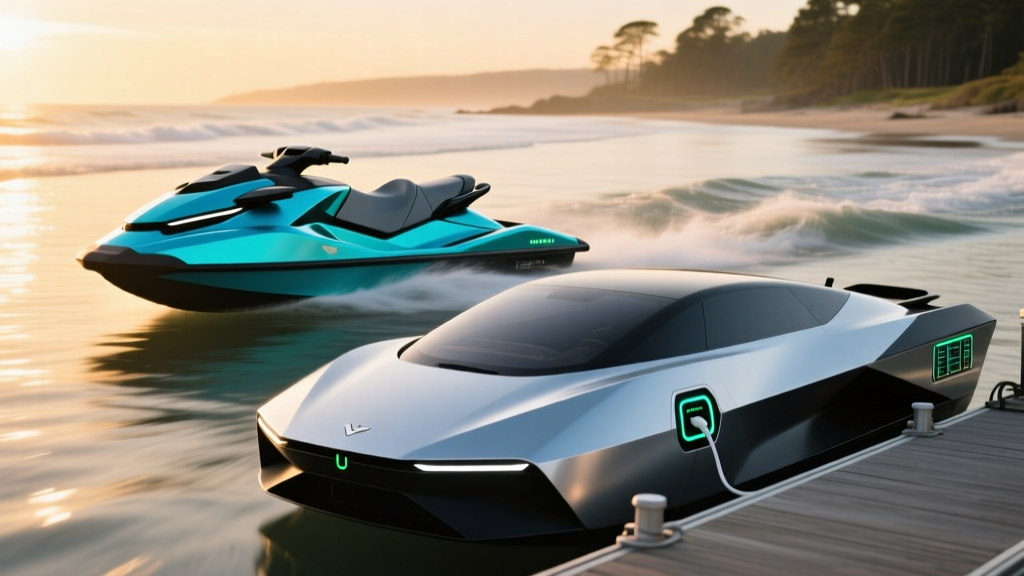
An electric wave runner — Yamaha's trademarked name for its personal watercraft (PWC) lineup — does not yet exist as a production battery-electric model as of early 2026. Yamaha's current WaveRunner lineup remains gasoline-powered, and while the company has shown electric marine concepts, no consumer-ready electric WaveRunner is available for purchase. If you are searching for an electric PWC or electric boat, alternatives from brands like Taiga Motors (electric PWC, starting ~$25,000) and various electric pontoon/pontoon-boat makers exist, but they occupy a fundamentally different market segment than road-going EVs. This guide breaks down what an electric watercraft actually costs, how it compares to gas PWCs and EVs, and what you should know before buying.
What Is an Electric Wave Runner, Exactly?
"WaveRunner" is Yamaha Motor Corporation's registered trademark for its sit-down personal watercraft. When buyers search for an electric wave runner, they typically mean one of three things:
- A Yamaha WaveRunner with an electric powertrain — this does not currently exist in production.
- An electric personal watercraft from any brand — Taiga Motors' Orca is the most prominent example, with an 80 kWh-equivalent marine battery pack and up to ~2 hours of ride time.
- An electric boat or electric jetboard — a broader category that includes electric pontoons, hydrofoil surfboards (e.g., Lift eFoil), and electric outboards.
For this guide, we'll focus on the electric PWC segment and how its ownership economics compare to both gas PWCs and road-going electric vehicles, since that's the comparison most shoppers are actually making.
Electric PWC vs Gas PWC: The Real Numbers
The most direct comparison is between a gasoline Yamaha WaveRunner and an electric alternative like the Taiga Orca. Here is how the hard data stacks up for 2026:
| Spec | Yamaha WaveRunner VX Cruiser (Gas) | Taiga Orca (Electric PWC) |
|---|---|---|
| Base MSRP | ~$12,500 | ~$25,000 (base) |
| Powertrain | 1.8L 4-cyl supercharged, ~250 HP | Electric motor, ~240 HP peak |
| Fuel / Battery | 18.5 gal gasoline tank | ~24 kWh marine battery (NMC) |
| Range / Ride Time | ~150-200 miles (4-6 hours) | ~2 hours at mixed use (~45-60 mi equiv.) |
| Refuel / Recharge | ~5 min at gas station | ~1.5 hrs (Level 2, 240V); ~8 hrs (120V) |
| Top Speed | ~65 mph | ~65 mph (performance trim) |
| Annual Fuel / Energy Cost | ~$600-$900 (est. 100 hrs/yr) | ~$80-$150 (est. 100 hrs/yr, $0.14/kWh) |
| Maintenance (Annual) | ~$300-$500 (oil, filters, winterization) | ~$50-$100 (minimal moving parts) |
| Federal Tax Credit | None | Not eligible (§30D is for on-road vehicles only) |
The upfront cost gap is stark: an electric PWC costs roughly 2x the price of a comparable gas model. The operating cost advantage, however, is significant — electricity costs roughly 85-90% less per hour of operation than gasoline for a PWC.
Cost of Ownership: Electric PWC vs Road-Going EV
Many searchers landing on "electric wave runner" are actually EV-curious car buyers using the term loosely. If you're weighing an electric PWC against an electric car, the financial picture is very different:
| Cost Category | Taiga Orca (Elec. PWC) | 2026 Chevy Equinox EV (2RS) | Yamaha WaveRunner VX (Gas PWC) |
|---|---|---|---|
| Purchase Price | $25,000 | $43,400 | $12,500 |
| Federal Tax Credit (§30D) | $0 | Up to $7,500 (eligibility varies) | $0 |
| Fuel/Energy (5 yrs) | $500-$750 | $2,800-$3,500 | $3,500-$4,500 |
| Maintenance (5 yrs) | $250-$500 | $1,500-$2,000 | $1,500-$2,500 |
| Insurance (5 yrs est.) | $2,000-$3,500 | $7,500-$10,000 | $2,000-$3,000 |
| Depreciation (est.) | ~40-50% | ~45-55% | ~35-45% |
Key takeaway: an electric PWC is a recreational toy with an annual usage measured in dozens of hours, while an EV replaces a daily-driver car. The §30D federal tax credit — worth up to $7,500 for qualifying on-road electric vehicles — does not apply to watercraft. Per the IRS, the credit applies to new clean vehicles placed in service for road use, with MSRP caps ($55,000 for sedans, $80,000 for SUVs/trucks/vans), buyer income limits, and battery-sourcing requirements.
Charging an Electric PWC: What You Need at the Dock
Unlike road-going EVs that benefit from the growing DC fast-charging network (Tesla Superchargers, Electrify America, EVgo), electric PWCs rely entirely on Level 1 (120V) and Level 2 (240V) AC charging at your dock, garage, or marina.
| Level | Voltage / Power | Full Charge Time (~24 kWh) | Infrastructure Needed |
|---|---|---|---|
| Level 1 | 120V / ~1.4 kW | ~16-18 hours | Standard household outlet |
| Level 2 | 240V / ~7-10 kW | ~2.5-3.5 hours | Marina pedestal or home 240V install |
| DC Fast Charge | Not available (current models) | N/A | N/A |
Marina charging is a real limitation. Most marinas do not offer dedicated 240V EV-style charging pedestals. You'll likely need to install a 240V outlet at your dock or storage facility — expect $500-$2,000 for a licensed electrician to run a 30-50A circuit, depending on distance from the panel. If your marina is in a remote lake community, panel upgrades can push costs higher.
Common Misconceptions About Electric Watercraft
| Myth | Fact |
|---|---|
| "Yamaha makes an electric WaveRunner" | As of 2026, Yamaha has not released a production electric WaveRunner. Their lineup is gasoline-only. |
| "Electric PWCs qualify for the $7,500 EV tax credit" | The §30D credit applies only to on-road vehicles. Watercraft are excluded per IRS rules. |
| "Electric PWCs charge at DC fast chargers" | No current consumer electric PWC supports DC fast charging. Charging is limited to Level 1/2 AC. |
| "Range is the same as gas PWCs" | Electric PWCs offer roughly 1.5-2 hours of mixed riding vs 4-6 hours for gas models. Plan accordingly. |
| "Maintenance-free means zero costs" | Battery replacement (if needed out of warranty) can cost $8,000-$12,000. Winterization and hull maintenance still apply. |
Real-World Ownership: Climate, Usage, and Practical Limits
Before buying any electric PWC, consider these real-world factors that spec sheets don't highlight:
Battery Degradation in Marine Environments
NMC (nickel manganese cobalt) marine battery packs, like those in the Taiga Orca, face saltwater exposure risk, vibration, and temperature extremes. Expect 10-15% capacity loss over 5 years under normal use — similar to EV degradation patterns, but marine environments can accelerate this if the craft isn't stored properly. Most manufacturers offer 3-5 year battery warranties with a ~70-80% capacity retention threshold.
Cold-Water Performance
Lithium-ion batteries lose efficiency in cold water (below ~50°F / 10°C). Expect 20-30% reduced ride time in early-spring or late-fall conditions — the same physics that reduces EV range in winter. If you ride primarily in warm climates (Florida, Southern California, Texas lakes), this is less of a concern.
Resale Value Uncertainty
Electric PWCs are a new category with limited resale data. Gas PWCs from Yamaha and Sea-Doo hold value well (typically 55-65% retained after 5 years). Electric PWCs may depreciate faster due to battery health concerns among used buyers — a pattern seen in early-generation road EVs.
Home Charging Access
If you store your PWC on a trailer at home, a 240V Level 2 outlet in your garage or driveway makes overnight charging practical. If you keep it at a marina slip, verify 240V availability before purchasing. Many older marinas only have 120V/15A outlets at dock pedestals — that means 16+ hour charge times.
Decision Framework: Should You Buy an Electric PWC?
Choose an Electric PWC If:
- You ride primarily on calm, inland lakes with short sessions (1-2 hours)
- You have 240V charging access at your dock, marina, or home storage
- You value silent operation (many lakes restrict noise; electric PWCs comply easily)
- You want to eliminate gas/oil maintenance and winterization engine prep
- You accept the ~$25,000+ upfront cost with no federal tax credit offset
Stick With a Gas PWC (or Wait) If:
- You ride for 4+ hours per session or take long-distance lake/river trips
- Your marina lacks 240V charging and upgrading is impractical
- You ride in cold-water conditions regularly (below 50°F)
- You want proven resale value and widespread dealer service networks
- You're hoping for a Yamaha electric WaveRunner — it doesn't exist yet
Frequently Asked Questions
Does Yamaha make an electric WaveRunner in 2026?
No. Yamaha's 2026 WaveRunner lineup is entirely gasoline-powered. Yamaha has explored electric marine concepts but has not announced a production electric PWC with a firm release date.
What is the best electric personal watercraft available now?
The Taiga Orca is the most widely available electric PWC, starting around $25,000. It offers ~240 HP peak, a ~24 kWh NMC battery, and approximately 2 hours of mixed-use ride time. Charging is via Level 1 (120V) or Level 2 (240V) AC only.
Do electric PWCs qualify for the federal EV tax credit?
No. The IRS §30D clean vehicle credit applies only to on-road vehicles (cars, trucks, SUVs, vans). Watercraft, including electric PWCs, are not eligible. See IRS guidelines for full eligibility rules.
How much does it cost to charge an electric PWC?
A full charge of a ~24 kWh battery at the US average residential rate of ~$0.14/kWh costs approximately $3.36. For 100 hours of annual riding, expect roughly $80-$150 per year in electricity — compared to $600-$900 in gasoline for a comparable gas PWC.
Can I charge an electric PWC at a marina?
It depends on your marina's electrical infrastructure. Most marinas offer 120V/15A dock outlets (Level 1, ~16-18 hour full charge). For practical overnight charging, you'll need a 240V outlet (Level 2), which may require a paid electrical installation at your slip.
What's the real range of an electric PWC?
Expect approximately 45-60 miles equivalent over 1.5-2 hours of mixed riding (cruising + aggressive acceleration). This is roughly one-third the range of a gas PWC on a full tank. There is no EPA-equivalent range rating standard for PWCs.
How long do electric PWC batteries last?
Most marine NMC battery packs are warrantied for 3-5 years with a 70-80% capacity retention threshold. Real-world lifespan depends on charge habits, storage conditions, and climate. Expect 10-15% degradation over 5 years under normal use. Out-of-warranty replacement can cost $8,000-$12,000.
Sources: IRS §30D Clean Vehicle Credit, Yamaha WaveRunner, manufacturer specifications. Always verify current pricing and eligibility with the manufacturer and your tax professional.