Electric vs Petrol Car Comparison: The Complete Buyer's Guide
Choosing between an electric vehicle (EV) and a traditional petrol car is one of the most significant decisions modern car buyers face. Both powertrains have evolved dramatically, and the right choice depends on your driving habits, budget, access to charging infrastructure, and personal priorities. In this comprehensive electric vs petrol car comparison, we break down every critical factor — from range and running costs to performance and long-term ownership — so you can make a confident, informed decision.
Whether you are considering making the switch to electric or wondering whether a petrol car still makes sense for your lifestyle, this guide covers everything you need to know. For a broader look at top-rated models in each category, check out our best electric vehicles rankings and our best petrol cars roundup.
Overview: Electric Cars vs Petrol Cars
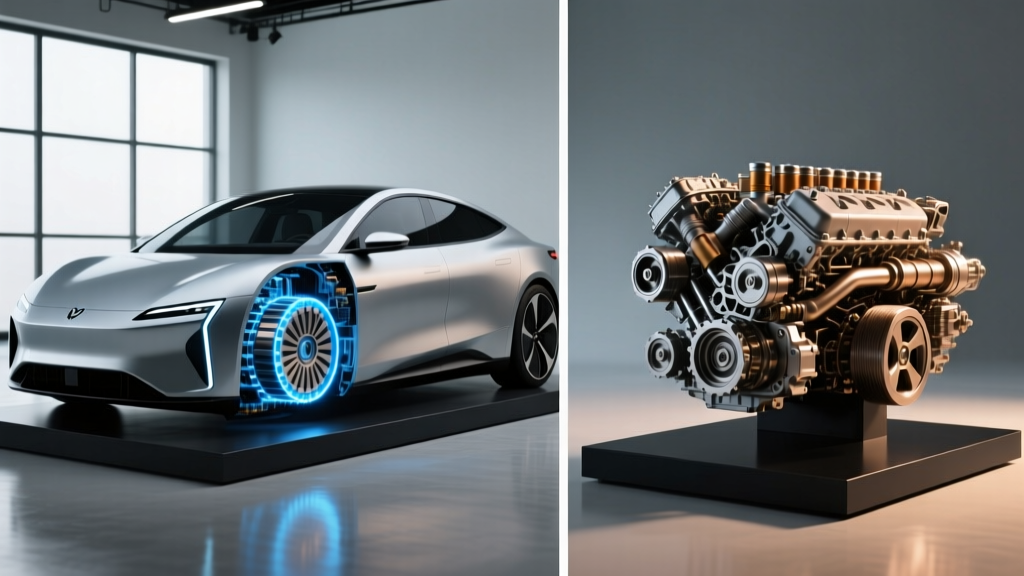
Electric cars are powered by one or more electric motors drawing energy from a rechargeable battery pack. They produce zero tailpipe emissions, deliver instant torque, and require far fewer moving parts than internal combustion engines. Petrol cars, on the other hand, rely on a gasoline-fueled internal combustion engine (ICE) paired with a multi-speed transmission. They benefit from over a century of infrastructure development, quick refueling, and a vast network of service stations.
The EV market has grown rapidly, with models now available across every segment — from compact hatchbacks to full-size SUVs and luxury sedans. Meanwhile, petrol vehicles continue to offer refinements in fuel efficiency, turbocharging technology, and hybridization that keep them competitive. The question is no longer whether EVs are viable, but rather which powertrain aligns best with your specific needs.
Side-by-Side Spec Comparison
The table below compares typical mid-range electric and petrol vehicles across key specifications. Data reflects EPA-rated averages and independent test results for popular models in the compact-to-midsize segment.
| Specification | Electric Vehicle (Typical Mid-Range EV) | Petrol Vehicle (Typical Mid-Range ICE) |
|---|---|---|
| Powertrain | Electric motor & lithium-ion battery | Internal combustion engine & transmission |
| EPA-Rated Range / Tank Range | 250–350 miles per charge | 350–500 miles per tank |
| Fuel / Energy Cost per Mile | $0.03–$0.06 (home charging) | $0.10–$0.16 |
| 0–60 mph Acceleration | 5.0–7.5 seconds | 6.5–9.0 seconds |
| Refueling / Recharge Time | 20–40 min (DC fast charge 10–80%) | 3–5 minutes (full tank) |
| CO₂ Emissions (Tailpipe) | Zero | ~350–400 g/mile |
| Maintenance Cost (Annual Avg.) | $300–$500 | $700–$1,200 |
| Typical Starting Price | $30,000–$45,000 | $22,000–$35,000 |
| Drivetrain Options | RWD, AWD | FWD, RWD, AWD |
| Warranty (Powertrain) | 8 years / 100,000 miles (battery) | 5 years / 60,000 miles |
For detailed model-by-model breakdowns, explore our EV comparison tool to see how specific vehicles stack up against one another.
Range & Fuel Economy: How Far Can You Go?
Range anxiety remains one of the most cited concerns for prospective EV buyers, but the reality of modern electric vehicles tells a different story. Most current EVs deliver an EPA-rated range between 250 and 350 miles on a full charge, with some long-range variants pushing past 400 miles. According to fueleconomy.gov, the average American drives roughly 37 miles per day — well within the capabilities of virtually any EV on the market.
Petrol cars generally offer 350 to 500 miles of range on a single tank, and refueling takes just minutes at any of the hundreds of thousands of gas stations worldwide. For drivers who regularly cover long distances in remote areas with limited charging infrastructure, petrol vehicles still hold a practical advantage.
However, EV efficiency is measured in MPGe (miles per gallon equivalent), and many electric vehicles achieve ratings of 100 MPGe or higher — far surpassing even the most fuel-efficient petrol cars. When charging at home using off-peak electricity rates, the cost per mile for an EV can be as low as $0.03, compared to $0.10–$0.16 per mile for a petrol vehicle at typical fuel prices.
It is also worth noting that EV range can vary with temperature. Cold weather can reduce battery range by 15–30%, according to testing by AAA. Petrol vehicles experience a smaller but still measurable drop in fuel economy under the same conditions. If you live in a region with harsh winters, consider this factor carefully and explore our best EVs for cold weather guide for models with excellent thermal management systems.
Price & Total Cost of Ownership
The upfront purchase price of electric vehicles tends to be higher than comparable petrol cars, primarily due to the cost of the battery pack. A mid-range EV typically starts between $30,000 and $45,000, while a similarly equipped petrol car might start between $22,000 and $35,000. However, the total cost of ownership (TCO) paints a very different picture over time.
EVs benefit from significantly lower fuel costs, reduced maintenance expenses (no oil changes, fewer brake replacements thanks to regenerative braking, and no exhaust system repairs), and potential tax incentives or rebates depending on your region. Studies by Consumer Reports have shown that EV owners can save between $6,000 and $10,000 over the lifetime of the vehicle compared to owning a petrol equivalent.
Insurance costs for EVs can be slightly higher due to the specialized repair requirements for battery packs and electric drivetrains, but this gap has been narrowing as EVs become more mainstream. Depreciation is another factor: early EVs suffered from steep depreciation, but growing demand and improving battery longevity have stabilized resale values considerably.
For budget-conscious buyers, the used EV market offers excellent value, with many well-maintained models available at significant discounts. Browse our best used electric cars list to find top picks at every price point.
Charging Speed vs Refueling: The Convenience Factor
One area where petrol cars maintain a clear advantage is refueling speed. Filling a tank takes three to five minutes and can be done at virtually any corner. EV charging, by contrast, requires more planning — especially on road trips.
Home charging is where EVs shine for daily use. Most EV owners do the vast majority of their charging at home, waking up to a full "tank" every morning. A Level 2 home charger (240V) can add roughly 25–30 miles of range per hour of charging, easily replenishing a day's driving overnight.
For longer trips, DC fast charging networks have expanded significantly. Modern EVs with fast-charging capability can go from 10% to 80% in 20 to 40 minutes, depending on the vehicle and charger power output. Networks like Tesla Supercharger, Electrify America, and Ionity continue to expand, making cross-country EV travel increasingly practical. According to data from the Alternative Fuels Data Center, the number of public charging stations continues to grow rapidly across all major markets.
However, charging speed varies widely between models. Some EVs support peak charging rates of 250 kW or more, while others are limited to 50–100 kW. If fast charging is a priority for your lifestyle, consult our fastest-charging EVs ranking to find models that minimize time spent at the plug.
Performance & Driving Experience
Electric vehicles deliver a fundamentally different driving experience than petrol cars. The most immediately noticeable difference is instant torque: electric motors provide maximum torque from zero RPM, resulting in brisk, seamless acceleration without the lag associated with turbocharged petrol engines or the shift delays of automatic transmissions.
Even mainstream EVs routinely achieve 0–60 mph times in the 5–7 second range, territory that was once reserved for sports cars. Performance-oriented EVs can hit 60 mph in under 3 seconds, rivaling supercars. Petrol vehicles in the same price range typically deliver 0–60 mph times of 6.5–9.0 seconds, though high-performance variants close the gap considerably.
Beyond straight-line speed, EVs benefit from a low center of gravity due to the battery pack mounted beneath the floor. This results in reduced body roll and confident handling through corners. The weight distribution is often near 50/50, and the regenerative braking system allows for one-pedal driving in many models — a feature that many drivers quickly grow to prefer.
Petrol cars, on the other hand, offer a visceral sensory experience that many enthusiasts cherish: the sound of an engine under load, the tactile feedback of a manual gearbox, and the emotional connection to mechanical engineering. For driving purists, the analog nature of a well-tuned petrol car remains deeply appealing.
For a deeper dive into performance metrics, visit our best performance EVs page and compare them against traditional sports sedans in our reviews.
Interior Space, Technology & Comfort
Electric vehicles often have a packaging advantage over their petrol counterparts. Without a bulky engine, transmission tunnel, and exhaust system, designers can push the wheels to the corners and create a flat floor, maximizing interior volume. Many EVs offer class-leading legroom and cargo space, and some even feature a front trunk ("frunk") for additional storage.
On the technology front, EVs tend to be equipped with the latest infotainment systems, over-the-air (OTA) software updates, advanced driver assistance systems (ADAS), and digital-first interfaces. Many EV manufacturers treat their vehicles as software platforms, continuously adding features and improving functionality after purchase. Petrol cars from legacy automakers have been catching up in this area, but EVs generally lead the pack in tech integration.
Noise, vibration, and harshness (NVH) levels also favor electric vehicles. Without an internal combustion engine, EVs are remarkably quiet at all speeds, creating a serene cabin environment. Wind and road noise become the dominant sounds, and manufacturers invest heavily in sound insulation to keep the cabin whisper-quiet.
That said, petrol cars offer their own comfort advantages. The lighter overall weight of many petrol vehicles (EVs are typically 500–1,000 lbs heavier due to the battery) can result in a more supple ride quality over rough surfaces. Some buyers also prefer the traditional layout and control interfaces found in petrol vehicles, which can feel more intuitive if you are not accustomed to touchscreen-heavy designs.
Explore our best EV SUVs and best EV sedans pages for detailed interior reviews and cargo measurements.
Warranty, Reliability & Long-Term Ownership
Reliability is a crucial factor in any vehicle purchase, and the comparison between electric and petrol cars reveals interesting trade-offs. EVs have far fewer moving parts — no engine, transmission, timing belt, spark plugs, or exhaust system — which translates to fewer things that can go wrong mechanically. Independent studies by organizations such as Consumer Reports have found that EVs generally require less maintenance and have lower long-term repair costs than petrol vehicles.
The primary reliability concern for EVs is the battery pack. Lithium-ion batteries degrade over time, but modern battery management systems and improved chemistry have significantly extended battery life. Most manufacturers offer battery warranties of 8 years or 100,000 miles, with some extending to 10 years. Real-world data suggests that many EV batteries retain 85–90% of their original capacity after 100,000 miles.
Petrol vehicles, while mechanically more complex, benefit from a vast aftermarket ecosystem and decades of established repair knowledge. Any competent mechanic can service a petrol car, and parts are widely available and relatively inexpensive. However, as petrol vehicles age, maintenance costs tend to increase with major service items like timing belt replacements, transmission rebuilds, and emissions system repairs.
From a warranty perspective, EV manufacturers tend to offer more generous powertrain coverage. The typical EV battery warranty of 8 years/100,000 miles significantly exceeds the standard 5-year/60,000-mile powertrain warranty found on most petrol vehicles. This extended coverage provides peace of mind and reflects manufacturers' confidence in battery durability.
For a closer look at long-term reliability data, check our most reliable electric cars rankings.
Verdict: Which Should You Buy?
There is no universally "better" choice between an electric car and a petrol car — the right answer depends entirely on your lifestyle, driving patterns, and priorities. Here is our recommendation based on buyer type:
Choose an Electric Vehicle If:
- You can charge at home: Home charging transforms the ownership experience, making daily "refueling" effortless and cheap.
- Your daily commute is under 100 miles: The vast majority of daily driving falls well within EV range, and you will rarely need to visit a public charger.
- You want lower running costs: Electricity is cheaper than petrol per mile, and maintenance expenses are significantly reduced.
- You prioritize performance and tech: Instant torque, one-pedal driving, OTA updates, and cutting-edge ADAS features define the modern EV experience.
- Environmental impact matters to you: Zero tailpipe emissions and a cleaner energy grid make EVs the greener choice in most regions.
Choose a Petrol Car If:
- You frequently drive long distances in remote areas: Quick refueling and ubiquitous gas stations make petrol the more practical option for road trips through areas with sparse charging infrastructure.
- Your budget is tight upfront: Petrol cars generally have lower starting prices, and the used market offers enormous variety at every price point.
- You lack access to home or workplace charging: Relying solely on public charging can be inconvenient and more expensive than home charging.
- You are a driving enthusiast who values engine character: The sound, feel, and mechanical engagement of a petrol engine remain unmatched for many enthusiasts.
- You live in an extremely cold climate with limited charging options: Cold weather range reduction and limited infrastructure can make EV ownership more challenging in remote cold regions.
For many buyers, the ideal solution might be a combination: an EV for daily commuting and a petrol or hybrid vehicle for longer trips. As charging infrastructure continues to expand and battery technology advances, the case for going fully electric grows stronger every year.
Ready to explore your options? Start with our best electric vehicles guide or compare specific models head-to-head using our EV comparison tool.
Frequently Asked Questions
Are electric cars cheaper to run than petrol cars?
Yes, in most scenarios. Electric cars cost significantly less per mile to "fuel" when charging at home, and maintenance expenses are lower due to fewer moving parts and regenerative braking reducing wear on brake components. According to EPA data and independent analyses from fueleconomy.gov, the average EV owner saves hundreds of dollars annually on energy costs compared to a petrol car owner. However, the actual savings depend on local electricity rates, driving patterns, and whether you have access to affordable home charging.
How long do electric car batteries last?
Modern EV batteries are designed to last the lifetime of the vehicle. Most manufacturers warranty their battery packs for 8 years or 100,000 miles, and real-world data indicates that many batteries retain 85–90% of their original capacity well beyond that threshold. Battery degradation is a gradual process, and advances in battery chemistry — including lithium iron phosphate (LFP) and solid-state technologies — continue to push longevity further. Unlike petrol engines that may require expensive rebuilds, EV batteries typically degrade slowly rather than failing catastrophically.
Can I take an electric car on a long road trip?
Absolutely. With proper planning, EVs are fully capable of long-distance travel. DC fast charging networks now cover major highways and interstates, and most modern EVs can add 150–200 miles of range in a 20–30 minute charging stop. Route planning apps built into many EVs automatically suggest charging stops and pre-condition the battery for optimal charging speed. While a road trip in an EV requires slightly more planning than one in a petrol car, the experience is increasingly seamless. Check our best EVs for road trips guide for top recommendations.
Is it better to buy or lease an electric vehicle?
Leasing an EV can be an excellent strategy, particularly if you want to take advantage of the latest battery technology and avoid concerns about long-term depreciation. Leases often come with lower monthly payments and allow you to upgrade to a newer model every few years. However, buying makes sense if you drive high mileage (most leases have annual mileage limits), want to build equity in the vehicle, or plan to keep the car for many years to maximize the total cost of ownership savings. Some regions also offer purchase incentives that are not available on leased vehicles, so it is worth researching local programs before deciding.