The Short Answer: Electric vs ICE in 2026
For most buyers, an electric vehicle (EV) costs more upfront but saves $4,000–$9,000 over five years in fuel and maintenance compared to a comparable gas-powered (ICE) car — if you can charge at home. The federal §30D tax credit can knock up to $7,500 off the purchase price, but eligibility depends on your income, the vehicle's MSRP, and battery-mineral sourcing rules. If you lack home charging or regularly drive 400+ miles in cold weather, a hybrid or ICE vehicle may still be the more practical choice.
What Does "Electric vs ICE" Actually Mean for Buyers?
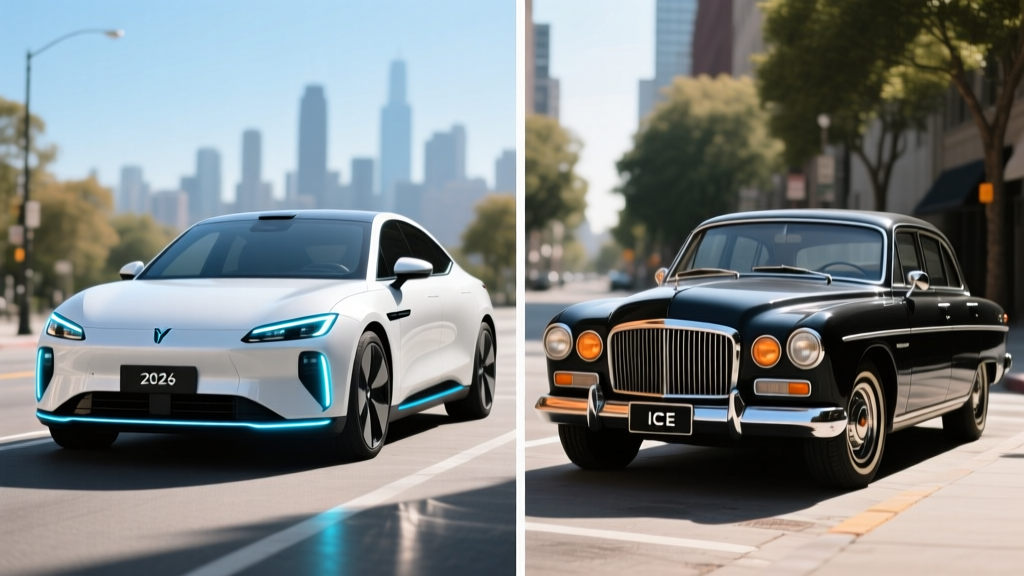
When shoppers search for "electric ICE," they're almost always comparing battery-electric vehicles (BEVs) against traditional internal combustion engine (ICE) cars — vehicles powered by gasoline or diesel. A third option, plug-in hybrids (PHEVs), bridges both worlds with a smaller battery (typically 25–50 miles of electric range) and a gas engine for longer trips.
The decision isn't just about the sticker price. It involves fueling costs, maintenance schedules, insurance premiums, depreciation curves, and how your daily driving pattern aligns with real-world EV range. Let's break each factor down with concrete 2026 numbers.
Range and Efficiency: EPA Stickers vs Real-World Driving
EPA range estimates give you a baseline, but real-world results vary significantly based on speed, temperature, and terrain. Here's how popular 2026 models stack up against their gas counterparts:
| Vehicle (2026) | Type | EPA Range / Tank Range | Real-World Highway | Cold-Weather (20°F) | MPGe / MPG Combined |
|---|---|---|---|---|---|
| Tesla Model Y Long Range AWD | BEV | 320 mi (EPA) | ~270–285 mi | ~220–245 mi | 117 MPGe |
| Toyota RAV4 AWD | ICE | ~430 mi (14.5 gal) | ~400 mi | ~390 mi | 30 MPG |
| Hyundai Ioniq 5 SEL AWD | BEV | 290 mi (EPA) | ~245–260 mi | ~200–220 mi | 110 MPGe |
| Honda CR-V AWD | ICE | ~406 mi (14.0 gal) | ~370 mi | ~365 mi | 29 MPG |
| Toyota RAV4 Prime (PHEV) | PHEV | 42 mi electric + ~380 mi gas | 40 mi electric + ~360 mi gas | ~32 mi electric + ~350 mi gas | 94 MPGe / 38 MPG |
Real-world range reality check: BEVs lose roughly 15–30% of their EPA range in sustained highway driving at 75+ mph, and an additional 15–25% in sub-freezing temperatures due to battery heating demands and cabin climate use. ICE vehicles also lose efficiency in cold weather, but the impact is typically 5–10%. Always plan road trips around 70–75% of the EPA range figure in moderate weather.
5-Year Total Cost of Ownership: EV vs Gas
Here's where the electric vs ICE comparison gets decisive. The following table models a 5-year / 75,000-mile ownership scenario using national average electricity and gas prices as of early 2026 ($0.16/kWh residential, $3.40/gallon regular unleaded):
| Cost Category | BEV (Tesla Model Y LR) | ICE (Toyota RAV4 AWD) | PHEV (RAV4 Prime) |
|---|---|---|---|
| Base MSRP | $44,990 | $33,400 | $43,690 |
| §30D Federal Tax Credit | –$7,500 (if eligible) | $0 | –$7,500 (if eligible) |
| Effective Purchase Price | $37,490 | $33,400 | $36,190 |
| Fuel / Energy (75k mi) | $2,100 (home charging) | $8,500 | $4,300 (mix) |
| Maintenance (5 yr) | $1,200 | $3,800 | $2,900 |
| Insurance (5 yr avg) | $9,500 | $7,200 | $8,100 |
| Estimated Depreciation | $16,500 | $13,800 | $15,200 |
| 5-Year Total | $66,790 | $66,700 | $66,690 |
Key takeaways:
- The BEV's fuel savings (~$6,400 vs the RAV4 gas) nearly offset its higher insurance and depreciation costs.
- With the §30D tax credit applied at point of sale, the BEV and ICE 5-year totals are within ~$100 of each other — but the BEV delivers a smoother, quieter, and quicker driving experience.
- Without the tax credit, the BEV costs roughly $7,600 more over five years.
- PHEVs offer a middle ground: electric commuting with gas backup for road trips.
Sources: fueleconomy.gov for EPA ratings; IRS §30D rules for tax credit eligibility.
Charging vs Fueling: What It Actually Costs Per Mile
Energy cost per mile is where EVs have an overwhelming advantage — but only with home charging. Here's the breakdown:
| Charging/Fueling Method | Cost per kWh or Gallon | Cost per Mile (Model Y ~3.5 mi/kWh) | Cost per Mile (RAV4 ~30 MPG) |
|---|---|---|---|
| Home Level 2 (residential avg) | $0.16/kWh | $0.046 | — |
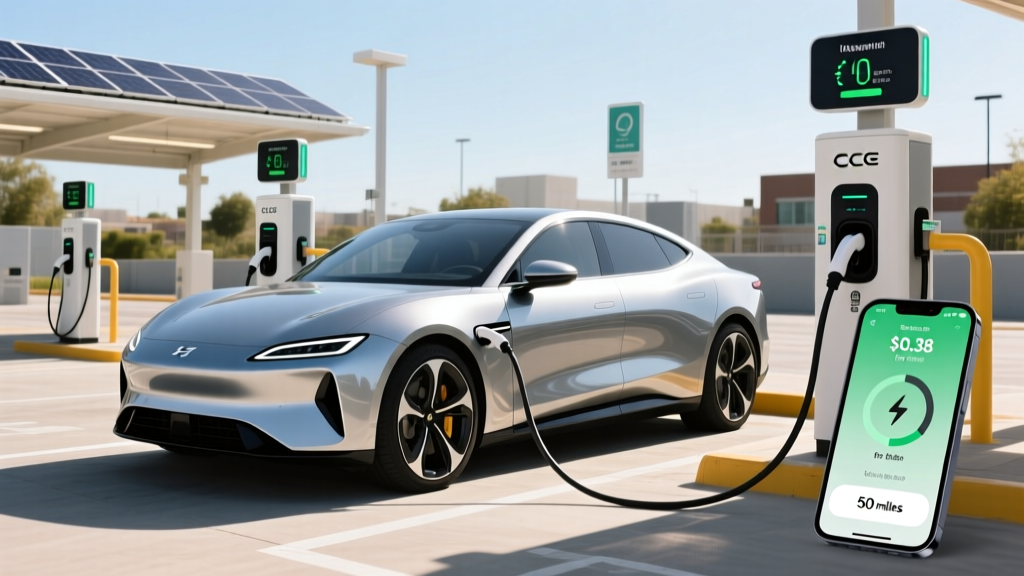
| Public DC Fast Charger (avg) | $0.38/kWh | $0.109 | — |
| Gasoline (national avg) | $3.40/gal | — | $0.113 |
At home, the Model Y costs roughly 4.6 cents per mile to fuel — less than half the RAV4's 11.3 cents. But if you rely exclusively on public DC fast charging, the cost per mile nearly equals gasoline. This is why home charging access is the single most important variable in the electric vs ICE decision.
For context on home charger installation, a Level 2 (240V, 48-amp) home charger typically costs $500–$800 for the unit and $800–$2,500 for professional installation, depending on your electrical panel's capacity and the run distance. A panel upgrade from 100A to 200A adds $1,500–$3,000.
Tax Credits and Incentives: The §30D Rules That Change Everything
The federal EV tax credit under IRS §30D can reduce your effective purchase price by up to $7,500 — and as of 2024, it can be transferred to the dealer at point of sale, meaning you get the discount immediately rather than waiting for tax season. But qualification is not automatic.
§30D Eligibility Checklist (2026 Rules)
- Income caps: Modified AGI ≤ $150,000 (single), $225,000 (head of household), $300,000 (joint)
- MSRP caps: ≤ $55,000 for sedans; ≤ $80,000 for SUVs, trucks, and vans
- Battery sourcing: Must meet escalating critical-mineral and battery-component requirements (phasing in stricter thresholds annually through 2029)
- Final assembly: Vehicle must be assembled in North America
- Point-of-sale transfer: You can assign the credit to the dealer for an immediate price reduction, even if you owe less than $7,500 in taxes
Many popular 2026 models — including the Tesla Model Y, Ford F-150 Lightning, and Hyundai Ioniq 5 (US-assembled trims) — qualify for the full $7,500 for eligible buyers. Others, like certain imported models, may qualify for $3,750 or nothing at all. Always verify current eligibility on fueleconomy.gov's tax credit tracker before purchasing.
Common Electric vs ICE Myths — Addressed With Data
| Myth | Fact |
|---|---|
| "EV batteries need replacing every 5 years" | Modern LFP and NMC batteries are warrantied for 8 years / 100,000 miles with ≥70% capacity retention. Real-world degradation data shows most packs retain 85–92% capacity at 100k miles. |
| "EVs are worse for the environment because of electricity generation" | Even on the US average grid mix (which includes fossil fuels), EVs produce 50–70% fewer lifecycle emissions than comparable ICE vehicles over 150k miles, per EPA analysis. The advantage grows as grids add renewables. |
| "You can't road-trip in an EV" | The Tesla Supercharger network has 6,000+ US stations; the combined NACS/CCS fast-charging infrastructure now covers all major interstate corridors. Plan 20–30 minute stops every 200–250 miles. |
| "EVs are slow" | The 2026 Model Y LR does 0–60 mph in 4.8 seconds with 384 hp. Even budget EVs like the Chevrolet Equinox EV (0–60 in ~7.8 sec, 213 hp) deliver instant torque that feels quicker than equivalent ICE acceleration. |
| "EV insurance is impossibly expensive" | EV insurance averages 15–25% higher than comparable ICE models, but the gap has narrowed significantly since 2023 as repair networks expanded and collision data matured. |
Maintenance: Where EVs Quietly Win Big
An ICE vehicle requires oil changes ($40–$80 each, 2–3x/year), transmission fluid service, spark plug replacement, exhaust system repairs, and emissions system maintenance. Over 75,000 miles, expect to spend $3,200–$4,500 on scheduled and unscheduled maintenance.
A BEV eliminates nearly all of that. There's no engine oil, no transmission fluid, no spark plugs, no exhaust system, and no emissions equipment. You'll still need:
- Tire rotation: Every 6,000–8,000 miles (EVs are heavier and wear tires ~20% faster)
- Cabin air filter: Every 15,000–20,000 miles (~$30–$50)
- Brake fluid flush: Every 2–3 years (~$80–$120)
- Brake pads: Rarely before 80,000–120,000 miles thanks to regenerative braking
- Windshield washer fluid and wipers: Same as any car
Total 5-year BEV maintenance: roughly $900–$1,500, versus $3,200–$4,500 for ICE.
Decision Framework: Should You Go Electric, Gas, or Hybrid?
Choose a BEV if:
- You have reliable home charging (garage or driveway with 240V access)
- Your daily driving is under 200 miles round-trip
- You qualify for the §30D tax credit (check income and MSRP caps)
- You want the lowest per-mile fuel cost and minimal maintenance
- You take 1–2 road trips per year and can plan charging stops
Choose a PHEV if:
- You can charge at home but also take frequent long road trips
- You want electric commuting (25–50 mi) with gas flexibility
- You live in a region with extreme cold where BEV range loss is a concern
- You want to reduce fuel costs without any range anxiety
Choose an ICE vehicle if:
- You cannot install a home charger (apartment, street parking, no electrical access)
- You regularly tow heavy loads over long distances (though EV towing is improving)
- Your budget is strictly under $30,000 and you need maximum upfront affordability
- You drive in extreme remote areas with no charging infrastructure
First-Time EV Buyer: What to Know Before You Sign
1. kW vs kWh — Know the Difference
This is the most common source of confusion. kWh (kilowatt-hours) measures battery capacity — like the size of a gas tank. A 75 kWh battery holds more energy than a 60 kWh battery. kW (kilowatts) measures power flow — like the speed of a fuel pump. A 250 kW DC fast charger delivers energy faster than a 150 kW charger. Never confuse the two.
2. Charging Speeds Are Not Linear
A car that advertises "250 kW peak charging" only sustains that rate for a portion of the session. The charge curve tapers significantly above 80% state of charge to protect battery health. A typical session from 10–80% at a capable DC fast charger takes 18–30 minutes; going from 80–100% can take just as long. Plan road-trip stops around 10–80% charges.
3. Preconditioning Matters
If you navigate to a DC fast charger using the car's built-in navigation, most modern EVs will precondition the battery — warming it to the optimal temperature for fast charging. Arriving at a charger without preconditioning (especially in cold weather) can cut your charge speed in half. Always use the car's nav to route to chargers.
4. Connector Standards: NACS vs CCS
As of 2026, the North American Charging Standard (NACS), pioneered by Tesla, has been adopted by Ford, GM, Rivian, Hyundai, Kia, BMW, and most major automakers. CCS1 remains on some legacy models. CHAdeMO is effectively discontinued for new vehicles. If buying new, NACS compatibility ensures the widest fast-charging network access.
5. Insurance Quotes Before You Buy
Get an insurance quote for the exact EV model and trim before signing. Premiums vary widely: a Model Y might cost 20% more to insure than a RAV4, while a Hyundai Ioniq 5 might be only 8–10% more. This directly affects your total cost of ownership.
Is an EV really cheaper than a gas car long-term?
With the §30D tax credit and home charging, a BEV and comparable ICE vehicle reach near-parity on 5-year total cost of ownership. Without the credit or with exclusively public fast-charging, the ICE vehicle usually costs less overall. The EV wins most decisively on per-mile fuel cost (4–5 cents at home vs 11+ cents for gas) and maintenance savings.
What happens if the battery degrades?
All 2026 BEVs carry a minimum 8-year / 100,000-mile battery warranty (mandated by the EPA for emissions-related components, adopted industry-wide) guaranteeing ≥70% capacity retention. Real-world data from high-mileage Teslas and Hyundai/Kia EVs shows typical degradation of 8–15% at 100,000 miles. Full battery replacement outside warranty currently costs $8,000–$18,000 depending on the pack, but is rarely needed within the first 10–12 years.
Can I charge an EV if I live in an apartment?
It's possible but challenging. Level 1 charging (120V standard outlet) adds roughly 3–5 miles of range per hour — enough for daily commutes under 40 miles if you park near an outlet. Some apartment complexes and workplaces now offer Level 2 chargers. If neither is available, a PHEV or ICE may be more practical until public charging infrastructure expands in your area.
Do EVs hold their resale value?
EV depreciation has been steeper than ICE vehicles in recent years, partly due to aggressive price cuts by Tesla and rapid technology improvements making older models less competitive. Expect 45–55% depreciation over 5 years for a BEV vs 38–48% for a comparable ICE. However, this gap has been narrowing as the used EV market matures and more buyers seek affordable electric options.
What about cold weather?
Batteries lose efficiency in cold temperatures. Expect 15–30% range reduction at 20°F and below, depending on the vehicle's heat pump and thermal management system. Models with heat pumps (standard on most 2026 BEVs including Tesla, Hyundai, and BMW) lose less range than those using resistive cabin heaters. Preconditioning while plugged in at home mitigates much of the loss for daily driving.