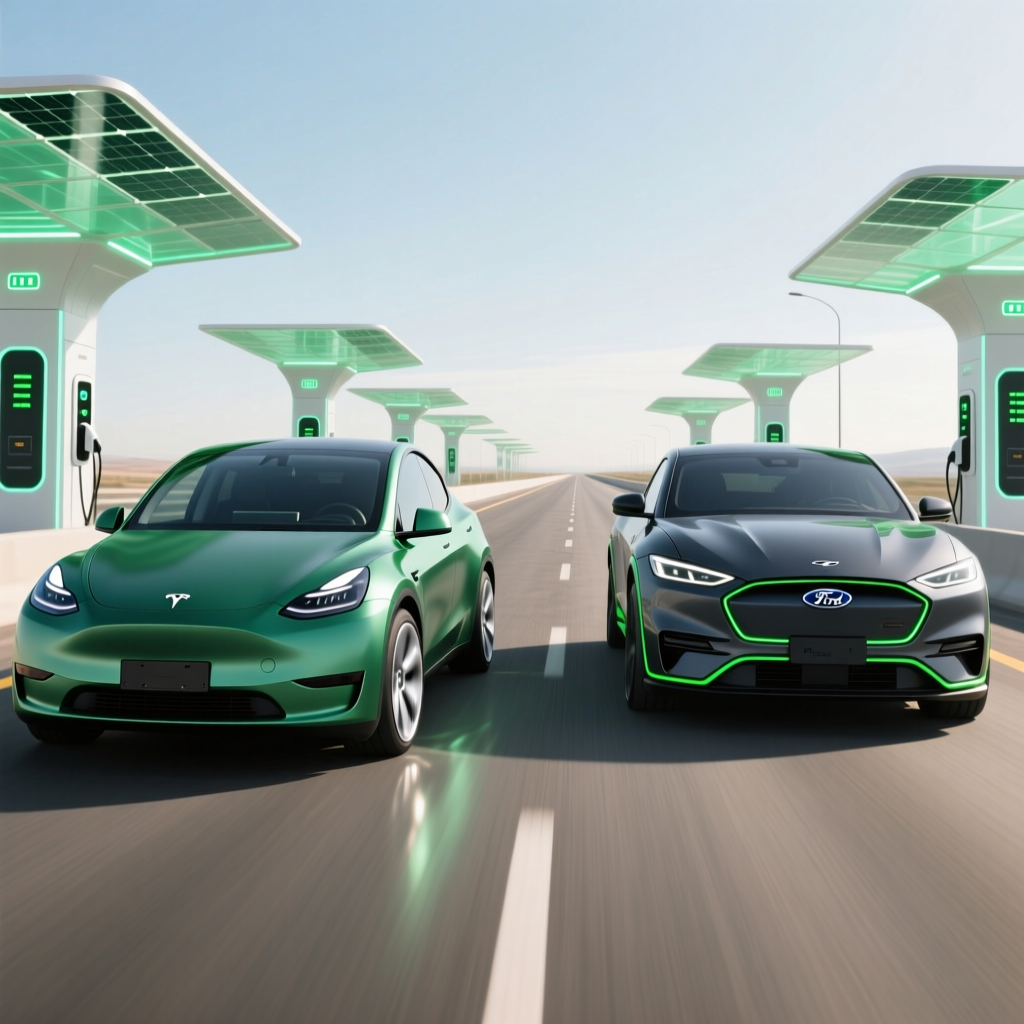
Tesla Model Y vs. Ford Mustang Mach-E: The Ultimate EV Showdown
When navigating the rapidly evolving automotive landscape, utilizing a reliable electric vehicle comparison site is the smartest way to separate marketing hype from real-world capability. The transition to electric mobility has brought forth a myriad of choices, but two models consistently dominate the search results and buyer wishlists: the Tesla Model Y and the Ford Mustang Mach-E. Both are electric crossovers that promise daily usability, impressive range, and cutting-edge technology, yet they approach the EV experience from fundamentally different philosophies.
In this comprehensive head-to-head analysis, we leverage data from our electric vehicle comparison site to break down every critical metric. Whether you are prioritizing maximum cargo space, lightning-fast DC charging, or advanced driver assistance systems, this guide will help you determine which electric SUV deserves a spot in your driveway. For deeper dives into each model, be sure to check out our Tesla Model Y full review and our Ford Mustang Mach-E review.
Vehicle Overview
The Tesla Model Y has established itself as the benchmark for the electric crossover segment. Built on a highly efficient, minimalist architecture, the Model Y prioritizes software integration, aerodynamic efficiency, and access to the industry-leading Supercharger network. It is the default choice for buyers who want a seamless, tech-forward ecosystem and class-leading energy efficiency.
Conversely, the Ford Mustang Mach-E represents a more traditional automotive approach adapted for the electric age. Ford leveraged its deep manufacturing expertise and performance heritage to create a vehicle that feels familiar to first-time EV buyers while offering thrilling driving dynamics. With a more conventional interior layout, physical controls mixed with a massive touchscreen, and a focus on ride comfort, the Mach-E appeals to those who want an EV that doesn't force them to relearn how to drive.
Side-by-Side Specification Comparison
| Specification | Tesla Model Y (Long Range AWD) | Ford Mustang Mach-E (Extended Range AWD) |
|---|---|---|
| Estimated EPA Range | 330 miles | 300 miles |
| Battery Capacity (Usable) | ~75 kWh | ~91 kWh |
| Peak DC Fast Charging | 250 kW | 150 kW |
| 0-60 mph Acceleration | 4.8 seconds | 5.1 seconds |
| Horsepower / Torque | 384 hp / 376 lb-ft | 346 hp / 428 lb-ft |
| Cargo Space (Behind Rear Seats) | 30.2 cu ft | 29.7 cu ft |
| Front Trunk (Frunk) | 4.1 cu ft | 4.7 cu ft |
| Starting MSRP Category | Premium Mid-Size | Premium Mid-Size |
Range & Efficiency
Range anxiety remains a primary concern for EV adopters, making this category a critical focal point on any electric vehicle comparison site. According to EPA fuel economy ratings, the Tesla Model Y Long Range AWD achieves an impressive 330 miles on a single charge. Tesla's mastery of aerodynamics, lightweight construction, and standard heat pump technology allows the Model Y to extract maximum distance from a relatively smaller battery pack. In real-world highway testing, the Model Y consistently outperforms its EPA estimates in moderate climates, showcasing exceptional miles-per-kWh efficiency.
The Ford Mustang Mach-E Extended Range AWD offers a robust 300 miles of EPA-estimated range. To achieve this, Ford utilizes a significantly larger battery pack. While the Mach-E's range is more than adequate for daily commuting and moderate road trips, its heavier curb weight and less aerodynamic profile result in lower overall energy efficiency compared to the Tesla. During cold-weather testing, the Mach-E's range depreciation is slightly more pronounced than the Model Y's, largely due to Tesla's superior battery thermal management system. However, for the vast majority of drivers, both vehicles offer more than enough range to eliminate daily charging chores.
Pricing & Value
Pricing in the EV sector is notoriously fluid, with frequent adjustments based on battery commodity costs and competitive pressures. Historically, both the Model Y and the Mach-E have hovered in the premium mid-size bracket, making them eligible for various federal and state tax incentives, provided buyers meet income thresholds and the vehicles satisfy sourcing requirements. When utilizing an electric vehicle comparison site to track pricing trends, you will notice that Tesla frequently adjusts its MSRPs and offers promotional financing, while Ford tends to rely on traditional dealer incentives and lease cash.
In terms of overall value, the Mach-E often wins on standard equipment. Features like a premium B&O sound system, heated and ventilated front seats, and a panoramic glass roof are frequently bundled into accessible trim levels. Tesla, on the other hand, employs a highly streamlined build-to-order model where the base Long Range trim includes almost every luxury feature, but adding Enhanced Autopilot or Full Self-Driving capability requires a hefty premium. When factoring in total cost of ownership, the Model Y generally benefits from lower depreciation rates, though the Mach-E offers a more traditional dealership experience for those who prefer negotiating in person.
Charging Speed & Infrastructure
The charging experience is where the Tesla Model Y has historically maintained an insurmountable lead, though the gap is rapidly closing. The Model Y natively supports the North American Charging Standard (NACS) and plugs directly into Tesla's Supercharger network. With a peak charging rate of 250 kW, the Model Y can recover up to 200 miles of range in just 15 minutes under optimal conditions. The reliability, ubiquity, and plug-and-charge seamlessness of the Supercharger network remain the gold standard for EV road tripping.
Ford has aggressively addressed its charging infrastructure短板 by adopting the NACS port for its latest models and providing adapters for older vehicles. This means Mach-E owners now have access to the Tesla Supercharger network, drastically improving the road-trip experience. However, the Mach-E's peak DC fast-charging rate is capped at 150 kW. While the charging curve is relatively flat—meaning it maintains decent speeds up to an 80% state of charge—it still takes noticeably longer to charge from 10% to 80% compared to the Model Y. For home charging, both vehicles support Level 2 AC charging, though buyers should consult our EV charging guides to ensure their home electrical panels are prepared for 48-amp continuous draws.
Performance & Driving Dynamics
Despite wearing the iconic Mustang badge, the Mach-E is a crossover first and a sports car second, yet it delivers a surprisingly engaging drive. The Extended Range AWD model produces a massive 428 lb-ft of torque, providing authoritative off-the-line acceleration. Ford's suspension tuning leans slightly toward the firmer side, offering excellent body control through corners and a steering feel that is communicative and weighted appropriately. For enthusiasts, the Mach-E GT variant pushes performance into supercar territory, rivaling the Model Y Performance in both track times and sheer thrill.
The Tesla Model Y prioritizes a different kind of performance: effortless, silent velocity. The dual-motor setup provides exceptional traction, and the low center of gravity keeps the vehicle planted. However, the steering is notoriously numb, and the ride quality can feel stiff over broken pavement due to the heavy battery pack and sport-tuned dampers. Tesla has made iterative improvements to the suspension comfort in recent production runs, but the Mach-E still holds a slight edge in overall ride refinement and traditional driving engagement. Both vehicles offer excellent one-pedal driving modes, allowing drivers to maximize regenerative braking in stop-and-go traffic.
Interior Space & Cargo Capacity
Step inside the Model Y, and you are greeted by an exercise in extreme minimalism. A single 15-inch landscape touchscreen controls virtually every function, from the windshield wipers to the glovebox. The cabin is airy, thanks to a massive tinted glass roof, and the vegan leather seating is comfortable for long journeys. Cargo space is a major strong point; the Model Y offers a deep rear trunk with an additional lower sub-trunk, plus a usable front trunk (frunk). The rear seats fold completely flat, creating a cavernous space that easily swallows camping gear or bulky furniture.
The Mach-E's interior strikes a balance between modern EV design and traditional automotive ergonomics. A large, vertically oriented 15.5-inch touchscreen dominates the dash, but Ford wisely retained a physical rotary dial for volume and a traditional instrument cluster behind the steering wheel. Material quality feels slightly more premium and varied than Tesla's, with attractive stitching and textured surfaces. Rear legroom is generous, though the sloping roofline slightly compromises headroom for taller passengers. The Mach-E's frunk is actually slightly larger than the Model Y's and features a clever drain plug, making it perfect for storing wet gear or acting as a makeshift cooler for tailgating.
Technology & Infotainment
Tesla's software ecosystem is arguably its strongest selling point. The UI is lightning-fast, intuitive, and supported by continuous over-the-air (OTA) updates that frequently add entirely new features to older vehicles. The integrated navigation system routes through Superchargers automatically, pre-conditioning the battery for optimal charging speeds. Tesla's Autopilot and Full Self-Driving (FSD) software are industry leaders in terms of data gathering and capability, though drivers must remain vigilant. Furthermore, the Tesla mobile app offers unparalleled remote control, including Sentry Mode dashcam viewing and precise climate preconditioning.
Ford's SYNC 4A system, powered by a massive portrait screen, is highly capable and features native wireless Apple CarPlay and Android Auto—a feature Tesla famously omits. The Mach-E's BlueCruise hands-free driving system is a revelation on divided highways, offering a more relaxed and confident hands-off experience than Tesla's base Autopilot, as validated by various IIHS safety tests and independent evaluations. BlueCruise uses robust driver-monitoring cameras to ensure attention, providing peace of mind. While Ford's OTA update capabilities are improving, they have historically been less comprehensive than Tesla's, often requiring dealership visits for certain module firmware updates.
Warranty & Ownership Costs
Both manufacturers offer competitive warranty packages that align with industry standards for electric vehicles. The Tesla Model Y includes a 4-year/50,000-mile basic vehicle limited warranty and an 8-year/120,000-mile battery and drive unit warranty. Tesla's mobile service fleet can handle many minor repairs at your home or office, though major collision or bodywork requires a visit to a service center, which can sometimes involve lengthy wait times depending on your region.
The Ford Mustang Mach-E mirrors this with a 3-year/36,000-mile basic warranty and an 8-year/100,000-mile battery component warranty. Where Ford gains an advantage is in its vast network of traditional dealerships. While not all Ford dealers are fully equipped for high-voltage EV repairs, the sheer volume of service centers provides more options for rural buyers. Maintenance costs for both vehicles are exceptionally low compared to internal combustion engines, as there are no oil changes, spark plugs, or transmission fluid flushes required. Brake pad life is also significantly extended due to the heavy use of regenerative braking.
The Verdict: Which EV is Right for You?
Choosing between these two titans ultimately comes down to your personal priorities and lifestyle. The Tesla Model Y is the undisputed champion of efficiency, software integration, and charging convenience. It is the ideal choice for tech-savvy buyers, frequent road-trippers who rely on the Supercharger network, and those who appreciate a minimalist, utilitarian approach to luxury. Its class-leading cargo space and energy efficiency make it the most rational choice for families.
The Ford Mustang Mach-E is the perfect antidote for buyers who want an EV that feels like a normal car. It offers superior ride comfort, a more engaging steering feel, and an interior that blends modern tech with familiar ergonomics. The inclusion of wireless smartphone integration and the highly capable BlueCruise system make it a compelling alternative. If you prefer a traditional dealership experience and value driving dynamics over absolute maximum range, the Mach-E is your winner. To see how these models stack up against the rest of the market, explore our best electric SUVs rankings.
Frequently Asked Questions
Which vehicle has better real-world range?
In moderate weather conditions, the Tesla Model Y consistently achieves higher real-world miles-per-kWh efficiency due to its superior aerodynamics and standard heat pump. However, the Mach-E's larger battery pack helps it maintain respectable range figures, though it will require more frequent stops on extremely long highway drives.
Can the Mach-E use Tesla Superchargers?
Yes. Ford has integrated the NACS (North American Charging Standard) into its latest production runs and provides approved adapters for existing Mach-E owners. This grants Ford drivers access to the vast and reliable Tesla Supercharger network, significantly enhancing the road-trip experience.
How do the ADAS systems compare?
Tesla's Autopilot is excellent for stop-and-go traffic and lane centering, but its Full Self-Driving package remains a work in progress and requires constant supervision. Ford's BlueCruise is widely regarded as superior for hands-free driving on pre-mapped divided highways, offering a more relaxed experience with robust driver-monitoring systems.
Which SUV holds its resale value better?
Historically, Tesla vehicles have enjoyed strong resale values due to high brand demand and the desirability of the Supercharger network. However, as the EV market matures and competition increases, depreciation curves are normalizing. The Mach-E holds its value reasonably well, particularly among buyers who prefer traditional automotive brands and dealership support.