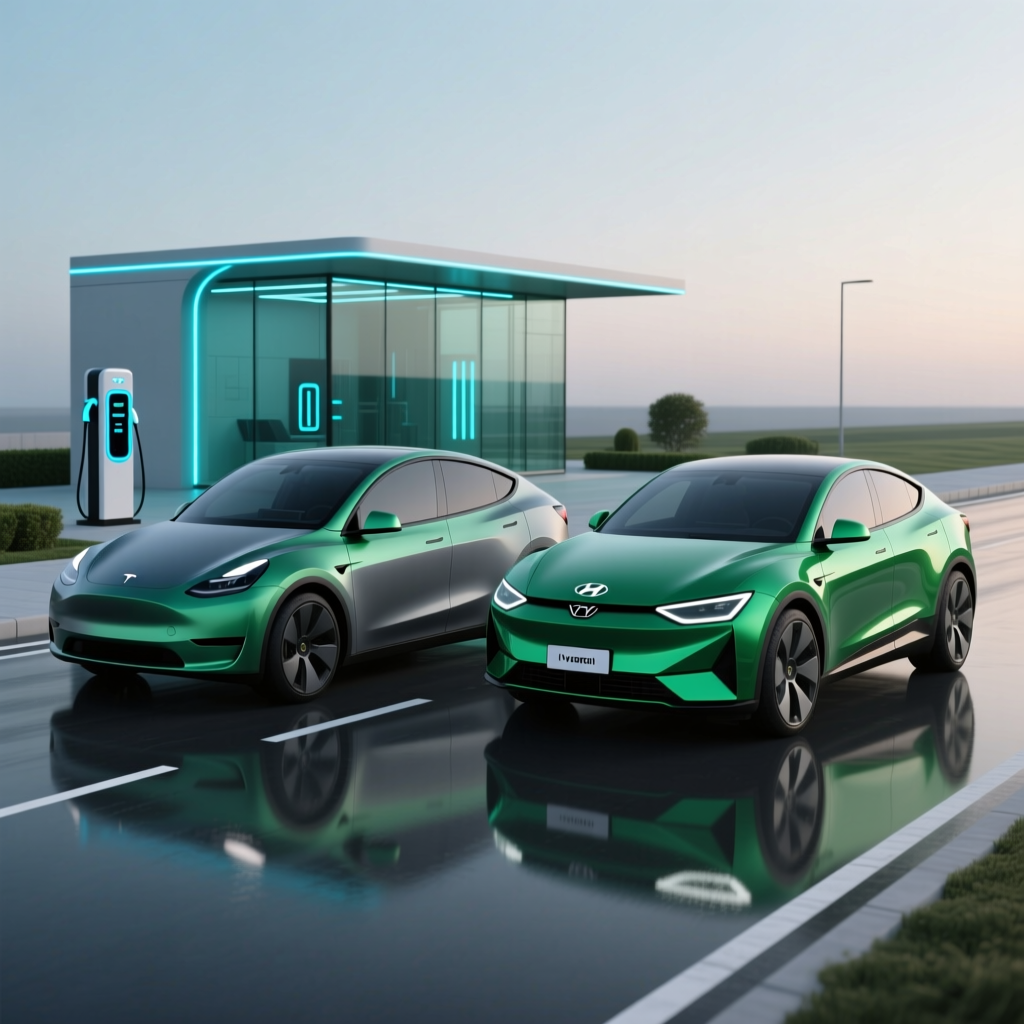
Navigating the rapidly expanding electric vehicle market can feel overwhelming. With dozens of new battery-electric models hitting the streets, relying on a comprehensive electric vehicle comparison chart is the best way to separate the genuine innovators from the also-rans. To anchor our ultimate EV comparison guide, we are putting the two undisputed heavyweights of the electric crossover segment head-to-head: the benchmark-setting Tesla Model Y and the retro-futuristic, highly acclaimed Hyundai Ioniq 5.
Whether you are a first-time EV buyer looking for daily commuting efficiency or a road-trip enthusiast demanding rapid charging speeds, this detailed breakdown will help you decide which electric SUV deserves a spot in your driveway. We will analyze independent test data, EPA ratings, and real-world ownership experiences to deliver a definitive verdict.
Overview of the EV Heavyweights
The Tesla Model Y has dominated global sales charts for good reason. It offers a compelling mix of industry-leading software, access to the most reliable charging network, and impressive cargo versatility. It is the default choice for many buyers transitioning from internal combustion engines to electric power.
On the other side of the ring, the Hyundai Ioniq 5 has captured the hearts of automotive journalists and consumers alike. Built on Hyundai Motor Group's dedicated Electric-Global Modular Platform (E-GMP), it boasts striking styling, a spacious lounge-like interior, and groundbreaking 800-volt charging architecture. For a deeper dive into its quirks and features, check out our full Hyundai Ioniq 5 review.
Side-by-Side Specification Chart
Before diving into the nuances of daily ownership, let us look at the raw numbers. The following electric vehicle comparison chart highlights the core specifications of the most popular dual-motor, long-range variants of both crossovers.
| Specification | Tesla Model Y (Long Range AWD) | Hyundai Ioniq 5 (Limited AWD) |
|---|---|---|
| Estimated Range (EPA) | ~330 miles | ~290 miles |
| Battery Capacity | ~75 kWh (usable) | 77.4 kWh (usable) |
| Peak Charging Power | ~250 kW | ~235 kW (800V Architecture) |
| 0-60 MPH | ~4.8 seconds | ~5.1 seconds |
| Cargo Volume (Behind Rear Seats) | 30.2 cu ft | 27.2 cu ft |
| Front Trunk (Frunk) | 4.1 cu ft | 0.85 cu ft |
| Towing Capacity | 3,500 lbs | 2,300 lbs |
Range & Efficiency
Range anxiety remains a primary concern for EV shoppers, making this category a critical component of any electric vehicle comparison chart. The Tesla Model Y Long Range AWD holds a distinct advantage on paper, with an EPA-estimated range hovering around 330 miles. Tesla's industry-leading heat pump and highly efficient powertrain allow it to extract maximum mileage from its battery pack, even in colder climates where EVs typically lose range.
The Hyundai Ioniq 5 AWD, equipped with the larger 77.4 kWh battery, achieves an EPA-estimated range of approximately 290 miles. While this is roughly 40 miles less than the Model Y, real-world highway testing conducted by independent automotive reviewers shows the Ioniq 5 punching slightly above its weight class. Its aerodynamic profile and aggressive regenerative braking system help it maintain strong efficiency at higher speeds.
If maximum distance between charges is your top priority, the Model Y wins this round. However, for the vast majority of drivers who commute fewer than 40 miles a day, both vehicles offer more than enough range to require only once-a-week charging sessions. For more tips on maximizing your battery life, read our EV charging guide.
Pricing & Value Proposition
Pricing in the EV sector is notoriously volatile, with frequent adjustments based on battery material costs and market demand. Generally, the Tesla Model Y and Hyundai Ioniq 5 compete in the same premium mainstream bracket. The base rear-wheel-drive trims of both vehicles offer an accessible entry point into electric mobility, while the fully loaded dual-motor variants push into luxury territory.
One major factor in the value equation is federal and state tax incentive eligibility. Depending on current battery sourcing requirements and MSRP caps, one vehicle may qualify for the full federal EV tax credit at the point of sale while the other might not. Buyers must verify current incentive structures before purchasing.
When evaluating total value, the Ioniq 5 often edges out the Tesla regarding standard equipment. Hyundai tends to include features like ventilated seats, a premium audio system, and advanced driver aids in mid-tier trims, whereas Tesla often requires buyers to step up to higher trims or pay for software add-ons to unlock similar convenience features. Both vehicles are frequently featured on our list of the best electric SUVs due to their strong value propositions.
Charging Speed & Infrastructure
This is where the electric vehicle comparison chart reveals a fascinating clash of philosophies: network dominance versus hardware superiority.
The Tesla Model Y relies on the proprietary North American Charging Standard (NACS) and the Tesla Supercharger network. The Supercharger network is universally recognized as the most reliable, seamless, and widespread fast-charging infrastructure available. Plug-and-charge functionality, integrated routing, and consistent uptime make road-tripping in a Tesla a nearly frictionless experience. The Model Y can accept up to 250 kW of peak power, allowing for a 10% to 80% charge in roughly 25 to 30 minutes.
The Hyundai Ioniq 5 utilizes an ultra-fast 800-volt electrical architecture, a rarity in this price class. When connected to a 350 kW CCS charger, the Ioniq 5 can accept up to 235 kW of peak power. More importantly, its 800V system allows it to sustain that high charging rate for a longer portion of the charging curve. As a result, the Ioniq 5 can achieve a 10% to 80% charge in an astonishing 18 minutes under optimal conditions—significantly faster than the Tesla.
However, the Ioniq 5's hardware advantage is bottlenecked by the current state of third-party CCS charging networks, which can suffer from downtime or broken stalls. Ultimately, Tesla wins on infrastructure reliability, while Hyundai wins on raw charging hardware capability.
Performance & Driving Dynamics
Electric vehicles are inherently quick thanks to instant torque, but how they handle the corners and absorb bumps varies wildly. The Tesla Model Y is tuned for sporty, aggressive driving. Its steering is razor-sharp, and the dual-motor setup provides relentless acceleration that will easily leave most gas-powered sports cars in the dust at stoplights. However, the Model Y's firm suspension tuning can make rough city streets feel harsh, transmitting more road noise and vibrations into the cabin than some buyers might prefer.
The Hyundai Ioniq 5 takes a decidedly different approach. It prioritizes ride comfort and refinement. The suspension soaks up potholes and expansion joints with ease, making it an exceptional daily commuter and long-distance cruiser. While its 5.1-second 0-60 mph time is still incredibly fast by traditional standards, the steering feels slightly more artificial and detached compared to the Tesla. If you prefer a relaxing, quiet, and compliant ride, the Ioniq 5 is the clear winner in driving dynamics.
Interior Space & Cargo Capacity
Crossover buyers demand practicality, and both vehicles deliver impressive interior volumes, albeit with different design philosophies. The Tesla Model Y features a highly minimalist cabin dominated by a single 15-inch central touchscreen. There is no traditional instrument cluster; all driving information is housed on the main display. The Model Y offers superior cargo space, boasting over 30 cubic feet behind the second row and a highly usable front trunk (frunk) perfect for storing charging cables or groceries.
The Hyundai Ioniq 5 embraces a "retro-futuristic lounge" aesthetic. The flat floor and exceptionally long wheelbase create massive rear legroom that rivals full-size luxury sedans. One of its most unique features is the sliding center console, which can be moved back to allow front passengers to exit through the passenger side door in tight parking spaces. However, the Ioniq 5's cargo area is slightly smaller than the Tesla's, and its frunk is little more than a small cubby for a tire inflator kit. For pure utility and moving large items, the Model Y remains the segment leader.
Technology & Infotainment
Tesla has long been the gold standard for EV software, and the Model Y continues to lead the pack. The user interface is snappy, the navigation system with live traffic and Supercharger routing is flawless, and the Over-The-Air (OTA) updates frequently introduce entirely new features, games, and efficiency tweaks. Tesla's Autopilot and optional Full Self-Driving (FSD) capabilities offer some of the most advanced lane-centering and adaptive cruise control systems on the market, though they require constant driver supervision.
Hyundai equips the Ioniq 5 with a dual-screen setup, retaining physical buttons and haptic touch panels for climate control and volume—a major win for buyers who dislike menu-diving while driving. The infotainment system is user-friendly, supports wireless Apple CarPlay and Android Auto (a feature Tesla still lacks), and includes a robust suite of Highway Driving Assist (HDA) features. While Hyundai's software is excellent and highly functional, it lacks the deep ecosystem integration and frequent feature-drop excitement of Tesla's operating system.
Warranty & Ownership Costs
Long-term peace of mind is a crucial factor in any electric vehicle comparison chart. Tesla provides a solid warranty package, including a 4-year/50,000-mile basic vehicle warranty and an 8-year/120,000-mile battery and drive unit warranty. Tesla guarantees that the battery will retain at least 70% of its capacity over the warranty period, which aligns with industry standards.
Hyundai, however, leverages its reputation for industry-leading coverage. The Ioniq 5 comes with a 5-year/60,000-mile basic warranty and a staggering 10-year/100,000-mile powertrain warranty. This extended coverage significantly reduces the anxiety surrounding long-term battery health and expensive out-of-warranty repairs. When factoring in Hyundai's complimentary maintenance periods and generally lower insurance premiums compared to Tesla, the Ioniq 5 often presents a lower total cost of ownership for buyers who plan to keep their vehicles for a decade or more.
The Verdict: Which EV Belongs in Your Driveway?
Choosing between these two phenomenal electric crossovers ultimately comes down to your lifestyle, priorities, and local charging infrastructure.
Choose the Tesla Model Y if:
- You frequently take long road trips and demand the reliability of the Supercharger network.
- You prioritize maximum cargo space, towing capacity, and a sporty, engaging driving experience.
- You prefer a minimalist interior and cutting-edge, continuously evolving software.
Choose the Hyundai Ioniq 5 if:
- You value a comfortable, quiet ride and a uniquely styled, lounge-like interior.
- You want ultra-fast 800V charging speeds for quick top-ups on compatible networks.
- Long-term warranty coverage and traditional physical controls for climate and audio are important to you.
Both vehicles are exceptional choices that have earned their spots at the top of our best electric SUVs rankings. You truly cannot go wrong with either, provided you select the trim that best aligns with your daily driving habits.
Frequently Asked Questions
How do I read an electric vehicle comparison chart effectively?
When reviewing an electric vehicle comparison chart, look beyond just the headline range and 0-60 mph times. Pay close attention to the battery chemistry (which affects longevity and cold-weather performance), the charging curve (which dictates how fast you charge from 20% to 80%), and the cargo dimensions. A vehicle with slightly less range but significantly faster charging speeds might actually save you more time on long road trips.
Which EV holds its resale value better?
Historically, Tesla vehicles have enjoyed strong resale value due to high brand demand and software desirability. However, the EV market is highly dynamic, and frequent price cuts on new models can impact used market values. The Hyundai Ioniq 5 has also shown strong residual value retention, bolstered by its award-winning design and long-term warranty, which provides confidence to second-hand buyers.
Are these electric SUVs cheaper to maintain than gas cars?
Yes, both the Model Y and the Ioniq 5 are significantly cheaper to maintain than their internal combustion counterparts. Without the need for oil changes, spark plugs, or transmission fluid flushes, routine maintenance is largely limited to tire rotations, cabin air filter replacements, and windshield washer fluid. Additionally, the heavy use of regenerative braking drastically extends the lifespan of the physical brake pads and rotors.
Do I need to install a home charger for these vehicles?
While you can technically charge both vehicles using a standard 120-volt household outlet (Level 1), it is incredibly slow and only adds about 3 to 5 miles of range per hour. To fully enjoy the benefits of EV ownership, installing a 240-volt Level 2 home charger is highly recommended. This allows you to wake up to a full battery every morning, effectively turning your home into your personal gas station.