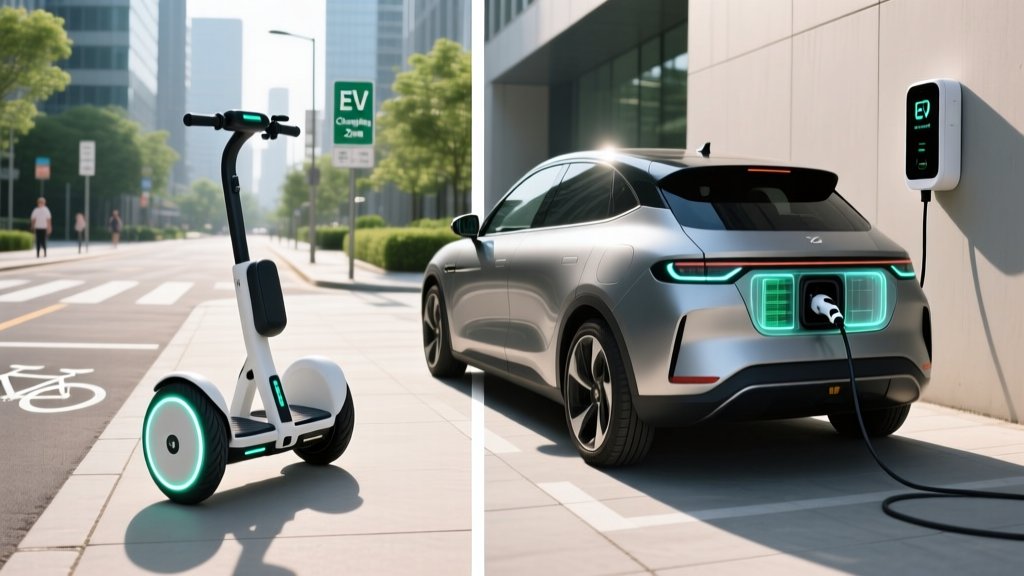
Electric unicycles (EUCs) are single-wheeled, self-balancing personal electric vehicles with ranges of 30–80 miles, top speeds of 30–55 mph, and prices from $1,200 to $4,500. They excel as last-mile or short-distance urban commuters for solo riders who lack home charging access or parking. However, they carry zero crash protection, cannot carry passengers or cargo, are illegal on many roads, and are unsuitable in rain or cold weather. For most US buyers, a compact electric car like the Chevrolet Equinox EV or Hyundai Kona Electric remains the practical primary vehicle — offering EPA-rated range, climate control, safety ratings, and federal tax credit eligibility. Choose an EUC only if your commute is under 15 miles, you need extreme portability, and you have a safe, car-free route.
What Is an Electric Unicycle and Who Actually Buys One?
Electric unicycles — brands like Begode, Kingsong, Inmotion, and Leaperkim — use gyroscopic sensors and a single hub motor inside a wheel ranging from 14 to 22 inches in diameter. The rider stands on fold-out pedals and leans forward to accelerate, backward to brake (regenerative), and shifts weight laterally to steer. There are no handlebars, no seat, and no enclosure.
The typical EUC buyer in 2026 is a tech-literate urban commuter (ages 25–45) who:
- Commutes 5–15 miles round-trip on bike lanes or multi-use paths
- Lacks dedicated parking or lives in an apartment without EV charging access
- Wants something more portable than an e-bike and faster than walking
- Is willing to invest 40–100 hours in learning to ride safely
EUCs are not toys. The high-performance models (Begode Master Pro, Leaperkim Patton) weigh 60–85 lbs and can reach 55 mph — making them more dangerous than a bicycle in a crash, with none of the structural protection of a car.
Electric Unicycle vs Electric Car: Spec-by-Spec Comparison
The table below compares a representative 2026 electric unicycle (Begode Master Pro, 22-inch wheel) against a 2026 compact electric car (Hyundai Kona Electric SEL) for commuting use.
| Attribute | Begode Master Pro (EUC) | 2026 Hyundai Kona Electric SEL |
|---|---|---|
| Base Price | $3,200 | $34,975 MSRP |
| Battery Capacity | 2.4 kWh (NMC) | 65.4 kWh (NMC) |
| Range (claimed / EPA) | ~70 mi (ideal) / ~45 mi real-world | 261 mi (EPA est.) / ~220 mi highway |
| Top Speed | 55 mph | 115 mph (electronically limited) |
| 0–20 mph / 0–60 mph | ~3 sec / N/A | ~7.2 sec (0–60) |
| Charging (full) | ~3 hours (500W charger, 110V) | ~7 hr (Level 2, 7.2 kW); 10–80% DC in ~43 min (100 kW peak) |
| Weight | 77 lbs | 3,748 lbs |
| Passengers / Cargo | 0 / backpack only | 4 passengers / 25.5 cu ft cargo |
| Climate Control | None (rider exposed) | Heat pump HVAC, heated seats available |
| Safety Ratings | None (no NHTSA/IIHS testing) | IIHS Top Safety Pick+; 5-star NHTSA |
| Federal Tax Credit (§30D) | Not eligible (not a motor vehicle) | Up to $7,500 if eligible (income/MSRP/sourcing rules apply) |
| License / Registration Required | Varies by state — often unregulated | Yes (driver's license, registration, insurance) |
Real-World Cost Breakdown: EUC vs Electric Car Over 5 Years
Below is a 5-year ownership cost comparison assuming a 20-mile daily round-trip commute, 250 workdays/year, and $0.14/kWh home electricity (national average in 2026).
| Cost Category | EUC (Begode Master Pro) | 2026 Kona Electric SEL |
|---|---|---|
| Purchase Price | $3,200 | $34,975 (−$7,500 credit = $27,475 if eligible) |
| 5-Year Charging Cost | ~$365 (2.4 kWh × 250 days × 5 yrs × $0.14) | ~$1,825 (est. 15 kWh/100mi × 25,000 mi × $0.14) |
| Maintenance (5 yr) | ~$400 (tire, bearings, pedal pads) | ~$1,200 (cabin filter, brake fluid, tire rotation) |
| Insurance (5 yr) | $0–$600 (rarely insurable; homeowner's rider) | ~$7,500 ($125/mo avg for EV) |
| Registration / Taxes | $0 | ~$1,500 (varies by state) |
| Safety Gear | ~$800 (full-face helmet, pads, armored jacket) | $0 |
| Total 5-Year Cost | $4,765–$5,365 | $39,500 (or $32,000 with full credit) |
| Cost Per Mile | ~$0.19–$0.22 | ~$1.58 (or $1.28 with credit) |
Key takeaway: An EUC costs roughly 85% less over 5 years — but only serves a single rider, on fair-weather days, on safe routes. The Kona Electric carries four people, handles winter, and replaces a gas car entirely.
Charging Reality: Where and How You'll Power Up
One major EUC advantage: you can charge anywhere with a standard 120V outlet. The Begode Master Pro's 500W charger refills the 2.4 kWh battery in roughly 3 hours. You can charge at your desk, in a coffee shop (with permission), or in a studio apartment — no Level 2 installation or electrical panel upgrade required.
For a compact EV like the Kona Electric, home Level 2 charging (240V, 32A, 7.2 kW) is strongly recommended. A full home install typically costs $800–$2,200 including a hardwired ChargePoint Home Flex or Emporia Vue charger, depending on panel proximity and whether a 200A service upgrade is needed. Without home charging, you'll rely on public DC fast chargers (Electrify America, EVgo), where the Kona peaks at 100 kW and charges 10–80% in ~43 minutes — at a cost of $0.35–$0.48/kWh, roughly doubling your fuel cost vs home charging.
Common Misconceptions About Electric Unicycles
| Myth | Fact |
|---|---|
| "EUCs are self-driving — the wheel balances itself." | The wheel self-balances fore/aft using gyroscopes. The rider must actively balance laterally and steer. Learning takes 20–80 hours of practice. |
| "You can ride an EUC on any road, like a bicycle." | Most US states classify EUCs as motorized vehicles or leave them unregulated. They are generally illegal on sidewalks and often prohibited on roads with speed limits above 25 mph. Always check local ordinances. |
| "70-mile range means I can commute 35 miles each way." | Manufacturer range is tested at 15 mph on flat ground with a 150-lb rider. At 30+ mph, in headwinds, cold weather (below 50°F), or with a heavier rider, expect 40–55% of claimed range — roughly 30–40 real-world miles. |
| "EUCs are maintenance-free." | Tires wear every 2,000–4,000 miles, bearings need replacement, and the mainboard and motor can fail. High-mileage riders report $200–$500/year in parts. |
| "I can ride in the rain." | Most EUCs are rated IP55 or IP65 (splash-resistant), not waterproof. Riding in heavy rain risks mainboard short-circuit, which voids the warranty and can cause a sudden cutoff at speed — extremely dangerous. |
Decision Framework: Should You Buy an EUC or an Electric Car?
Choose an electric unicycle if:
- Your one-way commute is under 15 miles on protected bike lanes or multi-use paths
- You live in a mild climate (rarely below 40°F or above 95°F)
- You have no need to carry passengers, groceries, or cargo
- You lack parking or home EV charging and need extreme portability (EUC rolls into a closet)
- You're willing to invest in full protective gear and 40+ hours of practice
- Your budget is under $5,000 total
Choose an electric car if:
- You commute more than 15 miles, drive on highways, or need year-round reliability
- You live in a region with cold winters, heavy rain, or extreme heat
- You carry passengers, children, or cargo regularly
- You need NHTSA safety ratings, airbags, and crash protection
- You qualify for the federal §30D tax credit (income caps: $150K single / $300K joint; vehicle MSRP caps: $55K sedans / $80K SUVs/trucks)
- You can install a Level 2 home charger or have reliable public charging nearby
Consider both if: You own or lease an EV for longer trips and want an EUC as a last-mile solution from a transit station or parking garage to your office.
Frequently Asked Questions
Are electric unicycles street-legal in the United States?
It depends on your state and city. California classifies them under electric personal assistive mobility devices (EPAMDs) and allows them on bike paths and roads with speed limits up to 25 mph. New York City has historically restricted them. Many states have no specific law, leaving legality ambiguous. Always verify with your local DMV or city transportation office before riding on public roads.
Do electric unicycles qualify for the federal EV tax credit?
No. The IRS §30D Clean Vehicle Credit applies only to four-wheeled motor vehicles with a gross vehicle weight rating under 14,000 lbs that are manufactured by a qualified manufacturer and meet battery sourcing requirements. EUCs are classified as personal mobility devices, not motor vehicles, and are ineligible. Some states or local utilities may offer micromobility rebates — check your state energy office.
How long do EUC batteries last before needing replacement?
Most EUCs use NMC lithium-ion packs rated for 500–800 full charge cycles before degrading to 80% of original capacity. At a typical commute of 10 miles/day with a daily recharge, that's roughly 2–4 years before noticeable range loss. Replacement battery packs cost $600–$1,500 depending on capacity and brand. By comparison, EV batteries (like the Kona Electric's 65.4 kWh pack) carry a federally mandated warranty of 8 years/100,000 miles and typically retain 85–90% capacity at 100K miles.
Can I commute in winter on an electric unicycle?
Technically possible but not recommended. NMC batteries lose 20–35% of usable capacity below 32°F. Road salt, slush, and ice dramatically increase crash risk on a single wheel. Most experienced EUC riders switch to public transit or an enclosed vehicle from December through February in northern US climates.
What's the real cost per mile of an EUC vs a gas car?
An EUC uses roughly 25–35 Wh/mile, costing $0.004–$0.005/mile at $0.14/kWh. A 2026 Toyota Corolla (33 MPG combined) at $3.40/gallon costs ~$0.103/mile in fuel alone — before insurance, maintenance, and depreciation. However, comparing cost-per-mile alone is misleading: the EUC cannot replace the Corolla's utility. The right comparison is EUC vs public transit pass ($80–$130/month), where the EUC pays for itself in 12–24 months.