The Quick Answer: Where Electric Trucks Stand in 2026
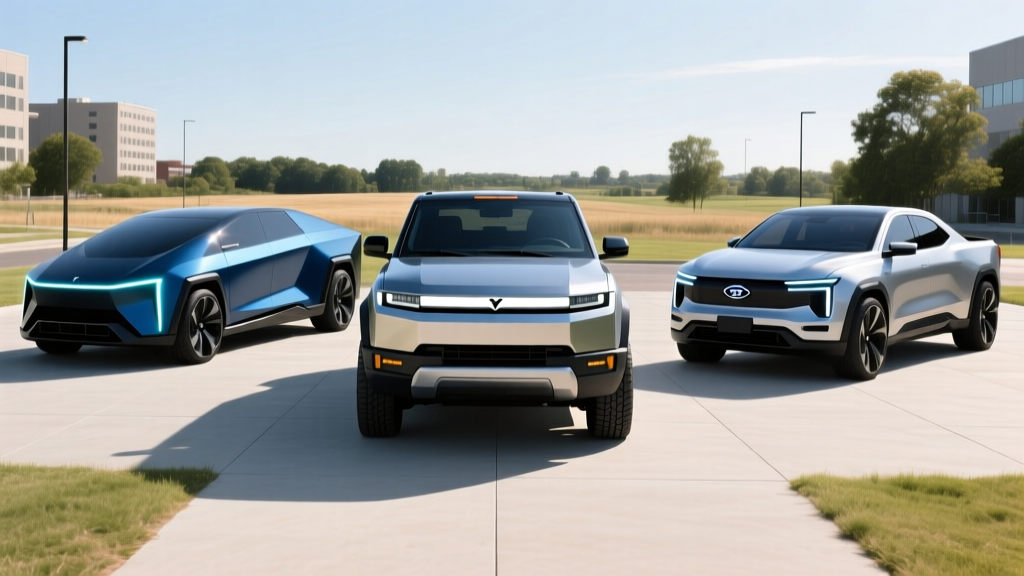
If you're searching "electric trucks 2020" because you first heard about the Rivian R1T or Tesla Cybertruck concepts back then, here's where things stand today. The electric pickup segment that was mostly vaporware in 2020 is now a mature, multi-model market. As of early 2026, you can buy a Ford F-150 Lightning (EPA range up to 320 miles, starting ~$55,000), a Rivian R1T Dual-Motor (up to 352 miles, starting ~$70,000), a Chevrolet Silverado EV (up to 440 miles, starting ~$57,000), or a Tesla Cybertruck (up to 340 miles, starting ~$80,000). The GMC Hummer EV and Sierra EV round out the heavy-duty luxury end.
Real-world towing range drops 40–55% from EPA estimates. Home Level 2 charging is essential for truck owners. Federal tax credits up to $7,500 may apply depending on MSRP caps, buyer income, and battery sourcing — check current IRS §30D rules before purchasing.
What Changed Since 2020: The Electric Truck Timeline
In 2020, the electric truck landscape was almost entirely pre-production. Rivian had begun limited R1T deliveries to early reservation holders. Ford had unveiled the F-150 Lightning concept but wouldn't begin deliveries until mid-2022. The Tesla Cybertruck was a stainless-steel promise with no firm date. GM had barely teased the Silverado EV. The GMC Hummer EV was announced but not yet shipping.
Fast-forward to 2026, and every one of those trucks is in its second or third model year with real-world data, software updates, and revised pricing. The Lordstown Endurance — remember that one from 2020? — is gone, a casualty of the startup shakeout. What remains is a competitive field with proven platforms, established service networks, and enough owner data to separate marketing from reality.
2026 Electric Truck Specs: Side-by-Side Comparison
| Spec | Ford F-150 Lightning (Extended Range) | Rivian R1T (Dual-Motor Max Pack) | Chevy Silverado EV (4WT Extended Range) | Tesla Cybertruck (AWD) |
|---|---|---|---|---|
| EPA Range | 320 mi | 352 mi | 440 mi | 340 mi |
| Real-World Highway Range | ~260–280 mi | ~290–310 mi | ~360–385 mi | ~280–300 mi |
| Battery (usable) | 131 kWh, NMC | 141 kWh, NMC | 200+ kWh (est.), NMC | ~123 kWh, NMC (structural pack) |
| Peak DC Fast Charge | ~150 kW | ~220 kW | ~350 kW | ~250 kW (NACS native) |
| 10–80% DCFC Time | ~41 min | ~30 min | ~20 min | ~25 min |
| Horsepower | 580 hp | 665 hp | ~600 hp (est.) | 600 hp |
| 0–60 mph | ~4.0 sec | ~3.5 sec | ~4.5 sec | ~4.1 sec |
| Max Towing Capacity | 10,000 lbs | 11,000 lbs | 10,000 lbs | 11,000 lbs |
| Payload | 2,235 lbs | 1,764 lbs | 1,600 lbs (est.) | 2,500 lbs |
| Base MSRP (2026 est.) | ~$55,000 | ~$70,000 | ~$57,000 | ~$80,000 |
| Battery Warranty | 8 yr / 100,000 mi | 8 yr / 175,000 mi | 8 yr / 100,000 mi | 8 yr / 120,000 mi |
Real-world highway range assumes 70 mph, moderate temperatures, no payload. Towing a 5,000+ lb trailer typically cuts range by 40–55%. Cold weather (below 32°F) reduces range an additional 15–30% depending on cabin heating use and whether the truck has a heat pump.
The Towing Reality Check: What 2020 Hype Didn't Tell You
This is the single biggest gap between the 2020 electric truck promises and 2026 ownership reality. Every electric truck on the market loses a dramatic amount of range when towing. Physics is unforgiving: you're pushing or pulling thousands of extra pounds through the air, and regenerative braking recovers far less energy on flat highway stretches than it does in stop-and-go driving.
In real-world testing by multiple outlets, the Ford F-150 Lightning towing a 6,000 lb travel trailer achieved roughly 130–150 miles of range at highway speeds before needing to charge. The Rivian R1T, with its larger Max Pack battery, manages slightly better at 160–180 miles under similar conditions. The Silverado EV's massive battery gives it the best towing endurance at roughly 200–230 miles, but that's still a far cry from the 440-mile EPA sticker.
For comparison, a gas-powered Ford F-150 with a 36-gallon tank and 20 MPG combined towing can cover roughly 350–400 miles before refueling — and refueling takes five minutes, not 25–40 minutes at a DC fast charger.
Myth vs. Fact: Electric Truck Towing
| Myth | Fact |
|---|---|
| "Electric trucks can tow just as far as gas trucks" | Towing range drops 40–55%. Plan for 130–230 miles between charges depending on battery size and trailer weight. |
| "Regen braking makes up for towing energy use" | Regen helps on downhill grades and in city traffic, but highway towing at steady speed offers almost no regen recovery. |
| "You'll save money towing with electric" | At home charging rates (~$0.13/kWh), yes — electricity is cheaper than gas per mile. At public DC fast chargers ($0.35–$0.55/kWh), the cost advantage narrows or disappears entirely when towing. |
| "Fast chargers are everywhere along highways now" | Major interstates are well-covered, but rural towing destinations (campgrounds, boat ramps, remote job sites) often lack DC fast charging. Always map your route. |
Ownership Costs: Electric Truck vs. Gas Truck Over 5 Years
The purchase price of electric trucks remains higher than comparable gas trucks, but the total cost of ownership equation depends heavily on your driving patterns, electricity rates, and whether you qualify for federal or state incentives.
| Category | F-150 Lightning (Extended Range) | F-150 Gas (3.5L EcoBoost, 4WD) |
|---|---|---|
| Base MSRP | $55,000 | $48,000 |
| Federal Tax Credit (§30D, if eligible) | –$3,750 to $7,500* | $0 |
| Fuel/Energy (5 years, 75,000 mi) | $4,500 (home charging, $0.13/kWh) | $12,500 (gas, $3.40/gal, 20 MPG avg) |
| Maintenance (5 years) | ~$1,200 (tires, cabin filter, fluid top-offs) | ~$3,800 (oil changes, brakes, transmission fluid, filters) |
| Insurance (5 years, avg.) | ~$10,500 (EV premiums typically 15–25% higher) | ~$8,500 |
| Depreciation (est. 5-year) | ~$22,000 | ~$18,000 |
| Estimated 5-Year Total | ~$73,500–$77,000 | ~$72,800 |
*Federal tax credit eligibility for 2026 depends on MSRP caps ($80,000 for trucks/vans/SUVs), buyer income limits ($300,000 joint / $150,000 single for modified AGI), battery component sourcing requirements, and critical mineral sourcing rules. Credits can now be transferred to the dealer at point of sale. Always verify current eligibility at IRS.gov and fueleconomy.gov before purchasing.
The takeaway: if you charge mostly at home and drive 15,000 miles or fewer per year, the Lightning's fuel and maintenance savings largely offset its higher purchase price and insurance premiums over five years. If you rely on public DC fast charging exclusively, the cost advantage shrinks considerably. And if you're a high-mileage driver towing frequently, the gas truck's range and fast refueling still hold practical advantages.
Charging at Home: The Non-Negotiable for Truck Owners
Electric truck ownership without home charging is possible but painful. These trucks have large batteries — 131 to 200+ kWh — which means Level 1 charging from a standard 120V outlet adds roughly 3–5 miles per hour. That's 36–60 miles overnight. For a truck with a 320-mile battery, a full Level 1 charge takes 30–50 hours.
A Level 2 home charger (240V, 48-amp circuit on a 60-amp breaker) adds roughly 25–35 miles per hour, fully replenishing a Lightning's Extended Range battery in about 10–12 hours. This is the minimum viable setup for daily truck use.
| Item | Cost Range |
|---|---|
| Level 2 Charger (hardwired, 48A) | $400–$700 |
| Electrician labor (240V run, 60A breaker) | $800–$2,500 |
| Permit & inspection | $100–$350 |
| Electrical panel upgrade (if needed, 200A service) | $1,500–$3,500 |
| Total (no panel upgrade) | $1,300–$3,550 |
| Total (with panel upgrade) | $2,800–$7,050 |
Always hire a licensed electrician for a site assessment before purchasing equipment. Panel upgrades are common in older homes and can double or triple your installation cost. Some utilities offer rebates for EV charger installation — check with your local provider.
Decision Framework: Which Electric Truck Buyer Are You?
If-Then Buyer Guide
- If you tow a heavy trailer more than 200 miles one-way regularly: A gas or diesel truck still makes more sense in 2026. DC fast charging infrastructure at campgrounds and remote job sites is improving but not reliable enough for frequent long-haul towing. Consider a plug-in hybrid or wait for next-generation batteries.
- If you commute daily, do light hauling, and tow occasionally under 150 miles: The Ford F-150 Lightning is the best all-around value. Home charging covers your daily needs, and the Lightning's Pro Power Onboard (up to 9.6 kW) makes it a mobile generator for job sites or tailgating.
- If you want the best off-road capability and don't mind paying a premium: The Rivian R1T with its quad-motor option, air suspension, and gear tunnel offers the most refined adventure-truck experience. Budget $75,000–$95,000 for a well-equipped build.
- If maximum range is your top priority: The Chevrolet Silverado EV 4WT Extended Range at 440 miles EPA gives you the longest legs. Its 350 kW peak charging capability also means shorter stops on road trips. But its large size and heavy curb weight trade off against everyday maneuverability.
- If you want Tesla's Supercharger network and software ecosystem: The Cybertruck is the only option. Its stainless-steel exoskeleton and polarizing design aren't for everyone, but Tesla's native NACS connector and Supercharger access remain the most seamless public charging experience. Note that the Cybertruck's real-world range has underperformed its original EPA estimates in several independent tests.
- If you don't have access to home or workplace charging: Reconsider whether an electric truck is practical for your situation right now. These large-battery vehicles are not well-suited to exclusive public charging, both due to cost and time. A conventional or hybrid truck may serve you better until your charging access changes.
Common Misconceptions About Electric Trucks
| Misconception | Reality |
|---|---|
| "Electric truck batteries won't last" | Modern NMC batteries are warrantied for 8 years / 100,000–175,000 miles with a minimum 70% capacity retention threshold. Real-world degradation data from 2022–2025 model-year trucks shows most losing only 5–10% capacity in the first 3 years with normal use. Avoid routinely charging to 100% or letting the battery sit at 0% for extended periods. |
| "Electric trucks can't handle cold weather" | They handle cold, but range drops 15–30% below freezing due to battery chemistry and cabin heating demands. Trucks with heat pumps (like the F-150 Lightning and Rivian R1T) lose less range than those using resistive heating. Preconditioning the battery while plugged in mitigates cold-weather charging slowdowns. |
| "The battery will cost $20,000+ to replace" | Full battery replacement costs for current electric trucks range from roughly $12,000 to $25,000 depending on the model and battery size. However, most batteries outlast the vehicle's useful life. Individual module replacement (when available) can cost significantly less. This is a legitimate long-tail risk but far less likely than early-2020s fear-mongering suggested. |
| "Electric trucks are worse for the environment because of battery mining" | Battery production does have an environmental footprint, primarily from lithium, nickel, and cobalt extraction. However, multiple lifecycle analyses — including from the EPA — show that EVs produce fewer total greenhouse gas emissions over their lifetime than comparable gas vehicles, even accounting for battery manufacturing and the current US electricity grid mix. The grid is also getting cleaner every year. |
Frequently Asked Questions
Do electric trucks qualify for the $7,500 federal tax credit?
Some do, but eligibility is complex and changes frequently. Under IRS §30D, the truck must be under the $80,000 MSRP cap for trucks/vans/SUVs, the buyer must fall under income limits ($300,000 modified AGI for joint filers, $150,000 for single), and the vehicle must meet battery component and critical mineral sourcing requirements that tighten each year. Some trims of the F-150 Lightning and Silverado EV have qualified for partial or full credits in recent years, while others have not. The Rivian R1T often exceeds the MSRP cap in popular configurations. Always verify at fueleconomy.gov for the specific model year and trim you're considering.
Can I use an electric truck as a backup generator for my house?
The Ford F-150 Lightning offers Ford Intelligent Backup Power (up to 9.6 kW), which can power essential home circuits during an outage when paired with the Ford Charge Station Pro and a home transfer switch (installed by an electrician, additional $2,000–$4,000). The Silverado EV offers V2H (vehicle-to-home) capability. This is a genuine differentiator for electric trucks that gas trucks can't match — your truck becomes a rolling 100+ kWh battery backup.
How long does it take to charge an electric truck on a road trip?
At a DC fast charger, expect 20–41 minutes for a 10–80% charge depending on the model and charger capability. The Silverado EV's 350 kW peak rate is the fastest, but sustained rates matter more than peak numbers — most trucks taper significantly above 80% state of charge. Plan road trips around 25–35 minute charging stops every 200–280 miles of real-world driving. Apps like A Better Routeplanner or the manufacturer's built-in navigation can map charger stops automatically.
Are electric trucks good for job site use?
Yes, with caveats. Instant torque is excellent for hauling loads from a stop. The F-150 Lightning's Pro Power Onboard provides up to 9.6 kW of 240V/120V outlet power directly from the truck bed — enough to run power tools, lights, and compressors without a separate generator. The main limitation is range when heavily loaded and access to charging on remote sites. For urban and suburban job sites with overnight home charging, electric trucks are excellent. For remote rural sites with no charging, a diesel still has practical advantages.
Will electric truck insurance cost more than a gas truck?
Generally yes, by roughly 15–25%. EV insurance premiums are higher due to the vehicle's higher purchase price, the cost of battery repairs after collisions, and a smaller pool of certified repair shops. Shop quotes from multiple insurers — some now offer specific EV discounts that narrow the gap. Geico, Progressive, and State Farm all have EV-specific rating factors as of 2026.