Quick Answer: Which Electric Truck Brand Is Right for You?
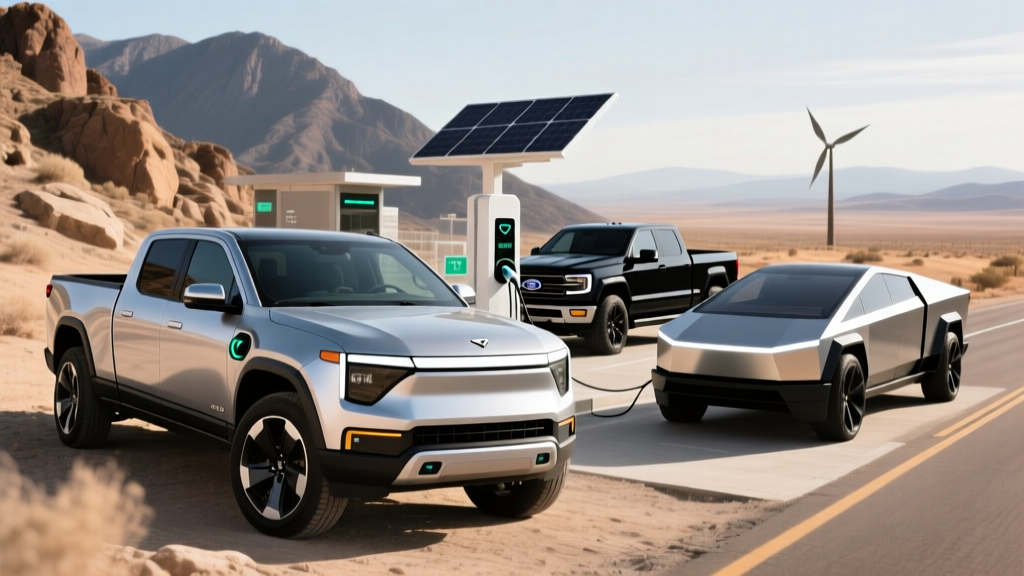
As of early 2026, four major electric truck brands sell full-size or mid-size battery-electric pickups in the U.S.: Ford (F-150 Lightning), Rivian (R1T), Chevrolet (Silverado EV), and Tesla (Cybertruck). GMC's Sierra EV rounds out the lineup as a premium sibling to the Silverado. The best choice depends on your priority: the Ford F-150 Lightning offers the strongest value and dealer network at ~$55,000 starting; the Rivian R1T delivers the most refined adventure-tech platform with up to 420 miles of range (Dual-Motor Max Pack); the Chevy Silverado EV targets fleet and work buyers with up to 492 miles (4WT Extended Range); and the Tesla Cybertruck provides the fastest charging and most distinctive design, though with polarizing styling and limited service centers. All four qualify for partial or full federal tax credits depending on trim, buyer income, and battery-sourcing compliance under IRS §30D rules.
The Current Electric Truck Landscape in 2026
The electric pickup segment has matured considerably since the Ford F-150 Lightning and Rivian R1T launched in 2022. Buyers now have genuine choices across price points, from the ~$55,000 Lightning XLT to the $100,000+ Cybertruck Cyberbeast and Rivian R1T Quad-Motor. What hasn't changed is the fundamental appeal: instant torque for towing, a front trunk (frunk) for secure storage, lower per-mile energy costs, and zero tailpipe emissions at the worksite.
But electric trucks also carry real trade-offs. Towing cuts range by 40–55% in real-world testing. Cold weather reduces usable range by 15–30%. Public DC fast-charging infrastructure remains uneven outside major corridors. And the upfront purchase price, even after incentives, often exceeds a comparably equipped gas truck by $10,000–$20,000. Understanding these trade-offs across brands is the key to making a smart purchase.
Spec Comparison: Ford, Rivian, Chevy, Tesla, and GMC
The table below captures the most important specifications across the five electric truck platforms available or taking orders in 2026. All range figures are EPA estimates; real-world highway and cold-weather expectations follow in the next section.
| Spec | Ford F-150 Lightning | Rivian R1T | Chevy Silverado EV | Tesla Cybertruck | GMC Sierra EV |
|---|---|---|---|---|---|
| Starting MSRP (2026) | ~$55,000 (XLT Std Range) | ~$71,700 (Dual-Motor Standard) | ~$57,900 (4WT Standard) | ~$81,630 (AWD) | ~$79,400 (Denali Edition 1) |
| EPA Range (best config) | 320 mi (Ext Range) | 420 mi (Max Pack) | 492 mi (4WT Ext Range) | 340 mi (AWD) | 440 mi (Denali Ext Range) |
| Battery (usable kWh) | 98 / 131 kWh (Std / Ext) | 95 / 149 kWh (Std / Max) | 200 kWh (Ext Range) | ~123 kWh | ~200 kWh (Ext Range) |
| Chemistry | NMC (Std: LFP available) | NMC (LFP on Standard) | NMC (Ultium) | NMC (structural pack) | NMC (Ultium) |
| Peak DC Fast Charge | 150 kW (Std) / 155 kW (Ext) | 200+ kW | 350 kW | 250+ kW (800V arch) | 350 kW |
| 10–80% Charge Time | ~41 min (Ext Range) | ~30 min (Max Pack) | ~20 min (4WT Ext Range) | ~15 min (AWD) | ~22 min (Denali) |
| Max Towing (when equipped) | 10,000 lbs (Ext Range) | 11,000 lbs (Max Tow) | 12,500 lbs (4WT) | 11,000 lbs (AWD) | 12,000 lbs (Denali) |
| 0–60 mph | ~4.0 sec (Ext Range AWD) | ~3.0 sec (Quad-Motor) | ~4.5 sec (4WT) | ~4.1 sec (AWD) / 2.6 sec (Cyberbeast) | ~4.3 sec (Denali) |
| Horsepower | 580 hp (AWD) | 665 hp (Dual) / 1,025 hp (Quad) | 510 hp (4WT) / 754 hp (4WT Max) | 600 hp (AWD) / 845 hp (Cyberbeast) | 754 hp (Denali) |
| Battery Warranty | 8 yr / 100,000 mi | 8 yr / 175,000 mi | 8 yr / 100,000 mi | 8 yr / 120,000 mi | 8 yr / 100,000 mi |
| Frunk Volume | 14.1 cu ft | 11.0 cu ft | 10.2 cu ft (eTrunk) | 7.1 cu ft (front trunk) | 11.6 cu ft (eTrunk) |
Sources: fueleconomy.gov, manufacturer press sites. MSRP figures reflect base trims before destination fees and before any federal or state incentives. Specs subject to change by model year and trim.
Real-World Range vs. EPA Stickers: What You'll Actually Get
EPA range estimates are measured under controlled conditions that don't fully replicate highway driving, cold weather, or towing. Here's what to expect from each brand in practice:
Ford F-150 Lightning Extended Range (EPA 320 mi)
Expect ~250–270 miles in mixed highway driving at 70–75 mph. In freezing temperatures (below 32°F), range drops to ~200–230 miles. When towing a 5,000-lb trailer, plan for ~150–175 miles between charges. The Lightning's heat pump helps mitigate cold-weather losses compared to earlier model years.
Rivian R1T Max Pack (EPA 420 mi)
The largest battery in the segment delivers ~340–370 miles highway and ~280–320 miles in cold weather. Towing range is approximately ~200–230 miles with a moderate trailer. Rivian's thermal management system is among the best in the segment, but the R1T's boxy aerodynamics hurt highway efficiency at speed.
Chevy Silverado EV 4WT Extended Range (EPA 492 mi)
This is the range king on paper, and real-world results are impressive: ~390–430 miles mixed highway. Cold weather still bites — expect ~320–370 miles. However, the 4WT's work-truck interior and fleet-oriented features mean most buyers are choosing it for commercial use, not road trips. Towing range with the 4WT's 12,500-lb capacity drops sharply — plan for ~200–250 miles under heavy load.
Tesla Cybertruck AWD (EPA 340 mi)
Cybertruck's stainless-steel exoskeleton creates aerodynamic drag that limits real-world highway range to ~270–300 miles. Cold-weather range falls to ~220–260 miles. Towing is the Cybertruck's weakest point relative to its EPA sticker — expect only ~150–180 miles with a loaded trailer. The 800V architecture does enable remarkably fast charging to compensate.
Charging Speed and Infrastructure: Who Charges Fastest?
Charging speed matters as much as range for truck buyers who tow or road-trip. The metric that counts is sustained charge rate from 10–80% State of Charge (SoC), not the peak kW number manufacturers advertise. Peak rates only hold for a narrow SoC window before tapering.
| Truck | Level 1 (120V) | Level 2 (240V Home) | DC Fast Charge (Peak kW) | 10–80% DCFC Time |
|---|---|---|---|---|
| F-150 Lightning Ext Range | ~2 mi/hr (1.4 kW) | ~25 mi/hr (11.5 kW onboard) | 155 kW (CCS/NACS adapter) | ~41 min |
| Rivian R1T Max Pack | ~2 mi/hr | ~25 mi/hr (11.5 kW) | 200+ kW (NACS native) | ~30 min |
| Silverado EV 4WT Ext | ~2 mi/hr | ~34 mi/hr (19.2 kW onboard) | 350 kW (NACS native) | ~20 min |
| Cybertruck AWD | ~2 mi/hr | ~30 mi/hr (17 kW onboard) | 250+ kW (NACS, 800V) | ~15 min |
| Sierra EV Denali | ~2 mi/hr | ~34 mi/hr (19.2 kW) | 350 kW (NACS native) | ~22 min |
Key insight: The Silverado EV, Sierra EV, and Cybertruck all use 800V-class architectures that unlock dramatically faster DC charging at compatible 350 kW stations (Electrify America, select Tesla Superchargers). However, most public chargers still max out at 150 kW, where the advantage narrows. For home charging, all trucks require a dedicated 240V Level 2 circuit — expect $800–$2,500 for a professional installation depending on panel capacity and run length. A 200-amp panel upgrade can add $1,500–$3,000 if your home needs one.
Electric Truck vs. Gas Truck: The Cost Breakdown
The upfront price gap between electric and gas trucks is real, but total cost of ownership (TCO) tells a different story for many buyers. Here's a 5-year comparison using a Ford F-150 Lightning Extended Range (Lariat, ~$70,000) versus a gas F-150 Lariat 4WD (3.5L EcoBoost, ~$58,000).
| Cost Category (5 Years) | F-150 Lightning Ext Range | F-150 Gas 3.5L EcoBoost |
|---|---|---|
| Purchase Price (MSRP) | ~$70,000 | ~$58,000 |
| Federal Tax Credit (§30D) | –$7,500 (if eligible) | $0 |
| Effective Purchase Price | ~$62,500 | ~$58,000 |
| Fuel / Energy (75,000 mi) | ~$4,200 (home L2 at $0.14/kWh) | ~$9,400 (17 MPG avg at $3.50/gal) |
| Maintenance | ~$1,500 (no oil, fewer fluids) | ~$3,800 (oil, filters, brakes) |
| Insurance (avg) | ~$12,500 | ~$9,500 |
| Estimated Depreciation | ~$28,000 | ~$22,000 |
| 5-Year Total Cost | ~$108,700 | ~$102,700 |
The verdict: The Lightning costs roughly $6,000 more over five years in this scenario, primarily due to higher depreciation and insurance premiums. But if you drive more than 15,000 miles per year, have access to cheap home electricity (under $0.12/kWh), or qualify for additional state incentives, the gap narrows or reverses. Commercial buyers can also leverage IRS §45W commercial clean vehicle credits and accelerated depreciation (bonus depreciation) that dramatically shift the economics. Consult a tax professional for your specific situation.
Note on the §30D federal tax credit: eligibility depends on buyer income caps ($150K single / $300K joint modified AGI), MSRP caps ($80,000 for trucks/SUVs), critical mineral and battery component sourcing requirements, and final assembly in North America. As of 2026, the credit can be transferred to the dealer at point of sale as a purchase-price reduction. Always verify current eligibility on IRS.gov before buying, as sourcing rules tighten annually.
Brand-by-Brand Ownership Realities
Ford: The Dealer-Network Advantage
Ford has the largest service and dealer network of any electric truck brand, with over 2,500 U.S. dealerships certified for Lightning service. This matters when something breaks in rural America. The Lightning's Pro Power Onboard (up to 9.6 kW) can run job-site tools or power your home during outages via a transfer switch — a genuine differentiator. The trade-off: Ford's Sync infotainment software has drawn consistent criticism for lag and bugs, and the Lightning's charging speed (155 kW peak) is the slowest in this comparison.
Rivian: Adventure-Tech Done Right, But at a Price
Rivian's R1T is the most thoughtfully engineered electric truck for off-road and adventure use, with a gear tunnel (lockable pass-through storage), four-motor torque vectoring on Quad-Motor trims, and an integrated camp kitchen option. The company has invested heavily in its own Rivian Adventure Network of DC fast chargers near outdoor destinations. However, Rivian has only ~50 service centers nationwide as of 2026, and mobile service coverage varies by region. If you live far from a Rivian Service Center, repairs can mean multi-day loaner logistics. The R1T's LFP Standard battery pack is a smart choice for buyers who want lower degradation risk and don't need maximum range.
Chevrolet / GMC: The Ultium Platform for Fleet and Work
GM's Ultium-based Silverado EV and Sierra EV share a platform but target different buyers. The Silverado EV 4WT is a no-nonsense work truck with a massive 492-mile range option, a Multi-Flex midgate that extends the bed into the cabin, and 350 kW DC charging. The Sierra EV Denali is a luxury play with premium materials, Super Cruise (hands-free highway driving on compatible roads), and a 440-mile Extended Range option. Both benefit from GM's vast dealer network. The catch: early Ultium software was plagued by bugs, though OTA updates through 2025 and 2026 have improved stability. The Silverado EV's crew-cab-only configuration and long wheelbase make it less maneuverable in tight urban settings.
Tesla: Speed and Software, But Service Is a Gamble
The Cybertruck's 800V architecture delivers the fastest 10–80% charge times in the segment (~15 minutes at a V4 Supercharger). Tesla's Supercharger network remains the most reliable public charging ecosystem, and Cybertruck gets native access. The vehicle's steer-by-wire system and 48V electrical architecture are engineering firsts for a production truck. But the Cybertruck's polarizing angular design limits rear visibility, its stainless-steel body panels are expensive to repair, and Tesla's service center count hasn't kept pace with Cybertruck deliveries. Owners in rural areas report weeks-long waits for body work. Tesla's insurance product (available in select states) can reduce premiums, but availability is limited.
Common Misconceptions About Electric Trucks
| Myth | Fact |
|---|---|
| "Electric trucks can't tow anything real." | All four brands tow 10,000–12,500 lbs when properly equipped. The issue isn't capability — it's range loss. Towing cuts range 40–55%, so plan charging stops accordingly. |
| "The battery will need replacing in 5 years." | All trucks carry 8-year / 100,000+ mile battery warranties with a capacity retention threshold (typically 70%). Real-world degradation data from 2022–2024 Lightning and R1T owners shows ~5–8% loss over 100,000 miles — far less than feared. |
| "You need a 400-amp panel to charge at home." | A standard 200-amp panel handles most Level 2 chargers (32–48 amps / 7.7–11.5 kW). A panel upgrade is only needed if your home has high existing loads or an older 100-amp service. |
| "Electric trucks are always cheaper to own." | Not always. Higher insurance, steeper depreciation (especially early-adopter models), and a larger upfront cost can offset fuel and maintenance savings for low-mileage drivers. Run your own numbers. |
| "Cold weather makes electric trucks unusable." | Cold reduces range 15–30%, but preconditioning (warming the battery while plugged in) restores much of the loss. Modern heat pumps in the Lightning, R1T, and Cybertruck significantly reduce cabin-heating energy draw. Owners in Minnesota and Maine report usable winter driving with planning. |
Decision Framework: Which Electric Truck Brand Should You Choose?
Choose the Ford F-150 Lightning if:
- You want the best dealer service network and easiest parts availability
- You need Pro Power Onboard for job-site or home-backup power
- Your budget is $55,000–$75,000 and you value proven, conventional truck ergonomics
- You're okay with slower DC charging (155 kW peak) because most of your charging is at home
Choose the Rivian R1T if:
- Off-road capability and adventure features (gear tunnel, camp kitchen) are priorities
- You want the longest available range (420 mi Max Pack) or the LFP battery's longevity
- You live near a Rivian Service Center or are comfortable with mobile service
- Budget is flexible ($72,000–$100,000+) and you value build quality and software polish
Choose the Chevy Silverado EV if:
- You need maximum range (492 mi) for fleet or long-haul work duty
- You want 350 kW DC fast charging and the Multi-Flex midgate for oversized cargo
- You're a commercial buyer who can leverage §45W credits and bonus depreciation
- You prioritize function and value over luxury interior materials
Choose the Tesla Cybertruck if:
- Fastest charging speed and Supercharger network access are top priorities
- You want the most distinctive design and cutting-edge tech (steer-by-wire, 48V architecture)
- You live near a Tesla Service Center and accept the repair-logistics risk
- You're drawn to the Cyberbeast's 2.6-second 0–60 time and don't mind the $100K+ price
Choose the GMC Sierra EV if:
- You want Ultium-platform capability with a luxury interior (Denali trim)
- Hands-free highway driving (Super Cruise) is important to you
- You need 440 miles of range and 350 kW charging with premium materials
- Budget is $80,000+ and you prefer a traditional luxury-truck experience
What First-Time Electric Truck Buyers Must Know
If this is your first EV purchase, here are the non-obvious realities that catch new owners off guard:
- Home charging is essential. Public charging alone is expensive ($0.35–$0.55/kWh at DC fast chargers) and inconvenient for daily use. Budget $1,000–$2,500 for a quality Level 2 home charger installation before delivery day. If you can't install home charging (apartment, street parking), an electric truck may not be practical yet.
- kW vs. kWh matters. Kilowatts (kW) measure power — how fast you charge or how hard the motors pull. Kilowatt-hours (kWh) measure energy — the size of your battery "tank." A 131 kWh battery charged at 155 kW doesn't fill in 50 minutes; the charge curve tapers above 80% SoC to protect the cells.
- Precondition before fast charging. Navigate to a DC fast charger using the truck's built-in navigation (not a third-party app). This triggers battery preconditioning — warming the pack to optimal temperature for faster charging. Skip this step and your 150 kW charger might deliver only 50 kW in cold weather.
- Towing requires route planning. Apps like A Better Routeplanner (ABRP) let you input your trailer weight and route to predict charging stops. Without planning, you risk being stranded with a depleted battery and a truck that can't be towed on a flatbed without disconnecting the motors.
- Insurance is higher. EV trucks cost 15–35% more to insure than gas equivalents due to higher repair costs and parts scarcity. Get quotes before committing to a purchase.
Frequently Asked Questions
Are there any electric trucks from Toyota, Ram, or other brands coming soon?
Toyota has announced a next-generation Tacoma with a hybrid powertrain but has not confirmed a fully electric Tacoma or Tundra as of early 2026. Ram's 1500 REV (electric) was delayed from its original 2024 timeline and remains in pre-production status — check Ram's official site for updates. The Hyundai Ioniq Pickup concept has been shown but no production date is confirmed. For now, Ford, Rivian, Chevy, Tesla, and GMC are the only brands with electric trucks you can actually buy or order.
Which electric truck qualifies for the full $7,500 federal tax credit?
Credit eligibility under IRS §30D changes as battery-sourcing rules tighten each year. As of 2026, the Ford F-150 Lightning (most trims under the $80K MSRP cap) has generally qualified for the full credit for eligible buyers. The Rivian R1T, Chevy Silverado EV, and Tesla Cybertruck eligibility varies by trim and battery configuration. Always check the latest fueleconomy.gov tax credit tool and verify with your tax professional before purchasing.
Can I use an electric truck for commercial work and towing every day?
Yes, but with planning. Fleet operators report strong satisfaction with the Silverado EV 4WT and Lightning for daily route work under 200 miles. For heavy towing over 150 miles, you'll need mid-route DC fast charging, which adds 20–40 minutes per stop. Many commercial fleets use electric trucks for predictable local routes and keep diesel trucks for long-haul towing.
How long do electric truck batteries last before replacement?
Current NMC and LFP batteries are designed to retain 70–80% capacity after 100,000–200,000 miles. Full battery replacement is rare and expensive ($15,000–$30,000+ depending on the pack). However, individual module replacement is sometimes possible at lower cost. The 8-year / 100,000+ mile warranty covers premature degradation below the manufacturer's threshold.
Do electric trucks hold their resale value?
Depreciation has been steeper for EVs than for gas trucks, with 3-year depreciation averaging 40–55% for early Lightnings and R1Ts versus 30–40% for gas F-150s. However, as the market matures and battery longevity data accumulates, resale values are stabilizing. Buying used (2–3 years old) lets someone else absorb the steepest depreciation curve.