Is There an Electric Tiguan? Here's What VW Actually Offers
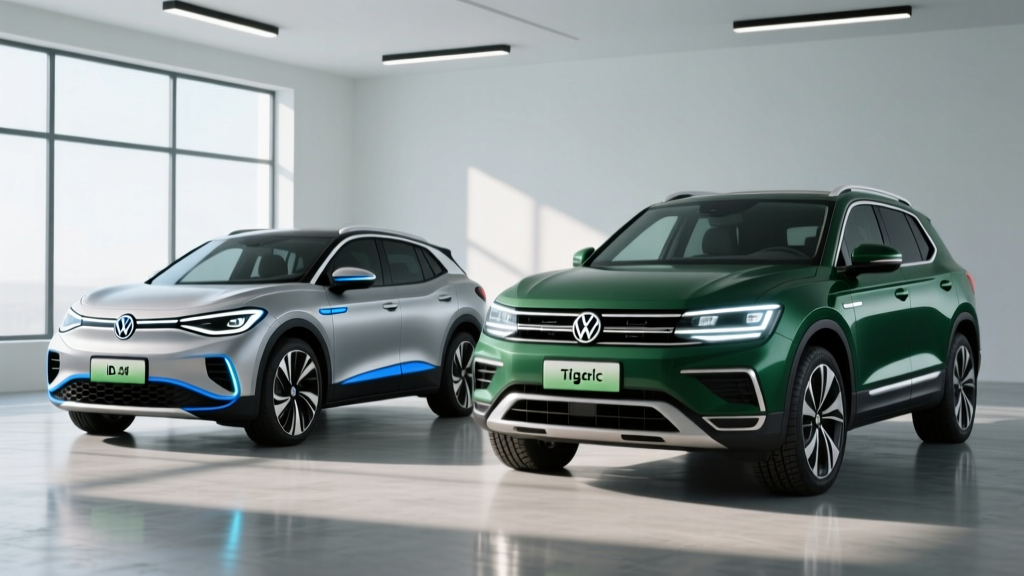
Short answer: Volkswagen does not currently sell an "electric Tiguan" in the United States. The Tiguan remains a gasoline-powered compact SUV. However, VW's ID.4 electric SUV occupies the same market segment, seats five (with optional third row on some trims), and competes directly with the vehicles Tiguan shoppers cross-shop. For 2026, the ID.4 starts at $40,790 (before incentives), offers up to 291 miles of EPA range, and qualifies for a partial or full federal tax credit depending on battery sourcing and buyer income.
If you're searching for an electric Tiguan because you love the Tiguan's size, practicality, and VW build quality but want to go electric, the ID.4 is VW's answer. This guide breaks down whether it's the right move for your driveway, your budget, and your daily driving.
2026 VW ID.4: Range, Battery, and Charging Specs
The 2026 VW ID.4 carries over the updated powertrain architecture introduced for the 2025 model year. Here's what the numbers look like across the lineup:
| Spec | ID.4 Standard Range (RWD) | ID.4 Pro / Pro S (RWD) | ID.4 AWD Pro / Pro S |
|---|---|---|---|
| Usable Battery | 62 kWh (NMC) | 82 kWh (NMC) | 82 kWh (NMC) |
| EPA Range | 206 mi | 291 mi | 263 mi |
| Real-World Highway Range* | ~170-185 mi | ~240-260 mi | ~215-235 mi |
| Peak DC Fast Charge | 135 kW | 175 kW | 175 kW |
| 10-80% DC Fast Charge | ~28 min | ~28 min | ~28 min |
| Level 2 Home Charging (11 kW) | ~6.5 hr (0-100%) | ~7.5 hr (0-100%) | ~7.5 hr (0-100%) |
| Motor Output | 201 hp | 282 hp | 335 hp (dual motor) |
| 0-60 mph | 7.7 sec | 7.0 sec | 5.4 sec |
| MPGe (Combined) | 107 MPGe | 104 MPGe | 98 MPGe |
*Real-world range reflects sustained 70-75 mph highway driving in moderate temperatures. Cold weather (below 30°F) can reduce range by 20-30%, especially on shorter trips where cabin heating draws heavily from the battery. The ID.4 Pro models include a heat pump, which mitigates some cold-weather loss.
Charging curve reality: The ID.4's peak 175 kW rate holds only between roughly 10-30% State of Charge. From 30-60%, it sustains around 120-130 kW, and above 80% it tapers sharply to protect the battery. If you're road-tripping, plan to charge from 10-80% and move on rather than waiting for a full charge — the last 20% can take as long as the first 70%.
Source: fueleconomy.gov and VW.com ID.4 specs.
ID.4 vs. Gas Tiguan: Cost and Efficiency Compared
The 2026 gas Tiguan starts around $30,490 (SE trim) and returns approximately 26 MPG combined (23 city / 30 highway for FWD). The ID.4 starts about $10,000 higher before incentives, but operating costs tell a different story over time.
| Metric | 2026 VW ID.4 Pro (RWD) | 2026 VW Tiguan SE (FWD) |
|---|---|---|
| Base MSRP | $44,290 | $30,490 |
| Fed. Tax Credit (est.) | Up to $7,500 (§30D)* | $0 |
| Effective Purchase Price | ~$36,790 | $30,490 |
| Fuel/Energy Cost per Mile | ~$0.04 (home charging)** | ~$0.13 (gasoline at $3.40/gal) |
| Annual Fuel/Energy (12,000 mi) | ~$480 | ~$1,560 |
| 5-Year Fuel/Energy Total | ~$2,400 | ~$7,800 |
| Maintenance (5-yr est.) | ~$1,500 | ~$3,200 |
| 5-Year Total Cost of Ownership*** | ~$40,690 | ~$41,490 |
*Federal §30D tax credit eligibility depends on buyer income (AGI caps: $150K single / $300K joint), vehicle MSRP (under $80K for SUVs), and battery critical-mineral and component sourcing. The credit can now be transferred to the dealer at point of sale as an upfront discount. Verify current-year eligibility at IRS.gov and consult a tax professional.
**Based on national average residential electricity rate of ~$0.16/kWh and ID.4 efficiency of ~3.0 mi/kWh. Actual cost varies by state, time-of-use rates, and whether you charge on Level 1 (120V) or Level 2 (240V).
***5-year TCO includes purchase price (after credit), fuel/energy, maintenance, and estimated insurance. Excludes depreciation, which varies significantly by region and market conditions.
The takeaway: with the federal credit applied, the ID.4's effective price gap narrows to roughly $6,000 over the Tiguan. Within 4-5 years of average driving, the fuel and maintenance savings largely close that gap — and you're insulated from gas price volatility.
Real-World Ownership: What First-Time EV Buyers Must Plan For
Buying an EV isn't just a vehicle decision — it's a home infrastructure decision. Here's what you need to budget and plan for:
Home Charging Setup
The ID.4 ships with a basic Level 1 cord (120V), which adds roughly 3-4 miles of range per hour of charging. For a 291-mile battery, a full charge from empty would take over 60 hours. That works for low-mileage drivers who park for long stretches, but most owners will want a Level 2 home charger.
| Item | Estimated Cost | Notes |
|---|---|---|
| Level 2 Charger (hardware) | $350-$700 | Grizzl-E, ChargePoint Home Flex, Emporia Vue |
| Electrician (240V/40-50A circuit) | $800-$2,500 | Depends on panel proximity and conduit run |
| Electrical Panel Upgrade (if needed) | $1,500-$3,500 | Required if your panel is at or near capacity (common in older homes) |
| Permit & Inspection | $100-$400 | Varies by municipality |
| Total (typical install) | $1,250-$3,600 | Without panel upgrade: $1,250-$3,600; with upgrade: $2,750-$7,100 |
Critical first step: Before you buy the car, have an electrician assess your panel. A 200-amp panel with room for a new breaker makes Level 2 straightforward. A maxed-out 100-amp panel in an older home could add thousands and weeks of permitting.
Apartment and Condo Considerations
If you can't install a home charger, you'll rely on public charging — either Level 2 destination chargers at workplaces and shopping centers, or DC fast chargers for quick top-ups. This is viable but adds friction: you're budgeting 20-40 minutes at a fast charger once or twice a week instead of plugging in overnight. Factor in public charging costs (typically $0.30-$0.48/kWh on DC fast networks like Electrify America), which can push your per-mile energy cost to $0.10-$0.14 — closer to the gas Tiguan.
Climate Impact
If you live in a region with harsh winters (sustained temps below 25°F), expect 20-30% range reduction on the ID.4. The 291-mile Pro model may deliver 200-230 miles in January. The heat pump helps, but battery chemistry simply slows in the cold, and cabin heating is an energy-intensive draw. Preconditioning the battery while plugged in mitigates some loss and improves charging speeds at DC stations.
Common Misconceptions About Going Electric
| Myth | Fact |
|---|---|
| "EV batteries need replacing every few years." | VW warranties the ID.4 battery for 8 years / 100,000 miles against degradation below 70% capacity. Real-world data from similar NMC packs shows 85-90% capacity retention at 100K miles. Replacement (if ever needed outside warranty) runs $12,000-$18,000, but is rarely required. |
| "I'll be stranded — there aren't enough chargers." | The U.S. now has over 70,000 public charging ports. The ID.4 uses the CCS connector and has access to Electrify America's network (included free for a limited period on new purchases), plus Tesla Superchargers via adapter as VW adopts NACS. That said, rural corridors and some apartment-heavy urban areas remain underserved. Plan your routes. |
| "EVs are worse for the environment because of electricity generation." | Even on a coal-heavy grid, an EV like the ID.4 produces fewer lifecycle emissions than a 26-MPG gas SUV over 150,000 miles, per EPA and DOE analysis. On cleaner grids (hydro, nuclear, wind-heavy states), the advantage is substantial. Battery production has an upfront carbon cost, but it's offset within 1-3 years of driving. |
| "Insurance will be wildly expensive." | EV insurance is typically 10-20% higher than comparable gas vehicles due to repair complexity and parts costs. For the ID.4, expect roughly $1,600-$2,200/year depending on your profile. Shop multiple carriers — some insurers now offer EV-specific discounts. |
| "The tax credit is a guaranteed $7,500." | The §30D credit is subject to AGI income limits, MSRP caps ($80K for SUVs), and battery sourcing requirements that tighten annually. Some ID.4 configurations may qualify for the full $7,500, a partial credit, or none at all depending on the model year's sourcing compliance. Always verify on fueleconomy.gov before purchasing. |
Decision Framework: Should You Buy the ID.4 Over the Gas Tiguan?
Choose the VW ID.4 if:
- You have (or can install) Level 2 home charging — this is the single biggest ownership satisfaction factor
- Your daily commute is under 80 miles round-trip, meaning you'll rarely need public charging on weekdays
- You qualify for the federal §30D credit (check income and sourcing rules), narrowing the effective price gap
- You want lower operating costs and immunity from gas price swings over 5+ years of ownership
- You value the ID.4's quiet ride, instant torque (335 hp AWD), and lower maintenance burden (no oil changes, fewer brake replacements due to regenerative braking)
Stick with the gas Tiguan (or wait) if:
- You live in an apartment or condo with no viable charging solution and limited public infrastructure nearby
- You regularly drive 300+ miles in a single day through rural areas with sparse DC fast-charging coverage
- Your budget is firmly under $32,000 and you need a vehicle now — the Tiguan's lower entry price is real
- You live in extreme cold (sustained sub-zero winters) and need every mile of range — a PHEV or efficient gas car may be more practical
- You tow frequently — the ID.4 is rated for 2,700 lbs (AWD), which handles a small trailer but falls short of the Tiguan's capabilities for larger loads
The Plug-In Hybrid Middle Ground
If you're not ready to go fully electric but want some EV benefits, consider whether a plug-in hybrid (PHEV) fits your pattern. VW doesn't currently sell a Tiguan PHEV in the U.S. (the European Tiguan eHybrid is not available stateside), but competitors like the Toyota RAV4 Prime (42 miles electric-only, 38 MPG combined after battery depletion, ~$44,590) and the Ford Escape PHEV (37 miles electric, 40 MPG combined) offer a bridge. You get short electric commutes, no range anxiety on road trips, and a smaller battery that charges on a standard 120V outlet overnight.
For drivers with 20-30 mile commutes and frequent long road trips, a PHEV can deliver 70-80% of the fuel savings of a full EV with none of the charging infrastructure demands.
Frequently Asked Questions
Will VW ever make an electric Tiguan?
VW has not announced a battery-electric Tiguan for the U.S. market. The company's electric SUV strategy centers on the ID.4 (built in Chattanooga, Tennessee). VW's next-generation electric SUVs are expected under the ID. family naming convention. It's possible a future model could wear a Tiguan-branded EV badge, but nothing is confirmed for 2026-2027.
Does the ID.4 qualify for the full $7,500 federal tax credit?
Eligibility varies by model year and trim due to evolving battery-sourcing rules under §30D. The ID.4's U.S. assembly helps meet domestic content requirements, but critical-mineral sourcing rules tighten each year. Check the latest eligibility at fueleconomy.gov and confirm with your dealer and tax advisor before purchase. The credit can be applied at point of sale as a direct price reduction if you meet income requirements.
How long does the ID.4 battery last?
VW warranties the high-voltage battery for 8 years or 100,000 miles, guaranteeing it will retain at least 70% of original capacity. Industry data from comparable NMC lithium-ion packs suggests 85-92% retention at 100,000 miles under normal use. To maximize longevity, avoid routinely charging to 100% on DC fast chargers and try to keep the battery between 20-80% for daily driving.
Can I charge the ID.4 at Tesla Superchargers?
VW has committed to adopting the NACS (Tesla) charging connector on future models. For current ID.4 vehicles with CCS connectors, adapters are becoming available to access Tesla's Supercharger network. Confirm adapter compatibility with VW before purchasing a third-party adapter, and note that charging speed may be limited by adapter throughput.
What's the real cost to charge at home vs. public stations?
At the national average electricity rate of ~$0.16/kWh, a full home charge of the ID.4 Pro's 82 kWh battery costs roughly $13.12 — good for about 270 real-world miles. That's about $0.05/mile. Public DC fast charging at $0.35-$0.48/kWh costs $28-$39 for the same charge, or $0.10-$0.15/mile. Home charging is dramatically cheaper; public charging is a convenience premium you pay on road trips.
Bottom Line: The Electric Tiguan Is the ID.4
If you came here searching for an electric Tiguan, the VW ID.4 is what you're looking for — same segment, similar interior volume, VW engineering, and a price that becomes competitive once incentives are applied. The math works for buyers with home charging access, moderate commutes, and a 5-year ownership horizon. For everyone else — apartment dwellers, extreme-cold drivers, road warriors covering 400 miles a week — the gas Tiguan or a PHEV alternative remains a pragmatic choice. The EV transition is real, but it's personal. Run your own numbers, check your panel, and test-drive both before signing.