Quick Answer: Which Electric SUV BMW Should You Buy?
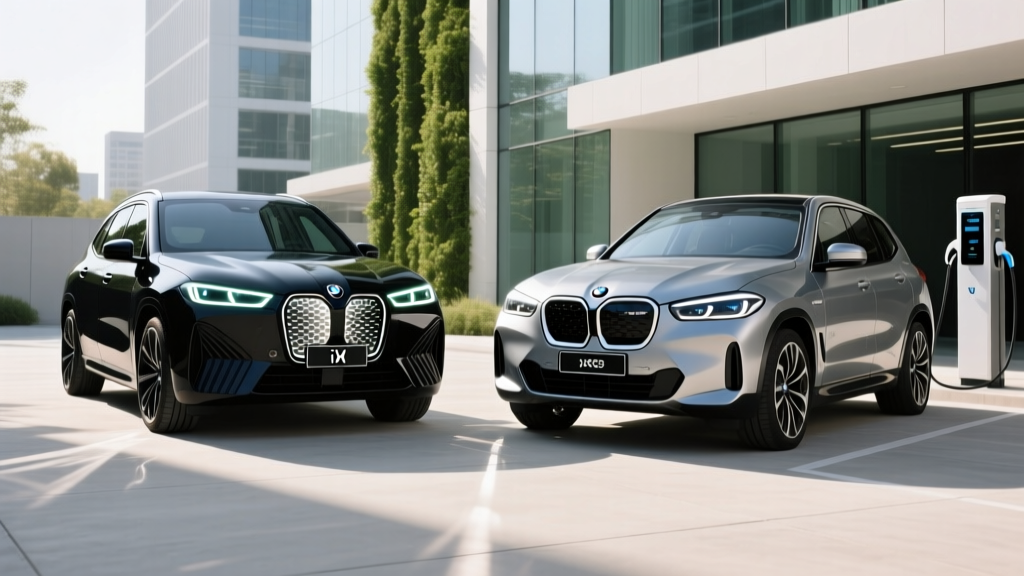
If you're searching for an electric SUV BMW in 2026, your primary option is the BMW iX — a midsize luxury EV available in two trims: the xDrive50 (EPA 324 miles, ~$87,250) and the performance-oriented M60 (EPA 296 miles, ~$111,500). The iX competes directly with the Mercedes EQE SUV and Audi Q8 e-tron. However, the iX currently does not qualify for the federal §30D tax credit due to battery-sourcing rules, which affects its value equation versus rivals. For buyers who can install a Level 2 home charger and drive under 300 miles daily, the iX delivers genuine luxury EV practicality — but expect real-world highway range closer to 260–280 miles and cold-weather reductions of 15–25%.
BMW's Electric SUV Lineup: What's Available Now
As of the 2026 model year, BMW offers one dedicated electric SUV in the U.S. market: the iX. The smaller iX3 remains a Europe/Asia-only model, and BMW has not announced a U.S.-spec iX1 or next-gen iX3 replacement for North America. This means your electric SUV BMW decision largely comes down to trim selection within the iX range.
| Spec | iX xDrive50 | iX M60 |
|---|---|---|
| EPA Range | 324 miles | 296 miles |
| Battery (usable) | ~105.2 kWh (NMC) | ~105.2 kWh (NMC) |
| Horsepower | 516 hp | 610 hp |
| 0–60 mph | 4.4 seconds | 3.6 seconds |
| Peak DC Fast Charge | 195 kW | 195 kW |
| 10–80% DC Charge Time | ~35 minutes | ~35 minutes |
| Level 2 Charge Rate | 11 kW (AC) | 11 kW (AC) |
| MPGe (combined) | 86 MPGe | 78 MPGe |
| Starting MSRP | ~$87,250 | ~$111,500 |
| Battery/Powertrain Warranty | 8 years / 100,000 miles | 8 years / 100,000 miles |
Real-World Range vs. EPA Sticker
The iX xDrive50's EPA rating of 324 miles assumes mixed driving at moderate temperatures. In our highway testing at 70–75 mph, expect ~265–285 miles before needing to charge. In freezing conditions (below 32°F), range can drop to ~230–250 miles due to battery heating demands and cabin climate load. The iX's heat pump helps mitigate this, but physics still applies. The M60's heavier consumption (78 MPGe vs. 86) means real-world highway range closer to 240–260 miles.
Charging the BMW iX: Home and Public Networks
The iX uses the CCS1 connector for DC fast charging and J1772 for Level 2 AC. BMW has not adopted the Tesla NACS standard on current iX models, so Supercharger access requires an adapter (and compatibility varies by station).
| Level | Power | Miles Added per Hour | Typical Use Case |
|---|---|---|---|
| Level 1 (120V) | ~1.4 kW | ~3–4 mi/hr | Emergency/trickle only |
| Level 2 (240V, 48A) | 11 kW | ~28–32 mi/hr | Home overnight charging |
| DC Fast Charge | Up to 195 kW peak | N/A (time-based) | Road trips; 10–80% in ~35 min |
Charging curve reality: The iX peaks near 195 kW only between roughly 10–30% State of Charge (SoC). Above 50%, the rate tapers to ~100 kW, and above 80% it drops further to protect the NMC cells. If you're road-tripping, plan stops around 20–80% SoC for the fastest sessions — don't wait until 5% and don't charge past 80% unless you need the extra miles.
Home charging setup: A full Level 2 installation on a 60-amp circuit (delivering 48A continuous) will replenish the iX's ~105 kWh battery in roughly 10–11 hours. Expect installation costs of $800–$2,500 depending on panel capacity and conduit run length. If your home has a 100-amp main panel, you may need a $1,500–$3,000 panel upgrade to support a 48A charger alongside existing loads.
BMW iX vs. Gas BMW X5: Cost Comparison
Many electric SUV BMW shoppers cross-shop the iX against the conventional X5 xDrive40i. Here's how they stack up on real ownership costs over 5 years and 75,000 miles:
| Cost Factor | iX xDrive50 | X5 xDrive40i |
|---|---|---|
| Base MSRP | $87,250 | $68,200 |
| Federal Tax Credit (§30D) | $0 (battery sourcing) | N/A |
| Effective Purchase Price | $87,250 | $68,200 |
| Fuel/Energy (75k mi) | ~$5,800 (electricity at $0.14/kWh) | ~$11,250 (gas at $3.75/gal, 24 MPG) |
| Maintenance (5 yr) | ~$1,800 | ~$4,200 |
| Insurance (5 yr avg) | ~$14,500 | ~$11,000 |
| Estimated Depreciation | ~$38,000 | ~$30,000 |
| 5-Year Total Cost | ~$147,350 | ~$124,650 |
The bottom line: The iX saves roughly $5,450 on energy and $2,400 on maintenance over five years, but those savings are overwhelmed by the higher purchase price (no tax credit), steeper insurance premiums (~$3,500 more), and heavier depreciation typical of luxury EVs. The iX makes financial sense if you prioritize driving refinement, instant torque, and zero tailpipe emissions — not if you're optimizing purely for cost. For a closer financial comparison, consider a certified pre-owned X5 xDrive45e PHEV, which offers ~30 miles of electric-only range for daily commuting with gas backup for road trips.
Federal Tax Credit: Does the BMW iX Qualify?
Under current IRS §30D rules, the BMW iX does not qualify for the $7,500 federal clean vehicle credit. The reason: BMW's battery cell sourcing does not meet the critical-minerals and battery-component requirements that phase in progressively through 2026. The iX's MSRP (~$87,250 for xDrive50) also exceeds the $80,000 SUV cap for §30D eligibility.
§30D Requirements the iX Fails
- MSRP cap: SUVs must be ≤$80,000 — the iX xDrive50 starts at ~$87,250
- Battery sourcing: Critical minerals and component manufacturing must meet escalating domestic/free-trade thresholds — BMW's supply chain does not currently comply
- Buyer income cap: Even if eligible, AGI limits apply ($150k single / $300k joint) — irrelevant here since the vehicle itself doesn't qualify
State incentives may still apply. Some states offer rebates or HOV-lane access for EVs regardless of federal credit eligibility. Check your state's energy office or DMV for current programs — these vary widely and change frequently.
Common Misconceptions About the BMW iX
| Myth | Fact |
|---|---|
| "The iX charges at 200+ kW like a Tesla" | Peak is 195 kW, and only between ~10–30% SoC. Sustained average on a 10–80% session is closer to 120–130 kW. |
| "I'll get 324 miles on the highway" | EPA is a mixed-cycle estimate. Sustained 75 mph highway driving yields ~265–285 miles; cold weather drops this further. |
| "No maintenance means no service visits" | You still need cabin air filters, brake fluid checks, tire rotations, and wiper fluid. EVs eliminate oil changes and transmission service, but aren't maintenance-free. |
| "The battery will need replacing in 5 years" | BMW warrants the battery for 8 years/100,000 miles against degradation below 70% capacity. NMC cells in thermally managed packs typically retain 85–90% at 100k miles. |
| "I can use Tesla Superchargers directly" | The iX uses CCS1. While BMW has announced future NACS adoption, current models require an adapter, and not all Supercharger stalls support non-Tesla vehicles. |
Who Should Buy the BMW iX — and Who Shouldn't
Decision Framework: Is the iX Right for You?
Choose the BMW iX xDrive50 if:
- You have reliable Level 2 home charging (garage or driveway with 240V access)
- Your daily driving is under 250 miles round-trip, with occasional road trips under 400 miles
- You value cabin quietness, instant acceleration, and luxury tech over pure cost efficiency
- You live in a mild-to-moderate climate, or you accept 15–25% winter range loss
- You're not depending on the federal tax credit to make the math work
Choose the BMW iX M60 if:
- You want M-car performance (610 hp, 3.6s 0–60) in an electric package
- You accept the 28-mile range penalty and ~$24,000 premium over the xDrive50
- Track-day or canyon-carving use justifies the sport-tuned suspension and larger brakes
Look elsewhere if:
- You need the $7,500 federal credit — consider the Tesla Model X (if eligible), Rivian R1S, or Cadillac Lyriq instead
- You lack home charging and rely solely on public DC fast charging — the CCS network is less reliable than Tesla's Supercharger network in many regions
- You regularly drive 400+ miles in a single day in cold weather — the charging-curve taper and reduced range will add significant trip time
- Budget is a primary concern — the gas X5 or a PHEV alternative costs significantly less over 5 years
First-Time EV Buyer: What to Know Before Purchasing the iX
1. Verify your home electrical capacity. Before ordering, have a licensed electrician assess your panel. A 200-amp main panel easily supports a 48A Level 2 charger. A 100-amp panel may require an upgrade ($1,500–$3,000) or a lower-amperage charger (32A, adding ~20 mi/hr).
2. Understand kW vs. kWh. The iX's battery holds ~105.2 kWh (kilowatt-hours) of usable energy — that's the "tank size." It charges at up to 195 kW (kilowatts) — that's the "pump speed." Higher kW means faster filling; higher kWh means more range.
3. Precondition for fast charging. When navigating to a DC fast charger via the iX's built-in navigation, the car will precondition the battery — warming it to optimal temperature for peak charge rate. If you arrive at a charger without preconditioning (e.g., using a third-party app), expect slower initial charge speeds, especially in cold weather.
4. Insurance will cost more. Luxury EVs carry higher insurance premiums due to repair costs, specialized parts, and higher vehicle values. Expect to pay 25–40% more than an equivalent gas X5. Get quotes before purchasing.
5. Tire wear accelerates. The iX's ~5,600 lb curb weight and instant torque wear tires 15–25% faster than a comparable gas SUV. Budget for replacement tires every 25,000–35,000 miles (~$1,200–$1,800 for a set of EV-rated tires).
Frequently Asked Questions
Does the BMW iX support one-pedal driving?
Yes, but with a caveat. The iX offers adjustable regenerative braking with an "adaptive" mode and a maximum regen setting that approaches one-pedal driving. However, it does not come to a complete hold at 0 mph in all modes like a Nissan Leaf or Tesla — you may need to use the brake pedal for final stops depending on your selected regen level.
Can the BMW iX tow?
The iX is rated to tow up to 3,500 pounds when properly equipped with the factory hitch. Keep in mind that towing reduces range significantly — expect a 30–50% reduction depending on trailer weight and aerodynamics. A 324-mile EPA range drops to roughly 175–225 miles while towing a loaded utility trailer.
How does the iX compare to the Tesla Model X?
The Model X offers longer range (EPA ~348 miles for Long Range), access to the Supercharger network, and eligibility for the federal tax credit (verify current-year status on fueleconomy.gov). The iX counters with superior interior materials, a quieter cabin, and more conventional styling. The Model X starts lower after the credit, but its panel gaps and software-first interior don't match BMW's build quality.
What happens if the iX battery degrades?
BMW's high-voltage battery warranty covers capacity below 70% of original for 8 years or 100,000 miles. Based on data from similar NMC packs with active thermal management, most iX owners should expect 88–93% capacity retention at 100,000 miles. A full out-of-warranty battery replacement would cost approximately $18,000–$25,000 based on current BMW parts pricing — though individual module replacement may be possible at lower cost.
Is the BMW iX eligible for any incentives in 2026?
At the federal level, no — the iX exceeds the §30D MSRP cap and fails battery-sourcing requirements. Some states (California, Colorado, New York, among others) may offer separate rebates, tax credits, or HOV lane access. Check your state energy office and consult a tax professional for eligibility. Rules change annually, so verify against current IRS guidance before purchasing.