Quick Answer: Should You Buy an Electric Speed Boat or an EV Car?
If you're searching for an electric speed boat in 2026, here's what you need to know before committing: electric speed boats like the Candela C-8 or X Shore Eelex 8000 cost between $95,000 and $390,000, offer 40–65 nautical miles of range at cruising speed, and require specialized marine charging infrastructure (typically 22 kW AC or DC fast marine chargers at select marinas). They are not eligible for the federal §30D EV tax credit, which applies only to on-road vehicles. By contrast, a comparable-performance EV car like the Tesla Model 3 Performance ($54,990 MSRP) delivers 315 miles of EPA range, charges on ubiquitous public networks, and may qualify for up to $7,500 in federal credits. Unless you have specific on-water recreation needs and marina charging access, an EV car delivers dramatically more utility per dollar.
What Is an Electric Speed Boat, Exactly?
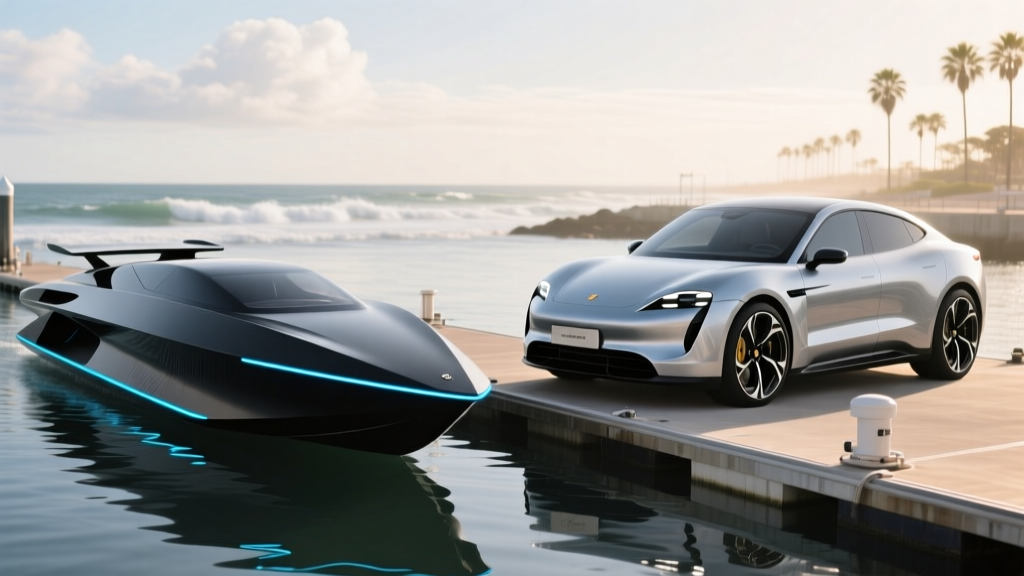
The term "electric speed boat" covers a small but growing category of battery-electric watercraft designed for performance and day-cruising. Unlike electric pontoons or slow-displacement launches, these boats prioritize planing speeds (20–30+ knots) and modern lithium-ion battery packs. Key players in 2026 include:
- Candela C-8 — Hydrofoiling electric boat, ~$390,000, 69 kWh battery (NMC), 57 nautical miles range at 22 knots, top speed 27 knots.
- X Shore Eelex 8000 — Swedish luxury cruiser, ~$329,000, 125 kWh battery, ~50 nmi range at cruising speed, top speed 35 knots.
- Frauscher x Porsche 850 Fantom Air — ~$590,000+, 100 kWh battery, 45–50 nmi range, top speed 46 knots.
- Vita Yachts LION — ~$95,000 starting, smaller day-boat format, ~40 nmi range at moderate speed.
These figures are manufacturer-stated and vary significantly with sea state, passenger load, and speed. Unlike EPA-rated EV cars, there is no standardized marine efficiency rating, making real-world range harder to predict.
Electric Speed Boat vs. EV Car: Cost and Ownership Compared
The buying decision between an electric speed boat and an electric car isn't apples-to-apples — they serve entirely different purposes. But if you're allocating a budget for electrified recreation or transportation, the numbers tell a stark story.
| Factor | Electric Speed Boat (Candela C-8) | EV Car (Tesla Model 3 Performance) |
|---|---|---|
| Base MSRP | ~$390,000 | $54,990 |
| Federal §30D Tax Credit | $0 (not eligible) | Up to $7,500 (income/MSRP/sourcing rules apply) |
| Battery Capacity | 69 kWh (NMC) | ~75 kWh usable (NMC) |
| Range | ~57 nmi at 22 knots | 315 mi EPA (expect ~260–280 mi highway) |
| Charging Infrastructure | Limited marina AC (22 kW); very few DC marine chargers | NACS Supercharger network, 17,000+ stalls nationwide |
| 10–80% Charge Time | ~2.5 hours at 22 kW AC | ~18 min at 250 kW DC Supercharger |
| Annual Insurance | $3,000–$8,000+ (marine hull/liability) | $1,800–$3,200 (varies by state/driver) |
| Annual Maintenance | $2,000–$5,000 (hull, antifouling, winterization) | $300–$600 (cabin filter, tire rotation, fluid top-off) |
| Storage/Docking | $3,000–$12,000/yr (slip or dry stack) | $0–$2,400/yr (home garage or apartment parking) |
The total first-year cost of owning a Candela C-8 can easily exceed $410,000 when you factor in dockage, insurance, and commissioning. A Model 3 Performance, after the potential $7,500 federal clean vehicle credit (subject to income caps of $150K single / $300K joint and battery sourcing requirements per IRS §30D), lands closer to $50,000–$55,000 all-in for year one.
Charging Reality: Marina vs. Home Garage
This is where most prospective electric speed boat buyers underestimate the friction. Charging an EV car at home on a Level 2 (7.7–11.5 kW) circuit is routine — a licensed electrician installs a 240V/50A circuit for $800–$2,500, and you wake up every morning with a full battery. Electric speed boats have no equivalent convenience for most owners.
Marine Charging vs. EV Car Charging
| Level | EV Car (Home/Public) | Electric Speed Boat (Marina) |
|---|---|---|
| Level 1 (120V) | ~1.4 kW, ~4 mi/hr — slow but universal | Not practical — would take 50+ hours for 69 kWh |
| Level 2 (240V AC) | 7.7–11.5 kW, ~30–44 mi/hr | ~22 kW AC (CEE marine plug), ~2.5 hr for 10–80% |
| DC Fast Charge | 150–350 kW, 10–80% in 15–25 min | Rare; a few European marinas offer 40–60 kW DC marine |
Most U.S. marinas in 2026 still lack dedicated high-power shore charging for planing-hull electric boats. You'll need to confirm your home marina can supply a 22 kW (or higher) AC connection on your slip — and many older marina electrical panels max out at 30A/240V (7.2 kW), which means a full charge on a 69 kWh battery takes 9+ hours. Some buyers install dedicated marine charging pedestals, which can cost $5,000–$15,000 including marina electrical upgrades and permitting.
Real-World Range: Why Nautical Miles Are Not Highway Miles
EV cars lose roughly 15–30% of EPA-rated range in sustained highway driving above 70 mph or in freezing temperatures. Electric speed boats face a far more dramatic range-vs-speed tradeoff due to hydrodynamic drag, which increases roughly with the cube of speed.
The Candela C-8, for example, achieves its 57 nmi range at 22 knots thanks to its hydrofoiling design, which lifts the hull above the water and dramatically reduces drag. Push it to 27 knots (top speed) and range drops to approximately 30–35 nmi. Conventional planing-hull electric boats like the X Shore Eelex 8000 see even steeper drops — full-throttle running can cut range to under 20 nmi.
Sea state matters enormously. Choppy water forces higher power draw to maintain speed, and headwinds add aerodynamic drag to the superstructure. In calm, flat conditions you may match manufacturer claims; in 2–3 foot chop with a headwind, expect 20–35% less range.
For context, a gasoline speed boat with a 200 HP outboard and a 50-gallon tank typically achieves 1.5–2.5 nmi per gallon at cruising speed, giving 75–125 nmi of range. The electric speed boat's range is substantially shorter, and "refueling" takes hours, not minutes.
Federal Tax Credits: Why Boats Don't Qualify
A common misconception is that any battery-electric vehicle qualifies for the §30D Clean Vehicle Credit. The IRS defines eligible vehicles as those "made by a manufacturer" and "for use on public streets, roads, and highways." Marine vessels, including electric speed boats, are explicitly excluded.
Common Misconceptions About Electric Speed Boats
| Myth | Fact |
|---|---|
| "I'll get the $7,500 federal EV tax credit." | Boats do not qualify for §30D. No federal purchase incentive exists for recreational marine vessels in 2026. |
| "I can charge it at any marina." | Most U.S. marinas lack 22 kW+ shore power at individual slips. Verify before purchasing. |
| "Electric boats have no maintenance." | The drivetrain is low-maintenance, but hull antifouling, gelcoat repair, winterization, and trailer upkeep remain significant costs. |
| "Range is enough for a full day on the water." | At planing speeds, 40–60 nmi is typical. A day of watersports or island-hopping may require mid-day charging — if available. |
| "It's like buying a Tesla for the water." | EV cars benefit from mature charging networks, standardized efficiency ratings, and federal incentives. Electric boats have none of these in 2026. |
Cost Per Mile: Electric Speed Boat vs. Gas Boat vs. EV Car
Let's compare operating cost per mile for three scenarios, assuming $0.14/kWh residential electricity, $4.50/gallon gasoline, and typical efficiencies:
| Vehicle | Energy Source | Efficiency | Cost Per Mile |
|---|---|---|---|
| EV Car (Model 3) | Electricity | 26 kWh/100 mi | $0.036/mi |
| Gas Car (Toyota Camry) | Gasoline | 32 MPG combined | $0.14/mi |
| Electric Speed Boat (Candela C-8) | Electricity | ~1.2 kWh/nmi at cruise | $0.146/nmi |
| Gas Speed Boat (200 HP outboard) | Gasoline | ~2.0 nmi/gal at cruise | $2.25/nmi |
The electric speed boat is roughly 15x cheaper per nautical mile to "fuel" than its gas counterpart — that's the compelling case for electric marine propulsion. However, at $0.146 per nautical mile versus $0.036 per road mile for an EV car, you're paying about 4x more per mile on water than on land, simply because moving a hull through water requires far more energy than rolling a car on pavement.
Decision Framework: Is an Electric Speed Boat Right for You?
Choose an Electric Speed Boat If:
- You have a confirmed marina slip with 22 kW+ shore power or can invest $5K–$15K in a dedicated charging pedestal.
- Your typical outings are under 40 nmi round-trip (lake days, coastal cruises, short island hops).
- You value silent, fume-free operation and zero wake-zone emissions (many lakes now restrict gas engines).
- You have a six-figure discretionary budget and view this as a lifestyle/recreation purchase, not a cost-savings play.
- You accept that resale value data is thin — the electric boat market is young and depreciation curves are unproven.
Choose an EV Car Instead If:
- You need daily transportation with reliable range and fast charging infrastructure.
- You want to maximize the value of federal (§30D), state, and utility EV incentives.
- Your budget is under $100,000 and you want the highest utility-per-dollar from electrification.
- You live in a region with cold winters — EV cars lose 15–30% range in the cold, but electric boats face seasonal layup and battery storage concerns.
- You want proven long-term battery warranty coverage (8 yr/100K mi for most EV cars vs. 2–5 yr marine battery warranties).
Frequently Asked Questions
Can I tow an electric speed boat on a trailer and charge it at home?
Yes, smaller models like the Vita LION can be trailered. You can charge from a home Level 2 (240V/50A) outlet using the boat's onboard charger, typically at 11–22 kW depending on the model. A full charge on a 69 kWh battery at 11.5 kW takes roughly 6 hours. However, confirm your boat's onboard charger supports standard J1772 or a compatible marine inlet — some use proprietary connectors.
How long do electric boat batteries last?
Most electric speed boats use NMC lithium-ion cells similar to EV cars. Manufacturers typically quote 2,000–3,000 charge cycles to 80% State of Health, which translates to roughly 10–15 years of typical recreational use (50–100 cycles per year). Candela offers a 5-year battery warranty; X Shore offers 3 years. Replacement costs are not widely published but are estimated at $25,000–$50,000+ depending on capacity.
Are there any incentives for buying an electric boat in 2026?
There is no federal purchase incentive for electric boats. A handful of states and local clean-water programs offer small rebates (typically $1,000–$5,000) for electric marine vessels, and some utilities offer off-peak charging rates for marina customers. Check your state's energy office and local utility for current programs — availability varies widely by jurisdiction.
What's the difference between kW and kWh on a boat spec sheet?
kW (kilowatts) measures power — how fast energy flows. Your boat's motor might be rated at 225 kW peak, meaning it can draw that much power at full throttle. kWh (kilowatt-hours) measures energy capacity — the size of the "fuel tank." A 69 kWh battery holds 69 kilowatt-hours of energy. Confusing the two is the most common spec-sheet mistake: a 22 kW charger (power) filling a 69 kWh battery (energy) takes about 3 hours, not 3 minutes.
Is an electric speed boat practical for watersports like wakeboarding or tubing?
At sustained high-power use (pulling a wakeboarder requires 20–25+ knots with heavy load), range drops significantly — expect 15–25 nmi of total runtime before needing a recharge. Since mid-day marina fast-charging is rare, electric speed boats are better suited to cruising and day trips than continuous watersports sessions. A gas boat remains more practical for all-day towing activities.