Quick Answer: Should You Buy an Electric Snowmobile?
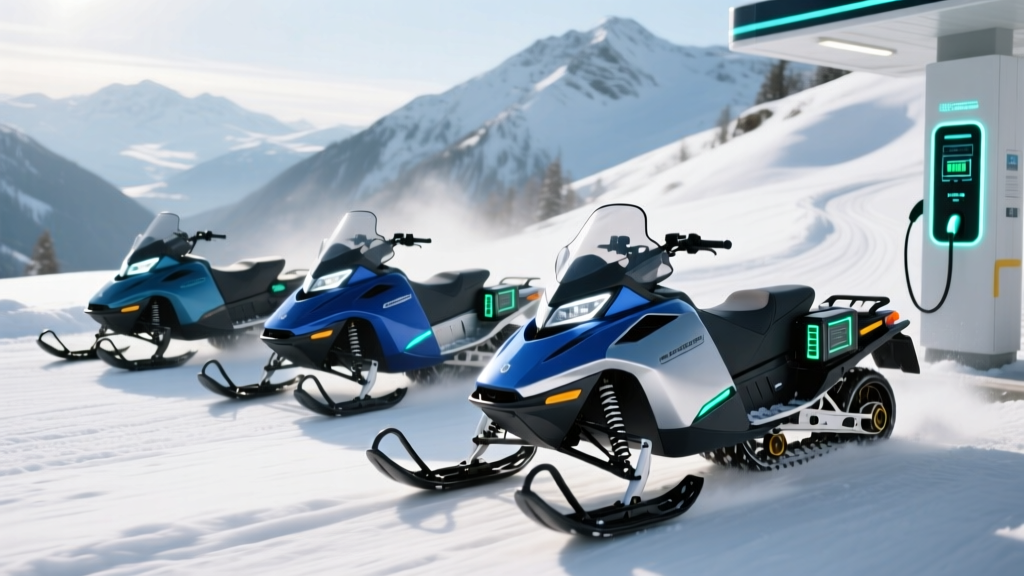
Electric snowmobiles in 2026 deliver 60–100 miles of real-world trail range on a single charge, cost between $12,000 and $18,000, and eliminate the fuel, oil, and exhaust maintenance of gas sleds. The Taiga TS2 and Lynx e-Sled (announced) lead the market. If your typical ride is under 80 miles, you have access to a 240V outlet for overnight charging, and you value instant torque and near-silent operation, an electric snowmobile is a strong buy. If you regularly ride 150+ miles in remote backcountry or need rapid refueling in sub-zero conditions, a gas sled remains the more practical choice for now.
What Is an Electric Snowmobile — and How Does It Work?
An electric snowmobile replaces the traditional 2-stroke or 4-stroke internal combustion engine with a battery pack (measured in kWh — kilowatt-hours, the total energy capacity) and an electric motor (measured in kW — kilowatts, the power output). This is the same fundamental architecture as an electric car, scaled down for a powersports chassis.
Instead of a fuel tank, you have a sealed lithium-ion battery mounted low in the chassis. Instead of a CVT clutch and belt drive, most models use a direct-drive or single-speed reduction gear to the track. The result is instant throttle response, no engine warm-up, and dramatically fewer moving parts.
The key specs that define the experience:
- Battery capacity (kWh): Determines range. Current models range from 10 kWh to 22 kWh.
- Motor power (kW): Determines acceleration and top speed. Expect 60–120 kW (80–160 HP).
- Charge rate (kW): How fast the battery refills. Level 2 (240V) charging typically adds 5–10 miles of range per hour; DC fast charging on select models can do 10–80% in roughly 30–40 minutes.
- Curb weight: Electric sleds run 550–700 lbs, often 50–100 lbs heavier than comparable gas models due to battery mass.
2026 Electric Snowmobile Models: Specs & Pricing
The electric snowmobile market is still small but growing. Here is what is available or announced for the 2026 model year:
| Model | Battery (kWh) | Motor (kW / HP) | Equiv. Range (mi) | Charge 10–80% | 0–60 mph | MSRP |
|---|---|---|---|---|---|---|
| Taiga TS2 (Cross-Country) | 15 kWh (NMC) | 90 kW / 120 HP | ~80 mi (trail) | ~35 min (DCFC*) | ~3.0 sec | $15,490 |
| Taiga TS2 (Mountain) | 20 kWh (NMC) | 120 kW / 160 HP | ~100 mi (trail) | ~45 min (DCFC*) | ~3.5 sec | $17,990 |
| Taiga Orca (Personal Watercraft) | 22 kWh (NMC) | 120 kW / 160 HP | N/A (watercraft) | ~50 min (DCFC*) | N/A | $24,990 |
| Lynx e-Sled (announced) | ~18 kWh (est.) | ~100 kW / ~135 HP (est.) | ~90 mi (est.) | TBD | TBD | TBD (est. $14,000–$16,000) |
| Ski-Doo / BRP (announced concept) | TBD | TBD | TBD | TBD | TBD | TBD |
*DC fast charging availability depends on model configuration and regional infrastructure. Level 2 (240V/32A) charging takes 3–5 hours for a full charge on most models. DCFC ports are optional on Taiga models and require a compatible CCS or proprietary connector.
Real-World Range Reality Check
Manufacturer range claims for electric snowmobiles assume moderate trail speeds (30–40 mph) on packed snow at temperatures around 20°F. In practice:
- Aggressive mountain riding (deep powder, steep climbs): Expect 40–60% of stated range — roughly 35–50 miles on a 15 kWh pack.
- Cold-weather penalty: Below 0°F, battery chemistry slows and cabin/track heating draws additional power. Plan for 15–25% range loss versus 20°F conditions.
- Trail cruising at 45+ mph: Aerodynamic drag and track friction increase energy consumption. Expect 60–75% of stated range.
The bottom line: a 15 kWh Taiga TS2 rated at 80 miles will realistically deliver 50–65 miles in typical mixed riding, and 35–45 miles in aggressive or extreme-cold conditions.
Electric Snowmobile vs. Gas Snowmobile: Cost & Performance Comparison
How does an electric sled stack up against a comparable gas model like a Ski-Doo MXZ or Polaris Indy? Here is a data-driven breakdown:
| Factor | Electric (Taiga TS2 15 kWh) | Gas (Ski-Doo MXZ 600 ACE, ~$11,500) |
|---|---|---|
| Purchase Price | $15,490 | $11,500 |
| Fuel/Energy Cost per 100 mi | $1.50–$3.00 (at $0.10–$0.20/kWh) | $12–$18 (at 8–12 mpg, $4.00/gal premium) |
| Annual Fuel/Energy (1,500 mi/yr) | $22–$45 | $180–$270 |
| Annual Maintenance | $50–$100 (track, suspension, brake) | $300–$600 (oil, spark plugs, belt, clutch, exhaust) |
| 5-Year Fuel + Maintenance | $350–$725 | $2,400–$4,350 |
| 5-Year Total Cost (purchase + operating) | $15,840–$16,215 | $13,900–$15,850 |
| Instant Torque | Yes (full torque at 0 RPM) | No (builds with RPM) |
| Noise Level | ~65 dB (conversation level) | ~85–95 dB (hearing protection recommended) |
| Refuel/Recharge Time | 3–5 hrs (Level 2) / 35 min (DCFC 10–80%) | 2–3 min (gas fill) |
| Emissions at Point of Use | Zero | CO₂, NOx, unburned hydrocarbons |
The purchase premium for electric is roughly $3,500–$4,000, but operating savings close that gap significantly over 5 years. At 1,500 miles per year, the breakeven point arrives around year 4–5. Riders who log higher mileage or pay more for premium fuel reach breakeven sooner.
Charging an Electric Snowmobile: What You Actually Need
Charging logistics are the single biggest ownership variable for electric snowmobiles. Unlike electric cars, which benefit from a mature public charging network, snowmobile charging infrastructure is extremely limited in 2026.
Charging Levels Explained
| Level | Power (kW) | Time to Full (15 kWh pack) | Range Added per Hour | Where You Find It |
|---|---|---|---|---|
| Level 1 (120V standard outlet) | 1.0–1.4 kW | 11–15 hours | ~5–7 miles | Any standard household outlet |
| Level 2 (240V, 32A) | 3.0–7.2 kW | 2.5–5 hours | ~15–30 miles | Dryer outlet, garage 240V circuit, some lodges |
| DC Fast Charge (CCS/proprietary) | 20–50 kW | ~35–45 min (10–80%) | ~80–120 miles (peak) | Select trailhead stations, Taiga partner locations |
Real-World Charging Advice for Snowmobile Owners
Home charging is essential. If you store your sled in a heated or insulated garage with a 240V outlet (the same type used for a clothes dryer or Level 2 EV charger), you can fully recharge overnight after every ride. This is the ideal scenario and covers the vast majority of use cases.
Trail-side charging is rare but growing. A handful of resorts and trail systems in Quebec, Vermont, and Michigan have installed DC fast chargers at warming huts or parking areas. Do not rely on public charging for backcountry or remote rides.
Cold-weather charging is slower. Lithium-ion batteries charge less efficiently below freezing. Most electric snowmobiles include battery preconditioning — the system warms the pack before accepting a charge — but this adds time and energy. Plan for 20–30% longer charge sessions when ambient temperatures are below 10°F.
Electrical panel capacity matters. If your garage does not already have a 240V/30A or 240V/50A circuit, hiring a licensed electrician to install one typically costs $500–$1,500, depending on panel capacity and wire run distance. If your panel needs an upgrade (from 100A to 200A service), add $1,500–$3,000. Always get a professional assessment before purchase.
Tax Credits and Incentives: Do Electric Snowmobiles Qualify?
As of 2026, the federal §30D Clean Vehicle Credit applies to qualified on-road electric vehicles — cars, trucks, SUVs, and motorcycles meeting specific battery sourcing, MSRP, and buyer income requirements. Electric snowmobiles are classified as off-road powersports vehicles and do not currently qualify for the federal §30D tax credit.
However, some state and provincial programs offer powersports electrification incentives:
- Quebec (Canada): The Roulez Vert program has historically offered rebates for electric off-road vehicles, including snowmobiles. Check current eligibility at Quebec's environmental ministry.
- Vermont & Maine: Periodic utility-company rebates for electric powersports. Contact your local electric cooperative.
- Manufacturer incentives: Taiga and other brands occasionally offer early-adopter discounts or bundle packages (charger + installation credit).
Always verify current incentive status with your state energy office or a tax professional before relying on a rebate in your purchase decision.
Common Misconceptions About Electric Snowmobiles
| Myth | Fact |
|---|---|
| "The battery will die in cold weather and strand me." | Cold weather reduces range by 15–25%, but modern battery management systems (BMS) actively manage cell temperature. You will see reduced range — not sudden failure. Plan your rides with a 25% buffer. |
| "Electric snowmobiles are underpowered." | The Taiga TS2 Mountain produces 120 kW (160 HP) and hits 60 mph in ~3.5 seconds. Electric motors deliver peak torque instantly, which is an advantage in deep snow where gas engines need RPM buildup. |
| "The battery will need replacing every few years." | NMC lithium-ion packs in powersports applications are rated for 1,000–2,000 full charge cycles before degrading to 80% capacity. At 50 rides per year, that is 20–40 years of use. Taiga offers a 5-year/30,000-mile battery warranty. |
| "You can't ride far from home." | For rides under 60 miles round-trip, an electric snowmobile works with home charging alone. For longer rides, you need a plan: a trail-side charger, a tow-behind generator, or a trailer for mid-ride transport. This is a real limitation for backcountry riders. |
| "Electric sleds are too heavy to handle in deep snow." | Electric models run 550–700 lbs — comparable to mid-range gas sleds. The low-mounted battery lowers the center of gravity, which actually improves handling in some conditions. Weight distribution is different, not worse. |
Decision Framework: Is an Electric Snowmobile Right for You?
Choose an Electric Snowmobile If:
- Your typical ride is under 80 miles round-trip — this covers the majority of trail riders and weekend warriors.
- You have a garage or shed with 240V access — overnight charging makes daily-use riding effortless.
- You ride on groomed trails or moderate terrain — where range efficiency is highest.
- You value silence — electric sleds let you ride without hearing protection, hear trail companions, and access noise-restricted trail systems.
- You want minimal maintenance — no oil changes, no spark plugs, no exhaust valves, no carburetor jetting, no belt replacements.
- You ride in regulated or environmentally sensitive areas — some parks and trail systems are beginning to restrict gas-powered sleds.
Stick with a Gas Snowmobile If:
- You regularly ride 100+ miles in a day — especially in remote backcountry without charging infrastructure.
- You need 5-minute refueling — gas cans and trail-side fuel stops are fast and widely available.
- You ride in extreme cold (below -20°F) frequently — battery performance degrades further, and gas sleds are less affected.
- Your budget is under $10,000 — the used gas sled market offers far more options at lower price points.
- You need maximum towing capacity — gas sleds generally offer higher tow ratings for work and rescue applications.
Ownership Costs: 5-Year Breakdown
| Cost Category | Electric (Taiga TS2, $15,490) | Gas (Ski-Doo MXZ 600, $11,500) |
|---|---|---|
| Purchase Price | $15,490 | $11,500 |
| Home Charger Install (240V) | $500–$1,500 | $0 |
| Energy/Fuel (5 yrs, 7,500 mi total) | $112–$225 | $900–$1,350 |
| Maintenance (5 yrs) | $250–$500 | $1,500–$3,000 |
| Insurance (5 yrs, est.) | $1,500–$2,500 | $1,200–$2,000 |
| 5-Year Total | $17,852–$20,215 | $15,100–$17,850 |
Electric snowmobiles cost more upfront but save $1,500–$3,000 in fuel and maintenance over five years. Insurance tends to be slightly higher for electric models due to higher replacement costs and limited actuarial data. The total-cost gap narrows to roughly $1,500–$2,500 over five years, and continues to shrink in years 6+ as the gas sled requires increasingly expensive maintenance (clutch rebuilds, exhaust work, engine overhauls).
What First-Time Electric Snowmobile Buyers Should Know
If you are transitioning from a gas sled, here are the practical differences that matter on the trail:
- Throttle response is instant. There is no clutch engagement delay or power-valve spool-up. The track responds the millisecond you twist the throttle. This is thrilling but demands respect — especially on icy or technical trails.
- There is no engine braking in the traditional sense. Most electric snowmobiles offer adjustable regenerative braking (regen) that slows the track when you release the throttle. You can set this from mild to aggressive. High regen enables near one-pedal riding on groomed trails.
- Plan your rides around your battery, not a fuel gauge. Unlike a gas sled where you can glance at a fuel tank, you need to monitor your State of Charge (SoC) percentage and plan turn-around points. Most riders develop a "50% rule" — turn back when you hit 50% SoC to ensure a safe return.
- Cold hands are still a thing. Electric sleds do not produce engine heat. Heated grips and heated seats are powered by the battery and are standard on most models, but they draw 200–500 watts, which reduces range by 3–5%. Budget for quality heated gear.
- Dealer support is limited. Taiga is based in Montreal and ships direct. Service support outside Quebec and the northeastern US is sparse. Confirm your nearest authorized service center before purchasing. Some owners perform basic maintenance (track tensioning, suspension greasing) themselves.
Frequently Asked Questions
How far can an electric snowmobile really go on a charge?
On groomed trails at moderate speeds (30–40 mph) in temperatures around 20°F, expect 50–80 miles from a 15–20 kWh pack. In deep powder or aggressive mountain riding, that drops to 35–50 miles. Always plan rides with a 20–25% range buffer for safety.
How long does it take to charge an electric snowmobile?
On a standard 120V household outlet (Level 1), a full charge takes 11–15 hours. On a 240V outlet (Level 2), it takes 2.5–5 hours. DC fast charging, where available, can bring the battery from 10% to 80% in roughly 35–45 minutes. For most owners, overnight Level 2 charging at home is the primary method.
Do electric snowmobiles work in extreme cold?
Yes, but with range penalties. Below 0°F, expect 15–25% less range due to reduced battery efficiency and increased energy draw from heated grips and seats. Modern battery management systems precondition the pack to protect cell health. The sled will operate in extreme cold — just plan for shorter rides.
Can I tow a sled trailer with an electric snowmobile?
Most electric snowmobiles have limited towing capacity (200–400 lbs) compared to gas work sleds (500–800+ lbs). Towing also significantly increases energy consumption. Check the manufacturer's tow rating before purchasing if this is a priority.
What happens to the battery at end of life?
NMC lithium-ion batteries in snowmobiles are expected to retain 80%+ capacity after 1,000–2,000 full cycles (20–40 years at typical usage). At end of life, the cells can be recycled through established lithium-ion recycling streams. Taiga's battery warranty covers defects and premature degradation for 5 years.
Are electric snowmobiles allowed on all trails?
Trail access rules vary by state, province, and land manager. Most trail systems that allow gas snowmobiles also allow electric models. A growing number of noise-sensitive areas (national parks, wildlife corridors) are beginning to restrict gas sleds, which may give electric models expanded access over time. Always check local regulations before riding.
Is an electric snowmobile a good first sled for a beginner?
The instant torque and lack of clutch complexity make electric sleds approachable for beginners, but the higher purchase price and limited used market make them a bigger commitment. A beginner who rides groomed trails near home is a good candidate. A beginner who wants to explore remote backcountry should start with a gas sled for the refueling flexibility.
Sources: Taiga Motors official specifications (taigamotors.ca); EPA off-road vehicle emissions data (epa.gov); IRS §30D Clean Vehicle Credit guidelines (irs.gov).