Quick Answer: Should You Buy an Electric Ski Boat in 2026?
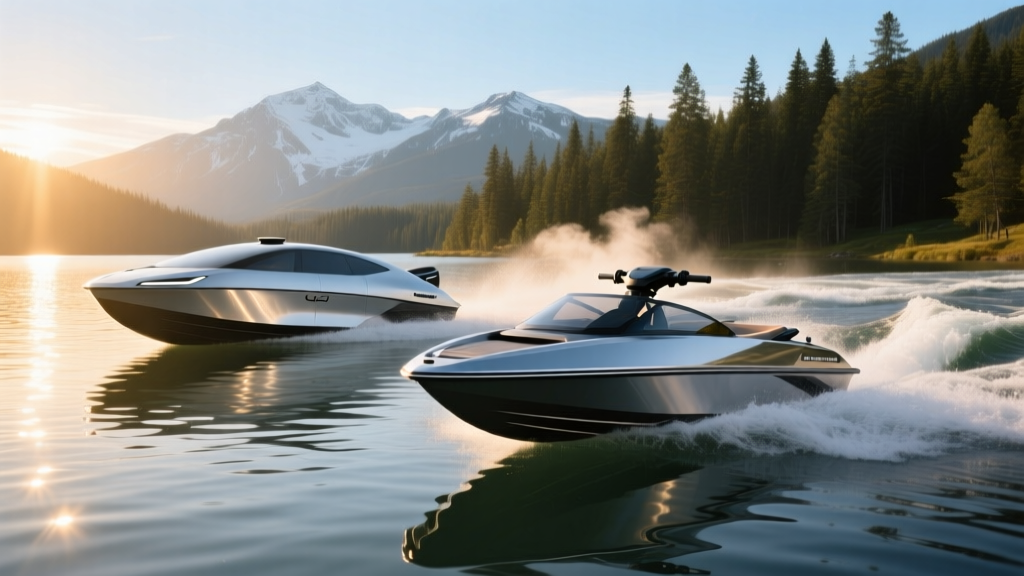
Electric ski boats like the Nautique G23 E-Series and MasterCraft NXT24 E are real, purchasable products in 2026 — but they serve a narrow buyer. Expect $180,000–$270,000 purchase prices, 2–4 hours of continuous tow-sport runtime per charge (roughly 60–100 kWh usable battery), and a requirement for dedicated dock or shore-power charging (240V Level 2 marine). If you ski or wakeboard on a private lake with noise/emission restrictions, have dock power, and boat 30–50 days a year, an electric ski boat eliminates fuel costs, oil changes, and exhaust fumes. If you trailer to different lakes, run all-day sessions, or lack 240V shore power, a gas V8 inboard remains the more practical choice.
AutoEdgeView covers electric and smart vehicles, and while our core focus is cars and trucks, the powertrain math behind electric ski boats is identical to what we evaluate in EVs: kWh capacity, kW charge rate, duty cycles, and total cost of ownership. Here is a data-driven breakdown.
How Electric Ski Boats Work: Battery, Motor, and Duty Cycle
Modern electric ski boats replace the traditional 5.7L–6.2L gasoline inboard with a high-torque permanent-magnet AC motor (typically 150–250 kW peak output, equivalent to roughly 200–335 hp) fed by a lithium-ion battery pack, usually NMC chemistry for energy density in a marine environment. Usable pack sizes in current models range from 60 kWh to 120 kWh.
The critical difference from an EV car is duty cycle. A car cruising highway uses 15–25 kW. A ski boat pulling a slalom skier at 34 mph or pushing a wakeboarder at 22 mph with ballast full can sustain 40–80 kW continuous draw. That means a 100 kWh pack delivers roughly 75–85 kWh of usable energy (marine systems keep a larger buffer than cars to protect against stranding), yielding approximately 1.0 to 2.0 hours of aggressive tow-sport runtime or 3–4 hours of mixed cruising and swimming.
| Spec | Typical Range (2026 Models) |
|---|---|
| Motor peak power | 150–250 kW (200–335 hp) |
| Battery chemistry | NMC lithium-ion |
| Usable battery capacity | 60–120 kWh |
| Tow-sport runtime (slalom/wakeboard) | 1.5–3.0 hours |
| Mixed-use runtime (cruise + swim) | 3–5 hours |
| Shore charge (240V Level 2, ~11 kW) | 6–10 hours (0–100%) |
| DC fast charge capable (where equipped) | 40–80 kW, ~45–90 min |
| Top speed | 42–50 mph (unballasted) |
Electric Ski Boat vs Gas Inboard: Cost, Fuel, and Maintenance Compared
The headline price gap is enormous. A well-equipped 2026 gas inboard ski boat (MasterCraft XT22, Nautique GS22, Malibu 23 LSV) typically lands between $110,000 and $170,000. The electric equivalents command a $60,000–$110,000 premium depending on pack size. The question is whether operating savings close that gap.
| Category | Gas Inboard (5.7L V8) | Electric Ski Boat (100 kWh) |
|---|---|---|
| Purchase price (typical) | $145,000 | $225,000 |
| Fuel / electricity per session (6 hrs) | $120–$180 (18–25 gal @ ~$6.50 marine) | $12–$25 (75 kWh @ $0.16–$0.33/kWh) |
| Annual fuel/energy (50 days) | $7,500 | $900 |
| 5-year fuel/energy total | $37,500 | $4,500 |
| Annual maintenance (oil, impeller, winterize) | $1,200 | $300 (coolant check, drive inspection) |
| 5-year maintenance | $6,000 | $1,500 |
| 5-year total cost of ownership | $188,500 | $231,000 |
| Resale (est. 5-yr depreciation) | ~45% retained | Uncertain — early market |
The math shows electric does not fully close the purchase gap in five years under typical use. The breakeven horizon is closer to 10–12 years — and that assumes battery degradation remains manageable. Most manufacturers warranty marine traction packs for 5 years or ~2,000 hours with a 70–80% capacity retention floor. Replacement pack pricing in 2026 is typically $25,000–$45,000 depending on kWh, which is the single largest long-term ownership risk.
Real-World Ownership Considerations: Charging, Climate, and Use Patterns
Electric ski boats work best when three conditions align:
- Dock or shore power access. You need a dedicated 240V / 50-amp marine receptacle (NEMA 14-50 or marine twist-lock) at your slip or lift. Installation on a dock typically runs $2,500–$6,000 depending on conduit length, marine-grade hardware, and whether your marina's panel needs an upgrade. Trailering to a public ramp and hoping for charging is not yet viable in most regions.
- Session duration matches the pack. If your typical day is 2–3 hours of skiing followed by swimming and lunch, a 100 kWh boat handles it. If you run dawn-to-dusk tournament sessions with multiple boats rotating, gas is still required.
- Climate and storage. Lithium packs tolerate cold poorly when charging. Winter storage in unheated climates requires either a conditioned facility or a manufacturer-approved storage protocol (usually ~50% state of charge with periodic monitoring). Leaving a pack fully depleted below freezing can cause permanent cell damage.
Common Misconceptions About Electric Ski Boats
| Myth | Fact |
|---|---|
| "They don't have enough torque for slalom." | Electric motors produce peak torque at 0 RPM. Tow-sport pull-off is actually stronger than a gas V8 in the first 2 seconds — critical for slalom starts. |
| "You can't wakeboard behind them." | Wake shaping is a hull-and-ballast function, not a powertrain function. Electric models carry equivalent ballast and produce identical wakes. |
| "The battery won't last." | NMC marine packs at 80% depth-of-discharge and moderate C-rates are engineered for 1,500–2,500 cycles before 80% SoH. At 50 sessions/year, that's 30–50 years of cycles — calendar aging (10–15 years) is the real limiting factor. |
| "They're silent, which is unsafe." | Most models include a low-speed acoustic warning. At tow speeds, hull noise and water spray make them audible. Spotter protocol remains identical. |
| "You qualify for the federal EV tax credit." | The IRS §30D credit applies to on-road motor vehicles. Boats do not qualify. Some states and utilities offer marine electrification rebates — check local programs. |
Who Should (and Shouldn't) Buy an Electric Ski Boat in 2026
Decision Framework: Is Electric Right for Your Boat Use?
- Choose electric if: you boat primarily on a private or noise-restricted lake (common in Adirondacks, Lake Tahoe communities, parts of Europe), have 240V dock power, run 30–60 sessions per year of 2–4 hours each, and value zero exhaust fumes, instant throttle response, and near-silent operation for swimming/cruising.
- Choose gas if: you trailer between lakes, run all-day tournament sets, boat more than 75 days per year, operate in remote regions without reliable shore power, or need the lowest possible upfront cost.
- Wait and revisit if: you're considering an electric ski boat purely for fuel savings — the payback math does not yet justify the premium without the lifestyle and regulatory benefits.
Charging Infrastructure: The Real Bottleneck
The biggest ownership constraint is not the boat — it's the dock. Most residential docks were never wired for 50-amp continuous loads, and marina electrical systems are often shared across dozens of slips. Before purchasing, confirm:
- Your slip or lift can accommodate a dedicated 240V/50A circuit.
- Your marina's master panel has headroom (many older marinas are near capacity).
- Whether your HOA or lake association permits high-draw marine charging.
- Whether a marine electrician in your area is certified for the boat manufacturer's charger (many require dealer-installed or approved units to preserve warranty).
For reference, charging a 100 kWh pack from 20% to full on an 11 kW Level 2 marine charger takes approximately 7.5 hours — which aligns well with overnight dock charging but means a mid-day top-up during a full day on the water is impractical without DC fast-charge infrastructure, which is vanishingly rare at marinas in 2026.
The Bottom Line on Electric Ski Boats
Electric ski boats in 2026 are a legitimate, high-performance option for a specific buyer: the lake-home owner with dock power, moderate annual use, and a sensitivity to noise, emissions, or local regulations. The tow-sport performance is genuine — torque delivery is excellent, wakes are unchanged, and the on-water experience is noticeably cleaner and quieter. The economics, however, do not yet favor electric on pure cost. Expect a $70,000–$90,000 purchase premium over gas with a 10+ year payback, plus meaningful uncertainty around long-term resale value and eventual battery replacement.
For buyers in that narrow sweet spot, the experience premium is real. For everyone else, a modern gas inboard with catalytic exhaust and electronic fuel injection remains the rational default — at least until marine DC fast-charging infrastructure catches up and pack pricing drops further.
Do electric ski boats qualify for the $7,500 federal EV tax credit?
No. IRS §30D (irs.gov clean vehicle credits) applies to on-highway motor vehicles with four wheels. Boats, PWCs, and off-road vehicles are excluded. Some utilities and states offer separate marine electrification incentives — check your local electric co-op and state energy office.
How long does an electric ski boat battery last before replacement?
Calendar life, not cycle life, is typically the limiting factor. Expect 10–15 years of usable service before capacity drops below 80% of original, assuming proper storage (50% SoC, moderate temperatures, no prolonged full-charge or full-discharge storage). Replacement packs in 2026 cost roughly $25,000–$45,000 depending on capacity.
Can I trailer an electric ski boat to different lakes?
Yes — trailering is mechanically identical to a gas boat. The constraint is charging at the destination. Unless your destination lake has marina shore power available to you, you're limited to whatever charge you arrived with.
Are electric ski boats allowed on all lakes?
Most lakes allow them, and some require them. A growing number of lakes — particularly in New York's Adirondack Park, parts of Norway, and select private communities — have banned or restricted gas-powered boats. Check your specific lake's regulations via your state DEC or lake association.
What is the real runtime when towing a skier?
Under continuous slalom or wakeboard towing with ballast deployed, expect 1.5–3.0 hours from a 100 kWh pack, depending on skier weight, speed, and water conditions. Mixed use (towing sets interspersed with swimming and cruising) extends this to 3–5 hours.