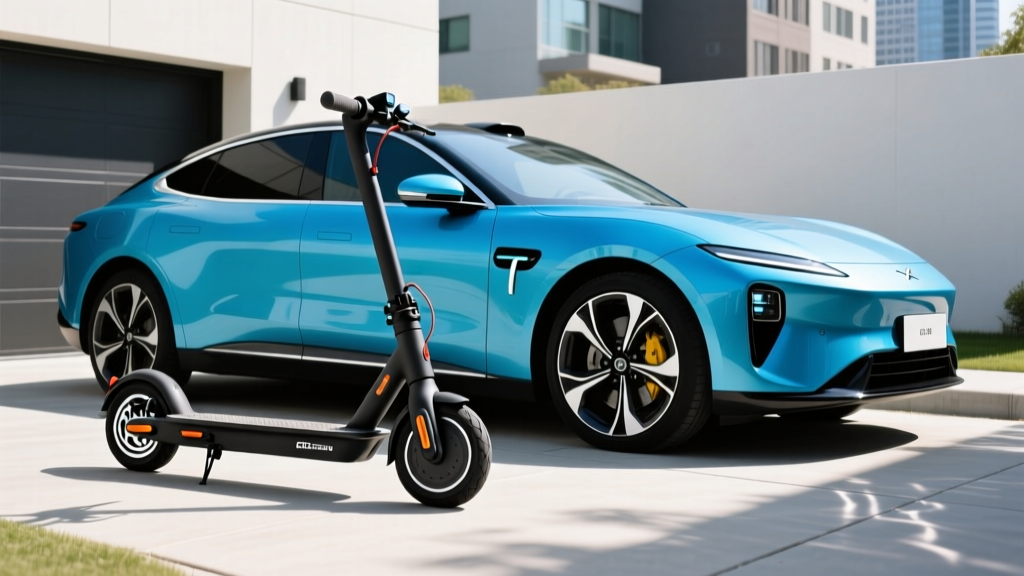
When shoppers search for how much are electric scooters, they're usually surprised to learn the answer spans from $300 for a basic commuter kick-scooter to over $15,000 for high-performance road-legal models. But here's what most buyers miss: the total cost of ownership for an electric scooter versus a full-size EV tells a very different story than the sticker price alone.
Quick Answer: How Much Are Electric Scooters?
In 2026, electric kick-scooters range from $300-$1,200 for basic commuter models (15-25 mile range, 15-20 mph top speed), $1,200-$3,500 for mid-range performance scooters (25-40 mile range, 25-35 mph), and $3,500-$15,000+ for road-legal electric mopeds and motorcycles. For comparison, the most affordable new EVs start around $28,000 before incentives.
Electric Scooter Price Ranges: What You Get for Your Money
Electric scooters fall into distinct categories based on intended use, battery capacity (measured in watt-hours or Wh), and legal classification. Unlike EVs, which are measured in kilowatt-hours (kWh) for battery capacity, e-scooters typically use smaller batteries measured in Wh—1 kWh equals 1,000 Wh.
| Category | Price Range | Battery Capacity | Range | Top Speed | Legal Status |
|---|---|---|---|---|---|
| Budget Commuter | $300-$800 | 250-400 Wh | 10-18 miles | 15-17 mph | No license required in most states |
| Mid-Range Performance | $800-$2,500 | 500-1,000 Wh | 20-35 miles | 20-30 mph | Varies by state; some require helmet |
| High-Performance/Off-Road | $2,500-$5,000 | 1,000-2,500 Wh | 35-60 miles | 30-50 mph | May require registration/insurance |
| Electric Moped (Road-Legal) | $4,000-$10,000 | 2-5 kWh | 40-80 miles | 45-70 mph | License, registration, insurance required |
| Electric Motorcycle | $10,000-$25,000+ | 5-20 kWh | 80-180 miles | 70-150+ mph | Full motorcycle licensing required |
The battery chemistry matters here too. Most budget and mid-range scooters use lithium-ion NMC (nickel manganese cobalt) cells for energy density, while some newer models in 2026 are adopting LFP (lithium iron phosphate) for longer cycle life—typically 2,000+ charge cycles versus 500-800 for NMC—though with slightly heavier weight.
Electric Scooter vs EV: Total Cost of Ownership Comparison
To understand whether an electric scooter makes financial sense compared to an EV, we need to look beyond purchase price. Here's a 5-year ownership comparison between a typical $1,500 performance electric scooter, a $35,000 mid-range EV like the Chevy Equinox EV or Hyundai Kona Electric, and a $28,000 gas-powered Honda Civic as a baseline.
| Cost Factor (5 Years) | E-Scooter ($1,500) | Mid-Range EV ($35,000) | Gas Car ($28,000) |
|---|---|---|---|
| Purchase Price | $1,500 | $35,000 | $28,000 |
| Federal Tax Credit | $0 (not eligible) | Up to $7,500 (§30D)* | $0 |
| Fuel/Energy Cost | $180 (electricity) | $2,700 (electricity) | $9,500 (gasoline) |
| Maintenance | $400 (tires, brakes) | $1,800 | $3,500 |
| Insurance | $0-$600 | $7,500 | $6,000 |
| Registration/Licensing | $0-$300 | $750 | $750 |
| 5-Year Total | $2,080-$2,980 | $39,250-$40,250** | $47,750 |
*Federal EV tax credit eligibility depends on MSRP caps, buyer income limits, battery sourcing requirements, and point-of-sale transfer rules. Check current IRS §30D guidelines.
**After $7,500 tax credit applied at point of sale.
The numbers reveal a critical insight: electric scooters cost dramatically less over 5 years, but they serve fundamentally different use cases. An e-scooter replaces short urban trips (1-10 miles), while an EV handles highway driving, passenger transport, cargo, and all-weather commuting.
Real-World Charging Costs: Scooter vs EV
Understanding the energy economics requires distinguishing between kilowatts (kW, the rate of power flow) and kilowatt-hours (kWh, the total energy consumed). A typical electric scooter battery holds 0.5-1.5 kWh, while an EV battery stores 60-100 kWh—roughly 50-100 times more energy.
| Charging Scenario | E-Scooter (1 kWh battery) | EV (75 kWh battery) |
|---|---|---|
| Home Charging Cost (Full Charge) | $0.13-$0.18 | $9.75-$13.50 |
| Cost Per Mile | $0.005-$0.007 | $0.03-$0.045 |
| Level 1 Charging Time (120V) | 4-6 hours | 40-50 hours |
| Level 2 Charging Time (240V) | 2-3 hours | 8-12 hours |
| DC Fast Charging | Not available (most models) | 30-45 min (10-80%) |
At the U.S. average electricity rate of $0.13-$0.18 per kWh (check your local utility for exact rates), charging an electric scooter costs pennies per charge. Even daily charging adds up to only $35-$50 annually. An EV costs $300-$500 per year to charge at home, still far less than the $1,500-$2,500 annual gasoline cost for a comparable gas car.
Common Misconceptions About Electric Scooter Costs
| Myth | Fact |
|---|---|
| "Electric scooters are just toys, not real transportation" | Mid-range e-scooters (25-35 mph, 25+ mile range) handle real commuting needs for 40% of U.S. car trips under 5 miles (FHWA data). |
| "E-scooter batteries don't last and are expensive to replace" | Quality NMC batteries last 500-800 full charge cycles (15,000-25,000 miles); LFP batteries last 2,000+ cycles. Replacement costs $200-$600 depending on capacity—far less than EV battery replacement ($5,000-$20,000). |
| "You can't ride e-scooters in winter or rain" | Many 2026 models feature IP54-IP67 water resistance and work in temperatures down to 14°F (-10°C), though expect 20-30% range loss in cold weather due to increased battery internal resistance. |
| "Electric scooters save as much money as EVs" | E-scooters save money on short trips but can't replace a car for highway travel, cargo, passengers, or harsh weather. They're complementary transportation, not a complete car replacement for most households. |
| "All electric scooters are the same" | Build quality, motor power (250W-5,000W), suspension, braking systems, and battery management vary dramatically. Budget models may last 1-2 years; quality scooters last 5+ years with proper care. |
Real-World Ownership Considerations
Home Charging Access
Unlike EVs, which benefit from Level 2 home chargers (7-19 kW, adding 25-75 miles of range per hour), most electric scooters charge from standard 120V outlets at 100-300 watts. This means apartment dwellers can often charge e-scooters indoors without dedicated infrastructure—a major advantage over EVs, which require parking spot access and potentially costly electrical upgrades ($500-$2,000+ for Level 2 installation).
Climate and Weather Limitations
Electric scooters face real limitations in extreme weather:
- Cold weather (below 40°F): Expect 20-30% range reduction due to battery chemistry and increased rolling resistance. Lithium-ion batteries lose efficiency in cold temperatures.
- Hot weather (above 95°F): Battery management systems may throttle performance to prevent overheating, reducing top speed and acceleration.
- Rain/snow: Even water-resistant scooters become hazardous on wet roads. Traction loss and reduced braking performance make riding in precipitation risky.
- Wind: Light e-scooters (under 40 lbs) become unstable in winds above 20 mph.
EVs handle all weather conditions with climate control, all-wheel drive options, and sealed battery systems, though they also experience 20-40% range loss in extreme cold.
Driving Patterns and Trip Distance
Electric scooters make sense if your typical trips are:
- Under 15 miles round-trip
- In urban or suburban areas with bike lanes or low-speed roads
- During fair weather months (seasonal use in northern climates)
- For solo commuting without cargo or passenger needs
If you regularly drive on highways, carry passengers, haul groceries or gear, or commute in harsh weather, an EV or hybrid remains the practical choice.
Decision Framework: Should You Buy an Electric Scooter, EV, or Both?
Choose an Electric Scooter If:
- Your daily commute is under 10 miles each way
- You live in an apartment without EV charging access
- You want sub-$2,000 entry into electric transportation
- You'll use it seasonally (spring through fall in cold climates)
- You already own a car for longer trips and bad weather
- Your route has bike lanes or low-speed roads
Choose an EV If:
- You need all-weather, year-round transportation
- Your daily driving exceeds 30 miles
- You regularly carry passengers or cargo
- You have access to home or workplace Level 2 charging
- You drive on highways or rural roads
- You want federal tax credits ($7,500 for qualifying models) and lower per-mile costs vs. gas
Choose Both If:
- You own an EV for primary transportation but want an e-scooter for ultra-short urban trips
- You want to reduce EV battery cycling on 2-mile errands
- You live in a multi-vehicle household and want to minimize car usage for local trips
Frequently Asked Questions
Do electric scooters qualify for federal tax credits?
No. The federal §30D Clean Vehicle Credit applies only to four-wheeled vehicles with gross vehicle weight ratings under 14,000 pounds. Electric kick-scooters and most e-bikes don't qualify. Some states and local utilities offer rebates for e-scooters or e-bikes—check your state energy office or utility provider.
How long do electric scooter batteries last before replacement?
Quality lithium-ion e-scooter batteries last 500-800 full charge cycles for NMC chemistry or 2,000+ cycles for LFP chemistry. At typical usage (partial daily charges), expect 3-5 years of service before noticeable capacity degradation (below 80% of original capacity). Replacement batteries cost $200-$600 depending on capacity and chemistry.
Are electric scooters cheaper to insure than EVs?
Most electric kick-scooters don't require insurance in the U.S., though some states require liability coverage for high-power models (750W+ motors or 20+ mph speeds). Road-legal electric mopeds and motorcycles require insurance similar to gas motorcycles ($300-$800 annually). EV insurance averages $1,500-$2,500 per year depending on model and location.
Can I ride an electric scooter on the road?
Laws vary by state and municipality. Most states allow e-scooters with motors under 750W and top speeds under 20 mph on bike lanes and roads with speed limits under 25-35 mph. Higher-power scooters may require registration, licensing, and insurance. Check your state DMV and local ordinances before purchasing.
What's the real range of an electric scooter vs. the advertised range?
Advertised ranges assume ideal conditions: 165-lb rider, flat terrain, 15 mph speed, 68°F temperature, no wind. Real-world range is typically 60-75% of advertised range due to hills, heavier riders, higher speeds, cold weather, and headwinds. A scooter advertised at 25 miles realistically delivers 15-18 miles in mixed conditions.
How much does it cost to charge an electric scooter per month?
At the U.S. average electricity rate ($0.13-$0.18/kWh), charging a 1 kWh e-scooter battery daily costs about $4-$5 per month. Even heavy users (two full charges daily) spend under $10 monthly on electricity—roughly 1/20th the cost of gasoline for equivalent car travel.
Electric scooters offer genuine value for specific use cases—short urban commutes, apartment living without EV charging access, and seasonal fair-weather transportation. But they complement rather than replace EVs for most households. Understanding your actual trip patterns, climate constraints, and transportation needs will determine whether an e-scooter, EV, or combination approach delivers the best return on your investment.