The Short Answer: Scooter or EV?
If your daily round-trip commute is under 15 miles, you live in a mild climate, and you need cargo or passenger capacity, a compact EV like the 2026 Chevrolet Bolt EV (EPA 259 mi, ~$29,995 MSRP) or the Nissan Leaf (EPA 212 mi, ~$30,540) will serve you better than any electric scooter — and may qualify for up to $7,500 in federal tax credits under IRS §30D. Good electric scooters (priced $500–$2,500) make sense only for last-mile trips under 5 miles, fair-weather riders, and those who can store and charge indoors. They cannot replace a car for highway driving, inclement weather, or grocery runs.
Searches for "good electric scooters" have surged as urban commuters look for cheap, zero-tailpipe-emission alternatives to driving. But conflating a $1,200 kick scooter with a $30,000 battery-electric vehicle leads to bad purchase decisions. This guide puts both options on the table with real numbers so you can match the tool to the trip.
What Good Electric Scooters Actually Offer in 2026
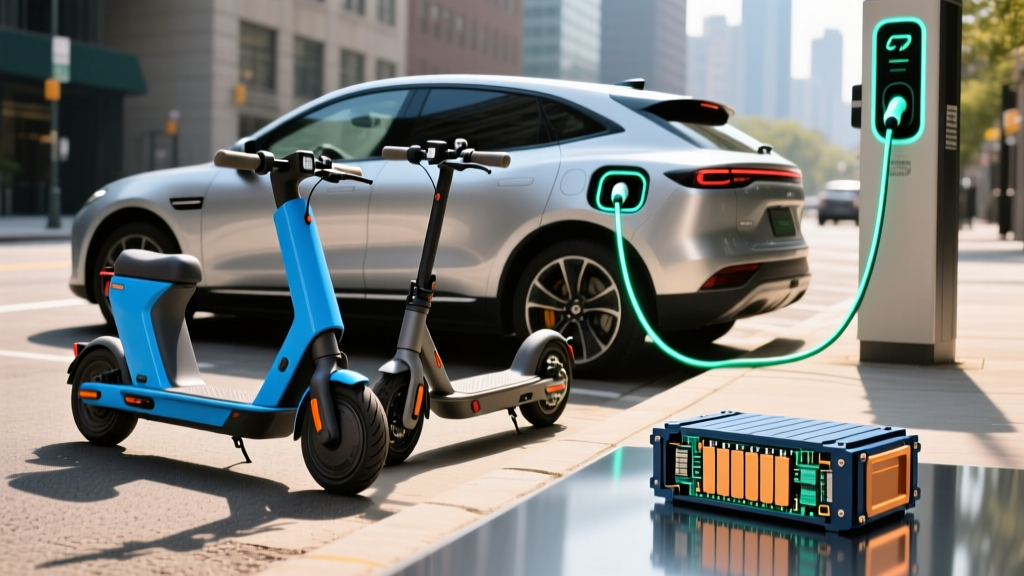
The electric kick-scooter market has matured. Leading models from Segway-Ninebot, Apollo, and NIU now feature lithium-ion (typically NMC) battery packs ranging from 0.36 kWh to 1.0 kWh, delivering real-world ranges of 15–40 miles per charge depending on rider weight, terrain, and speed. Top speeds cluster around 18–30 mph for consumer models. Charging from a standard 120V outlet takes 4–8 hours for most units, at a power draw of roughly 0.1–0.2 kW — trivially cheap.
Here is what a well-regarded mid-tier scooter delivers in 2026:
- Battery: 0.55 kWh (NMC lithium-ion)
- EPA-equivalent range: ~25 miles (real-world: 18–22 mi at full speed)
- Top speed: 20 mph (many jurisdictions cap at 15 mph on bike paths)
- Charge time (0–100%): ~5.5 hours on 120V
- Weight: 38–45 lbs
- Price: $800–$1,500
That is a compelling package for a 3-mile ride to a train station or a short errand in good weather. It is not a vehicle replacement.
EV vs. Electric Scooter: The Numbers Side by Side
| Attribute | Mid-Tier E-Scooter (2026) | 2026 Chevy Bolt EV (2LT) | 2026 Toyota Corolla Hybrid (Gas Baseline) |
|---|---|---|---|
| Purchase Price (MSRP) | $1,200 | $29,995 | $24,595 |
| Federal Tax Credit (§30D) | $0 (not eligible) | Up to $7,500* | $0 |
| Effective Price After Credit | $1,200 | ~$22,495* | $24,595 |
| EPA Range | ~25 mi (mfg. est.) | 259 mi | ~530 mi (13.2-gal tank, 50/46 MPG) |
| Energy Capacity | 0.55 kWh | 65 kWh (usable, NMC) | 13.2 gal gasoline |
| Top Speed | 20 mph | ~93 mph (governed) | ~112 mph |
| 0–60 mph | N/A | ~7.0 sec | ~7.5 sec |
| Charge/Refuel Time | ~5.5 hrs (120V) | ~35 min (10–80% at 115 kW DC) | ~5 min |
| Cargo Capacity | Backpack only | 16.3 cu ft (seats up) | 13.1 cu ft |
| Passengers | 1 (rider only) | 5 | 5 |
| Highway Capable | No | Yes | Yes |
| Climate Control | None | Heat pump HVAC | Gas HVAC |
| Battery/Powertrain Warranty | 1 yr / ~1,500 mi typical | 8 yr / 100,000 mi | 5 yr / 60,000 mi (powertrain) |
* §30D credit eligibility depends on buyer income caps ($150K single / $300K joint AGI), MSRP caps ($55K for cars), and battery critical-mineral sourcing requirements. Verify current rules at IRS.gov and consult a tax professional.
Real Cost of Ownership: 5-Year Breakdown
Purchase price is only the start. Here is what five years of commuting actually costs, assuming 6,000 miles/year (roughly a 12-mile daily round trip, 5 days/week, 50 weeks):
| Cost Category | E-Scooter (5 yrs) | Bolt EV (5 yrs) | Corolla Hybrid (5 yrs) |
|---|---|---|---|
| Purchase (after credit) | $1,200 | ~$22,495 | $24,595 |
| Fuel / Energy (30,000 mi total) | ~$45 (at $0.16/kWh) | ~$1,680 (at $0.16/kWh, 3.5 mi/kWh) | ~$2,760 (at $3.50/gal, 48 MPG avg) |
| Maintenance | ~$200 (tires, brakes) | ~$600 (tires, cabin filter, wipers) | ~$2,400 (oil, filters, brakes, tires) |
| Insurance (avg annual × 5) | $0 (typically uninsured) | ~$7,500 ($1,500/yr avg) | ~$6,000 ($1,200/yr avg) |
| Replacement at Year 5 | ~$1,200 (new scooter) | $0 (still under warranty) | $0 |
| 5-Year Total | ~$2,645 | ~$32,275 | ~$35,755 |
| Cost Per Mile | $0.09 | $1.08 | $1.19 |
The scooter wins on raw cost — but only because it does not carry insurance, cannot drive in rain or snow safely, holds no cargo, and will likely need full replacement within 3–5 years as the small battery pack degrades past 70% state of health. The Bolt EV, by contrast, retains highway capability, crash protection (IIHS Top Safety Pick eligible), climate control, and a battery warrantied for 8 years/100,000 miles at ≥70% capacity retention.
Real-World Ownership Considerations Most Buyers Overlook
Charging Access
E-scooters charge from any standard 120V outlet — a genuine advantage for apartment dwellers who cannot install a Level 2 home charger. However, you must bring the scooter (or at least its removable battery) indoors. Many landlords and HOAs prohibit storing lithium-ion scooters in hallways or units due to fire risk. Check your lease or building rules before purchasing.
For EVs, home Level 2 charging (240V, 7–11 kW) adds roughly 25–35 miles of range per hour and costs $500–$2,000 to install depending on your electrical panel. If you lack home charging access, public DC fast charging at networks like Electrify America or EVgo costs $0.35–$0.55/kWh — roughly double the home rate — and adds time to your routine.
Cold Weather Reality
Small NMC scooter batteries lose 30–50% of their range below 32°F. A scooter rated for 25 miles in summer may deliver only 12–17 miles on a cold January morning. EVs with heat pumps (standard on the Bolt EV and many 2026 models) fare better, typically losing 15–25% of EPA range in freezing conditions — but the loss is real and must be factored into your daily distance budget.
Safety and Regulation
E-scooters offer no crash structure, no airbags, and minimal visibility to drivers. NHTSA data shows a sharp rise in e-scooter injuries in urban areas since 2020. An EV provides a 5-star safety-rated enclosure, automatic emergency braking, and lane-keeping assist. The risk profiles are fundamentally different.
Common Misconceptions — Fact-Checked
| Myth | Fact |
|---|---|
| "A good electric scooter can replace my car." | Only if every trip you make is under 15 miles, in fair weather, requires no passengers or cargo, and avoids highways. For most US commuters, this is unrealistic as a sole vehicle. |
| "EVs are always more expensive than scooters." | A $1,200 scooter replaced every 3 years plus zero cargo/passenger utility is not directly comparable to a $22,500 (after credit) EV that serves all driving needs for 15+ years. |
| "Scooters have zero environmental impact." | Tailpipe emissions are zero, but manufacturing a scooter's NMC battery, shipping it, and replacing the entire unit every 3–5 years carries a lifecycle carbon cost. Per mile, an EV charged on a modern US grid is competitive — and far more useful. |
| "EV batteries need replacing every few years." | Modern EV battery packs (NMC or LFP) are warrantied for 8 years/100,000 miles at ≥70% capacity. Real-world fueleconomy.gov data and fleet studies show most packs retain 85–90% capacity at 100,000 miles. Scooter batteries, with smaller cells and less sophisticated thermal management, degrade faster. |
| "I can ride my e-scooter anywhere." | Most US states classify e-scooters as low-speed vehicles. They are illegal on highways, often restricted to bike lanes or roads under 25 mph, and may require helmets. Check your state's DMV rules. |
Decision Framework: Which Should You Actually Buy?
Buy a Good Electric Scooter If:
- Your daily commute is under 5 miles each way, on protected bike lanes or low-speed roads
- You have secure indoor storage and a place to charge (and your landlord permits it)
- You live in a mild climate with 8+ months of fair riding weather
- You already own or have access to a car for longer trips, bad weather, and cargo runs
- Your budget is under $1,500 and you want near-zero operating cost
Buy an EV If:
- Your daily commute exceeds 15 miles round-trip or includes highway segments
- You need to carry passengers, groceries, child seats, or gear
- You drive in rain, snow, or extreme heat regularly
- You can install a Level 2 home charger or have reliable workplace/public charging
- You qualify for the §30D federal tax credit (check income and MSRP caps at IRS.gov)
- You want a single vehicle that handles every trip you need to make
Consider a PHEV (Plug-In Hybrid) If:
- You want electric-only commuting (20–40 mi range) but also need 400+ mile road-trip capability
- You lack reliable DC fast-charging access for long trips
- Models like the 2026 Toyota RAV4 Prime (42 mi electric, 38 MPG gas, ~$45,000 MSRP) split the difference
First-Time EV Buyer Essentials
If the decision framework above points you toward an EV, here are the non-obvious facts that separate informed buyers from disappointed ones:
- kW vs. kWh: kW (kilowatts) measures power — how fast energy flows. kWh (kilowatt-hours) measures energy — how much the battery holds. A 65 kWh battery charged at 11 kW (Level 2) takes ~6 hours from empty. The same battery at 115 kW (DC fast charger) reaches 80% in ~35 minutes. Never confuse the two.
- Charge curve taper: DC fast charging peaks at a stated kW only between ~10–40% state of charge. Above 80%, speed drops dramatically to protect battery health. Plan road-trip stops to charge from 10–80%, not 0–100%.
- Real-world range: The EPA 259-mile sticker on a Bolt EV assumes a mix of city and highway driving at moderate temperatures. Expect 210–230 miles on a 70°F highway trip at 75 mph, and 180–200 miles in 20°F weather. Size your battery for your worst-case day, not your average day.
- Tax credit complexity: The §30D credit is not automatic. Battery components and critical minerals must meet US-sourcing thresholds that tighten each year. The point-of-sale transfer option lets you apply the credit as a down-payment reduction at the dealer — but only if the specific VIN qualifies. Always verify on the IRS portal before signing.
- Insurance costs more: EV insurance premiums run 15–25% higher than comparable gas cars due to higher repair costs and battery replacement risk. Get quotes before you buy.
Frequently Asked Questions
Can I use a good electric scooter for my 10-mile daily commute?
Technically yes, if you have a safe bike lane, fair weather, and a scooter rated for 25+ miles of real-world range. But 10 miles each way means 20 miles daily — near the upper limit for most scooters. You will charge nightly, ride in a vulnerable position, and have zero weather protection. A used EV or a PHEV is a safer, more versatile choice at this distance.
How long do electric scooter batteries last compared to EV batteries?
Most e-scooter batteries (small NMC cells, passive air cooling) show noticeable degradation after 300–500 full charge cycles — roughly 2–4 years of daily use. EV battery packs use larger cells with active liquid thermal management and are warrantied for 8 years/100,000 miles at ≥70% capacity. The engineering gap is substantial.
Do good electric scooters qualify for any tax credits?
No. The federal §30D Clean Vehicle Credit applies only to four-wheeled vehicles with a gross vehicle weight rating under 14,000 lbs and a battery capacity of at least 7 kWh. E-scooters have batteries under 1 kWh and do not qualify. Some local utility rebates may apply — check your provider.
Is an e-scooter cheaper than public transit?
At $0.09/mile operating cost, a scooter beats most urban transit fares ($2.50–$3.50 per ride). If your transit pass costs $100+/month and you ride 40+ miles/week, the scooter pays for itself in under a year. But transit offers weather protection, no storage hassle, and no theft risk — trade-offs worth weighing.
What's the best EV for someone switching from a scooter?
If you are used to the simplicity and low cost of a scooter, look at compact, affordable EVs: the 2026 Chevy Bolt EV (~$29,995, 259 mi), the Nissan Leaf (~$30,540, 212 mi), or the Hyundai Kona Electric (~$34,000, 261 mi). All offer Level 2 home charging, DC fast charging, and low operating costs that feel familiar after scooter ownership.
Sources: EPA fuel economy data via fueleconomy.gov; IRS §30D Clean Vehicle Credit rules at irs.gov; manufacturer specifications from Chevrolet and Toyota press sites.