The Short Answer: Electric Range Costs Less Per Mile — If You Charge at Home
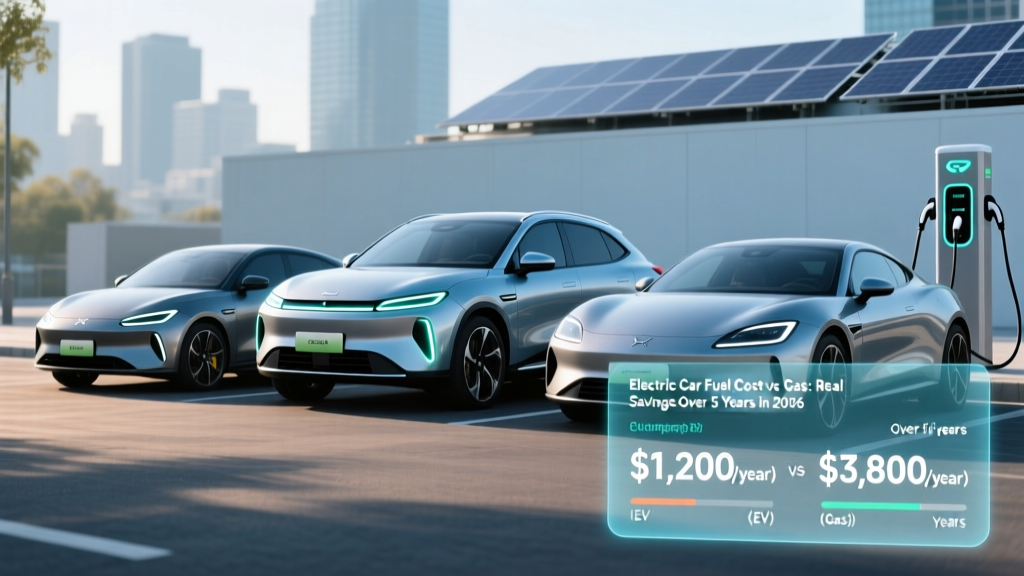
An electric vehicle driven on home Level 2 charging costs roughly $0.04 to $0.06 per mile in electricity, compared to $0.13 to $0.16 per mile for a comparable gas car at $3.40/gallon. That's a 55–70% fuel cost reduction. However, the real-world electric range you experience will typically be 10–20% below the EPA sticker on highways and up to 30% lower in freezing weather. If you rely solely on public DC fast charging at $0.35–$0.50/kWh, your per-mile cost jumps to $0.11–$0.16/mi — nearly matching gas. The savings case for an EV rests on home charging access, moderate climate, and daily driving under 80 miles.
Electric Range: What the EPA Sticker Doesn't Tell You
The EPA range figure on the window sticker is a laboratory-derived composite — a blend of city, highway, and climate-controlled driving. It's useful for comparing models, but it rarely matches what you'll see in daily use. Here's what actually happens to electric range in the real world:
- Highway driving (70–80 mph): Expect 80–90% of EPA range. Aerodynamic drag scales with the square of speed, and EVs have no gears to optimize at high velocity. A 2026 Hyundai Ioniq 6 SE Long Range rated at 361 miles EPA will realistically deliver 290–320 miles on a flat interstate at 75 mph.
- Cold weather (below 32°F): Battery chemistry slows, and cabin heating draws 2–5 kW continuously. Range loss of 20–30% is typical; at 0°F, some models lose 40%. A Chevrolet Equinox EV rated at 319 miles EPA may deliver only 190–230 miles in a Minnesota January.
- Hot weather with A/C: Less severe than cold — typically 5–10% loss. Heat pumps (standard on most 2026 models from Hyundai, Kia, Tesla, and BMW) mitigate this significantly.
- Elevation gain: Climbing consumes heavily, but regenerative braking recaptures 50–70% on the descent. Net effect depends on your route profile.
Compare this to gas cars: a vehicle rated at 30 MPG combined will also see real-world variation — perhaps 26–28 MPG on the highway and less in stop-and-go traffic — but the swing is narrower (10–15%) because internal combustion engines are less sensitive to temperature extremes and the energy density of gasoline doesn't fluctuate.
Cost Per Mile: Electric vs Gas Head-to-Head
Let's run concrete numbers using representative 2026 models and national average energy prices.
| Metric | 2026 Tesla Model 3 Long Range RWD | 2026 Toyota Camry LE (Gas) |
|---|---|---|
| EPA Efficiency | 132 MPGe (25 kWh/100 mi) | 32 MPG combined |
| Home Charging Cost (avg $0.16/kWh) | $0.040/mi | — |
| Public DCFC Cost (avg $0.43/kWh) | $0.108/mi | — |
| Gasoline Cost ($3.40/gal national avg) | — | $0.106/mi |
| Annual "Fuel" Cost (12,000 mi, home charging) | $480 | $1,275 |
| Annual "Fuel" Cost (12,000 mi, DCFC only) | $1,296 | $1,275 |
| 5-Year "Fuel" Cost (home charging) | $2,400 | $6,375 |
| 5-Year "Fuel" Savings (EV home vs gas) | $3,975 | |
Data sources: fueleconomy.gov for EPA efficiency figures; EIA weekly gas price survey and typical residential electricity rates from the EIA monthly electricity report.
The takeaway is stark: home charging makes an EV dramatically cheaper to fuel. Public-only charging erases the advantage entirely. This is the single most important economic variable in EV ownership.
Total Cost of Ownership: Beyond the Fuel Pump
Fuel cost is one line item. Here's how the full ownership picture breaks down over five years and 60,000 miles:
| Cost Category | 2026 Tesla Model 3 LR RWD | 2026 Toyota Camry LE |
|---|---|---|
| MSRP (base) | $42,380 | $28,700 |
| Federal Tax Credit (§30D, if eligible) | −$7,500 (point-of-sale) | $0 |
| Effective Purchase Price | $34,880 | $28,700 |
| 5-Year Fuel/Energy | $2,400 (home) | $6,375 |
| 5-Year Maintenance | $1,200 (cabin filter, wipers, tire rotation) | $3,500 (oil, filters, brakes, spark plugs) |
| 5-Year Insurance (avg) | $9,600 ($160/mo) | $7,200 ($120/mo) |
| Estimated 5-Year Depreciation | $17,440 (50%) | $12,915 (45%) |
| 5-Year Total Cost of Ownership | $65,520 | $58,690 |
| Cost Per Mile (all-in) | $1.09 | $0.98 |
The EV still costs more over five years, primarily due to higher depreciation and insurance premiums. However, this gap narrows significantly when you factor in state incentives (some states offer $1,000–$4,000 rebates), employer-subsidized workplace charging, or higher annual mileage (the per-mile savings compound). At 20,000 miles/year, the Model 3 reaches cost parity with the Camry by year four.
Tax credit caveats: The §30D federal credit has an MSRP cap ($55,000 for sedans, $80,000 for SUVs/trucks), buyer income limits ($150K single / $300K joint AGI), and critical-mineral/battery-component sourcing requirements that change annually. Always verify eligibility at irs.gov before relying on the credit in your budget.
Charging Access: The Make-or-Break Factor
Before evaluating any electric range figure, answer this question: Where will I charge?
Home Level 2 Charging (The Gold Standard)
A 240V Level 2 home charger delivers 7–11 kW, adding 25–44 miles of range per hour. An overnight charge (8–10 hours) fully replenishes virtually any EV on the market. Installation costs range from $500–$1,500 if your electrical panel has spare capacity, or $2,000–$4,500 if you need a panel upgrade from 100A to 200A service.
Apartment and Street Parking
If you lack a dedicated parking spot with electrical access, you're dependent on public infrastructure. Workplace charging can bridge this gap — check if your employer offers it. Otherwise, plan for 2–3 DC fast-charging sessions per week at $0.35–$0.50/kWh, which erases the fuel-cost advantage as shown above.
DC Fast Charging (Road Trips and Emergencies)
Modern EVs peak at 150–350 kW on DC fast chargers, but the charge curve tapers significantly above 80% state of charge. A 2026 Hyundai Ioniq 5 peaks at 240 kW and reaches 10–80% in approximately 18 minutes on a 350 kW charger — but the full 10–100% session takes closer to 35 minutes. The sustained average rate matters more than the peak number.
Common Electric Range Misconceptions
| Myth | Fact |
|---|---|
| "EVs can't handle road trips." | A 300-mile EPA-range EV with 150+ kW DCFC capability adds 150–200 miles in a 20-minute stop. With the expanding NACS (Tesla Supercharger) network open to Ford, GM, Rivian, and Hyundai/Kia vehicles in 2026, route coverage across the continental US is strong. Plan 2–3 stops on a 600-mile drive. |
| "EV batteries need replacing every few years." | Federal law mandates a minimum 8-year/100,000-mile warranty on EV batteries (10 years/150,000 miles in CARB states). Real-world degradation data from Tesla's fleet reports show an average of 12–15% capacity loss at 200,000 miles. LFP (lithium iron phosphate) batteries, used in standard-range Tesla Model 3/Y and some BYD models, degrade even less — typically under 10% at 200K miles. |
| "Charging an EV takes too long." | Home charging is passive — plug in when you arrive, wake up to a full battery. You spend zero active time charging. DC fast charging adds 150–200 miles in 15–20 minutes, which aligns with a rest stop. |
| "EVs are worse in winter." | Range drops are real (20–30%), but EVs start instantly in cold weather with no cold-start issues, cabin preheating costs pennies when plugged in, and regenerative braking works on icy roads. A heat pump (standard on most 2026 models) cuts heating energy consumption by 40–60%. |
| "Electric range is the only number that matters." | Efficiency (kWh/100 mi) matters just as much. A 25 kWh/100 mi EV with a 75 kWh battery gets 300 miles. A 35 kWh/100 mi truck with a 130 kWh battery also gets ~370 miles — but costs 40% more to charge and wears tires faster. Efficiency determines your ongoing cost. |
Decision Framework: Is an EV Right for Your Situation?
Choose a Battery Electric Vehicle (BEV) if:
- You can install a Level 2 charger at home or have reliable workplace charging
- Your daily driving is under 80 miles (covers 95% of US commuters)
- You live in a moderate climate or your EV will have a heat pump
- You want the lowest per-mile operating cost and minimal maintenance
- You qualify for the §30D tax credit or a state rebate that narrows the price gap
Choose a Plug-In Hybrid (PHEV) if:
- You lack reliable home or workplace charging
- You take frequent road trips exceeding 300 miles between stops
- You want electric-only commuting (25–50 miles) with gas flexibility
- You live in an area with sparse DC fast-charging infrastructure
Choose a Conventional Hybrid (HEV) if:
- You cannot charge at home or work
- You want maximum range flexibility with no plug-in behavior change
- Your budget prioritizes the lowest purchase price over operating cost
Wait on an EV if:
- You park on the street with no foreseeable charging access
- You regularly tow heavy loads in cold weather (range loss compounds: towing alone cuts range 40–50%, plus 20–30% for cold)
- Your household income exceeds §30D limits and no state incentive applies, making the upfront premium hard to justify on a 5-year horizon
What First-Time EV Buyers Must Know Before Signing
- Test the actual commute. Don't just read the EPA number. Borrow or rent the model for a weekend, drive your real route at your real speed, and check the energy consumption readout (kWh/100 mi). Multiply that by your battery's usable kWh to calculate your personal range.
- Get an electrical assessment before buying. Have a licensed electrician evaluate your panel capacity and quote a Level 2 installation. A $500 install and a $4,000 panel upgrade are very different budget items.
- Understand the charge curve. Peak DC fast-charge kW is not sustained kW. A "250 kW capable" vehicle may only sustain that rate between 10–40% SoC, then taper to 100 kW, then 50 kW above 80%. The 10–80% time is the meaningful metric.
- Check insurance quotes before committing. EVs cost 15–30% more to insure on average due to higher repair costs and parts pricing. Get a real quote for your ZIP code and driving record.
- Verify tax credit eligibility yourself. Don't rely on the dealer. Check the IRS clean vehicle credit page, confirm the specific VIN's battery sourcing compliance, and verify your AGI is under the cap. The point-of-sale transfer option (available since 2024) lets you apply the credit at purchase rather than waiting for tax filing.
- Learn preconditioning. Most EVs let you precondition the battery before arriving at a DC fast charger — warming it to optimal temperature for faster charging. This is especially important in cold weather, where an un-preconditioned battery may accept only 50 kW instead of its 200+ kW peak.
Frequently Asked Questions
How far can I really drive on a full charge?
For a 2026 EV rated at 300 miles EPA, expect 250–270 miles on a highway road trip at 75 mph in moderate weather, 210–240 miles in freezing temperatures, and 285–300 miles in mixed city/suburban driving where regenerative braking recaptures energy. Your efficiency readout (kWh/100 mi) is the best predictor.
Is a hybrid a better choice than a full EV?
It depends on charging access. A PHEV like the 2026 Toyota RAV4 Prime (42 miles electric-only, then 38 MPG on gas) is ideal if you can charge at home for daily commuting but need gas flexibility for long trips. A conventional hybrid like the Camry (52 MPG combined) is the lowest-risk choice if you can't charge at all. A BEV wins on operating cost only if home charging is available.
How long do EV batteries actually last?
Most modern NMC and LFP batteries retain 85–90% of original capacity at 150,000 miles. The federal warranty floor is 8 years/100,000 miles with a capacity retention threshold (typically 70% of original). Full battery replacements cost $8,000–$18,000 depending on the model but are rarely needed within the vehicle's practical lifespan.
What happens if I run out of charge on the road?
The same thing that happens when you run out of gas — you need a tow to the nearest charger. However, EVs provide multiple low-battery warnings, and navigation systems in 2026 models automatically route you through charging stations with real-time availability data. Running out is almost always a planning failure, not a technology failure.
Do EVs save money in the long run?
Over 5 years at 12,000 miles/year, an EV with home charging saves $3,000–$5,000 in fuel and maintenance compared to a gas equivalent. Whether that offsets the typically higher purchase price and depreciation depends on the specific models compared, your electricity rate, your mileage, and tax credit eligibility. At higher annual mileage (15,000–20,000+), the EV almost always wins.