Why Are People Searching for 'Electric Railways' When Buying EVs?
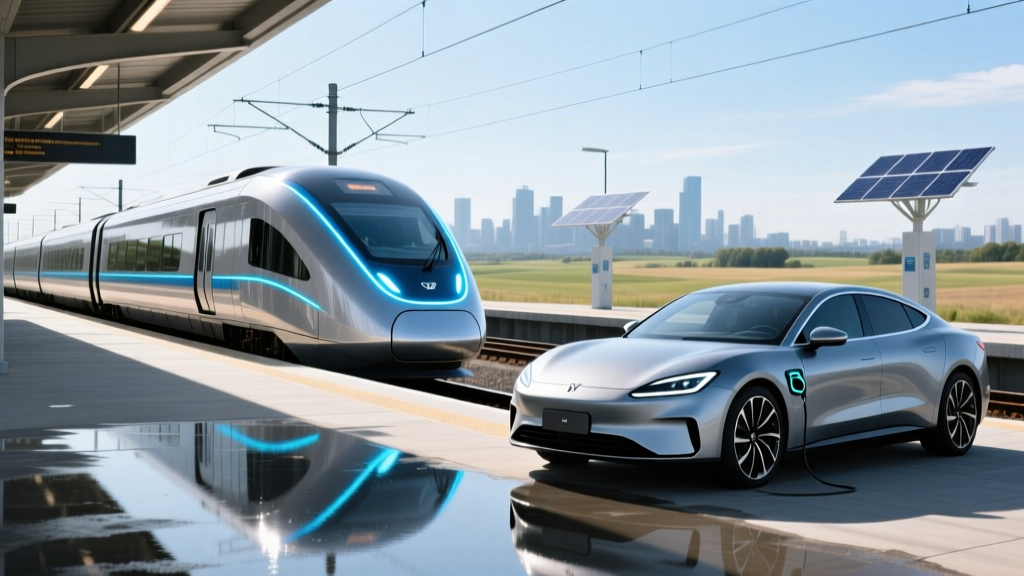
If you landed here searching for electric railways, you're likely drawing a parallel between the massive electrification of rail networks and the personal EV transition happening in driveways across America. The connection is real: both systems rely on the same fundamental principles of electric propulsion, charging infrastructure, grid capacity, and energy economics. Understanding how electric railways work — and where they diverge from passenger EVs — can actually make you a smarter EV buyer.
The short answer: Electric railways (trains powered by overhead catenary wires or third rails) use continuous external power delivery, meaning they carry no large battery packs. Personal EVs carry their energy onboard in lithium-ion batteries (typically 60–100 kWh). For EV buyers, the practical takeaway is that your car's range, charging speed, and operating cost depend entirely on battery capacity and charging infrastructure access — not a continuous power feed. Plan your purchase around your real-world driving pattern, not a marketing sticker.
This guide breaks down what the electric railway model teaches us about EV ownership — and where the comparison ends — using concrete 2026 data on pricing, charging, efficiency, and total cost of ownership.
Electric Railways vs. EVs: How Propulsion and Energy Delivery Differ
Modern electric railways — from Amtrak's Northeast Corridor to urban light rail systems — draw power continuously from overhead lines (typically 12–25 kV AC) or ground-level third rails (600–750 V DC). The locomotive or EMU (electric multiple unit) converts this to traction power on the fly. There's no large energy storage system onboard; the grid is the battery.
A battery-electric vehicle inverts this model entirely. Your EV stores energy in a lithium-ion or LFP (lithium iron phosphate) battery pack and must periodically reconnect to the grid to recharge. This creates the ownership variables that electric railway operators never face:
| Factor | Electric Railway (Train) | Personal EV (2026 Models) | Gas Vehicle (Baseline) |
|---|---|---|---|
| Energy source | Continuous overhead/third rail | Onboard battery (60–100+ kWh) | Onboard fuel tank (12–20 gal) |
| Range before refuel | Effectively unlimited | 250–400 mi EPA (real-world 200–340 mi) | 350–500 mi |
| Refuel/recharge time | N/A (continuous) | 18–40 min (DC fast, 10–80%) | 3–5 min |
| Energy cost per mile | ~$0.08–$0.15/mi (operator) | ~$0.04–$0.08/mi (home L2) | ~$0.12–$0.18/mi |
| Infrastructure dependency | Dedicated electrified track | Home charger + public DC network | Gas stations (ubiquitous) |
| Maintenance (annual avg) | Heavy (scheduled rail work) | ~$400–$700 | ~$900–$1,400 |
The key insight for EV buyers: unlike an electric train that never worries about range, your EV ownership experience is defined by how and where you recharge. This is the single biggest decision point in your purchase.
Real Costs and Savings: EV Ownership in 2026
Let's put concrete numbers behind the EV vs. gas vs. hybrid comparison using a mainstream 2026 model. We'll use the Hyundai Ioniq 6 SE (RWD, 77.4 kWh battery, EPA 361 mi) against the Toyota Camry LE (gas, EPA 32 MPG combined) and the Toyota Camry Hybrid LE (EPA 52 MPG combined).
| Cost Category | Hyundai Ioniq 6 SE (EV) | Camry LE (Gas) | Camry Hybrid LE |
|---|---|---|---|
| Base MSRP | $42,750 | $29,500 | $33,500 |
| Federal tax credit (§30D)* | Up to $7,500 (see eligibility) | $0 | $0 |
| Effective price after credit | ~$35,250 | $29,500 | $33,500 |
| Energy/fuel cost (15,000 mi/yr) | $600–$1,050 (home vs. public mix) | $1,640 ($3.50/gal, 32 MPG) | $1,010 ($3.50/gal, 52 MPG) |
| Annual maintenance | ~$500 | ~$1,100 | ~$900 |
| Insurance (annual avg) | ~$2,100 | ~$1,500 | ~$1,600 |
| 5-year total operating cost | ~$15,500–$18,250 | ~$20,700 | ~$17,550 |
*The IRS §30D credit requires the buyer to meet income caps ($150K single / $300K joint), the vehicle must be under the MSRP cap ($55K sedans), and battery minerals/sourcing must meet annual thresholds. Eligibility changes yearly — verify with a tax professional before purchase.
The EV wins on operating cost but carries a higher upfront price and higher insurance premiums (typically 15–30% above comparable gas models). Over five years, the Ioniq 6 saves roughly $2,000–$5,000 in operating costs vs. the gas Camry, but the purchase-price gap means true total-cost parity depends heavily on your mileage, local electricity rates, and credit eligibility.
Charging Infrastructure: The Electric Railway Lesson
Electric railways only work because the entire route is electrified. Run a train past the last catenary wire and it stops. EVs face the same reality in miniature: your practical mobility is bounded by your charging infrastructure.
Here's what 2026 charging access actually looks like in the U.S.:
| Charging Level | Power (kW) | Miles Added per Hour | Typical Use Case | Cost |
|---|---|---|---|---|
| Level 1 (120V outlet) | 1.0–1.4 kW | 3–5 mi/hr | Overnight top-up, PHEVs | $0.04–$0.08/mi (home rate) |
| Level 2 (240V home/public) | 7.2–19.2 kW | 25–60 mi/hr | Daily home charging, workplace | $0.04–$0.08/mi home; $0.10–$0.20/mi public |
| DC Fast Charging | 50–350 kW (peak) | 150–1,000+ mi/hr (at peak) | Road trips, corridor travel | $0.12–$0.35/mi (network dependent) |
Critical distinction: kW is power (how fast energy flows), kWh is energy (how much the battery holds). A 350 kW charger doesn't deliver 350 kWh in an hour to your car — the vehicle's charge curve, battery state, and thermal management dictate actual throughput. A typical 2026 EV peaking at 240 kW will sustain that rate only from roughly 10–50% SoC, then taper significantly. Expect a 10–80% charge in 18–25 minutes at a capable station, not the theoretical minimum.
Home Charging: The Make-or-Break Factor
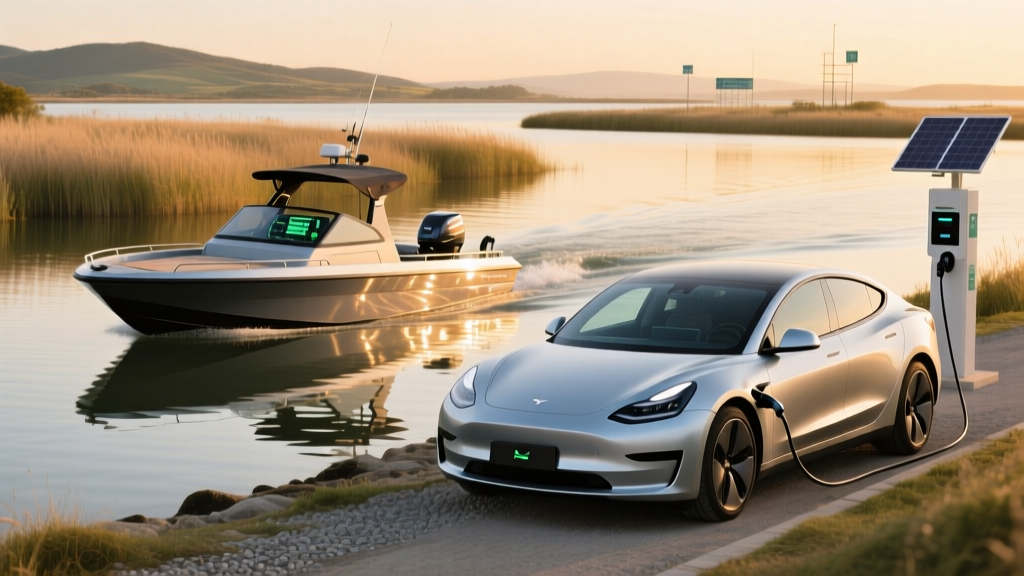
Approximately 70–80% of EV charging happens at home. If you have a garage or dedicated parking space with access to a 240V circuit, a Level 2 home charger (typically $500–$800 for equipment plus $800–$2,500 for electrician installation) transforms EV ownership. You wake up every morning with a "full tank."
If you live in an apartment, rely on street parking, or lack panel capacity for a 240V/40A circuit, your experience will depend entirely on public charging — which remains inconsistent in reliability, pricing, and availability outside major metro corridors. This is the EV equivalent of an electric railway that only has wires on half the route.
Panel upgrade reality check: Older homes with 100A electrical panels may need a $2,000–$5,000 panel upgrade to support a 48A Level 2 charger. Get an electrician assessment before buying the EV.
Common EV Misconceptions — Fact-Checked with Data
| Myth | Fact (2026 Data) |
|---|---|
| "EV batteries need replacing every few years" | Modern NMC and LFP packs are warrantied for 8 years/100,000 miles with ≥70% capacity retention (fueleconomy.gov). Real-world data shows most packs retain 85–92% capacity at 100K miles. Full replacement (rare) runs $8,000–$18,000 depending on the model. |
| "EVs don't work in cold weather" | Range drops 15–30% in sub-freezing temperatures due to battery chemistry and cabin heating demands. A 300-mi EPA EV may deliver 210–255 mi in 20°F weather. Heat pumps (now standard on many 2026 models) reduce this penalty. Preconditioning while plugged in recovers significant range. |
| "Public charging is always broken" | Reliability varies by network. Tesla Superchargers consistently report 95%+ uptime. Electrify America and EVgo have improved to ~85–90% in 2025–2026 audits, but individual station outages remain common. Always have a backup station mapped on road trips. |
| "EVs are worse for the environment because of battery mining" | Lifecycle analyses (including battery production) show EVs produce 50–70% fewer greenhouse gas emissions over their lifetime than gas cars in the U.S. grid mix, per Argonne National Laboratory. The gap widens as the grid decarbonizes. |
| "All EVs qualify for the $7,500 tax credit" | Many do not. §30D requires MSRP under cap, buyer income under limit, and battery critical-mineral/sourcing thresholds that tighten annually. Check IRS.gov and the dealer's point-of-sale eligibility confirmation before committing. |
What First-Time EV Buyers Must Know Before Purchasing
If you're transitioning from gas to electric, these are the ownership realities no brochure will emphasize:
- EPA range ≠ real-world range. Expect 85–90% of the EPA sticker in mixed driving, 70–80% at sustained highway speeds (75+ mph), and 65–80% in freezing weather. A 300-mi EPA rating means plan your road trips around 220–250 mi of usable range.
- Charging speed matters more than battery size for road trippers. A 75 kWh pack that charges at 250 kW (10–80% in ~18 min) will beat a 100 kWh pack limited to 150 kW (10–80% in ~32 min) on any trip over 400 miles.
- NACS is winning. Tesla's North American Charging Standard has been adopted by Ford, GM, Hyundai, Rivian, and most major automakers for 2025–2026 models. CCS1 remains on some vehicles but new infrastructure is overwhelmingly NACS. Factor connector type into your purchase.
- Insurance is higher. EV insurance premiums run 15–30% above comparable gas vehicles due to higher repair costs, battery replacement risk, and specialized labor. Get a quote before signing.
- Depreciation is steeper. EVs have seen 40–55% depreciation over 3 years (vs. ~30–40% for gas), driven by rapid tech advancement and price cuts. Lease if you want to hedge this risk.
- Tires wear faster. EVs are heavier (battery mass) and deliver instant torque. Expect tire replacement at 25,000–35,000 miles vs. 40,000–60,000 on gas cars. Budget for EV-rated tires ($200–$350 each).
Decision Framework: Should You Buy an EV, Hybrid, or Gas Car?
Use this framework to match the right powertrain to your situation:
Choose a battery-electric vehicle (BEV) if:
- You have reliable home Level 2 charging (garage, driveway, or workplace)
- Your daily driving is under 80 miles round-trip
- You take road trips fewer than 6 times per year (or can plan DC fast-charger stops)
- You want the lowest per-mile operating cost ($0.04–$0.08/mi on home electricity)
- You qualify for the §30D tax credit, narrowing the upfront price gap
Choose a plug-in hybrid (PHEV) if:
- You can charge at home but also take frequent long road trips
- You want 25–45 miles of electric-only range for daily commuting with a gas engine backup
- You live in an area with sparse DC fast-charging infrastructure
- You want to hedge against battery degradation and resale-value uncertainty
Choose a conventional hybrid (HEV) or gas vehicle if:
- You have zero home charging access and limited public charging nearby
- You regularly tow heavy loads (trailers, boats) over long distances
- Your annual mileage is low (under 8,000 mi/yr), making fuel savings negligible vs. the EV price premium
- You live in an extreme-cold climate where range loss compounds with high heating demands
The Bigger Picture: Electric Railways and the Grid EVs Share
There's one more lesson from electric railways worth internalizing: they work because of massive, deliberate infrastructure investment over decades. The U.S. EV charging network in 2026 is where the interstate highway system was in the late 1950s — functional in corridors, sparse in rural areas, and rapidly expanding.
The U.S. Department of Energy reports over 70,000 public charging ports as of late 2025, with federal NEVI funding driving corridor buildout through 2028. But density and reliability remain uneven. If you're buying an EV today, your personal "electrified railway" is the route between your home charger, your workplace, and the DC fast chargers along your most-traveled highways.
Map that route before you sign the purchase agreement. The buyers who thrive with EVs in 2026 are the ones who treated charging access as a prerequisite — not an afterthought.
Frequently Asked Questions
Are electric railways more efficient than electric cars?
Per passenger-mile, yes — when trains run at high occupancy. Electric rail moves people at roughly 0.1–0.3 kWh per passenger-mile, while a single-occupant EV uses 0.25–0.40 kWh per mile. But a full commuter train is dramatically more efficient. For individual, point-to-point mobility, EVs offer flexibility that fixed-rail cannot.
Can I charge my EV from the same grid that powers electric railways?
Yes. Both draw from the same regional electrical grid. The difference is that electric railways use dedicated high-voltage substations, while your EV charges through standard residential or commercial electrical infrastructure. Grid capacity for widespread EV adoption is being addressed through utility upgrades and managed/ off-peak charging programs.
How much does home EV charger installation actually cost in 2026?
A Level 2 (240V, 40–48A) home charger installation typically runs $1,300–$3,300 total: $500–$800 for the charger unit, $800–$2,500 for licensed electrician labor, conduit, and permitting. If your panel needs upgrading from 100A to 200A, add $2,000–$5,000. Some utilities offer $300–$1,000 rebates — check with your provider.
What happens if I run out of charge on the road?
Unlike an electric train that simply can't run past the wire's end, an EV with a depleted battery requires a flatbed tow to the nearest charger. You cannot "splash" an EV with a jerry can. Most modern EVs give aggressive low-battery warnings and will route you to chargers. AAA and other roadside services now offer mobile charging trucks in major metro areas, but coverage is not universal. Keep a 10–15% buffer on road trips.
Do LFP batteries last longer than NMC batteries?
LFP (lithium iron phosphate) batteries generally offer longer cycle life (3,000–5,000+ cycles vs. 1,500–2,500 for NMC) and can be charged to 100% daily without accelerated degradation. The trade-off: LFP packs are heavier and have ~15–20% lower energy density, meaning slightly less range per kWh. Tesla, Ford, and several Chinese-market imports use LFP for standard-range trims. For a daily commuter, LFP is often the better long-term choice.