The Short Answer: Electric Powered Boats in 2026
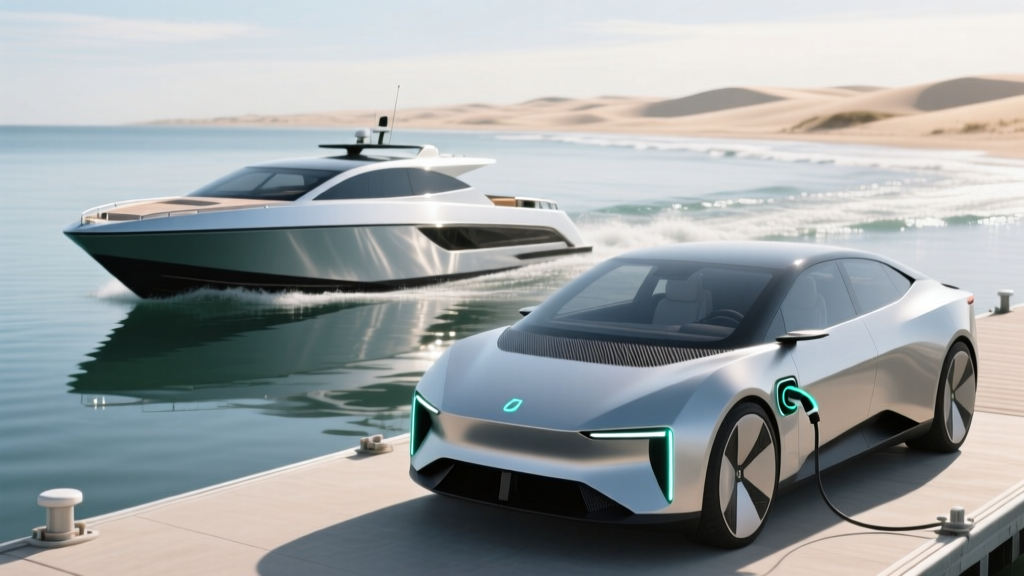
Electric powered boats are real and available in 2026, but they occupy a very different niche than electric cars. Expect 30–100 miles of range depending on hull type and speed, battery packs of 40–250 kWh (typically NMC lithium-ion), base prices from roughly $75,000 to $500,000+, and charging via shore-power Level 2 (6–19 kW) or marina DC fast-chargers where available. Unlike EVs, there is no federal §30D tax credit for boats, no Supercharger-style network, and real-world range drops dramatically at planing speeds. If you're cross-shopping an electric powered boat against buying an EV, understand they solve different problems — and the ownership math is far less favorable on the water.
Why an EV Analyst Is Writing About Electric Boats
If you've landed here searching for electric powered boats, you're likely one of three readers: an EV owner wondering whether electrification extends to the lake, a boater considering ditching gas, or a comparison-shopper weighing where to put your electrification budget. As someone who has tested dozens of EVs and tracked the marine-electric market since the early Arc and Candela launches, I'll give you the same spec-driven honesty I apply to cars — exact kWh, kW, range, and cost figures — while being blunt about where the marine-electric ecosystem still falls short compared to road-going EVs.
Range, Battery, and Charging: The Real Numbers
Marine efficiency is brutal compared to road vehicles. Water is ~800x denser than air, and pushing a hull through it at planing speed (20+ mph) consumes energy at a rate that makes highway driving in a Tesla Model S look trivial. Here's how current 2026-era electric powered boats stack up on paper and in practice.
| Category | Battery (kWh) | Chemistry | Cruise Range (mi) | Planing Range (mi) | Peak DC Charge (kW) | Approx. Base Price |
|---|---|---|---|---|---|---|
| Electric pontoon (e.g., Princecraft/Manitou class) | 40–80 | NMC | 35–60 @ 5–7 mph | 12–20 @ 20 mph | 20–40 | $75,000–$130,000 |
| Electric day cruiser (foil-assisted) | 120–150 | NMC | 50–70 @ 22 mph (foiling) | N/A (foils sustain) | ~100 | $300,000–$400,000 |
| Electric runabout / ski boat | 60–100 | NMC | 40–60 @ 6 mph | 15–25 @ 25 mph | 40–80 | $150,000–$250,000 |
| Tesla Model Y (Long Range, 2026, for comparison) | ~78 usable | NMC | ~320 EPA | ~260 highway @ 70 mph | 250 | $44,990 |
A few critical takeaways:
- kWh is energy, kW is power — the same rule as cars. A 100 kWh battery holding 40 kW of charge power needs ~2.5 hours from 10–90% on that charger.
- Range is speed-dependent, far more than in cars. Doubling your speed on water can quadruple energy consumption. A pontoon rated for 50 miles at 6 mph may deliver only 15 miles at 20 mph.
- Foil-assisted hulls (Candela C-8 class) lift the hull out of the water, cutting drag roughly 80% — the closest marine equivalent to EV aerodynamic efficiency gains.
- Chemistry is almost universally NMC (nickel manganese cobalt) for energy density; LFP is too heavy for planing hulls today, though it's appearing in slower houseboats and work barges.
Charging Infrastructure: Marina vs. Home vs. EV Networks
This is where electric powered boats diverge most sharply from EVs. You cannot plug a boat into a Tesla Supercharger, and the marina charging ecosystem in 2026 is roughly where EV public charging was in 2015.
| Level | Boat Typical | EV Typical | Miles Added/Hour (Boat @ cruise) |
|---|---|---|---|
| Level 1 (120V / 12A) | 1.4 kW — rarely used | 1.4 kW | ~1 mi/hr |
| Level 2 (240V / 30–80A) | 6–19 kW shore power | 7–19 kW | ~4–12 mi/hr |
| DC Fast | 20–100 kW (select marinas) | 50–350 kW | ~20–60 mi/hr |
Real-world ownership considerations:
- Home charging access assumes you have a dock, slip, or dry-stack with shore power — many marina slips in 2026 still have only 30A/120V pedestals, limiting you to 3–6 kW.
- Panel upgrades for a 19 kW Level 2 at a private dock often require a sub-panel run from your home's 200A service; budget $2,500–$7,000 for trenching and marine-rated conduit.
- Public DC fast charging on water is sparse. Networks like Aqua superPower and a handful of OEM-specific marina chargers exist in coastal hubs (Florida, Southern California, the Great Lakes), but you cannot plan a multi-state cruise the way you can plan a road trip on Electrify America.
- No NACS/CCS standardization. Marine connectors vary — many use proprietary DC plugs or marine-grade J1772 variants. Verify your slip's receptacle before buying.
Cost Breakdown: Purchase, Fueling, Maintenance, Insurance
Electric powered boats carry a steep upfront premium over gas equivalents, but the operating cost story is more nuanced than EV-vs-gas on land.
| Item | Electric Pontoon | Gas Pontoon (150 HP outboard) |
|---|---|---|
| Purchase price | $95,000 | $45,000 |
| Federal tax credit | $0 (no §30D equivalent) | $0 |
| Fuel / electricity (5 yrs) | $2,250 (15¢/kWh avg) | $13,500 ($4.50/gal, 6 GPH avg) |
| Maintenance (5 yrs) | $1,500 (coolant, prop, electronics) | $6,000 (oil, impeller, lower unit, winterize) |
| Insurance (5 yrs) | $12,000 (higher battery replacement risk) | $7,500 |
| Battery replacement reserve | $15,000–$25,000 (post-warranty) | $0 |
| Estimated 5-yr total cost | $125,750–$135,750 | $72,000 |
The electric boat wins on fueling and routine maintenance but does not close the gap with the purchase premium in five years unless you log very high hours or electricity is essentially free (e.g., solar-docked setups). Compare this to a 2026 EV vs gas car comparison from fueleconomy.gov, where a typical EV breaks even in 3–5 years partly thanks to the IRS §30D clean vehicle credit — a credit with no marine equivalent.
Common Misconceptions About Electric Powered Boats
| Myth | Fact |
|---|---|
| "Electric boats have the same range as EVs." | No. Water drag at speed is enormous; expect 30–70 real-world miles vs 250–350 in an EV. |
| "I can charge at any marina." | Most slips still offer only 30A/120V — fine for overnight top-offs, useless for same-day turnaround. |
| "There's a federal tax credit for electric boats." | As of 2026, §30D applies only to on-road vehicles. Some states offer commercial vessel incentives, but no broad consumer credit. |
| "Electric outboards are silent and maintenance-free." | Quiet, yes — but gearcases, props, cooling loops, and battery management systems still need service. |
| "Saltwater kills electric boats faster." | Modern marine EVs are sealed to IP67/IP68; corrosion risk is on connectors and hull hardware, not the pack itself. |
Decision Framework: Should You Buy an Electric Powered Boat or an EV First?
- If you boat <100 hours/year on a calm inland lake and have a dock with 240V power → an electric pontoon or runabout is a viable, pleasant upgrade. Quiet, no fumes, no winterization of an outboard.
- If you cruise offshore, fish long distances, or need 40+ mph speeds → stay gas or diesel. Battery weight and planing drag make electric impractical for bluewater or tournament use in 2026.
- If you're deciding between spending $100K on an electric boat OR an EV + solar → the EV + solar delivers dramatically more daily electrification per dollar. A $45K Model Y with home Level 2 and rooftop solar offsets far more carbon and fuel spend than a $100K electric pontoon used 150 hours/year.
- If you want the foil-assisted premium cruiser experience (Candela-class) → budget $300K+, verify marina DC fast-charging in your region, and treat it as a luxury/lifestyle purchase, not a cost-savings play.
- If you lack dock-side charging → do not buy an electric powered boat. Slip-side 120V is insufficient for daily use of any pack larger than ~20 kWh.
Frequently Asked Questions
How far can an electric powered boat actually go on a charge?
At displacement speeds (5–7 mph), expect 35–70 miles from a 60–100 kWh pack. At planing speeds (20+ mph), range collapses to 15–25 miles. Foil-assisted hulls extend planing range to ~50–70 miles by lifting out of the water.
How long does it take to charge an electric boat?
On a 19 kW Level 2 shore connection, a 100 kWh pack takes roughly 5 hours from 10–90%. On DC fast chargers (where available), 40–80 kW units deliver 10–80% in ~60–90 minutes. Plan a full day at the dock, not a 20-minute pit stop.
Do electric boats qualify for any tax credit?
Not the federal §30D credit — that applies only to on-road vehicles per IRS rules. A few states and local air-quality districts offer commercial marine electrification grants; check your state energy office.
What's the battery lifespan on an electric boat?
Typical warranties are 5–8 years or 2,000–3,000 cycles to 70–80% state of health. Marine environments stress thermal management more than cars, so expect somewhat faster degradation if you operate in hot, shallow water year-round. Budget $15,000–$25,000 for eventual pack replacement.
Can I trailer an electric boat and charge at a ramp?
You can trailer them, but boat ramps almost never have EV-grade charging. You'll need to charge at home or at your slip. Treat a trailerable electric boat like an EV with no road-trip network — it works only within the radius of your home charger.
Electric boat vs electric car — which is the better buy?
For most households, the EV is the far stronger financial and environmental decision. A 2026 EV delivers 250+ miles of range, a mature charging network, and a potential §30D credit — none of which the marine market matches yet. Buy the electric boat because you love being on the water quietly, not because the math beats an EV.