The Short Answer on Electric Powered Boats
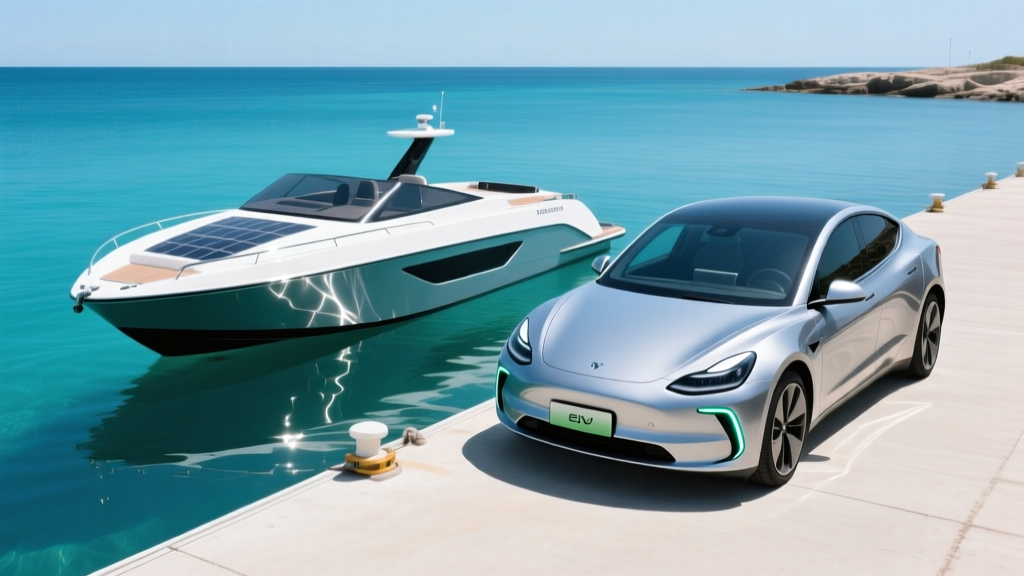
An electric powered boat is a watercraft propelled by an electric motor drawing energy from an onboard battery pack — conceptually identical to a battery-electric vehicle (BEV), but engineered for marine environments. As of 2026, consumer electric boats from brands like Arc, Candela, and X Shore offer ranges of roughly 20–50 nautical miles (23–58 statute miles) depending on speed, with battery capacities ranging from 40 kWh to over 120 kWh. Prices start around $50,000 for small day cruisers and climb past $300,000 for foiling or luxury models. If you're an EV car owner considering an electric boat, the ownership principles — home charging, energy cost per mile, battery degradation — are familiar, but the numbers, infrastructure, and regulatory landscape are very different on the water.
This site specializes in electric cars, trucks, and SUVs. But we get the question regularly from EV owners who also spend time on the water: Is an electric powered boat a practical buy, and how does it compare to the EV in my driveway? Below, we break down the real specs, costs, and ownership realities with the same data-driven approach we apply to every vehicle review.
How Electric Boats Compare to Electric Cars: The Numbers
The physics of moving a hull through water versus rolling a car on asphalt produce dramatically different efficiency profiles. Water is roughly 800 times denser than air, and hydrodynamic drag scales with the cube of speed — meaning doubling your speed on water requires roughly eight times the power. That's why electric boats carry enormous battery packs relative to their range.
| Metric | Electric Boat (Typical 24-ft Day Cruiser) | Electric Car (e.g., Tesla Model Y LR) | Gas Outboard Boat (24-ft) |
|---|---|---|---|
| Battery / Tank | 63–126 kWh (NMC lithium-ion) | 75–82 kWh usable (NMC/LFP) | 60–100 gal gasoline |
| Range (typical cruise) | 30–50 nmi (35–58 mi) | 300–330 mi (EPA) | 150–250 nmi |
| Efficiency | ~2.0–3.5 kWh/nmi | ~0.25–0.30 kWh/mi (120–140 MPGe) | ~1.5–2.5 nmi/gal |
| Top Speed | 25–45 knots (29–52 mph) | 130–155 mph | 40–60 knots |
| "Refuel" Time | 4–10 hrs (Level 2 AC); no marine DCFC standard yet | ~25 min (10–80% at 250 kW DCFC) | 5–10 min (gas fill-up) |
| Starting Price (2026) | $50,000–$300,000+ | $44,990–$55,000 | $35,000–$80,000 |
| Fuel/Energy Cost per Mile | ~$0.25–$0.50/mi (at $0.16/kWh) | ~$0.04–$0.05/mi (home charging) | ~$1.00–$2.00/mi (at $4.00/gal) |
The takeaway: electric boats are roughly 10–15 times less energy-efficient per mile than electric cars, and their range is a fraction of what you'd get in a BEV on the road. That's not a flaw in the technology — it's the physics of water displacement.
Real-World Range: What the Specs Don't Tell You
Just as we flag the gap between EPA sticker range and real-world highway or cold-weather range for electric cars, marine range estimates come with major caveats:
- Speed kills range. A Candela C-8 electric hydrofoil boat claims roughly 50 nautical miles at 22 knots on its 44 kWh battery. Push to 27 knots and that drops to around 35 nmi. Unlike cars, where aerodynamic drag dominates above 65 mph, boats face exponential hydrodynamic penalties even at modest speed increases.
- Sea state matters. Choppy water increases resistance dramatically. A calm-lake range of 45 nmi might shrink to 25–30 nmi in 2-foot chop.
- Weight sensitivity. Every additional passenger, cooler, or gear load directly reduces range more than in a car, because the hull sits deeper and creates more drag.
- No regenerative braking equivalent. Unlike EVs that recover energy during deceleration, boats have no meaningful regen opportunity — you can't coast downhill on water.
Real-World Range Expectation
If a manufacturer advertises 50 nautical miles of range, plan for 30–40 nmi in typical mixed-speed recreational use, and as little as 20–25 nmi if you're running at top speed or in rough conditions. This mirrors how we advise EV car buyers to expect 75–85% of EPA range in highway driving.
Charging an Electric Boat: Infrastructure Reality Check
This is where the comparison to electric cars diverges most sharply. The U.S. has over 70,000 public EV charging ports as of 2026 (U.S. Department of Energy). Marine charging infrastructure? It barely exists.
| Charging Level | Power (kW) | Time to Full (63 kWh Battery) | Availability |
|---|---|---|---|
| Standard 120V Outlet (Dock/L1) | ~1.4 kW | ~45 hours | Any dock with a standard outlet |
| 240V Shore Power (L2 equivalent) | ~7–11 kW | 6–9 hours | Marinas with 30A/50A shore power pedestals |
| High-Power Marina Charger | ~22 kW (some up to 44 kW) | 2–3 hours | Limited to select modern marinas; rare |
| DC Fast Charge (Marine) | No standardized marine DCFC yet | N/A | Not available (some prototypes exist) |
Key differences from car charging:
- No NACS or CCS equivalent for boats. There is no universal fast-charging standard for marine applications. Most electric boats charge via shore-power connections (the same twist-lock plugs used for dock electricity) or proprietary connectors.
- Overnight charging is the norm. Plan to charge your boat the same way you charge an EV at home — plugged in overnight. There is no "pull over and charge in 20 minutes" scenario on the water in 2026.
- Marina electrical upgrades are expensive. If your slip doesn't have a 240V/50A shore-power pedestal, expect to pay $3,000–$8,000 for marina electrical work (with marina and local permitting requirements, which vary significantly by jurisdiction).
- You cannot charge on the water. Unlike a gas boat that can carry spare fuel cans, an electric boat with a depleted battery needs a tow back to a dock with power.
Total Cost of Ownership: Electric Boat vs Gas Boat
Here's where the math gets interesting — and where EV owners will recognize a familiar pattern of higher upfront cost offset by lower operating expenses.
| Cost Category | Electric Boat ($100K Purchase) | Gas Outboard Boat ($60K Purchase) |
|---|---|---|
| Purchase Price | $100,000 | $60,000 |
| Energy/Fuel (5 yrs, 500 hrs total) | ~$4,000 (at $0.16/kWh, ~2.5 kWh/nmi avg) | ~$15,000 (at $4.50/gal, ~2 nmi/gal avg) |
| Maintenance (5 yrs) | ~$1,500 (minimal — no engine oil, impellers, lower units, or winterization of ICE systems) | ~$8,000–$12,000 (annual service, winterization, lower unit lube, fuel system, impeller replacement) |
| Insurance (5 yrs) | ~$12,500 (est. $2,500/yr — higher for expensive battery systems) | ~$7,500 (est. $1,500/yr) |
| Battery Degradation/Replacement Reserve | ~$0–$5,000 (most packs warrantied 8–10 yrs; degradation ~2–3%/yr) | N/A |
| Estimated 5-Year Total | ~$118,000–$123,000 | ~$90,500–$94,500 |
The electric boat saves roughly $10,000–$14,000 in fuel and maintenance over five years, but the higher purchase price and insurance premiums mean the total cost of ownership remains significantly higher than a comparable gas boat at current pricing. This mirrors the early days of EV cars — the gap narrows as battery costs decline and production scales.
Note on tax incentives: The federal §30D Clean Vehicle Credit (IRS) applies to qualified on-road vehicles — boats do not qualify. Some states and local utilities offer marine electrification rebates (check your state energy office and local utility), but there is no federal tax credit for electric boat purchases as of 2026.
Common Misconceptions About Electric Powered Boats
| Myth | Fact |
|---|---|
| "Electric boats are slow." | Modern electric boats like the Arc One hit 40+ knots (46+ mph). Electric motors deliver instant torque — acceleration is strong. Top speed is competitive with mid-range gas outboards. |
| "The battery will die and strand you." | This is a real risk if you ignore your state of charge, just as running out of gas strands a gas boat. Responsible range planning (return at 30% SoC) mitigates this. Some models offer range-extender generators as backup. |
| "Saltwater will destroy the battery." | Marine-grade electric boats use IP67/IP68-rated, fully sealed battery enclosures with corrosion-resistant marine-grade aluminum or stainless hardware. Saltwater exposure to the battery pack itself is not a realistic failure mode in a properly engineered vessel. |
| "Electric boats are silent, so they're safer." | Silence is a double-edged sword: it's pleasant for you, but other boaters, swimmers, and personal watercraft may not hear you coming. Many jurisdictions require sound-signaling devices. Treat silence as a safety concern, not just a feature. |
| "You can charge from solar panels on the roof." | Solar trickle-charging on a boat canopy might add 0.5–1.5 kW — enough to offset standby loads or extend range by 1–3 nmi on a sunny day. It won't meaningfully recharge a 63 kWh pack. |
Who Should Buy an Electric Powered Boat (and Who Shouldn't)
Decision Framework
Choose an electric powered boat if:
- You boat on a lake, calm bay, or protected waterway where your typical outing is under 30 nautical miles round-trip
- You have dock access with 240V shore power (or can install it) for overnight charging
- You value quiet operation — electric boats are transformative for conversation, wildlife viewing, and watersports coaching
- You're an existing EV owner comfortable with plug-in routines and range planning
- You boat in an area with wake/noise restrictions where electric propulsion is an advantage
- You want to eliminate annual gas-engine winterization, fuel stabilizer, and lower-unit maintenance
Stick with a gas outboard if:
- Your typical trips exceed 40–50 nautical miles or involve open-ocean passages where range reserves are a safety concern
- You trailer your boat to remote launches without shore-power access
- Your budget is under $50,000 — the electric boat market has no sub-$50K new options in 2026
- You need to refuel quickly between multiple outings in a single day (tournament fishing, commercial use)
- You boat in cold northern climates where battery range loss (10–20% in cold water/air temps) further compresses already limited range
What First-Time Electric Boat Buyers Should Know
If you're coming from a gas boat or considering your first boat and leaning electric, here are the ownership essentials:
- Battery warranty matters. Look for 8–10 year battery warranties with a guaranteed capacity retention threshold (typically 70–80% of original capacity). This mirrors EV battery warranties — and the replacement cost for a marine battery pack is $20,000–$50,000+ out of warranty.
- kW vs kWh still applies. The motor's power rating in kW (e.g., 150 kW = ~200 HP) determines acceleration and top speed. The battery's capacity in kWh (e.g., 63 kWh) determines range. Don't confuse the two.
- Survey the charging situation before you buy. Talk to your marina about available shore power. If you need a 50A/240V pedestal installed at your slip, get quotes before committing to the boat — costs vary enormously by marina infrastructure and local electrical codes.
- Insurance is higher. Expect marine insurance premiums 40–70% higher than equivalent gas boats, driven by the battery replacement cost exposure and limited actuarial data on marine battery claims.
- Resale values are uncertain. The electric boat market is young. Depreciation curves are not yet established the way they are for Tesla or Rivian. Early adopters accept this risk.
- No federal tax credit. Unlike electric cars eligible for up to $7,500 under IRS §30D, electric boats currently have no federal purchase incentive. Check your state's clean-boating or electrification programs — some coastal and lake states have begun offering rebates.
Leading Electric Boat Brands in 2026
For buyers ready to explore specific models, here are the most established players:
- Candela (Sweden) — The C-8 hydrofoil boat lifts above the water on carbon-fiber foils, cutting drag by ~80% and achieving roughly 50 nmi range at 22 knots on a 44 kWh battery. Starting around €290,000 (~$315,000). The most range-efficient electric boat on the market thanks to foiling technology.
- Arc (USA) — The Arc One is a 24-foot all-electric day cruiser with a 226 kWh battery pack, roughly 40–45 nmi range at cruise speed, and a 475 HP electric motor. Priced around $300,000. Backed by significant venture funding and a growing dealer network.
- X Shore (Sweden) — The X Shore 1 is a premium 6.5-meter (21-ft) open-top electric boat with a 126 kWh battery, ~50 nmi range, and a starting price around €150,000 (~$163,000).
- Flux Marine (USA) — Focuses on electric outboard motors (25 HP to 150 HP) that can repower existing hulls. An interesting path for boat owners who want electric propulsion without buying a new vessel.
- Vision Marine (Canada) — Offers the E-Fusion electric outboard system and the Bruce 22 electric runabout at a relatively accessible price point (~$50,000–$70,000 range).
As with early Tesla and Nissan Leaf buyers, today's electric boat purchasers are early adopters paying a premium for technology that will become more affordable over the next decade.
Bottom Line
Electric powered boats are real, capable, and genuinely enjoyable on the water — especially for lake and protected-waterway use. But in 2026, they remain a premium product with limited range, slow charging, and no public fast-charging network. The ownership equation favors buyers who have dock charging, boat locally, value silence and low maintenance, and can absorb a significant upfront premium. If that describes you, the experience is exceptional. If you need long range, quick refueling, or budget-friendly boating, gas outboards remain the pragmatic choice — just as gas cars still make sense for certain drivers today.
Do electric boats qualify for the federal EV tax credit?
No. The IRS §30D Clean Vehicle Credit applies to qualified on-road vehicles (cars, trucks, SUVs, vans) meeting specific MSRP, income, and battery-sourcing requirements. Electric boats, personal watercraft, and off-road vehicles are not eligible. Check your state energy office for any local marine electrification incentives.
How long does it take to charge an electric boat?
On a standard 240V/50A shore-power connection (~11 kW), expect 6–9 hours for a full charge on a typical 63–126 kWh battery pack. On a 120V outlet, it can take 40+ hours. There is currently no standardized marine DC fast-charging network comparable to Tesla Superchargers or Electrify America for cars.
What happens if an electric boat runs out of battery on the water?
You'll need a tow back to a dock with power, just as a gas boat that runs out of fuel needs a tow or fuel delivery. Most electric boat makers recommend returning to dock with at least 20–30% state of charge remaining. Some models offer an optional onboard gasoline range-extender generator as a backup.
Are electric boats safe in saltwater?
Yes, when properly engineered. Marine-grade electric boats use sealed (IP67/IP68) battery enclosures, marine-grade corrosion-resistant hardware, and isolated high-voltage systems. Major classification societies (e.g., ABS, CE) certify electric marine vessels. Saltwater exposure to the battery is not a realistic concern in a certified production boat.
How much does an electric boat cost to operate per hour?
At an average consumption of ~2.5 kWh per nautical mile and a cruise speed of ~15 knots, you'll use roughly 37.5 kWh per hour. At $0.16/kWh (U.S. residential average), that's about $6/hour in electricity. A comparable gas outboard burning 5–8 gallons per hour at $4.50/gal costs $22–$36/hour in fuel alone.