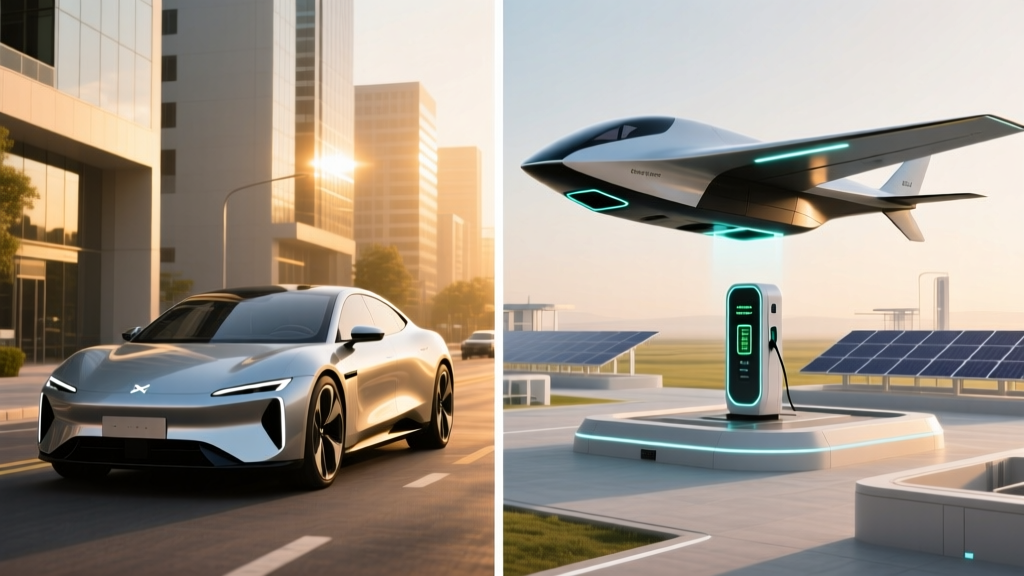
The short answer: Electric powered aircraft remain largely in the pilot-training and short-range air-taxi category as of 2026 — they are not yet a consumer transportation alternative to electric cars. The Pipistrel Velis Electro, the only EASA/FAA-certified electric airplane in widespread use, offers roughly 50 minutes of flight endurance (about 80–100 miles) on a 34.5 kWh battery. By contrast, a 2026 Tesla Model Y Long Range delivers 320+ EPA miles from a ~75 kWh pack. However, the battery chemistries, thermal management strategies, and charging infrastructure lessons from e-aviation directly inform what EV buyers should look for in ground vehicles today.
Why Electric Powered Aircraft Matter to EV Buyers
If you've searched for "electric powered aircraft" while researching your next EV purchase, you're not alone. The intersection of aviation electrification and automotive electrification is more than academic — it's where battery technology roadmaps converge. Companies like Eviation (with its Alice commuter aircraft), Joby Aviation, and Archer Aviation are pushing energy-dense battery packs that share NMC (nickel manganese cobalt) cell architectures with high-performance EVs.
For the practical EV shopper, understanding how electric aircraft engineers solve the same problems — energy density, thermal runaway risk, fast charging degradation, cold-weather performance — gives you a sharper lens for evaluating ground vehicles. Aviation demands higher safety margins, which means the battery management systems (BMS) developed for e-aviation often preview what shows up in premium EVs two to three years later.
Head-to-Head: Electric Aircraft vs. Electric Cars by the Numbers
| Metric | Pipistrel Velis Electro (Aircraft) | 2026 Tesla Model Y LR (AWD) | 2026 Hyundai Ioniq 5 Long Range |
|---|---|---|---|
| Usable Battery Capacity | 34.5 kWh (NMC) | ~75 kWh (NMC) | 77.4 kWh (NMC) |
| Range / Endurance | ~50 min flight (~80–100 mi) | 320 mi (EPA) | 305 mi (EPA) |
| Energy Efficiency | ~17 kWh/100 mi (flight) | 28 kWh/100 mi (EPA combined) | 30 kWh/100 mi (EPA combined) |
| Peak Charge Rate | ~20 kW DC (custom) | 250 kW DC (V3 Supercharger) | 240 kW DC (350 kW capable) |
| 10–80% Charge Time | ~60–80 min | ~25 min | ~18 min |
| Vehicle / Aircraft Price | ~$165,000 (aircraft) | $46,630 MSRP | $45,450 MSRP |
| Battery Warranty | 2 years / 500 flight hours | 8 yr / 120,000 mi | 10 yr / 100,000 mi |
The disparity in price and range is stark, but the engineering constraints are identical: packing enough kilowatt-hours into a weight-limited platform while maintaining safe thermal margins. In aviation, every extra kilogram of battery directly reduces payload. In EVs, extra battery mass hurts efficiency and tire wear but is more forgivable.
Battery Chemistry: What Aviation Teaches Us About LFP vs. NMC
Electric powered aircraft almost exclusively use NMC (nickel manganese cobalt) or NCA (nickel cobalt aluminum) chemistries because energy density — measured in watt-hours per kilogram (Wh/kg) — is paramount. Current NMC cells deliver 250–300 Wh/kg at the cell level, while LFP (lithium iron phosphate) cells top out around 170–200 Wh/kg.
For EV buyers, this trade-off plays out clearly:
- NMC batteries (Tesla Model Y LR, Hyundai Ioniq 5, Ford Mustang Mach-E Extended Range): Higher energy density means more range in a lighter pack, but NMC cells degrade faster if routinely charged to 100% and are more susceptible to thermal runaway. Best practice: daily charge to 80%, use 100% only for road trips.
- LFP batteries (Tesla Model 3 RWD, standard-range BYD models, some Ford offerings): Lower energy density but can be charged to 100% daily without degradation concerns, last 3,000+ cycles, and contain no cobalt. Ideal for buyers with home charging who drive under 250 miles daily.
Aviation's intolerance for LFP's weight penalty is exactly why your long-range EV uses NMC — and why you should manage its state of charge carefully.
Real Costs: Owning an EV vs. the Promise of Electric Flight
Let's ground this in the decision you're actually making: buying an electric car in 2026. Here's a five-year cost snapshot for a typical buyer driving 12,000 miles annually.
| Cost Category | 2026 Tesla Model Y LR | 2026 Toyota Camry (Gas Baseline) | 2026 Toyota RAV4 Hybrid |
|---|---|---|---|
| Base MSRP | $46,630 | $30,495 | $35,295 |
| Est. Federal Tax Credit (§30D) | Up to $7,500 (see caveats below) | $0 | $0 |
| Effective Purchase Price | ~$39,130 | $30,495 | $35,295 |
| Fuel / Charging (5 yr, 60k mi) | ~$3,600 (at $0.15/kWh home avg) | ~$9,000 (at $3.50/gal, 30 MPG) | ~$5,250 (at $3.50/gal, 40 MPG) |
| Maintenance (5 yr) | ~$1,500 (tires, cabin filter, wipers) | ~$4,500 (oil, filters, brakes, belts) | ~$4,000 |
| Insurance (5 yr avg) | ~$12,000 | ~$8,500 | ~$9,000 |
| 5-Year Total Cost | ~$56,230 | ~$52,495 | ~$53,545 |
Tax credit caveats: The §30D federal credit of up to $7,500 for the Model Y depends on meeting IRS requirements for battery component sourcing and critical minerals, plus buyer income caps ($150K single / $300K joint AGI) and the $80K MSRP cap for SUVs. The credit can now be transferred at point of sale as an instant discount. Always verify current eligibility on IRS.gov before purchasing — sourcing rules tighten annually.
The EV wins on fuel and maintenance but pays more upfront and in insurance. Over five years, the gap narrows to a few thousand dollars — and if gas prices rise or you have access to free workplace/solar charging, the EV pulls ahead decisively.
Common Misconceptions About Electric Powered Aircraft and EVs
| Myth | Fact |
|---|---|
| "Electric aircraft are about to replace short-haul flights." | As of 2026, certified electric aircraft are limited to 2-seat trainers (Velis Electro) and experimental prototypes. The Eviation Alice (9-passenger, ~650 mi range) is in development but not in commercial service. Regional electric flights remain 5–10 years away at scale. |
| "EV batteries degrade like phone batteries — I'll need a $20K replacement in 4 years." | Modern EV battery packs use sophisticated BMS and liquid cooling. Data from fueleconomy.gov and long-term fleet studies show most NMC packs retain 85–90% capacity after 100,000 miles. LFP packs fare even better. Federal warranty mandates require 8 years/100K miles minimum coverage for capacity below 70%. |
| "If the grid goes down, my EV is useless." | Many 2026 EVs (Hyundai Ioniq 5, Ford F-150 Lightning, Kia EV9) offer V2L (vehicle-to-load) or V2H (vehicle-to-home) capability, turning the car into a 10–20 kWh backup battery — enough to power a home for 1–3 days. |
| "Electric planes and EVs use the same charging plugs." | They don't. Electric aircraft use proprietary high-voltage DC connectors designed for aviation safety standards. EVs use NACS (Tesla standard, now adopted by Ford, GM, Hyundai, and others) or CCS1. CHAdeMO is effectively discontinued for new vehicles. |
| "Cold weather kills EV range — same would be true for electric aircraft." | True, but differently. EVs lose 20–35% range at 20°F, mitigated by heat pumps (standard on most 2026 models) and battery preconditioning. Aircraft face even harsher thermal challenges at altitude, which is why e-aviation thermal management R&D directly benefits EV cold-weather performance. |
Charging Infrastructure: Ground Truth vs. Aviation Aspirations
One area where EV buyers have a massive, practical advantage over electric aircraft operators: charging infrastructure. As of 2026, the U.S. has over 200,000 public EV charging ports, with Tesla's Supercharger network (now open to NACS-equipped Fords, Hyundais, GMs, and others) offering 150–250 kW DC fast charging every 150–200 miles along major corridors.
Electric aircraft? There are roughly a dozen airfields in the U.S. with dedicated electric aircraft charging stations, mostly in California and Florida. The infrastructure gap is enormous.
For EV buyers, the charging decision framework is:
Do you have access to home charging (garage, driveway, or dedicated outlet)?
- Yes → Level 2 home charger (240V, 7–11.5 kW): Expect $500–$1,500 for equipment plus $800–$3,000 for electrician installation (panel upgrade may add $1,500–$4,000 if you need a 200A service). You'll wake up every morning with a full battery. This covers 95% of your driving.
- No → Evaluate public charging + workplace: If your workplace offers Level 2 charging, or you live near reliable DC fast chargers (Electrify America, EVgo, Tesla Superchargers), an EV is still viable. Budget $0.25–$0.48/kWh for public DC charging — roughly $8–$15 per 100 miles. Consider a PHEV (like the 2026 Toyota RAV4 Prime, 42 mi electric range) if public charging is unreliable in your area.
How far do you regularly drive between charges?
- Under 200 miles daily: Any modern EV (LFP or NMC) works. Prioritize LFP for longevity if you'll charge to 100% daily.
- 200–350 miles daily or frequent road trips: Choose NMC with 300+ EPA miles and 200+ kW DC fast charging (Ioniq 5, Model Y LR, Kia EV6). Precondition the battery before fast charging to hit peak charge rates.
- Over 400 miles regularly: Consider a PHEV or wait for solid-state battery EVs (announced for late this decade from Toyota and Samsung SDI, but not yet in production).
Real-World Ownership: What First-Time EV Buyers Must Know
Whether you're inspired by electric powered aircraft innovation or simply want lower running costs, these ownership realities apply to every EV purchase in 2026:
1. EPA range is optimistic for highway and cold weather. A 320-mile EPA rating typically means 260–280 miles at sustained 75 mph highway speeds and 220–250 miles at 20°F. Plan road trips around 200-mile charging intervals for comfort.
2. Charging speed matters more than battery size. A 77 kWh pack that charges at 240 kW (Ioniq 5, 10–80% in ~18 minutes) is more road-trip-friendly than a 100 kWh pack limited to 150 kW. Look at 10–80% charge times, not peak kW claims — peak rates are sustained for only a portion of the charge curve.
3. Insurance costs 15–30% more for EVs. Higher repair costs, specialized parts, and total-loss thresholds for battery damage drive premiums. Get quotes before buying. Some insurers (Geico, Progressive) now offer EV-specific discounts.
4. Home charging is the make-or-break factor. Without it, EV ownership becomes a chore of public charging planning. If you can't install Level 2 at home, a PHEV or HEV may be the smarter choice — no range anxiety, no charging dependency, and the RAV4 Hybrid still delivers 40 MPG combined.
5. Battery replacement fears are overblown but real. Out-of-warranty battery replacements run $8,000–$18,000 depending on the pack. However, failure rates before 150,000 miles are under 2% for liquid-cooled packs. The NHTSA and manufacturer warranties provide strong protection during the ownership period most buyers care about.
Frequently Asked Questions
Are electric powered aircraft available for private owners today?
The Pipistrel Velis Electro is available for approximately $165,000 and is certified for flight training in the U.S. and Europe. It seats two, has roughly 50 minutes of endurance, and requires a dedicated charging setup at your airfield. For personal transportation, it is not a practical alternative to an EV — think of it as a proof of concept, not a commuter vehicle.
Will electric aircraft batteries eventually make EVs better?
Yes — indirectly. The energy density improvements driven by aviation (targeting 400+ Wh/kg for next-gen NMC and solid-state cells) will trickle down to EVs. Toyota's announced solid-state battery prototype targets 745 miles of range with 10-minute charging, but production is not expected before 2028–2030. For now, today's NMC and LFP packs are mature, reliable, and well-understood.
Should I wait for better EV battery tech before buying?
If you need a car now, today's EVs are excellent. The 2026 model year offers 300+ mile ranges, 18–25 minute fast charging, and 8–10 year warranties. Waiting for solid-state or next-gen tech means a 3–5 year delay with no guarantees on pricing or availability. The best time to buy an EV is when your current vehicle needs replacing and your charging situation supports it.
How does EV charging cost compare to aviation fuel for electric planes?
The Velis Electro costs roughly $5–$8 per flight hour in electricity (at ~$0.15/kWh), compared to $40–$60 per hour in avgas for a comparable piston trainer. For ground EVs, the savings are similar in proportion: roughly $0.04–$0.06 per mile on home electricity vs. $0.12–$0.15 per mile on gasoline at 30 MPG.
Do I qualify for the $7,500 federal EV tax credit?
Eligibility under IRS §30D depends on: (1) buyer AGI under $150K single / $300K joint, (2) vehicle MSRP under $55K for sedans or $80K for SUVs/trucks, (3) battery components and critical minerals meeting annual sourcing thresholds that tighten each year. The credit can be applied at point of sale. Verify current rules at IRS.gov and consult a tax professional for your specific situation.