The Quick Answer
Electric planes—including eVTOL air taxis and small electric aircraft—are not a practical alternative to electric cars for everyday transportation in 2026. Companies like Joby Aviation, Archer, and Beta Technologies are advancing electric flight, but commercial availability remains extremely limited to specific air-taxi corridors. For personal transportation, a ground-based EV like the Tesla Model Y (EPA 320 miles, starting ~$44,990) or Hyundai Ioniq 5 (EPA 318 miles, ~$42,450) delivers real, usable range today with a mature charging infrastructure. Electric planes matter as a technology story, but EV buyers should focus on the ground.
What Electric Planes Actually Exist Today
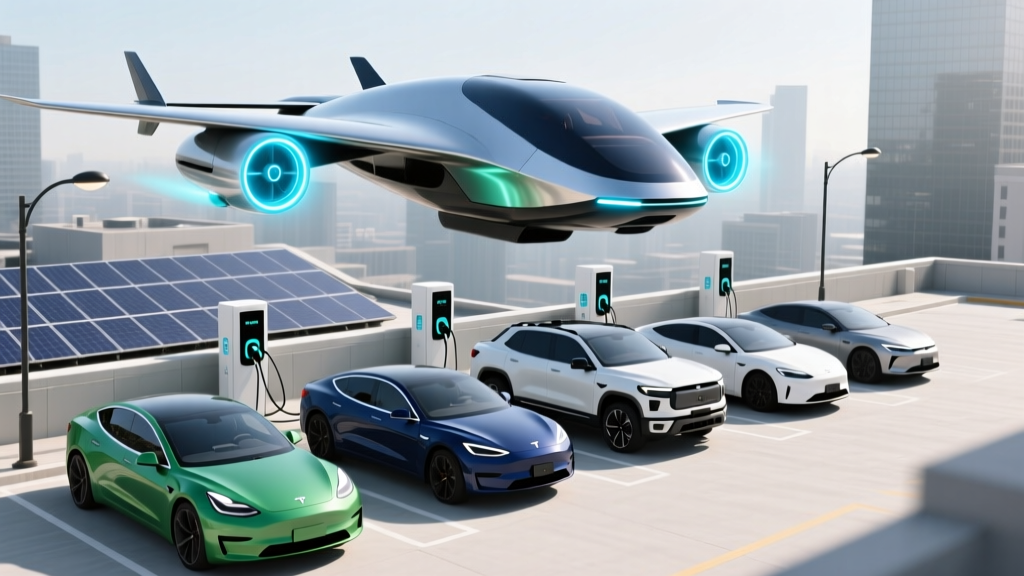
The term "electric plane" covers a wide spectrum, and most of what makes headlines falls into the eVTOL (electric vertical takeoff and landing) category—essentially large passenger drones designed for short urban hops. Here is where the major players stand as of early 2026:
- Joby Aviation (S4): Targeting ~100-mile range per charge, cruise speed of ~200 mph, carrying a pilot plus four passengers. Joby has been conducting demonstration flights and pursuing FAA type certification, with initial commercial service planned for select markets like Dubai and potentially U.S. cities.
- Archer Aviation (Midnight): Designed for ~20-mile back-to-back trips with rapid charging between flights. Archer has targeted launch operations in cities like Abu Dhabi and has partnerships with United Airlines for airport shuttle concepts.
- Beta Technologies (Alia): A more conventional-appearing electric aircraft focused on cargo and medical transport, with a range target of ~250 nautical miles. Beta has been conducting real cargo delivery flights and working toward certification.
- Eviation (Alice): A 9-passenger all-electric commuter aircraft targeting ~250 nautical miles of range at cruise speeds around 260 knots. Certification timeline has slipped multiple times; not yet in commercial service.
The critical takeaway: none of these are aircraft you can buy or fly today as a consumer. They are in various stages of FAA certification, limited demonstration, or pre-commercial operations. The closest analog to consumer availability is still years away, and the cost per seat-mile will initially rival or exceed helicopter service—not economy airline pricing.
Electric Plane vs Electric Car: Range, Cost, and Infrastructure
For anyone researching "electric plane" while shopping for an EV, the comparison reveals just how mature ground-based electric transportation has become relative to electric flight.
| Factor | Electric Plane (eVTOL / Small) | Ground EV (e.g., Tesla Model Y LR) |
|---|---|---|
| Range | 20–250 miles (aircraft dependent) | 320 miles EPA (real-world ~270–290 mi highway) |
| Energy Capacity | ~50–300 kWh battery packs (estimated) | 75 kWh usable (NMC) |
| Charging / Turnaround | 30–45 min between flights (targeted) | 10–80% in ~20 min at 250 kW DC fast charger |
| Purchase Price / Per-Trip Cost | Not consumer-available; air taxi fare est. $50–$150+ per trip | $44,990–$52,490 MSRP; ~$0.04–$0.06/mi (home charging) |
| Infrastructure | Vertiports (very limited, purpose-built) | 190,000+ public charging ports in U.S.; home Level 2 widely available |
| Regulatory Status | FAA certification in progress; not consumer-operable | Fully legal, NHTSA/IIHS rated, §30D tax credit eligible |
| Practical Daily Use | No | Yes |
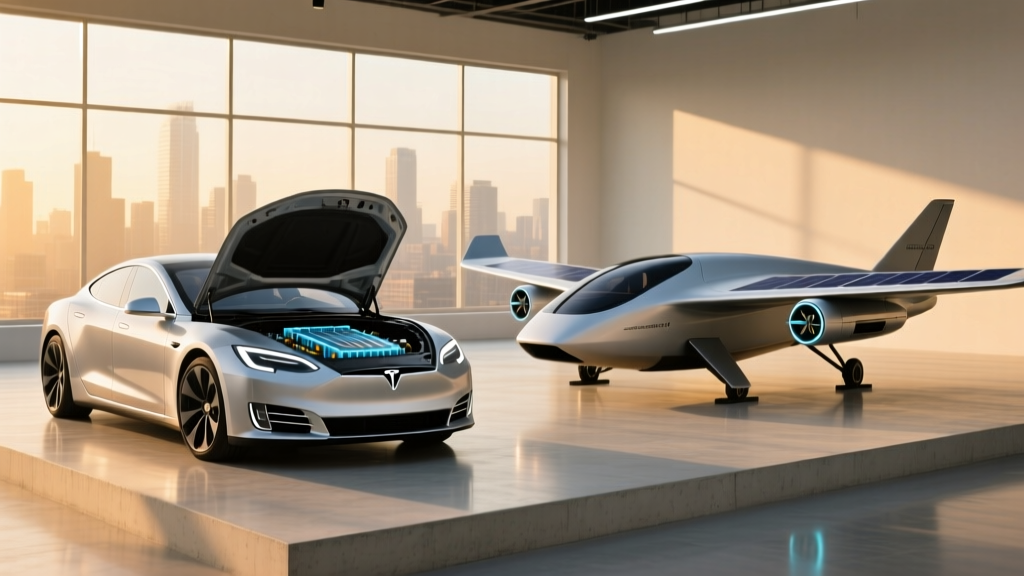
The energy density challenge is the fundamental physics problem. Jet fuel stores roughly 12,000 Wh/kg. Today's best lithium-ion battery cells store around 250–300 Wh/kg. That 40-to-1 energy density gap means electric aircraft must carry enormous battery weight for relatively short range, which is why eVTOL designs target 20–100 mile missions rather than cross-country flights. A DOE analysis of battery energy density confirms this gap remains a defining constraint even as cell chemistry improves incrementally each year.
The Real Cost Picture: EV Ownership Numbers That Matter
While electric planes remain a future prospect, EV ownership economics in 2026 are concrete and calculable. Here is what a first-time EV buyer actually faces with a mainstream model like the Hyundai Ioniq 5 SEL (AWD):
| Cost Category | EV (Ioniq 5) | Comparable Gas Vehicle (Tucson AWD) |
|---|---|---|
| Purchase Price (MSRP) | $46,700 | $33,250 |
| Federal Tax Credit (§30D) | Up to $7,500 (subject to income/MSRP/sourcing rules) | $0 |
| Effective Purchase Price | ~$39,200 | $33,250 |
| Fuel/Energy (5 yr, 75,000 mi) | $2,250–$3,750 (home vs. public mix) | $8,100 (at $3.60/gal, 28 MPG combined) |
| Maintenance (5 yr) | ~$1,500 (no oil changes, fewer moving parts) | ~$3,500 |
| Insurance (5 yr avg.) | ~$9,500 | ~$7,800 |
| Est. 5-Year Total | ~$52,450–$53,950 | ~$52,650 |
The numbers show near-parity over five years when the §30D credit applies, with the EV pulling ahead in years 6–10 as fuel and maintenance savings compound. Note that IRS §30D rules impose buyer income caps ($150K single / $300K joint), vehicle MSRP caps ($55K cars / $80K SUVs/trucks), and battery critical-mineral sourcing requirements that change annually. Always verify eligibility at purchase time—never assume a flat $7,500 credit.
Common Electric Plane and EV Myths — Addressed with Facts
| Myth | Fact |
|---|---|
| "Electric planes will replace short-haul flights within a few years." | FAA certification for eVTOL aircraft is ongoing. Even optimistic timelines place meaningful commercial availability in limited markets no earlier than 2027–2028, with scaling taking far longer. Energy density physics limits range severely. |
| "EVs have worse range than advertised." | Partially true in specific conditions: expect 10–20% range loss in sustained highway driving at 75+ mph, and 20–40% loss in sub-freezing temperatures. A 320-mile EPA-rated EV may deliver 250–270 real-world highway miles. This is physics, not deception—and it is manageable with route planning. |
| "You can't charge an EV without a garage." | Home Level 2 (240V, 7–11 kW) is ideal, but workplace charging, public Level 2 networks (ChargePoint, EVgo), and DC fast charging (Electrify America, Tesla Superchargers at 150–350 kW) are viable alternatives. ~80% of EV owners charge at home, but the remaining 20% manage with a mix of public options. |
| "EV batteries need replacing every few years." | Modern NMC and LFP batteries are warranted for 8 years / 100,000 miles (federal minimum) with a capacity retention threshold of 70%. Real-world degradation data shows most EV batteries retain 85–92% capacity after 100,000 miles. Full replacement costs $8,000–$18,000 depending on pack size but is rarely needed within the vehicle's first decade. |
| "Electric planes are zero-emission, so they are always better." | Electric aircraft emissions depend on the grid powering them—same as EVs. And the energy-per-passenger-mile for short eVTOL hops may be higher than a fully loaded ground EV on a per-mile basis due to the enormous energy cost of vertical flight. |
What First-Time EV Buyers Actually Need to Know
If your search for "electric plane" brought you here while you are actually shopping for an EV, focus on these practical decision points rather than future flight technology:
Home Charging Access Is the Single Biggest Factor
If you can install a Level 2 home charger (240V, 32–48 amp circuit), EV ownership is dramatically more convenient. A typical home install runs $800–$2,500 including the charger unit ($350–$700 for a quality Level 2 like the Emporia Vue or ChargePoint Home Flex) and electrician labor. If your electrical panel needs a service upgrade from 100A to 200A, add $1,500–$3,500. Without home charging, you will rely on public infrastructure, which adds time and cost to every charge session.
Cold Climate? Size the Battery Up
In regions where winter temperatures regularly drop below 25°F, budget for 25–40% range loss. A vehicle rated at 250 EPA miles may deliver only 150–185 miles in deep cold. Choose a model with at least 300+ EPA miles of rated range, and prioritize models with heat pumps (standard on Hyundai/Kia E-GMP vehicles, Tesla Model Y, and most 2025+ EVs) which reduce cold-weather efficiency loss by roughly 10–15% compared to resistive heating.
DC Fast Charging Speed Matters for Road Trips
Not all EVs charge at the same rate. Peak DC fast charge rates range from 50 kW (older/cheaper models) to 350 kW (Hyundai/Kia E-GMP 800V architecture). What matters more than peak rate is the charge curve: how long the vehicle sustains high charge rates before tapering. A Hyundai Ioniq 5 can charge 10–80% in approximately 18 minutes at a 350 kW station because it sustains high kW longer. A vehicle that "peaks" at 150 kW but tapers sharply after 50% SoC may take 30+ minutes for the same 10–80% session.
Understand the Tax Credit Before You Buy
The §30D federal credit can reduce your effective purchase price by up to $7,500, but eligibility depends on:
- Your income: Modified AGI must not exceed $150,000 (single) or $300,000 (married filing jointly)
- Vehicle MSRP: Must not exceed $55,000 for sedans/wagons or $80,000 for SUVs, trucks, and vans
- Battery sourcing: Increasing percentages of battery components and critical minerals must be manufactured or sourced in North America or FTA-partner countries (thresholds tighten annually through 2030)
- Point-of-sale transfer: You can transfer the credit to the dealer for an immediate price reduction rather than claiming it on your tax return
EV Decision Framework: Which Path Is Right for You?
Choose a BEV (full electric) if: You have home charging access, your daily driving is under 80 miles round-trip, you want the lowest per-mile energy cost (~$0.04–$0.06/mi at home), and you qualify for the §30D credit.
Choose a PHEV (plug-in hybrid) if: You lack reliable home charging, frequently drive 200+ miles in a day, live in a region with extreme cold, or want electric-only commuting (25–45 miles) with gas-engine backup for road trips. Models like the Toyota RAV4 Prime (42 mi electric-only, 94 MPGe) offer a practical bridge.
Choose a conventional hybrid (HEV) if: You cannot charge at home or at work, drive in an area with very limited public charging infrastructure, and want fuel savings (45–55 MPG) without any plug-in behavior change.
Wait on electric planes if: You need practical, affordable, daily transportation today. eVTOL and electric aircraft remain in certification and limited demonstration phases. Check back in 2029–2030 for early commercial air-taxi availability in select cities.
The Bottom Line: Ground EVs Are the Practical Electric Future
Electric planes represent genuinely exciting engineering, and the battery technology advances happening in aviation—higher energy density cells, improved thermal management, faster charging—will eventually trickle down to ground vehicles. But for anyone making a vehicle purchase decision in 2026, the electric car market offers proven, data-backed value: 250–400 miles of real range, DC fast charging in 15–30 minutes, federal tax credits up to $7,500, and per-mile energy costs that are one-quarter to one-third the cost of gasoline.
Keep watching the electric plane space if you are a technology enthusiast. But for your next vehicle, keep your wheels on the ground.
Are electric planes available for consumers to buy in 2026?
No. Electric aircraft from companies like Joby, Archer, and Eviation are in various stages of FAA certification and limited demonstration flights. None are available for consumer purchase or personal operation. Early commercial air-taxi services may begin in select markets by 2027–2028 at the earliest.
How far can an electric plane fly?
Range varies dramatically by aircraft type. eVTOL air taxis like Archer's Midnight target 20-mile missions. Larger designs like Eviation's Alice target ~250 nautical miles. For comparison, a Tesla Model Y Long Range achieves 320 EPA miles on the ground at a fraction of the per-mile energy cost.
Is an EV better than a gas car financially in 2026?
Over a 5-year ownership period, a mainstream EV (with the §30D federal tax credit applied) reaches near cost-parity with a comparable gas vehicle, primarily through fuel savings ($0.04–$0.06/mi home charging vs. $0.11–$0.14/mi gasoline) and lower maintenance. The EV typically pulls ahead in years 6–10. Without the tax credit, the higher upfront MSRP takes longer to recoup.
What is the biggest mistake first-time EV buyers make?
Underestimating the importance of home charging access and cold-weather range loss. Buying a 230-mile-range EV in Minnesota without a garage charger is a recipe for frustration. Budget for a Level 2 home install ($800–$2,500), choose at least 300+ EPA miles of range if you face cold winters, and verify your §30D tax credit eligibility before signing a purchase agreement.
Will electric plane batteries make EVs better?
Yes, indirectly. Aviation demands the highest energy-density battery cells, and R&D investment in solid-state and advanced lithium chemistries for aircraft will eventually benefit ground EVs. However, automotive-grade LFP and NMC cells are already excellent for ground transportation, and you should not delay an EV purchase waiting for aviation-derived battery breakthroughs.